
Reviewed · KILIMANJARO TREKS
Kilimanjaro climb, Rongai Route (6-day)
Africa’s highest summit demands respect. The six-day Rongai climb approaches Kilimanjaro from the quieter northern side, giving you a less crowded trail, striking views of Mawenzi Volcano, and a real wilderness feel. Altezza Travel handles the hard logistics, from airport pickup and permits to porters, meals, tents, and medical checks.
I especially like the route’s quiet northern approach and the strong safety setup, including Wilderness First Responder guides, oxygen, oximeters, and daily medical checks. The main drawback is the schedule: six climbing days leave less time to adjust to altitude, so this route suits fit regular hikers more than first-time trekkers looking for a gentle introduction.
The package costs $3,064 per person and takes about eight days from airport arrival to departure. That price covers two hotel nights, all park fees, transport, food, camping gear, and a full mountain crew. It is not cheap, but it removes many costly and stressful details from a high-altitude trip.
In This Review
- Key points to know before you book
- What $3,064 buys you in Tanzania
- Day 1: Arrival, hotel rest, and a useful briefing
- Day 2: Nalemuru Gate to Simba Camp
- Day 3: Simba Camp to Kikilewa Camp
- Day 4: Mawenzi Tarn and the 200-meter acclimatization hike
- Day 5: Mawenzi Tarn to School Hut Camp
- Day 6: School Hut to Uhuru Peak and Horombo Camp
- Day 7: Horombo Camp to Marangu Gate
- Day 8: Hotel recovery and airport transfer
- How the Rongai route feels underfoot
- Meals, tents, porters, and practical comfort
- Who should choose this six-day climb?
- Booking advice and cancellation terms
- Should you book the Altezza Rongai Route?
- FAQ
- How long is the full Kilimanjaro Rongai experience?
- What is the highest point reached?
- Is airport transportation included?
- Where do you sleep on the mountain?
- Are hotel nights included?
- What meals and drinks are included?
- Is special dietary food available?
- Do I need travel insurance?
Key points to know before you book
- Rongai is one of Kilimanjaro’s quieter routes: You start near Nalemuru Gate on the northern slope and descend through the Marangu side.
- The summit push begins at night: From School Hut Camp, you leave at night for Uhuru Peak at 5,895 meters.
- Acclimatization is compressed: The route includes a useful hike near Mawenzi Tarn, but six climbing days give you less altitude adjustment than longer routes.
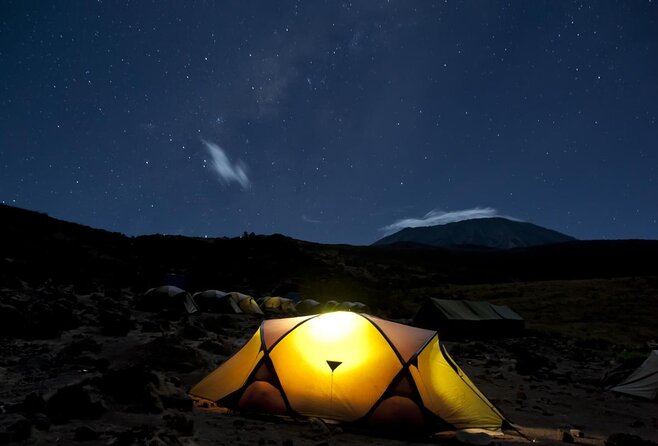
- Your crew carries the working camp: Porters handle equipment, cooks prepare three meals daily, and camp staff set up the dining and sleeping areas.
- Safety is taken seriously: Guides carry medical kits and oxygen, use oximeters, and check your condition along the way.
- The package includes more than the hike: Airport transfers, two hotel nights, permits, park fees, meals, tents, and post-climb transport are included.
What $3,064 buys you in Tanzania
At first glance, $3,064 may seem steep for a mountain walk. Look closer and the price covers much more than a guide and a tent.
You receive airport pickup and drop-off at Kilimanjaro International Airport, all ground transport, two nights at Aishi Machame Hotel, park fees, permits, rescue registration, camping equipment, meals, drinks, medical supplies, guides, cooks, porters, and camp staff. This is close to an all-inclusive climb, apart from your international flights, visa, insurance, personal gear, and crew tips.
The hotel is described as comfortable rather than luxurious, with hot water, Internet access, a swimming pool, and polite staff. You stay there before and after the mountain portion, which matters. A proper bed and hot shower before the climb help you begin rested, while the post-climb night gives you space to recover before flying home.
Two hikers share a hotel room and a North Face VE-25 tent. Solo accommodation costs extra. Single hotel and tent arrangements are available, but you should budget for that supplement before booking.
The food plan is a real part of the value. Three meals are served daily, with several choices at each meal. Tea, coffee, juice, soda, and similar drinks are included on the mountain. Vegetarian, vegan, lactose-free, gluten-free, halal, and other meal plans can be arranged.
Your international airfare is not covered. You also pay for a Tanzanian visa, which is listed as $50 for most nationalities and $100 for US passport holders. Travel insurance that covers trekking up to 6,000 meters is strongly recommended and is not included. You need to bring or hire your own boots, clothing, sleeping bag, and personal hiking equipment.
More Kilimanjaro routes and climbs:
- Kilimanjaro climb by Lemosho Route (7-day)
★ 5.0 · 651 reviews - Kilimanjaro climb, Machame Route (7-day)
★ 5.0 · 262 reviews - Kilimanjaro Climbing Lemosho Route 8 Days.
★ 5.0 · 186 reviews
Day 1: Arrival, hotel rest, and a useful briefing
Your first day begins at Kilimanjaro International Airport, where an Altezza representative meets you and transfers you to Aishi Machame Hotel. Check-in starts at 2:00 PM, so plan around that if you arrive early.
This is not a sightseeing day. You will want the rest. The hotel provides hot water, Internet access, a swimming pool, and a comfortable base in the foothills of Kilimanjaro. In the evening, managers hold a briefing and check that you have the equipment needed for the climb.
That meeting is more important than it sounds. A short route leaves little room for poor preparation, missing layers, or unsuitable footwear. Use the briefing to ask about your gear, the pace, medical checks, meal arrangements, and the expected summit night.
Day 2: Nalemuru Gate to Simba Camp
In the morning, your guide and support crew meet you at the hotel. You drive to Nalemuru Gate, the northern entrance to Kilimanjaro National Park, at about 2,020 meters.
Park permits and search and rescue registration are handled at the gate. Once the paperwork is done, you begin walking through coniferous forest toward Simba Camp at 2,625 meters. The day is described as moderate, but the best approach is deliberately slow.
This first walk introduces you to the rhythm of the route. You are not trying to prove anything on day one. Keep a comfortable pace, drink regularly, and save energy for the higher camps.
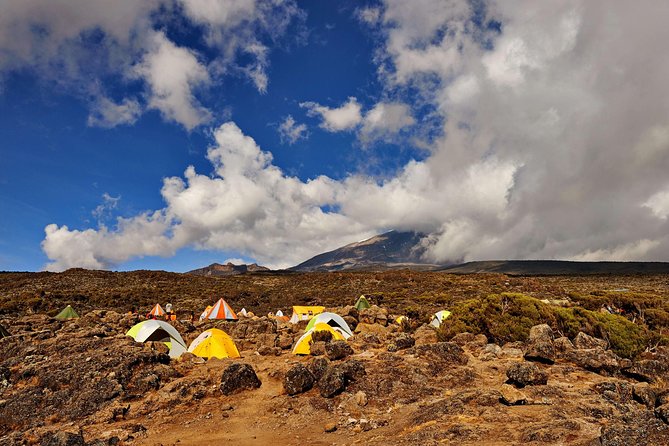
At Simba Camp, the crew sets up the tents and prepares food. The walk-in tents are customized for Kilimanjaro, and the camp includes a dining tent, sleeping pads, tables, chairs, crockery, and cutlery. That setup gives you a more organized place to eat and rest than a basic tent-only trip.
Day 3: Simba Camp to Kikilewa Camp
The route continues from Simba Camp to Kikilewa Camp at 3,630 meters. This day is more demanding than the first, and the altitude begins to matter more than the mileage.
The route provides views toward Kibo Volcano when clouds stay away. Kibo is Kilimanjaro’s main summit cone, and seeing it ahead gives the climb a strong sense of direction. The mountain no longer feels like a distant idea. It is right in front of you.
Once you reach Kikilewa, full rest is recommended. That advice is worth following. The temptation is to inspect camp, take endless photos, or wander around, but rest helps your body deal with the height. If you develop symptoms of altitude sickness, tell your guide early rather than trying to hide them.
A few more trips of this kind worth comparing:
- Kilimanjaro climb, Lemosho Route (6-day)
★ 5.0 · 129 reviews - Kilimanjaro climb, Marangu route (6-day)
★ 5.0 · 72 reviews - 6 Days 5 Night Safari
★ 5.0 · 57 reviews - 6 Days Tanzania Classic Safari
★ 5.0 · 52 reviews
Day 4: Mawenzi Tarn and the 200-meter acclimatization hike
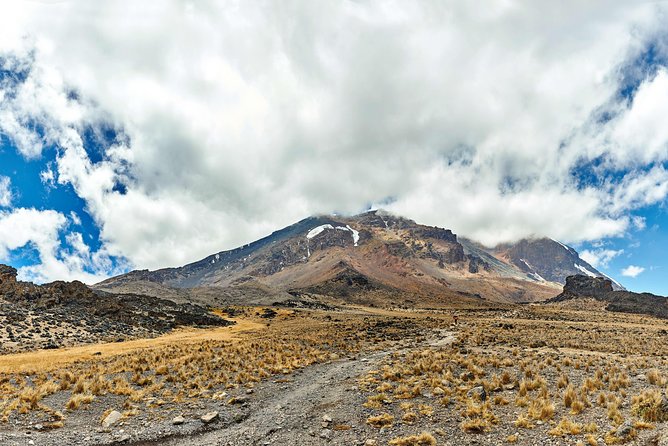
Day four takes you to Mawenzi Tarn Camp at 4,330 meters, at the foot of Mawenzi, Kilimanjaro’s dramatic second summit. Mawenzi has a rough, sharply cut profile that contrasts with Kibo’s broader summit dome.
After reaching camp, you eat lunch and rest for about two hours. Then you take an acclimatization hike toward Mawenzi, gaining about 200 meters before walking back down to camp for dinner.
This short up-and-down walk is one of the route’s smartest features. You gain height during the afternoon, then sleep lower than your highest point of the day. The goal is to help your body adjust without adding a major physical burden.
Take this hike seriously, even if it feels easy. The point is not to collect extra distance. It is to give your body more time at altitude before the summit attempt. The afternoon near Mawenzi is also one of the route’s strongest scenic moments, provided the weather stays clear.
Day 5: Mawenzi Tarn to School Hut Camp
The route changes noticeably as you walk toward School Hut Camp at 4,715 meters. Forest has disappeared, and the ground becomes rocky semi-desert.
The day takes around ten hours, although the actual walking is described as manageable. The challenge is conserving strength. You are not simply arriving at a camp for another night of sleep. You are preparing for a night departure to the summit.
At School Hut, avoid strenuous activity. Eat, drink, organize your clothing, and try to sleep. You need warm layers, gloves, headlamp access, water, and summit snacks ready before lying down. A late scramble for gear costs sleep at exactly the wrong time.
The early night can feel strange. You may not sleep well at 4,715 meters, and the upcoming summit attempt can keep your mind busy. That is normal enough, but report any significant symptoms to your guide.
Day 6: School Hut to Uhuru Peak and Horombo Camp
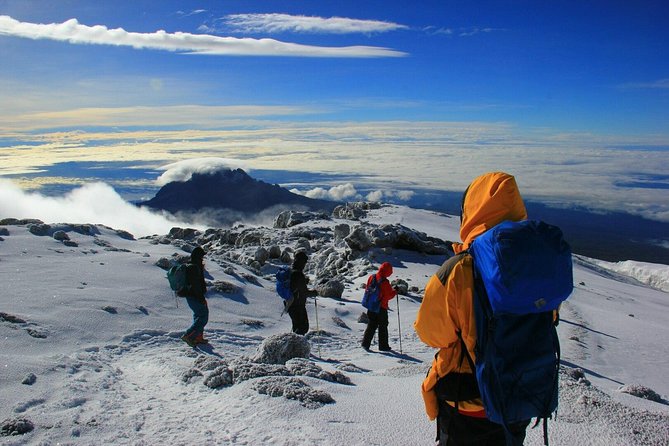
The summit day begins at night. You leave School Hut and climb toward Uhuru Peak, the highest point of Kilimanjaro, at 5,895 meters.
Physically, the route is described as moderate. Altitude is the serious problem. At this height, even a simple uphill step can feel slow and heavy. The pace must be patient, and your guides monitor both your physical condition and your mental strength.
Each pair of climbers is accompanied by its own guide during the summit push. That one-to-one support is a major safety benefit, especially when a group includes people moving at different speeds. The guides can watch for fatigue, confusion, and signs that you need to stop or turn back.
After reaching Uhuru Peak, you may descend to the nearest glacier if conditions and energy allow. Treat this as optional. The summit is the main goal, and extra walking at high altitude may not be wise for everyone.
You then descend to Kibo Camp, rest for about two hours, and continue down to Horombo Camp at 3,720 meters. This is a long day, listed at about twelve hours, and it can be the hardest part of the entire climb. The descent is not simply a relaxed stroll after the summit. Your legs are tired, the ground can be uneven, and concentration still matters.
The guiding team’s safety focus receives strong praise. Guides named in the feedback include Shabane, Kelvin, Emmanuel, Gerald, Adam, Joseph, Stanford, Peter, Innocent, Richard, Godfrey, and others. Individual crews vary, but the repeated pattern is clear: the guide team is central to the experience, especially during the final ascent.
Day 7: Horombo Camp to Marangu Gate
After breakfast, you descend to Marangu Gate at 1,860 meters. The route out takes about five hours.
This is your transition back to ordinary life. The group gathers after the descent, and the company presents commemorative certificates at its office. You then transfer back to Aishi Machame Hotel.
The change in altitude may make you feel better, but do not underestimate the day. Feet and knees can be sore after the summit push, and a hot shower will likely be your main attraction. The hotel night is included, so you do not need to rush toward the airport immediately after leaving the park.
Day 8: Hotel recovery and airport transfer
The final day is for rest and airport transfer. Hotel check-out is at 11:00 AM.
If your flight is in the evening, late check-out can be arranged for an additional fee. Confirm that cost before you arrive. Otherwise, you may spend several hours waiting after leaving your room.
Airport drop-off is included. The package is therefore easy to connect with an international departure, but give yourself plenty of time and avoid booking a flight that leaves too soon after the scheduled transfer.
How the Rongai route feels underfoot
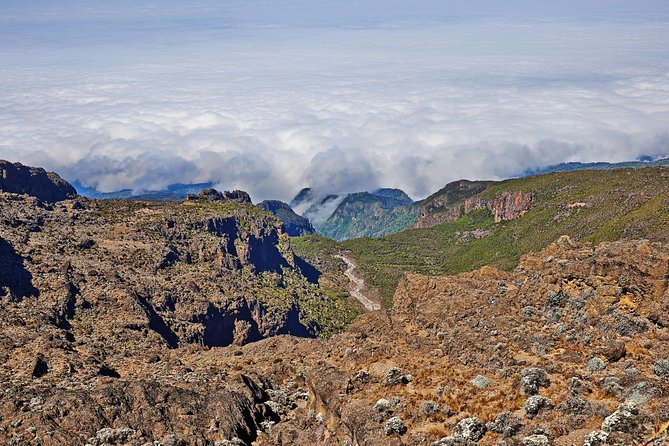
Rongai is valued for its quieter northern approach. It begins in coniferous forest, moves through higher mountain terrain, reaches rocky semi-desert near School Hut, and finishes at the summit zone above 5,000 meters.
The route is not technically described as a climbing route requiring ropes or specialized rock skills. The major test is endurance and altitude. The six-day schedule is shorter than longer Kilimanjaro itineraries, so the route is recommended mainly for regular hikers.
Previous high-altitude experience can make acclimatization smoother, but it does not remove the risk of altitude sickness. Fitness helps you walk for long hours, while acclimatization helps your body cope with thin air. They are not the same thing.
The private format is another point to understand. Only your group participates, rather than joining a large public departure. That gives your party a more personal structure, though the size of the support crew can still be substantial. One three-person group had a crew of 16, which shows how much labor goes into carrying, cooking, guiding, and managing a Kilimanjaro camp.
Meals, tents, porters, and practical comfort
The support system is designed to keep you focused on walking. Porters carry the equipment, camp masters prepare the sleeping and dining areas, and cooks produce three meals a day.
Several people specifically praise the meals, with one chef, Justin, receiving special mention. A birthday cake was even carried up for one climber. That is a small detail, but food becomes a big part of morale when you are cold, tired, and eating at altitude.
The North Face VE-25 tents are shared by two hikers unless you pay for a solo arrangement. The dining tent and proper table service add comfort at the end of long days. You should still expect mountain camping, not hotel service. Warm layers, a suitable sleeping bag, and dry personal clothing remain your responsibility.
Medical support includes certified Wilderness First Responder guides, oxygen tanks, oximeters, medical kits, and check-ups. These tools do not guarantee a summit, but they show that safety is built into the operation rather than left to chance.
Who should choose this six-day climb?
I would consider this route if you:
- Hike regularly and can handle long uphill days
- Have previous experience at high altitude
- Want a quieter trail
- Prefer a private group
- Value organized meals, transport, and camp support
- Are comfortable sharing a tent and hotel room
- Can accept that summit success is never guaranteed
I would think carefully if you are new to high altitude, dislike cold camping, or want the gentlest possible acclimatization schedule. The route saves time, but that convenience comes with a tighter altitude timetable.
The package can also work well for a meaningful group goal. One family used the climb to complete their mother’s bucket-list wish and scatter her ashes. Others climbed as couples, friends, and honeymooners. The private setup gives your group room to set its own emotional tone, while the guides handle the practical work.
Booking advice and cancellation terms
Pickup starts with the airport transfer, and confirmation is provided at booking. The listed start time is 9:00 AM, though your arrival plan should also account for the hotel’s 2:00 PM check-in.
Free cancellation is available if you cancel at least 24 hours before the experience start time. Cancellations or changes inside that window are not accepted for a refund, and the cut-off follows local Tanzanian time.
Before paying, confirm the cost of single accommodation, personal gear rental, insurance, visa arrangements, and any late hotel check-out. Also ask how crew tips are handled. Tips are optional and based on your satisfaction, but they are an expected part of budgeting for a supported mountain climb.
Should you book the Altezza Rongai Route?
I would recommend it to a fit hiker who wants a quieter Kilimanjaro route and prefers to have nearly every major detail arranged. The safety equipment, private group format, airport transfers, hotel nights, meals, porters, and medical checks make the $3,064 price easier to justify.
The key warning is the six-day schedule. You are buying a shorter climb, not an easier one. If you already hike regularly and have some high-altitude experience, Rongai can be a focused, well-supported route to Uhuru Peak. If altitude is new to you, choose a longer itinerary if available, or be very honest with yourself about the extra risk and effort.
FAQ
How long is the full Kilimanjaro Rongai experience?
The full package takes approximately eight days, including arrival, two hotel nights, six climbing days, the return to the hotel, and airport transfer.
What is the highest point reached?
The summit is Uhuru Peak at 5,895 meters.
Is airport transportation included?
Yes. Pickup and drop-off at Kilimanjaro International Airport are included, along with other ground transportation.
Where do you sleep on the mountain?
You sleep in North Face VE-25 walk-in tents, normally with two hikers per tent. Single tent accommodation is available for an extra charge.
Are hotel nights included?
Yes. Two nights at Aishi Machame Hotel are included, with two people per room except on solo climbs.
What meals and drinks are included?
Three meals per day are provided on the mountain, with different meal choices. Tea, coffee, juices, soda, and similar drinks are also included.
Is special dietary food available?
Yes. Vegetarian, vegan, lactose-free, gluten-free, halal, and other meal plans are available.
Do I need travel insurance?
Mountaineering insurance covering trekking up to 6,000 meters is highly recommended, but it is not included in the package price.
Just added around Moshi
- Moshi: Lake Chala Tour: Hiking &/or Kayaking★ 4.5 · 3 reviews
- 3 Days Tanga Exclusive Beach Holiday★ 5.0 · 3 reviews
- Serengeti Wildebeest Migration.★ 5.0 · 3 reviews
- Chemka Hotpsrings E-Bike Day Trip★ 5.0 · 3 reviews
- Explore 1 day Ngorongoro Crater Budget Group Safari from Arusha★ 5.0 · 3 reviews
- Explore the 360° of Kilimanjaro★ 5.0 · 3 reviews
- Affordable Short Tanzania Safari (2 Days Camping Safari)★ 5.0 · 3 reviews
- Rongai Route 7 Days★ 5.0 · 3 reviews
Kilimanjaro Treks, compared.



8-Day Small-group Lemosho Kilimanjaro Summit Trekking
Read our review →


Climbing Kilimanjaro through 7 days Machame Route
Read our review →

Browse the lists this tour appears in