
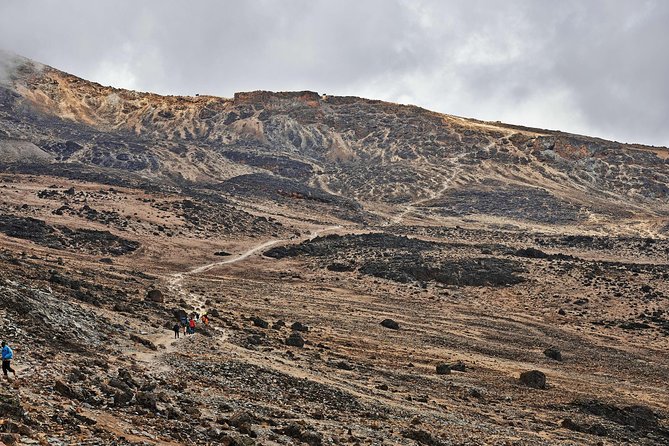
Reviewed · KILIMANJARO TREKS
Kilimanjaro climb, Rongai Route (7-day)
Africa’s highest summit demands respect. This Rongai Route climb offers a quieter approach to Uhuru Peak, with gradual acclimatization, full camping support, and a professional crew handling the heavy work. I especially like the route’s northern forest start and its gentle acclimatization hikes, including the extra outings near Second Cave and Mawenzi Tarn. I also like that airport transfers, hotel nights, park fees, meals, tents, medical checks, and certified wilderness guides are included.
The main drawback is the price: $3,507 per person is a serious commitment, especially once you add flights, visas, personal gear, insurance, and tips. You also need to read the schedule carefully. The climb is described as seven days, but the full package lasts about nine days, including arrival, hotel, and departure days. Summit night is long, cold, and physically taxing, even with the route’s relatively steady ascent.
In This Review
- Key details worth knowing before you book
- Why the Rongai Route is a smart choice
- Arrival in Moshi and the first night
- Day 2: Nalemuru Gate to Simba Camp
- Day 3: Second Cave and the first acclimatization hike
- Day 4: Kikilewa Camp and a useful relief day
- Day 5: Mawenzi Tarn beneath Kilimanjaro’s second summit
- Day 6: The rocky approach to Kibo Camp
- Day 7: Uhuru Peak and the long descent
- Day 8: Marangu Gate and the return to comfort
- Day 9: Hotel rest and airport transfer
- What the $3,507 price includes
- Who should choose this climb
- Final verdict: should you book it?
- FAQ
- How long does the full Kilimanjaro Rongai experience last?
- What is the price per person?
- Is airport transportation included?
- Where do you stay before and after the climb?
- What meals are included?
- Is personal hiking equipment included?
- What fitness level is required?
Key details worth knowing before you book
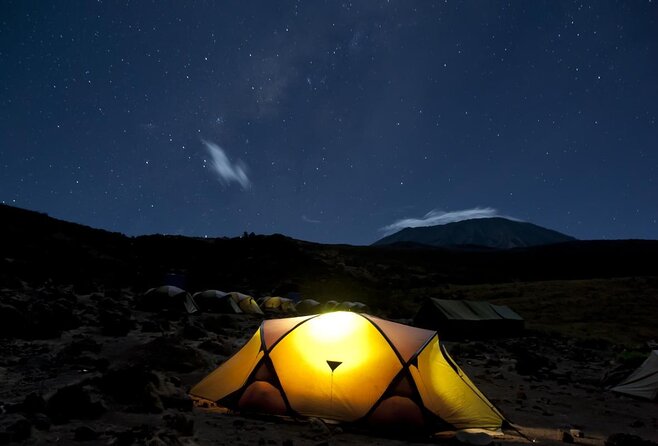
- Rongai begins on Kilimanjaro’s northern side: You enter at Nalemuru Gate, near the Kenyan border, and walk through coniferous forest before reaching the high camps.
- The route uses altitude-friendly rest hikes: You climb higher after reaching camp, then return to sleep lower. This helps your body adjust to the thin air.
- You sleep in walk-in North Face VE-25 tents: Two hikers share each tent, while a dining tent, chairs, tables, sleeping pads, and cooking equipment create a more organized camp.
- Summit night is the hardest section: The climb begins around midnight from roughly 4,700 to 4,715 meters and continues to Uhuru Peak at 5,895 meters.
- The descent uses a different side of the mountain: After the summit, you descend through Kibo and Horombo to Marangu Gate.
- The support team is a major part of the value: Guides, porters, cooks, camp staff, medical equipment, oxygen, and health checks are included.
Why the Rongai Route is a smart choice
Kilimanjaro has several routes, but Rongai has a useful character of its own. It approaches the mountain from the north, where the early walking passes through coniferous forest. The route is described as one of the quieter options, which matters if you prefer a more peaceful camp routine and less foot traffic on the trail.
The gradual profile also makes sense for first-time high-altitude hikers. You are not simply marched uphill each day. On Day 3, for example, you walk from Second Cave toward Kikilewa, gain about 100 meters, then return to sleep at Second Cave. On Day 5, you hike about 200 meters higher toward Mawenzi before returning to Mawenzi Tarn Camp.
That pattern gives you useful time at altitude without forcing you to sleep at the highest point you reach that day. It does not remove the risk of altitude sickness, but it gives the itinerary a sensible rhythm.
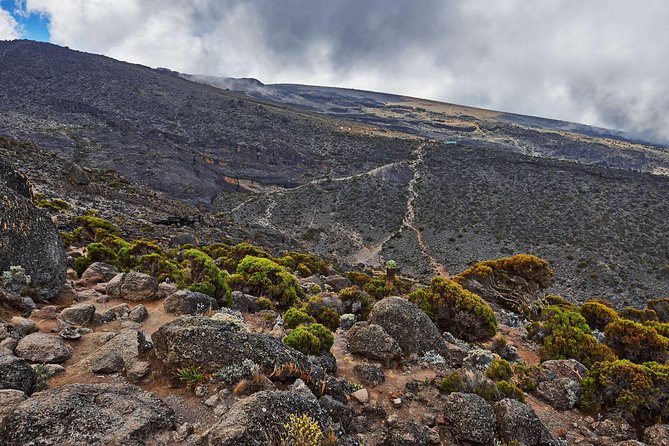
The route crosses several climate zones. At first, you walk in forest, then through heath and moorland around the higher parts of Kilimanjaro, followed by rocky semi-desert near Kibo. The summit area is an Arctic desert, with cold, dry conditions and very little plant life.
The route is not a technical mountaineering trip. The main difficulty is altitude, stamina, cold, and the long summit night. The guide team assigns one guide to every two climbers during the final ascent, according to the supplied schedule. That close attention is reassuring, especially when you are tired and your body is reacting to nearly 6,000 meters of elevation.
More Kilimanjaro routes and climbs:
- Kilimanjaro climb by Lemosho Route (7-day)
★ 5.0 · 651 reviews - Kilimanjaro climb, Machame Route (7-day)
★ 5.0 · 262 reviews - Kilimanjaro Climbing Lemosho Route 8 Days.
★ 5.0 · 186 reviews
Arrival in Moshi and the first night
Your trip begins with pickup at Kilimanjaro International Airport. An Altezza Travel representative meets you and transfers you to Aishi Machame Hotel in the foothills of the mountain.
The hotel stay is included for two nights, with two people per room unless you are climbing alone. The property is described as having comfortable rooms, hot water, polite staff, a swimming pool, and Internet access. Check-in begins at 2:00 PM, so plan your arrival time around that.
The first evening includes a climb briefing. This is more important than it may sound. You should use it to check your equipment, ask about the daily routine, discuss any medical concerns, and make sure you understand how the crew will handle health checks.
Airport transfers are included at both ends. That removes a common source of pre-climb stress, especially if you are arriving tired or unfamiliar with Tanzania.
Day 2: Nalemuru Gate to Simba Camp
The first hiking day begins at the northern entrance to Kilimanjaro National Park, Nalemuru Gate, at about 2,020 meters. While the head guide handles permits and search and rescue registration, you begin the transition from hotel comfort to mountain routine.
The walk to Simba Camp rises to about 2,625 meters and takes roughly five hours. The trail passes through coniferous forest on Kilimanjaro’s northern slope. This is a moderate introduction, but you should not treat it as a warm-up race.
The best advice here is simple: walk slowly, drink regularly, and keep your pace comfortable. The crew will have already pitched the tents and begun preparing dinner by the time you arrive. That lets you focus on eating, drying damp clothes, and resting instead of setting up camp after a full day on your feet.
From the start, you are asked to follow the mountain rules. Avoid rushing, listen to your guides, and report symptoms early. Headaches, nausea, dizziness, unusual tiredness, or shortness of breath should not be hidden from the crew.
Day 3: Second Cave and the first acclimatization hike
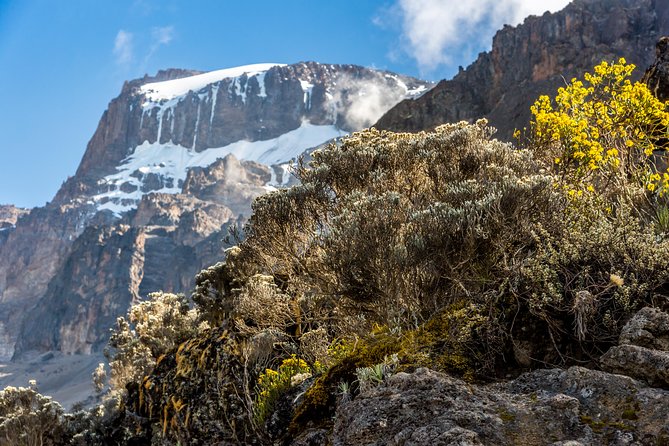
The walk from Simba Camp to Second Cave Camp covers the next part of the northern route and takes about three hours. The camp sits at roughly 3,480 meters, so the day is short enough to leave room for rest.
That extra time is useful. After lunch, you have a couple of hours to relax before taking an acclimatization hike toward Kikilewa Camp. The hike gains about 100 meters, then returns to Second Cave for the night.
This is one of the itinerary’s strongest features. You get a controlled taste of higher altitude without giving up the benefits of sleeping lower. You might find the afternoon walk easy physically, but it still matters because the purpose is adjustment, not speed or sightseeing.
The short day also gives you a chance to settle into the tent routine. You will spend several nights in walk-in tents, with two hikers sharing each tent. A separate dining tent, tables, chairs, crockery, and cutlery make camp feel far more practical than a basic backpacking setup.
A few more trips of this kind worth comparing:
- Climbing Kilimanjaro through 7 days Machame Route
★ 5.0 · 151 reviews - 7 Days Kilimanjaro via Machame route affordable price
★ 5.0 · 110 reviews - Private Kilimanjaro Hike 7 Day Lemosho Route
★ 5.0 · 60 reviews - 7-Day Magical Tanzania Safari -Premium High End Package
★ 5.0 · 53 reviews
Day 4: Kikilewa Camp and a useful relief day
After breakfast, you continue to Kikilewa Camp at around 3,630 meters. The route offers some of the best views of Mawenzi and Kibo, although clouds can block the volcanoes.
This is called a relief day, and that description is welcome. After reaching camp, you have time to sleep after lunch before the next push. The guide also checks everyone’s health in the evening and explains what to expect the following day.
At this point, the climb becomes less about covering distance and more about managing your body. You may feel fit and eager to continue, but the altitude can affect you differently from one day to the next. A rest period is not wasted time. It is part of the climb.
Day 5: Mawenzi Tarn beneath Kilimanjaro’s second summit
The trail rises toward Mawenzi Tarn Camp, at the foot of Mawenzi Volcano. Mawenzi is Kilimanjaro’s second major summit, and its jagged volcanic form gives this section a more dramatic feel than the gentler forest days.
After arriving, you eat lunch and rest for about two hours. The afternoon acclimatization walk climbs approximately 200 meters toward Mawenzi before returning to camp for dinner.
This is another sensible high-altitude routine, but it is also a demanding day. The itinerary lists about seven hours, including walking and the acclimatization outing. Keep your pack light and use the rest period properly.
The included meals are designed to provide energy, and vegetarian, gluten-free, halal, and other meal requests are available. Tea, coffee, juice, soda, and other drinks are also included on the mountain. You should still bring or arrange enough personal hydration capacity, since drinking well is especially important before summit night.
Day 6: The rocky approach to Kibo Camp
Day 6 takes you to Kibo Summit Camp at about 4,700 meters. The vegetation fades and the ground becomes a rocky semi-desert. The route itself is described as moderate, but the altitude changes how every step feels.
This is a day for conservation. Walk slowly, avoid unnecessary exertion, eat even if your appetite is poor, and drink as directed by your guide. Once at camp, the goal is to sleep and prepare for the midnight ascent.
The schedule lists this as a 14-hour day because the walk to Kibo and the beginning of the summit effort are closely linked. You should expect a short rest window rather than a normal night’s sleep.
One detail deserves clarification. The itinerary refers to both Kibo Summit Camp at 4,700 meters and School Hut Camp at about 4,715 meters for the night departure. These are very close elevations, but the wording is not perfectly consistent. Ask Altezza to confirm your exact sleeping camp and summit departure point before you go.
Day 7: Uhuru Peak and the long descent
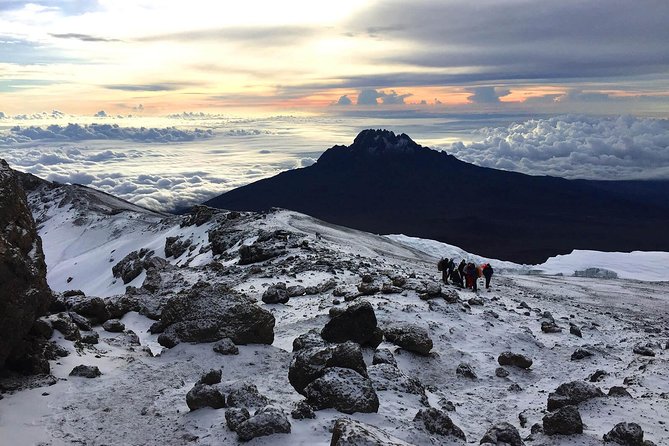
Summit night begins in darkness. From roughly 4,700 to 4,715 meters, you climb to Uhuru Peak at 5,895 meters. The slope is moderate, but the altitude places more pressure on your heart and breathing than on your leg muscles.
The pace will be slow. Your guide will assess your condition throughout the ascent, and the stated ratio of one guide for every two climbers offers close supervision. This is where patience matters most. You may take many short steps, pause often, and wonder why the summit seems to stay the same distance away.
At the top, you may have the chance to walk on the nearest glacier. Conditions and timing will affect that option, so do not count on a long glacier excursion. The main reward is reaching Uhuru Peak, the highest point in Africa, and seeing the sunrise or early morning views if the weather cooperates.
The descent is not an easy victory lap. You return to Kibo for a two-hour rest stop before continuing to Horombo Camp at about 3,720 meters. The schedule warns that many climbing accidents occur during descent, when tired legs and poor concentration create problems. Take that advice seriously. Use trekking poles if you have them, watch every step, and do not rush because you are eager to finish.
The day is listed at about 12 hours. It will likely be the most exhausting part of the entire trip.
Day 8: Marangu Gate and the return to comfort
After breakfast at Horombo, you make the final descent to Marangu Gate at approximately 1,860 meters. The walk takes around five hours.
At the gate, you have time to say goodbye to the support crew and exchange final memories with the group. Certificates are presented at the company offices before you return to the hotel.
This transition can feel surprisingly quick. One day you are above the clouds, and the next you are back among roads, vehicles, hot showers, and ordinary meals. Give yourself time to appreciate what the crew has done. Porters carry equipment, cooks prepare three meals a day, camp staff handle setup, and guides watch your health while leading the route.
Day 9: Hotel rest and airport transfer
The final day is deliberately simple. You rest at Aishi Machame Hotel and transfer to the airport.
Hotel checkout is at 11:00 AM. If your flight leaves later, a late checkout is available for an extra fee. Lunch and dinner at the hotel are not included, so budget for those meals.
The package is therefore about nine days in total, even though the mountain portion is presented as a seven-day climb. Build your flights around the arrival and departure days rather than treating this as a one-week door-to-door holiday.
What the $3,507 price includes
At first glance, $3,507 is expensive. But the package covers much more than guiding. Included costs cover Kilimanjaro National Park fees, airport transfers, ground transport, two hotel nights, tents, group camping equipment, three mountain meals per day, drinks, guides, porters, cooks, camp staff, medical checks, oxygen tanks, oximeters, and medical kits.
The guides are certified Wilderness First Responders. That does not make altitude safe, but it gives you a stronger safety setup than an informal climb with minimal support.
The campsite equipment also affects comfort. Sleeping pads, a dining tent, tables, chairs, crockery, and cutlery mean you are not building an entire expedition from your suitcase.
You still need to pay for flights to Tanzania, visas, personal clothing and boots, a sleeping bag, insurance, and crew tips. Single accommodation at the hotel and in a tent costs extra. Trekking gear can be hired, but you should settle that before departure rather than assuming every item will be available at the last minute.
Insurance covering trekking up to 6,000 meters and helicopter evacuation is strongly recommended. Standard travel insurance may not cover a climb of this height, so check the wording carefully.
Who should choose this climb
I would recommend this trip to a fit beginner who wants a supported Kilimanjaro experience rather than a stripped-down expedition. The route’s gradual schedule, acclimatization walks, hotel nights, medical checks, and full camp crew create a useful safety net.
It also suits families and small private groups. The activity is private, so only your group participates. Public feedback includes strong praise from families, solo climbers, friends traveling together, and even a group that included a 12-year-old, though you should make your own decision about a child’s fitness and medical readiness.
The trip is not right for anyone seeking a casual scenic walk. You need moderate physical fitness, patience with long days, and a willingness to sleep in tents for several nights. The summit attempt is cold, tiring, and high enough to affect people who are otherwise strong hikers.
The public rating is listed as 5 out of 5 from 40 ratings, with a 100 percent recommendation rate. The most consistent praise centers on guide support, organization, food, health care, and the kindness of the porters and camp staff. Names singled out in personal accounts include guides Jackson, Joseph, Frank, Athumani, Amos, Elia, and Solomon, along with crew members Ivan, Leonard, and Evance.
Final verdict: should you book it?
Book this Rongai climb if you want a quieter route, careful acclimatization, and a highly supported ascent with hotel nights and airport transfers included. I see the strongest value in the medical preparation, guide-to-climber attention during the summit push, full cooking and camp team, and the gradual altitude schedule.
Think twice if $3,507 already stretches your budget before flights, gear, insurance, and tips. Also confirm the Kibo and School Hut details, the exact seven-day mountain schedule, and any single-room or single-tent supplements before paying.
For a first Kilimanjaro attempt, this is a well-supported choice with a sensible route profile. It will not make Uhuru Peak easy, but it gives you the organization and human support you want when the mountain gets serious.
FAQ
How long does the full Kilimanjaro Rongai experience last?
The full package lasts approximately nine days. The mountain climb is described as seven days, with one arrival day before the trek and one hotel and airport-transfer day after the descent.
What is the price per person?
The listed price is $3,507 per person.
Is airport transportation included?
Yes. Pickup and drop-off at Kilimanjaro International Airport are included, along with ground transportation during the trip.
Where do you stay before and after the climb?
You stay for two nights at Aishi Machame Hotel, with two people per room unless you are climbing alone. Single accommodation costs extra.
What meals are included?
Breakfast, lunch, and dinner are included during the mountain portion. Vegetarian, gluten-free, halal, and other meal options are available. Hotel lunches and dinners are not included.
Is personal hiking equipment included?
No. You must provide or hire personal equipment such as hiking clothing, boots, and a sleeping bag. Single accommodation in the hotel and tent is also available for an additional fee.
What fitness level is required?
The experience requires a moderate level of physical fitness. The summit section reaches 5,895 meters and involves a long nighttime ascent followed by a substantial descent.
Just added around Moshi
- Moshi: Lake Chala Tour: Hiking &/or Kayaking★ 4.5 · 3 reviews
- 3 Days Tanga Exclusive Beach Holiday★ 5.0 · 3 reviews
- Serengeti Wildebeest Migration.★ 5.0 · 3 reviews
- Chemka Hotpsrings E-Bike Day Trip★ 5.0 · 3 reviews
- Explore 1 day Ngorongoro Crater Budget Group Safari from Arusha★ 5.0 · 3 reviews
- Explore the 360° of Kilimanjaro★ 5.0 · 3 reviews
- Affordable Short Tanzania Safari (2 Days Camping Safari)★ 5.0 · 3 reviews
- Rongai Route 7 Days★ 5.0 · 3 reviews
Kilimanjaro Treks, compared.



8-Day Small-group Lemosho Kilimanjaro Summit Trekking
Read our review →


Climbing Kilimanjaro through 7 days Machame Route
Read our review →

Browse the lists this tour appears in