
Reviewed · KILIMANJARO TREKS
Kilimanjaro Climb & Safari – Lemosho Route – 13 Day
Kilimanjaro rewards patience, not bravado. I like the slow Lemosho itinerary, which gives you time to adjust before the summit push, and I like Tusker Trail’s strong focus on guides, food, equipment, and crew welfare. The route moves from rainforest to high moorland, lava fields, giant senecios, and the icy upper mountain before adding a short safari in northern Tanzania.
The main drawback is the price: $8,188 per person is a serious investment, and climbing gear rental is not included. The safari portion is also described in broad terms, so you should confirm exactly which park, lodge, transfers, and flights are covered before paying.
In This Review
- Key points to know before you book
- Why the Lemosho Route makes sense
- Days 1 and 2 in Moshi: preparation before the mountain
- Days 3 and 4: rainforest to the Shira Plateau
- Days 5 and 6: Shira, Moir Camp, and Lava Tower
- Days 7 and 8: Barranco Wall to Barafu High Camp
- Day 9: Uhuru Peak and the hardest hours
- Days 10 and 11: a long descent and a proper celebration
- Food, tents, and the people behind the climb
- Days 12 and 13: Lake Manyara and the safari add-on
- Is $8,188 good value?
- Who should book this Kilimanjaro trip?
- Should you book it?
- FAQ
- How long is the Kilimanjaro and safari experience?
- Where does the experience begin?
- Which Kilimanjaro route is used?
- Is the tour private?
- Are meals included?
- Is climbing gear included?
- Can I camp in Kilimanjaro’s crater?
- What happens if bad weather cancels the experience?
Key points to know before you book
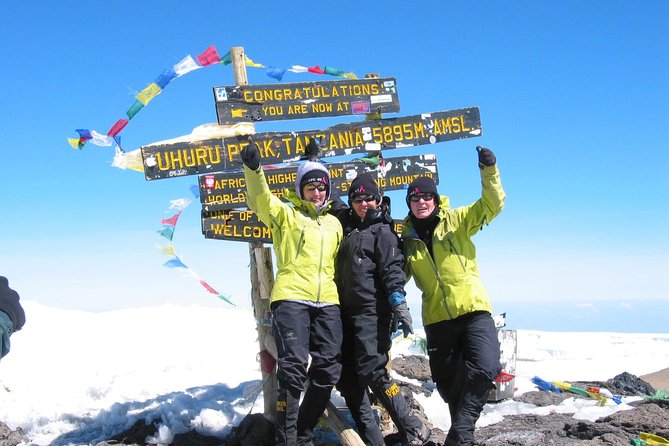
- A nine-day mountain schedule: The climb runs from the Lemosho Glades to Uhuru Peak, followed by a descent through Millennium Camp.
- Built-in altitude adjustment: You spend several days above 11,000 feet before summit night, with a high point near Lava Tower at 15,200 feet.
- A demanding but varied route: Expect rainforest, the Shira Plateau, Barranco Wall, scree, cold high camps, and steep descents.
- Strong attention to mountain support: Tusker describes High Altitude First Responder guides, custom walk-in tents, and chefs trained by the Culinary Institute of America.
- Food is a major part of the operation: Breakfast, lunch, and dinner are included on most days, with 12 breakfasts, 12 lunches, and 10 dinners listed.
- A climb plus safari finish: The final two days focus on Lake Manyara National Park and possible connections to other wildlife areas or Zanzibar.
Why the Lemosho Route makes sense
Lemosho is a good choice if you want a fuller Kilimanjaro experience rather than the shortest possible climb. The route begins on the western side of the mountain, crosses the Shira Plateau, then joins the southern circuit for the Barranco Wall, Karanga, and Barafu.
That extra time matters. Altitude is the great troublemaker on Kilimanjaro, not technical climbing. You need to walk slowly, sleep at increasing heights, eat even when your appetite fades, and give your body time to respond. This 13-day plan provides several gradual stages before the summit attempt.
You should not mistake the route for an easy holiday. The days are long, the air becomes thin, and summit night requires an early start and a steep climb. But you are not expected to use ropes or technical climbing equipment on the standard route described here. The physical challenge is sustained walking, cold, altitude, rough ground, and the final push to Uhuru Peak.
Tusker Trail was founded by Eddie Frank in 1977. The company says Frank has climbed Kilimanjaro 54 times and helped shape its operating methods. Tusker also reports a 99 percent summit success rate and a five-star rating. Those figures come from the company, so I would treat them as useful context rather than a guarantee for your own climb.
More Safaris in Moshi
- Safari Serengeti And Ngorongoro
★ 5.0 · 288 reviews - Big Five Safari In Tanzania
★ 5.0 · 99 reviews - Unforgettable Tanzania Safari And Zanzibar Beach
★ 5.0 · 97 reviews
Days 1 and 2 in Moshi: preparation before the mountain
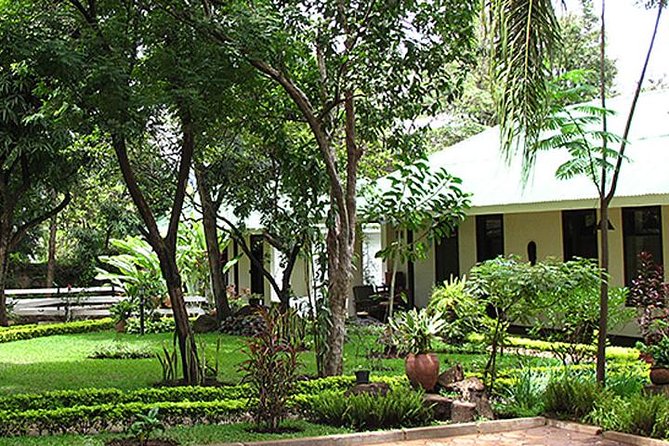
Your arrival day is intentionally gentle. A driver takes you from Kilimanjaro airport to Bristol Cottages Hotel in Moshi, where you have time for a meal, a shower, and sleep before the climb begins.
That first night is more important than it sounds. You are likely arriving after a long international flight, and the next morning brings a full equipment check. Good rest gives you a better start than squeezing in extra sightseeing.
Day 2 is devoted to orientation and final preparation with the Tusker mountain guides. They check your equipment, discuss the climb, and help you meet the group. You also go into Moshi for lunch and a walk through the local market.
I like this use of time. You get practical preparation without being rushed straight to the trailhead. It also gives you a chance to discover any missing item before you leave town. The company does not include climbing gear and clothing rental in the listed price, so confirm your packing list and rental needs well ahead of arrival.
Days 3 and 4: rainforest to the Shira Plateau
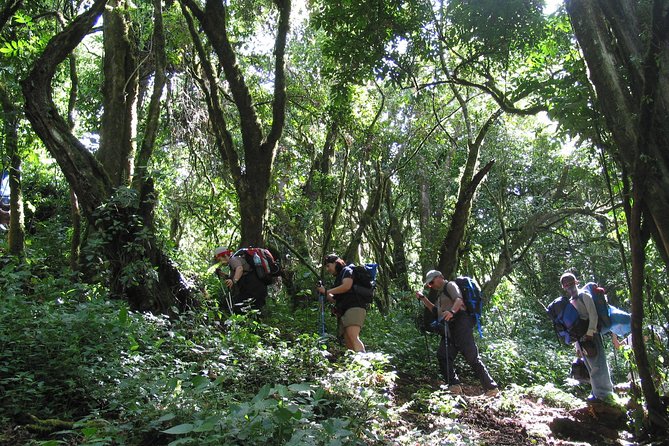
The climb begins at Londorossi on the western slopes. From there, you enter the Lemosho Glades and walk through montane forest for about four hours to Tusker Camp near Mti Mkubwa.
This is one of the most appealing sections of the route. The forest is thick and tall, with Hartlaub’s turacos and colobus monkeys adding sound and movement overhead. The guides use Eddie and Amy Frank’s field guide to identify plants, which gives the walk more purpose than simply counting the hours to camp.
Day 4 changes the mood. You leave the forest and climb toward the Shira Plateau, a caldera formed when one of Kilimanjaro’s original three peaks collapsed. The day lasts about eight hours, including a lunch break, and reaches the caldera edge at roughly 11,560 feet.
You should expect the scenery to open up as the trees disappear. Heath and moorland replace forest, and Kibo Peak comes into view for the first time. It is a long day, but it serves an important purpose: you gain altitude while still moving at a manageable pace.
Days 5 and 6: Shira, Moir Camp, and Lava Tower
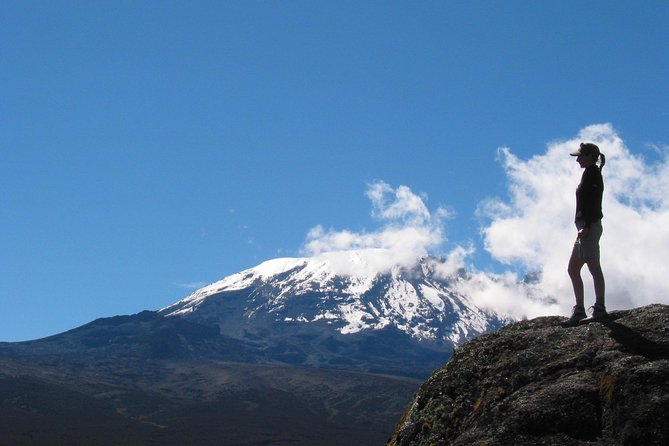
Day 5 crosses the Shira Plateau toward Moir Camp. The route heads northeast across rough ground and passes beneath a large lava flow. A hot lunch at Fisher Camp breaks up the eight-hour day.
This section is less about famous landmarks and more about steady adjustment. The plateau can feel broad and exposed after the forest. You are walking high, but the summit is still ahead, which helps keep the pressure off.
Day 6 is a key altitude day. You climb into the Alpine zone toward Lava Tower at 15,200 feet, stopping for lunch near the 320-foot formation. Then comes a steep descent of about 2,000 feet into Barranco Canyon.
That up-and-down pattern is valuable because you reach a high point during the day and sleep lower at night. It can help your body adjust, though it does not make the day easy. The descent leads into a striking area filled with giant senecios and lobelias, ending at camp below Barranco Wall.
Barranco Camp is where the mountain starts to feel more serious. The wall rises above camp, and the next morning’s climb is clearly visible. You do not need technical climbing skills for the route described, but you should be comfortable using your hands at times and moving carefully over uneven rock.
More Kilimanjaro routes and climbs:
- Kilimanjaro climb by Lemosho Route (7-day)
★ 5.0 · 651 reviews - Kilimanjaro climb, Machame Route (7-day)
★ 5.0 · 262 reviews - Kilimanjaro Climbing Lemosho Route 8 Days.
★ 5.0 · 186 reviews - Climbing Kilimanjaro – Machame Route
★ 5.0 · 170 reviews
Days 7 and 8: Barranco Wall to Barafu High Camp
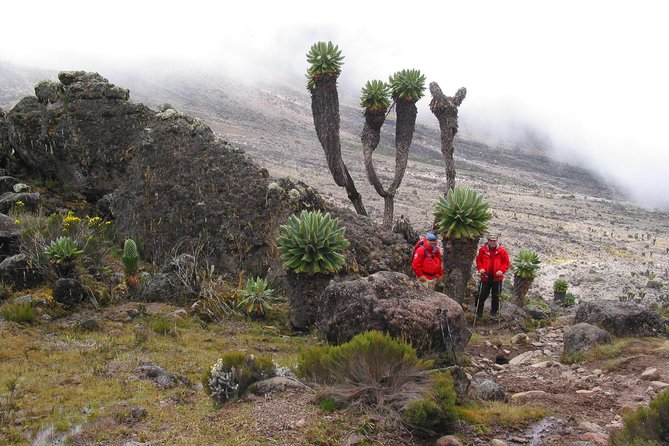
Day 7 begins with the climb up Barranco Wall. This is a physical and exciting section, though the schedule lists only about five hours of walking. The route then drops sharply into Karanga Valley before climbing again to Karanga Camp.
That repeated climb and descent can be tiring, especially after several nights at altitude. The reward is a strong view of Kibo and a sense that you are now moving into the final stage of the ascent.
Day 8 is shorter at about four hours, but the thin air changes the effort. You walk slowly over rocky ground toward Barafu High Camp, taking more breaks as needed. Barafu means ice in Swahili, and the camp is described as cold and exposed, with Mawenzi Peak behind you.
This is not a day to spend energy trying to prove anything. Eat, drink, rest, and organize your summit clothing. Your summit start comes before sunrise, so the practical work done at Barafu matters. The electric mood of camp may be exciting, but sleep is more useful than late-night conversation.
Day 9: Uhuru Peak and the hardest hours
Summit day begins before sunrise. The climb from Barafu is steep and demanding, with the schedule allowing about seven hours to reach the crater rim and Uhuru Peak.
You first aim for the crater rim, arriving around midday according to the planned timing. Mawenzi Peak sits behind you, while the crater and its ice walls appear ahead. From the rim, Uhuru Peak is about another hour.
Reaching Uhuru Peak gives you the highest point in Africa, but the final approach should not be underestimated. Cold, thin air and accumulated fatigue can turn a short distance into a long effort. Your guides and support team are especially important here. Tusker places heavy emphasis on High Altitude First Responder guides, and safety is one of the most praised parts of the company’s operation.
The itinerary offers a choice after the summit. You may descend into the crater and camp below the summit, or continue down to Barafu Camp. Crater camping adds a rare high-altitude experience, but it also means spending the night in a very cold, demanding setting. Ask Tusker exactly how this option affects the schedule, equipment, price, and safety plan.
Days 10 and 11: a long descent and a proper celebration
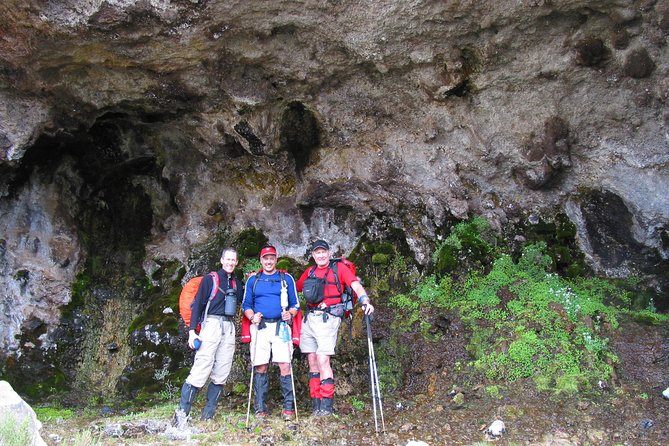
Day 10 starts with a descent through scree. After about two hours, you return to Barafu for lunch, then continue to Millennium Camp. The total walking time is listed as six hours.
Downhill does not mean effortless. Loose scree can be hard on your knees and ankles, and the summit effort may catch up with you. Millennium Camp gives you a final night on the mountain before the last walk out.
On Day 11, you hike downhill from Millennium Camp to the national park gate. You sign out, then take a short ride back to Bristol Cottages Hotel in Moshi. A hot shower, cold drink, and group dinner provide the right ending to the climb.
The social side matters here. Several past accounts praise the crew’s warmth, professionalism, and care from start to finish. One account describes a support team of 21 people for three climbers, while another highlights the quality of the equipment and food. Staffing can vary by departure, but these details show the level of support Tusker aims to provide.
Food, tents, and the people behind the climb
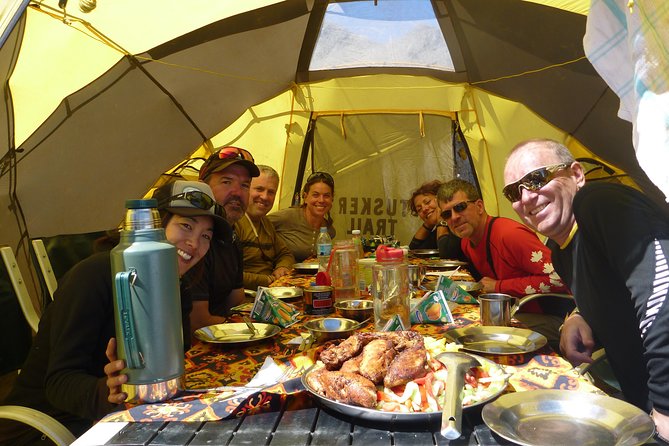
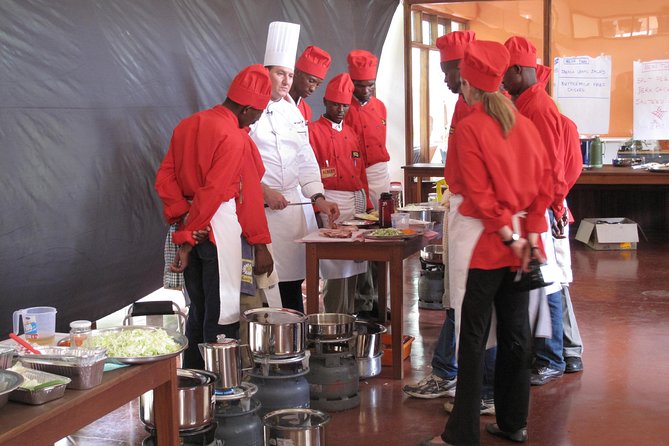
Food can make or break a high-altitude trip. Tusker says its mountain chefs have Culinary Institute of America training and serve farm-to-table meals designed to fuel the climb. The listed package includes 12 breakfasts, 12 lunches, and 10 dinners.
That is a strong inclusion for a 13-day program. You are not buying a basic transport service with a guide and a tent. Meals, camp support, and mountain logistics are part of the value. Past accounts repeatedly praise the cooking, with one calling it a major reason the climb succeeded.
Tusker also describes custom walk-in tents. These matter because you need a place to sit, change, eat, and recover rather than simply crawl into a small sleeping shelter after a long day.
The company says it pays its crew at the highest level, provides pensions and medical benefits, and supports families. It also works with the local Lions Club on community projects, including a school for deaf children. If responsible tourism is important to you, ask for current details on wages, porter treatment, and how your specific departure is staffed.
Days 12 and 13: Lake Manyara and the safari add-on
The final part shifts from mountain walking to wildlife. Day 12 takes you to Lake Manyara National Park, with accommodation at a traditional wildlife lodge on the edge of the Rift Valley escarpment.
The setting is a fine change of pace after the mountain. Instead of cold camps and thin air, you have broad views over the African plains and a lodge base for safari activities. The supplied plan does not list specific animals, game-drive times, or the name of the lodge, so you should ask for those details before booking.
Day 13 continues the safari experience for about six hours. If you choose the safari option, transfers take you to another gate for short flights toward the Serengeti, Ngorongoro Crater, Tarangire, and Lake Manyara. The plan also mentions the option of flying to Zanzibar.
This section needs the most clarification. The experience is marketed as a climb and safari, but the exact safari length, park combination, flights, lodge category, and included activities are not fully spelled out. Make sure you know if the $8,188 price covers only the Lake Manyara portion or also the additional parks and flights.
If you are flying home directly, a driver collects you from the lodge with enough time to reach the airport and check in. That transfer is useful after a demanding trip, but you should still confirm the airport, departure time, and any domestic flight arrangements.
Is $8,188 good value?
The price is high, but it reflects a full-service private climb rather than a bare-bones ascent. You receive airport pickup, Moshi hotel stays, mountain guiding, meals, camp support, the climb itself, and a safari component. The program is also private, meaning only your group participates, though the exact number of climbers is not stated.
The strongest value comes from support and preparation. A slow route, specialist guides, organized food, custom tents, and a company with decades on Kilimanjaro can reduce the stress of managing a complicated climb yourself.
The weak point is uncertainty around what is included after the mountain. Gear and clothing rental are extra, and the safari description leaves several important costs unclear. Ask for a written list covering park fees, lodge nights, internal flights, transfers, tips, rental equipment, and the exact number of safari days.
Who should book this Kilimanjaro trip?
I would suggest this trip to you if you want a carefully supported climb and place high value on safety, food, crew care, and a gradual route. It suits a fit, determined person who accepts that summit day will be difficult and that comfort on the mountain has limits.
It is less suitable if you want a low-cost Kilimanjaro option, a short trek, or a clearly defined luxury safari package with every lodge and flight already itemized. You also need to be ready for long walking days, cold camps, steep sections, and altitude.
The cancellation terms are generous if your plans change: you can receive a full refund when you cancel at least 24 hours before the local start time. A weather cancellation offers a different date or a full refund, but late changes are not accepted.
Should you book it?
Book this Tusker Trail program if your priority is a high-support Lemosho climb with serious attention to meals, guides, equipment, and crew welfare. The route is long enough to give you a sensible altitude schedule, and the safari finish adds variety after the summit.
Before committing $8,188, get the safari details and gear costs in writing. If those items match your expectations, this is a strong choice for someone who wants Kilimanjaro handled by an experienced specialist rather than assembled piece by piece.
FAQ
How long is the Kilimanjaro and safari experience?
The planned duration is 13 days. The schedule includes arrival and preparation in Moshi, the mountain climb, the descent, and two days connected with Lake Manyara and optional safari travel.
Where does the experience begin?
The experience begins in Moshi, Tanzania. Airport pickup is offered, and the first accommodation listed is Bristol Cottages Hotel.
Which Kilimanjaro route is used?
The climb uses the Lemosho Route. It begins at Londorossi on the western slopes, crosses the Shira Plateau, and continues through Barranco, Karanga, and Barafu to Uhuru Peak.
Is the tour private?
Yes. The activity is described as private, with only your group participating. The exact group size is not specified.
Are meals included?
Yes. The package lists 12 breakfasts, 12 lunches, and 10 dinners. Meals are included during the scheduled experience, though the exact menu is not provided.
Is climbing gear included?
No. Climbing gear and clothing rental are not included in the listed price. You are advised to contact Tusker Trail for rental details.
Can I camp in Kilimanjaro’s crater?
The Day 9 plan says you may choose to descend into the crater and camp for the night, or continue down to Barafu Camp. Confirm the current availability, cost, equipment, and safety arrangements with Tusker Trail.
What happens if bad weather cancels the experience?
If poor weather causes the experience to be canceled, you are offered a different date or a full refund. For a personal cancellation, you must cancel at least 24 hours before the local start time for a full refund.
More Safaris
- 8-Day Essence of Tanzania Safari – Luxury
★ 5.0 · 72 reviews - Great Migration Safari In Tanzania
★ 5.0 · 71 reviews - Serengeti, Ngorongoro and Tarangire 4 Days Safari
★ 5.0 · 59 reviews - 6 Days 5 Night Safari
★ 5.0 · 57 reviews
Just added around Moshi
- Moshi: Lake Chala Tour: Hiking &/or Kayaking★ 4.5 · 3 reviews
- 3 Days Tanga Exclusive Beach Holiday★ 5.0 · 3 reviews
- Serengeti Wildebeest Migration.★ 5.0 · 3 reviews
- Chemka Hotpsrings E-Bike Day Trip★ 5.0 · 3 reviews
- Explore 1 day Ngorongoro Crater Budget Group Safari from Arusha★ 5.0 · 3 reviews
- Explore the 360° of Kilimanjaro★ 5.0 · 3 reviews
- Affordable Short Tanzania Safari (2 Days Camping Safari)★ 5.0 · 3 reviews
- Rongai Route 7 Days★ 5.0 · 3 reviews
Kilimanjaro Treks, compared.



8-Day Small-group Lemosho Kilimanjaro Summit Trekking
Read our review →


Climbing Kilimanjaro through 7 days Machame Route
Read our review →

Browse the lists this tour appears in