
Reviewed · KILIMANJARO TREKS
Kilimanjaro Lemosho Route 7 Days
Africa rewards patience. This 7-day Kilimanjaro Lemosho trek appeals to me for two clear reasons: its trek high, sleep low route design and its changing scenery, from pine forest to volcanic desert and glacier views. I also like the level of camp support, including hot washing water, a private flush toilet tent, emergency oxygen, and a Gamow bag. The main drawback is simple: seven days makes for a demanding climb, especially on summit night.
At $2,500 per person, the trip includes park fees, porters, cooks, guides, meals, camping, airport transfers, hotel nights, and medical safety equipment. That is a substantial price, but much of it covers the hard-to-see work behind a responsible Kilimanjaro climb. Past feedback gives Jaribu Africa Adventures high marks for smooth organization, friendly staff, and guides who went beyond expectations, with Jacob and Joseph singled out for their care and commitment.
In This Review
- Key points to know before you book
- Why the Lemosho Route is worth considering
- Day 1: Londrossi Gate to the first mountain camp
- Day 2: Forest, giant heather, and the Shira Plateau
- Day 3: Shark’s Tooth and the high desert
- Day 4: Lava Tower, then down to Barranco
- Day 5: The Great Barranco Wall and Karanga Valley
- Day 6: Stella Point, Uhuru Peak, and the long descent
- Day 7: Mweka rainforest and the finish
- Camp comfort, guides, and group arrangements
- Is $2,500 good value?
- Who should choose this seven-day climb?
- Should you book the Kilimanjaro Lemosho Route?
- FAQ
- How long is the Kilimanjaro Lemosho Route experience?
- Is hotel accommodation included?
- What meals are provided?
- Does the tour include airport transfers?
- What level of fitness is required?
- What happens if bad weather cancels the climb?
Key points to know before you book
- Lemosho gives you a gradual start: You begin at 1,981 meters and move through forest, moorland, alpine desert, and the summit zone.
- The route uses altitude wisely: You climb to Lava Tower at about 4,530 meters, then descend into Barranco Valley to sleep lower.
- Summit night is a serious test: Expect a midnight departure, about six hours to Stella Point, then another two hours to Uhuru Peak.
- Barranco Wall adds real adventure: The climb is a non-technical rock scramble, but it still demands steady feet and a good head for heights.
- Camp support is unusually well equipped: You get a mess tent, private flush toilet tent, wash water, mattresses, emergency oxygen, and vital sign checks.
- The trek ends through rainforest: Mweka Route brings a steep, sometimes slippery descent before transport back to your hotel in Arusha.
Why the Lemosho Route is worth considering
Kilimanjaro is not a technical mountain climb in the usual sense, but it is a serious high-altitude trek. You do not need ropes or advanced climbing skills here, yet you still need endurance, patience, and the ability to keep walking when the air gets thin.
Lemosho works well because it does not rush you straight toward the summit. The route begins lower, crosses several plant and climate zones, and then uses a high-altitude acclimatization day around Lava Tower. That pattern gives your body more time to adjust than a fast ascent would.
I particularly like the route’s trek high, sleep low approach. On Day 4, you climb to Lava Tower for lunch and panoramic views, then drop more than 600 meters into Great Barranco Valley. That is tiring, but it is useful preparation for the summit.
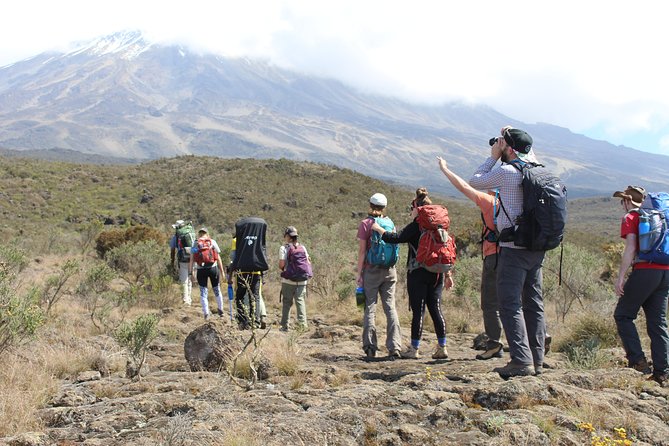
The route also travels counter-clockwise beneath Kibo, Kilimanjaro’s main volcanic cone. You see the mountain from different angles rather than simply following one uphill corridor. On clear days, Mawenzi Peak, the Shira Plateau, the Western Breach, Heim Glacier, and the southern valleys all add variety to the walk.
More Kilimanjaro routes and climbs:
- Kilimanjaro climb by Lemosho Route (7-day)
★ 5.0 · 651 reviews - Kilimanjaro climb, Machame Route (7-day)
★ 5.0 · 262 reviews - Kilimanjaro Climbing Lemosho Route 8 Days.
★ 5.0 · 186 reviews
Day 1: Londrossi Gate to the first mountain camp
Your day begins after breakfast with a four-wheel-drive transfer to Londrossi Gate. The team handles park registration there, and every duffle bag is weighed so each porter carries no more than the mandatory 20-kilogram limit.
That detail matters. A well-run mountain trip depends on fair porter loads, and the stated arrangements include fair and ethical treatment of porters. You may have lunch at the gate, depending on weather and the day’s schedule.
From Londrossi, the vehicle continues for about 11 kilometers along narrow dirt roads through pine plantations to the Lemosho Glades. The hike then covers roughly 7 kilometers in four to five hours, rising from 1,981 meters to about 2,780 meters.
This first walk passes through mountain forest and gives you a manageable opening day. You are not asked to perform at your limit right away, which is welcome after the road transfer and park formalities.
Day 2: Forest, giant heather, and the Shira Plateau
Day 2 is longer, with about 12 kilometers of walking over seven hours. The trail leaves the forest and enters the moorland zone, where giant heather and erica replace the denser lower vegetation.
As you gain height, look for Kilimanjaro’s unusual giant plants, including giant lobelia and giant groundsel. These plants make the mountain feel unlike an ordinary highland walk. You gradually leave behind familiar woodland and move into a more open, strange-looking world.
The route follows narrow tracks that weave across ridges before reaching Shira Camp at about 3,511 meters. The climb is steady rather than explosive, and the guiding philosophy is pole pole, Swahili for slowly slowly.
That pace is not just a cultural greeting. It is the sensible way to handle altitude. You may feel capable of walking faster at this stage, but saving energy and allowing gradual adjustment will matter later.
The main challenge is the length of the day. Seven hours on uneven tracks can feel much longer if you have not trained for sustained uphill walking. Keep your water accessible, follow the guide’s pace, and do not treat an easy-feeling morning as permission to race ahead.
Day 3: Shark’s Tooth and the high desert
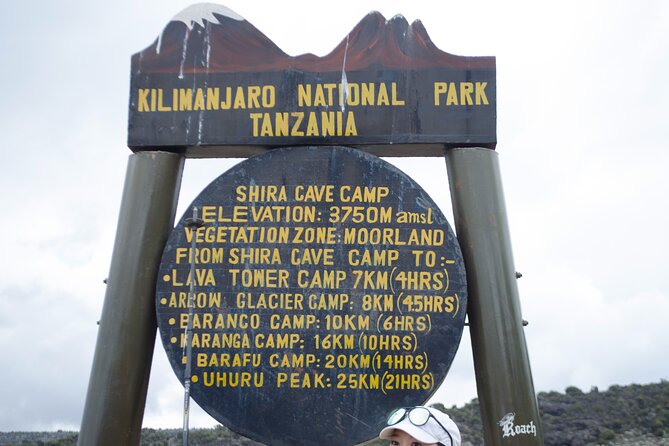
From Shira Camp, you walk north for about 9 kilometers over five to six hours. The route moves through heather and into the alpine desert, with the natural landmark known as Shark’s Tooth along the way.
At about 4,175 meters, the surroundings become harsher. Only hardy everlasting flowers and small senecios survive here, and the Lent Group, a collection of large volcanic dykes, rises nearby.
The trail climbs a ridge, enters a valley, and then continues upward to camp. You should arrive around lunchtime, giving you some time to rest in the high desert.
This is an important acclimatization day even though the walking distance is moderate. The air is thinner, the ground is rockier, and the lack of vegetation makes the height feel more obvious. You might find the scenery stark rather than conventionally pretty, but the exposed volcanic setting is one of the route’s strongest features.
The description also refers to a large circular bowl created by glacial action. Conditions and cloud cover will determine how much you see, so keep your expectations flexible. Mountain views are never guaranteed on schedule.
A few more trips of this kind worth comparing:
- Climbing Kilimanjaro through 7 days Machame Route
★ 5.0 · 151 reviews - 7 Days Kilimanjaro via Machame route affordable price
★ 5.0 · 110 reviews - Private Kilimanjaro Hike 7 Day Lemosho Route
★ 5.0 · 60 reviews - 7-Day Magical Tanzania Safari -Premium High End Package
★ 5.0 · 53 reviews
Day 4: Lava Tower, then down to Barranco
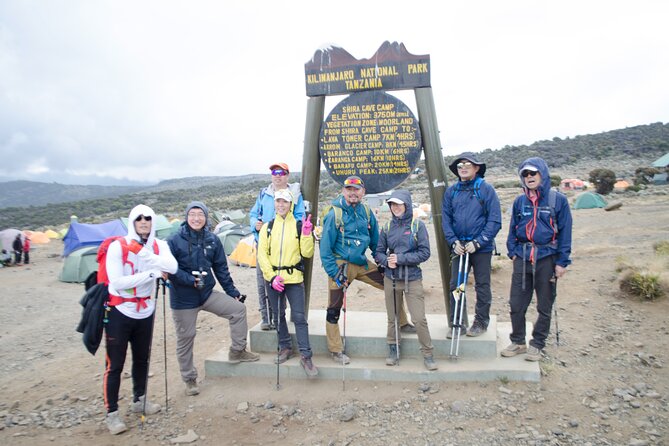
Day 4 is the route’s classic high-and-low acclimatization day. You leave camp at around 4,175 meters, cross rocky scree, and climb to Lava Tower at about 4,530 meters for lunch.
You can also attempt an optional, non-technical rock scramble to the top of Lava Tower. From there, the views may reach across Karanga Valley, the Shira Plateau, and the Western Breach. I would treat this scramble as optional for a reason. If you feel tired, dizzy, or short of breath, resting is the wiser choice than collecting one more viewpoint.
After Lava Tower, the trail drops steeply for roughly two hours and more than 600 meters into Great Barranco Valley. This descent can be tough on knees, but it serves the route’s main altitude strategy: climb high, then sleep lower.
The day covers about 6 kilometers and takes around five to six hours. You finish in an alpine desert setting, with the huge Barranco Wall rising above camp. It is a satisfying day because the terrain changes quickly, and you gain a clear sense of how close you are getting to the upper mountain.
Day 5: The Great Barranco Wall and Karanga Valley
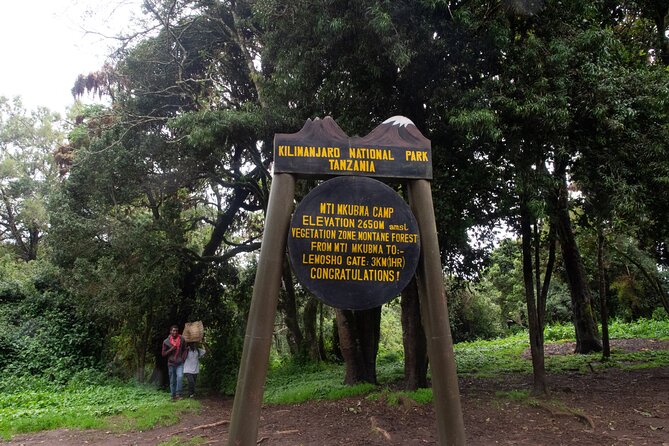
The Great Barranco Wall is the most exciting physical feature before the summit. The path climbs steadily up the eastern face, passing below Heim Glacier and offering possible views of the glacier and upper slopes when clouds stay away.
This is a rock scramble, not a technical climb. Still, you will use your hands in places, and the route may feel exposed. Move slowly, watch your footing, and follow the guide’s instructions rather than trying to pass other people.
After the wall, the route drops into the alpine desert of Karanga Valley and then climbs again toward higher camp. The day covers about 9 kilometers in six to seven hours, with the repeated up-and-down sections making it more tiring than the distance suggests.
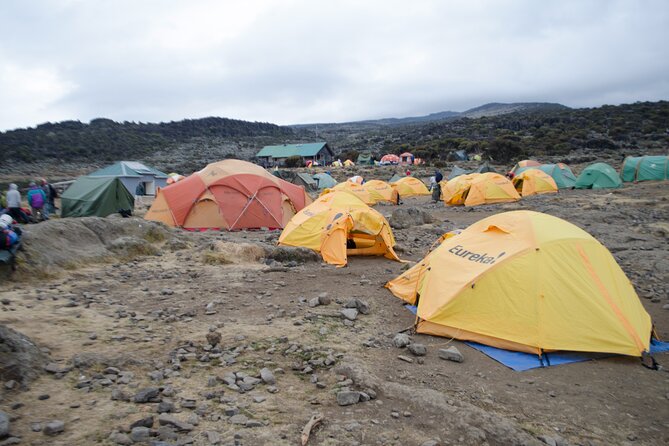
Temperatures will grow colder as you gain height. Your sleeping bag, warm layers, gloves, and water management now matter more than they did in the forest. The camp setting is functional rather than luxurious, but the package includes a mess tent, a mountaineering mattress, hot washing water morning and evening, and a hot towel at camp.
You also receive healthy meals in large portions, with breakfast, lunch, and dinner provided each day. At altitude, eating can be difficult, so reliable food and warm drinks are not minor comforts. They help you maintain the energy needed for summit night.
Day 6: Stella Point, Uhuru Peak, and the long descent
Summit day begins around midnight. After a warm drink and light snack, you start the slow climb toward the crater rim.
This is the hardest part of the trek. The ascent to Stella Point at 5,685 meters takes about six hours, depending on pace, weather, and how your body handles the altitude. The trail is steep and strenuous, with the darkness hiding much of the slope until daylight arrives.
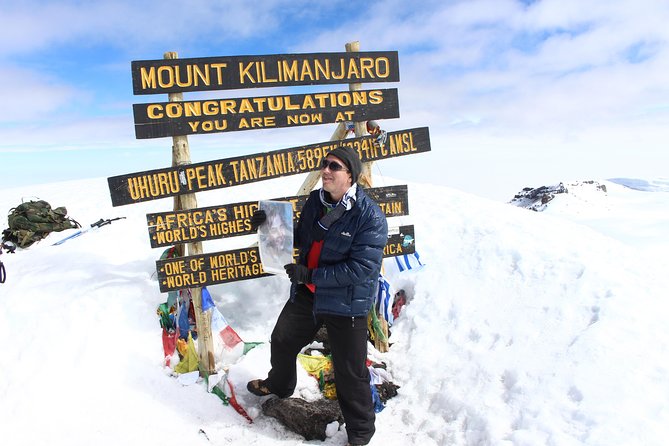
At Stella Point, you rest, eat, and look out across the clouds. From there, the final approach to Uhuru Peak takes about two more hours and is normally snow-covered. The route passes near the blue Rebmann and Tarzel glaciers before reaching the summit area at 5,882 meters.
The total day lasts around 12 hours and includes the summit push followed by descent. That combination is what catches many fit hikers by surprise. Reaching the top is only half the day, and you still need to descend to camp or a lower point afterward.
The reward is the roof-of-Africa summit experience, along with views of Mawenzi Peak and Kilimanjaro’s volcanic cone when the weather cooperates. The package even includes wine and champagne for the summit celebration, an unusual touch after such a long effort.
Safety support is a major part of the price. The expedition includes a two-way radio, mobile phone, pulse oximeter, emergency oxygen, comprehensive vital sign monitoring, a medical kit, and a Gamow bag. A wilderness first responder trained guide or equivalent assistant guide is also included.
Medical evacuation with AMREF Flying Doctors is listed, but extra evacuation or medical costs can still apply in certain situations. Read that distinction carefully and make sure your own insurance covers high-altitude trekking and evacuation.
Day 7: Mweka rainforest and the finish
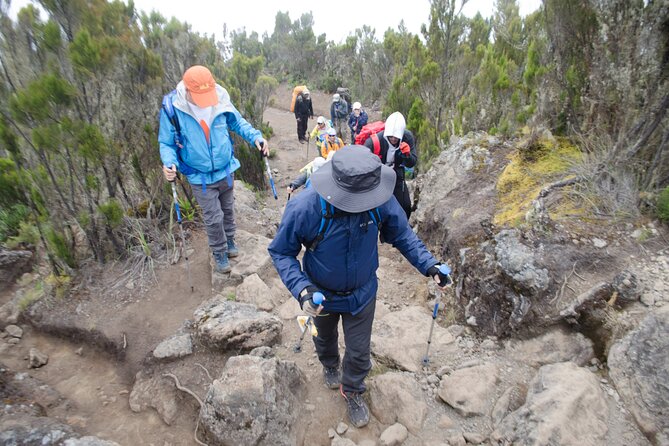
The final day takes you down through the Mweka rainforest. The walk lasts about five to six hours and covers roughly 13.5 kilometers, so your legs still have work to do after summit day.
The trail is steep in places and can become slippery when wet. It follows the crest of a broad ridge between two river valleys before reaching a road for the final 40-minute walk to Mweka Park Gate.
At the gate, you stop for a picnic lunch. Successful hikers receive certificates from the Kilimanjaro National Park Authority, with gold for Uhuru Peak and green for Stella Point.
After the celebrations, a private bus or Jeep takes you to your hotel in Arusha. The trip includes two nights of bed-and-breakfast accommodation at either Ameg Lodge or Salinero Hotels, along with airport transfers and the return transfer between the Arusha hotel and park gate.
The final descent is not glamorous, but it is a good ending. You move from cold volcanic slopes back into thick forest, and the change happens quickly. Expect mud, tired knees, and a strong desire for a shower.
Camp comfort, guides, and group arrangements
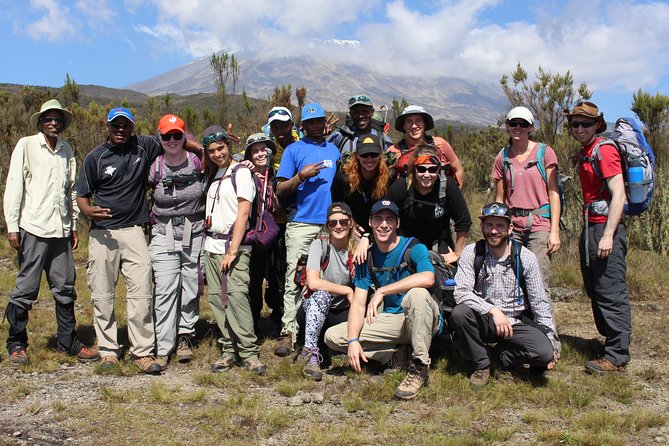
This is a private tour, so only your own group participates. That can make the pace and daily routine easier to manage than a large shared departure. The tents sleep two clients in three-person expedition tents, giving you some extra room for bags and equipment.
The camp setup includes a walk-in mess tent, lightweight tables, comfortable chairs with backrests, a shower and wash tent, and a private portable flush toilet. You should not confuse this with a lodge-based trek, but these facilities make seven days in the mountain much more manageable.
The company also supplies purified water while you are on the mountain. Personal trekking equipment is not included, so you need to budget for suitable clothing, boots, sleeping gear, and other essentials.
Jaribu Africa Adventures has earned especially strong praise for organization from airport pickup through hotels and the trek itself. Jacob is singled out for knowledge, enthusiasm, and commitment, while Joseph is connected with a well-organized bespoke Tanzania trip. Another account describes the company as reliable, professional, friendly, and good value.
I would still ask who your lead guide and assistant guide will be before booking. The safety equipment is strong on paper, but the quality of your day-to-day experience depends heavily on communication, pacing, and how carefully the team responds to altitude symptoms.
Is $2,500 good value?
At first glance, $2,500 is not a cheap mountain holiday. The value becomes clearer once you account for Kilimanjaro National Park entrance, camping, rescue fees, government taxes, VAT on park entrance fees, meals, camp staff, porters, cooks, guides, transfers, and hotel accommodation.
You also receive equipment and support that many budget trips either omit or provide at a lower standard. The mess tent, private toilet tent, emergency oxygen, Gamow bag, medical monitoring, radio, and AMREF Flying Doctors coverage are meaningful inclusions.
The price does not cover international flights, visas, personal trekking equipment, laundry, room service, souvenirs, immunizations, communication charges, staff gratuities, or some medical and evacuation costs. Add those expenses before deciding that the headline price is your full budget.
Free cancellation is available up to 24 hours before the local start time. A poor-weather cancellation offers a different date or full refund, which gives you some protection, but last-minute changes inside 24 hours are not accepted.
Who should choose this seven-day climb?
I would recommend this route to someone with moderate physical fitness who wants a supported Kilimanjaro climb and is ready for long days at altitude. You should be comfortable walking for several hours, carrying your daypack, sleeping in tents, and continuing through cold or wet conditions.
It suits you especially well if scenery matters as much as the summit. The forest, giant heather, Shira Plateau, volcanic dykes, Lava Tower, Barranco Wall, glaciers, and rainforest finish provide far more variety than a simple uphill march.
I would hesitate if you want a relaxed holiday, dislike camping, or expect every day to feel manageable. The 12-hour summit day is a genuine endurance test, and the steep final descent can be rough on tired legs.
Should you book the Kilimanjaro Lemosho Route?
Book this trek if you value a carefully supported private climb, changing mountain scenery, and an altitude plan that includes sleeping lower after the Lava Tower ascent. The combination of ethical porter limits, medical equipment, full meals, hotel nights, and organized transfers gives the $2,500 price solid value.
Before paying, confirm the exact hotel, the names and qualifications of your guides, the gratuity expectations, and what your insurance covers for evacuation. If you are fit, patient, and willing to walk pole pole, this seven-day Lemosho route offers a strong balance of adventure, scenery, and practical support.
FAQ
How long is the Kilimanjaro Lemosho Route experience?
The climb lasts approximately seven days. Hiking times range from four or five hours on shorter days to about 12 hours on summit day.
Is hotel accommodation included?
Yes. Two nights of bed-and-breakfast accommodation are included at either Ameg Lodge or Salinero Hotels.
What meals are provided?
Breakfast, lunch, and dinner are provided for seven days. Purified water is also supplied while you are on the mountain.
Does the tour include airport transfers?
Yes. Airport transfers and the return transfer between the Arusha hotel and the park gate are included.
What level of fitness is required?
The experience requires a moderate physical fitness level. You should be prepared for long hikes, steep sections, a non-technical scramble on Barranco Wall, and a demanding summit day.
What happens if bad weather cancels the climb?
If poor weather causes cancellation, you will be offered a different date or a full refund. For a normal cancellation, you must cancel at least 24 hours before the local start time for a full refund.
Just added around Moshi
- Moshi: Lake Chala Tour: Hiking &/or Kayaking★ 4.5 · 3 reviews
- 3 Days Tanga Exclusive Beach Holiday★ 5.0 · 3 reviews
- Serengeti Wildebeest Migration.★ 5.0 · 3 reviews
- Chemka Hotpsrings E-Bike Day Trip★ 5.0 · 3 reviews
- Explore 1 day Ngorongoro Crater Budget Group Safari from Arusha★ 5.0 · 3 reviews
- Explore the 360° of Kilimanjaro★ 5.0 · 3 reviews
- Affordable Short Tanzania Safari (2 Days Camping Safari)★ 5.0 · 3 reviews
- Rongai Route 7 Days★ 5.0 · 3 reviews
Kilimanjaro Treks, compared.



8-Day Small-group Lemosho Kilimanjaro Summit Trekking
Read our review →


Climbing Kilimanjaro through 7 days Machame Route
Read our review →

Browse the lists this tour appears in