
Reviewed · KILIMANJARO TREKS
Kilimanjaro Lemosho Route 7 Days
Africa’s highest peak rewards patient hikers. This seven-day private climb follows the quieter western approach to Kilimanjaro, then crosses Shira Plateau before joining the route toward Barranco, Barafu, and Uhuru Peak. I like the private format, which gives your group more room to set its pace, and I like the serious safety package, including oxygen, radios, a Gamow Bag, and daily pulse-oximeter checks. The main drawback is the schedule: summit day combines a long ascent with a long descent, so you need solid fitness and a calm attitude toward fatigue.
The price is $2,669.88 per person, a substantial sum, but it covers much more than a guide and a campsite. Park fees, transport, hotel nights, food, tents, porters, rescue fees, and specialist safety equipment are included. I would still ask the operator to clarify the exact hotel category before paying, since the package description refers to both classic standard and comfort accommodation.
In This Review
- The important facts at a glance
- Why Lemosho makes sense for a seven-day climb
- Day one: Londorossi Gate to Mti Mkubwa Camp
- Day two: Mti Mkubwa, Shira Camp 1, and Shira Camp 2
- Day three: Shira Camp 2 to Barranco Camp
- Day four: The Barranco Wall and Karanga Valley
- Day five: Karanga Valley to Barafu Camp
- Day six: Uhuru Peak, Barafu, and Mweka Camp
- Day seven: Mweka Camp to the park gate
- Safety, food, and camp comfort
- What the $2,669.88 price really covers
- Who should book this Kilimanjaro climb?
- Should you book it?
- FAQ
- How long is the Kilimanjaro Lemosho climb?
- Is this a private tour?
- What is the highest point reached?
- Is pickup included?
- Are park fees and rescue fees included?
- Are meals included?
- Is drinking water provided?
- What safety equipment is included?
- Can I cancel for a full refund?
The important facts at a glance
- A quieter western approach: The first two days use the Lemosho side of Kilimanjaro, where you can expect a less crowded start than the better-known southern routes.
- A strong safety setup: Emergency oxygen, VHF radios, a Gamow Bag, a pulse-oximeter, and mountain rescue fees are included.
- A demanding summit schedule: Day six takes you from Barafu Camp to Uhuru Peak, back through Barafu for a short rest, and onward to Mweka Camp.
- Comfortable camp support: Waterproof tents, sleeping mats, solar LED lights, a dining tent, tables, chairs with backs and armrests, and a private flash toilet are provided.
- Food is treated as fuel: Fresh meals, fruit, carbohydrates, and special diets such as vegetarian, vegan, Halal, and Kosher options are available.
- A fully private trip: Only your own group participates, with arrival and departure transfers included.
Why Lemosho makes sense for a seven-day climb
Lemosho is a smart choice if you want a quieter beginning and a route that builds gradually toward the summit. The opening days pass through the western side of Kilimanjaro before the route reaches Shira Camp and links with the higher camps.
The seven-day version is not leisurely. It gives you several nights to gain height, but you still move from roughly 2,385 meters at the park gate to 5,895 meters at Uhuru Peak in less than a week. That makes pacing important. Your guides should keep the walking speed slow, watch your condition, and encourage steady hydration.
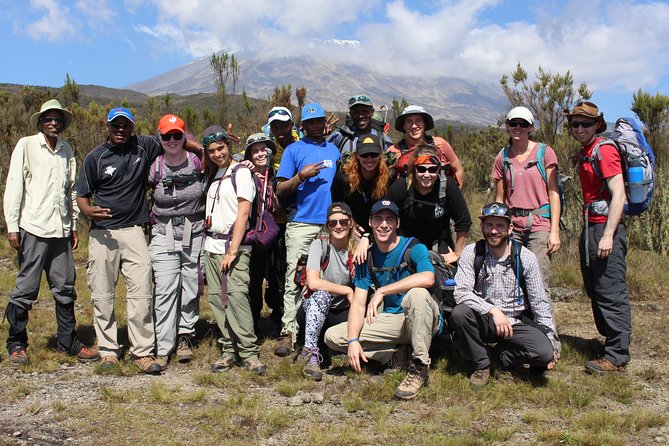
The private setup helps here. Your group does not need to match the speed of strangers, and you can ask questions more freely. If one person needs a short break, the day does not have to revolve around a large mixed party.
Still, private does not mean easy. You will sleep in tents, walk on uneven mountain paths, and cope with cold, thin air at high camp. The package is designed to support you, not remove the physical challenge.
More Kilimanjaro routes and climbs:
- Kilimanjaro climb by Lemosho Route (7-day)
★ 5.0 · 651 reviews - Kilimanjaro climb, Machame Route (7-day)
★ 5.0 · 262 reviews - Kilimanjaro Climbing Lemosho Route 8 Days.
★ 5.0 · 186 reviews
Day one: Londorossi Gate to Mti Mkubwa Camp
Your first mountain day begins with a drive to Londorossi Park Gate at 2,385 meters, or 7,825 feet. This is where park entry formalities take place before you begin walking toward Mti Mkubwa Camp at about 2,700 meters.
The planned hike is around 8 kilometers and three to four hours. Compared with later days, that is a gentle introduction. You have time to adjust to the rhythm of walking, carrying your day pack, and camping at altitude.
Mti Mkubwa means Big Tree Camp, and the name fits the forest setting. The first day is less about dramatic views and more about getting your body and mind ready. I would use it to check your boots, water system, rain gear, and sleeping arrangements before the trail becomes more demanding.
You can expect a camp supported by waterproof tents, sleeping mats, lighting, washing water, and meals. Warm water for washing is a small luxury here. It will not replace a shower, but it makes the first night far more pleasant.
Day two: Mti Mkubwa, Shira Camp 1, and Shira Camp 2
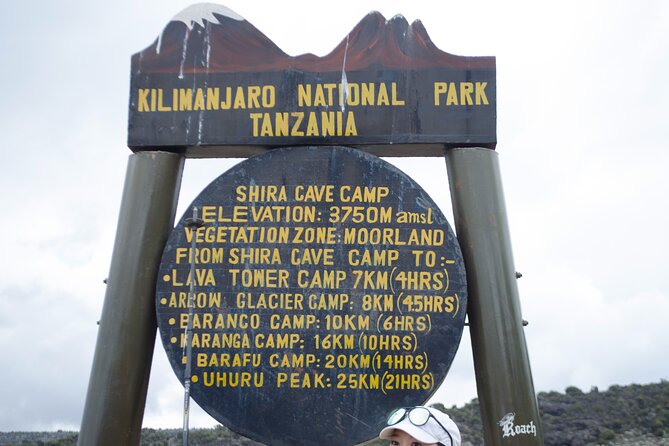
Day two covers the largest amount of vertical gain so far. You first climb from Mti Mkubwa to Shira Camp 1 at 3,500 meters, or 11,483 feet. The stated walking time is five to six hours over about 6 kilometers, followed by another three to four hours and approximately 8 kilometers toward Shira Camp 2 at 3,840 meters.
The distance figures are presented in a slightly confusing way, so I would ask your operator to confirm the exact camp plan. The key point is clear: this is a long day with a substantial height increase.
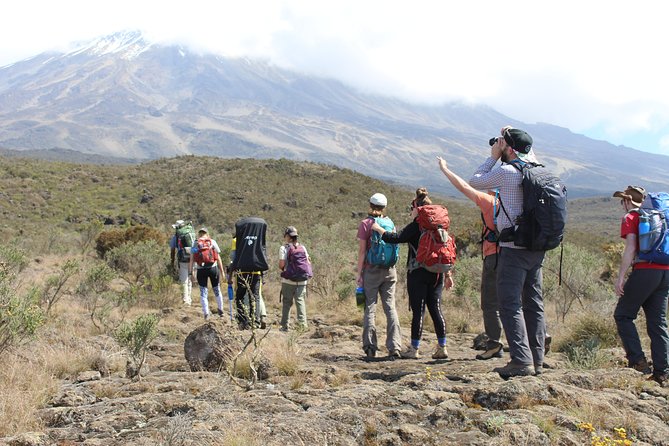
Shira Plateau changes the feel of the climb. The forest gives way to open high-country scenery, and Kilimanjaro begins to feel like a serious alpine trip rather than a forest hike. The open setting can also expose you to wind and weather, so keep your warm layers and waterproof shell close at hand.
This is one of the days when the guides’ pacing matters most. Walk slowly, eat even if your appetite drops, and drink regularly. The company provides purified water, and the cooks prepare fresh meals with carbohydrates and fruit. Past groups have singled out the food, including vegetarian meals, as one of the strongest parts of the service.
Day three: Shira Camp 2 to Barranco Camp
From Shira Camp 2, you walk to Barranco Camp at approximately 3,950 meters. The route covers about 8 kilometers and takes six to seven hours.
This day is useful for acclimatization because you gain height gradually and spend time at a higher elevation before sleeping at Barranco. The mountain scenery becomes more striking, with broad views across the high slopes and a growing sense of distance from the world below.
Barranco Camp is one of the most memorable overnight stops on this route. It sits below the Barranco Wall, a steep rock face that you tackle the next morning. Seeing that wall from camp can be intimidating, but the route is a walk rather than a technical climbing expedition.
You should expect a full day on your feet. The camp routine matters now: eat dinner, refill your water, inspect your clothing for the next morning, and get into your sleeping bag early. The flash toilet and dining tent are particularly useful at this altitude, where comfort becomes a practical issue rather than a luxury.
A few more trips of this kind worth comparing:
- Climbing Kilimanjaro through 7 days Machame Route
★ 5.0 · 151 reviews - 7 Days Kilimanjaro via Machame route affordable price
★ 5.0 · 110 reviews - Private Kilimanjaro Hike 7 Day Lemosho Route
★ 5.0 · 60 reviews - 7-Day Magical Tanzania Safari -Premium High End Package
★ 5.0 · 53 reviews
Day four: The Barranco Wall and Karanga Valley
Day four runs from Barranco Camp to Karanga Valley Camp at about 3,995 meters. The distance is only 5 kilometers, with four to five hours of hiking.
The shorter distance does not mean an easy morning. The Barranco Wall requires careful footwork and a steady pace. Your guides will help you choose a safe line, and the private format means you can take the time you need without feeling pushed by a large group.
Once above the wall, the route continues through a series of rises and dips toward Karanga Valley. This is a good example of Kilimanjaro hiking: the map may show modest distance, but the terrain and altitude add effort.
Karanga is an important rest point before the final push to Barafu. Use the afternoon well. Eat, drink, organize your summit clothing, and charge any essential devices using the available solar LED setup. Do not leave your headlamp, gloves, hat, or spare layers buried in a duffel.
Day five: Karanga Valley to Barafu Camp
The fifth day takes you from Karanga Valley to Barafu Camp at 4,550 meters, or 14,928 feet. It covers only about 4 kilometers and takes four to five hours.
Barafu means ice in Swahili, and the camp is a high, exposed base for the summit attempt. You will not find much comfort here beyond what the support team brings, but the tents, mats, dining furniture, lighting, food, and washing water make a clear difference.
This is usually a quiet afternoon because the summit schedule begins very early, often after only a short rest. The supplied itinerary does not state a precise departure time, so confirm it at your briefing.
Your main job is to save energy. Eat a proper meal, sip water, and keep your clothing ready. The guides should check your condition using the pulse-oximeter and explain the plan for the summit. Ask how your group will handle symptoms of altitude sickness and what happens if someone cannot continue.
Day six: Uhuru Peak, Barafu, and Mweka Camp
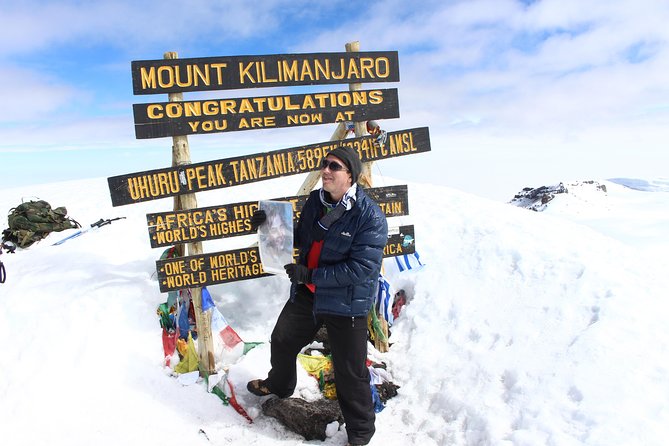
Summit day is the hardest part of the climb. From Barafu, you ascend to Uhuru Peak at 5,895 meters, or 19,341 feet. The listed ascent takes seven to eight hours and covers about 5 kilometers.
The route is slow and steep, with cold conditions and thin air. The correct approach is not speed. I would focus on small steps, regular breathing, and following the guide’s pace. The included emergency oxygen and Gamow Bag provide important backup, but they are not a substitute for honest communication about how you feel.
After reaching Uhuru Peak, you return to Barafu for a short rest. Then you continue down to Mweka Camp at 3,060 meters, adding another four to five hours and about 12 kilometers.
That descent is why this day deserves respect. Reaching the summit is only half the work. Your knees and feet may feel the strain, and loose ground can make downhill walking tiring. Use trekking poles if you have them, keep eating small amounts, and do not rush simply because the air feels easier lower down.
The porter assigned to carry your day pack during the summit attempt is a useful inclusion. Keep that small bag light and place only essential items inside: water, snacks, warm layers, gloves, sun protection, and personal medication.
Day seven: Mweka Camp to the park gate
The final day takes you from Mweka Camp to Mweka Gate. The listed walking time is four to five hours, with about 4 kilometers given for the descent.
The distance and time figures do not quite match the usual feel of a full descent, so I would confirm the exact plan with the operator. What matters for you is that the last day is still a proper hike, not just a short stroll after the summit.
At the gate, you transfer back to your previous hotel for a certificate and summit party ceremony. The hotel stop gives you a place to wash, rest, and enjoy a proper bed after several nights in camp.
The package includes hotel accommodation before and after the trek, with bed and breakfast listed, as well as full-board mountain meals. Since the description refers to both classic standard and comfort hotel nights, ask exactly how many nights fall into each category and which hotel you will use.
Safety, food, and camp comfort
The safety equipment is one of the better reasons to consider this package. Each trek carries VHF handheld radios, so the mountain team can communicate easily. Emergency oxygen, a Gamow Bag, rescue fees, and a pulse-oximeter are also included.
You should still bring personal essentials. The supplied information does not list a complete packing list, so confirm clothing, footwear, sleeping bag, trekking poles, and medical requirements before departure.
Food receives unusually strong praise in the available feedback. The cooking team provides fresh, filling meals with fruit and plenty of carbohydrates. Breakfast may include porridge, tea, coffee, eggs, bread, toast, sausages, and fruit.
Vegetarian and vegan diets are supported, and special food requests including Halal, Kosher, and allergy-related needs are available. Tell the company early, not at the gate.
Camp equipment includes waterproof tents, sleeping mats, high-powered solar LED lights, toilet tents, an aluminum dining table, and large chairs with backs and armrests. These details sound ordinary until you are tired, cold, and eating dinner at altitude. Then they matter.
What the $2,669.88 price really covers
The price is high in simple dollar terms, but the package includes the major costs of a guided Kilimanjaro climb. You receive park fees, government taxes, rescue fees, arrival and departure transfers, local transportation, guides, porters, food, camping equipment, and hotel stays.
You also receive purified drinking water and warm washing water every day. Those services reduce the number of small expenses and planning tasks you need to manage.
The company also states that porters receive fair and ethical treatment. That is worth asking about directly. You can request details about porter wages, load limits, tipping guidance, and how the team follows local porter welfare standards.
Tips are not included. Personal expenses, laundry, telephone use, drinks, a Tanzania visa, and optional trips such as a safari are also extra. Build those costs into your budget before you decide that the advertised price is your complete trip cost.
Who should book this Kilimanjaro climb?
I would recommend this route to someone with moderate physical fitness who wants a private mountain trip and values support equipment, organized meals, and hotel nights at both ends.
It suits you if:
- You prefer a quieter start than a crowded route.
- You want only your own group on the trek.
- You appreciate a slow, guided pace.
- You are comfortable camping for several nights.
- You want park fees, rescue fees, transfers, meals, and equipment bundled together.
- You can prepare for a long summit day followed by a major descent.
I would hesitate if you want a relaxed holiday with light walking. Seven days is compact for a climb to nearly 5,900 meters, and day six is genuinely demanding. I would also hesitate if you need a clear luxury hotel specification, since the accommodation wording needs confirmation.
The company has a 4.9 rating from 13 submitted ratings and a 100 percent recommendation figure. The strongest praise centers on guides such as Joseph, Ibi, Eli, Paul, Side, and Martin, as well as the cooks, porters, and trip coordinators. Names and staff can change, so treat those details as examples of the team members associated with past departures, not a guarantee that one particular guide will lead your climb.
Should you book it?
I would book this Kilimanjaro Lemosho climb if you want a private, well-supported route and understand that the price pays for a large mountain operation, not simply seven days of walking.
The best reasons to choose it are the quieter opening, the substantial safety package, the praised food, and the practical camp setup. Before booking, confirm the hotel category, exact day-two distances, final-day timing, packing requirements, porter policy, and summit departure time. If those answers suit you, this is a strong option for a serious first attempt at Uhuru Peak.
Free cancellation is available up to 24 hours before the start time for a full refund. Changes or cancellations inside that window are not accepted for a refund, and poor weather may lead to a different date or a full refund.
FAQ
How long is the Kilimanjaro Lemosho climb?
The experience lasts approximately seven days, including the mountain trek and hotel stays before and after the hike.
Is this a private tour?
Yes. Only your own group participates in the private tour or activity.
What is the highest point reached?
The climb reaches Uhuru Peak at 5,895 meters, or 19,341 feet.
Is pickup included?
Yes. Arrival and departure transfers, pickup, and transportation within the destination are included.
Are park fees and rescue fees included?
Yes. Government taxes, park entrance fees, and rescue fees on the mountain are included.
Are meals included?
Yes. Breakfast, lunch, and dinner are provided during the climb. The package lists seven breakfasts, seven lunches, and seven dinners.
Is drinking water provided?
Yes. Clean, purified drinking water is provided during the mountain portion of the experience.
What safety equipment is included?
The package includes emergency oxygen tanks, VHF handheld radios, a Gamow Bag, a pulse-oximeter, and mountain rescue fees.
Can I cancel for a full refund?
You can cancel at least 24 hours before the experience start time for a full refund. Cancellations or changes made less than 24 hours before the start time are not accepted, and poor weather may result in a different date or a full refund.
Just added around Moshi
- Moshi: Lake Chala Tour: Hiking &/or Kayaking★ 4.5 · 3 reviews
- 3 Days Tanga Exclusive Beach Holiday★ 5.0 · 3 reviews
- Serengeti Wildebeest Migration.★ 5.0 · 3 reviews
- Chemka Hotpsrings E-Bike Day Trip★ 5.0 · 3 reviews
- Explore 1 day Ngorongoro Crater Budget Group Safari from Arusha★ 5.0 · 3 reviews
- Explore the 360° of Kilimanjaro★ 5.0 · 3 reviews
- Affordable Short Tanzania Safari (2 Days Camping Safari)★ 5.0 · 3 reviews
- Rongai Route 7 Days★ 5.0 · 3 reviews
Kilimanjaro Treks, compared.



8-Day Small-group Lemosho Kilimanjaro Summit Trekking
Read our review →


Climbing Kilimanjaro through 7 days Machame Route
Read our review →

Browse the lists this tour appears in