
Reviewed · KILIMANJARO TREKS
Kilimanjaro Marangu Route 6 Days
Africa’s highest point rewards patience. This six-day Marangu Route from Moshi uses sleeping huts, includes an extra acclimatization day, and gives you a structured path from rainforest to Uhuru Peak. I like the hut accommodation, since it avoids tent camping, and I like the careful safety equipment, including oxygen, radios, a Gamow Bag, and a pulse oximeter. The main caution is the summit day, which lasts about 13 hours and combines a midnight start with a long descent.
I also appreciate that the package includes airport and local transfers, hotel nights before and after the climb, meals on the mountain, park fees, rescue fees, and porter support. At $2,179.49 per person, it is not a budget climb, but much of the major cost is already covered. You still need to budget for tips, a Tanzanian visa, drinks, laundry, phone use, and any safari or other add-on.
In This Review
- Key Points Before You Book
- Why the Marangu Route Appeals to First-Time Climbers
- Day One: Marangu Gate to Mandara Hut
- Day Two: Moorland Views on the Way to Horombo
- Day Three: Zebra Rocks and Better Acclimatization
- Day Four: Across the Saddle to Kibo Hut
- Day Five: Gillman’s Point, Uhuru Peak, and the Long Descent
- Day Six: Rainforest Descent and a Mountain-Inn Celebration
- What the $2,179.49 Price Covers
- How the Organization Has Performed
- Who Should Choose This Six-Day Climb
- Booking, Cancellation, and Practical Details
- Should You Book the Marangu Route?
- FAQ
- Where does the Kilimanjaro Marangu Route climb begin?
- How long is the tour?
- How much does the experience cost?
- Does the tour include accommodation?
- What type of accommodation is used on the mountain?
- Is an acclimatization day included?
- Are meals included?
- Is transportation included?
- What safety equipment is included?
- What is not included in the price?
Key Points Before You Book
- Six days with five mountain nights: The schedule includes an extra night at Horombo for acclimatization, a useful buffer before climbing higher.
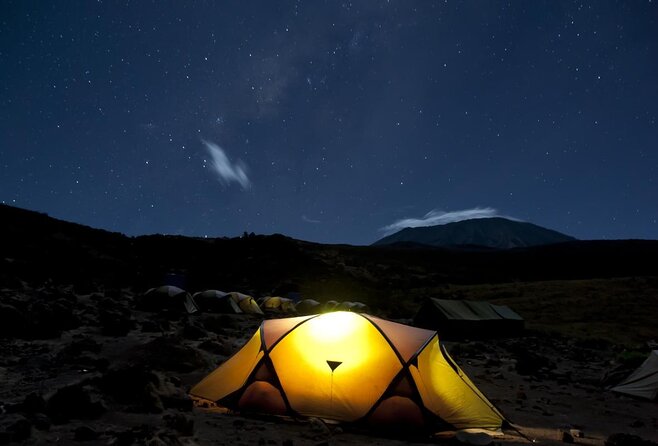
- The only hut-based Kilimanjaro route: You sleep in simple mountain huts with basic rooms and shared dining facilities rather than camping.
- A demanding summit day: Day five begins before midnight and includes Gillman’s Point, Uhuru Peak for those continuing, and a descent to Horombo.
- Safety support is built in: Emergency oxygen, a Gamow Bag, radios, rescue fees, and a pulse oximeter are included.
- Private group format: Only your group takes part, and group discounts are offered.
- Strong organization from airport to mountain: The package includes arrival and departure transfers, two hotel nights, guides, porters, and all mountain meals.
Why the Marangu Route Appeals to First-Time Climbers
Marangu is often chosen because its slope is considered moderate and its route is easy to follow. That does not make Kilimanjaro easy. You still reach 5,895 meters, where thin air, cold, fatigue, and the long summit push can test even fit climbers.
The route moves through several clear ecological zones. You begin in tropical rainforest, continue into moorland, cross the high alpine area, and finish in a stark volcanic setting near Kibo. This change gives the climb a strong sense of progress. Each day looks and feels different.
The huts are the route’s practical advantage. You get a bed in a simple mountain room and a dining area for meals. The facilities are basic, not hotel-like. Kibo Hut has no running water, so you should prepare for a less comfortable night before the summit.
The extra acclimatization day at Horombo is one of the best reasons to choose six days instead of five. The shorter version removes that spare day, while this schedule lets you walk toward Mawenzi, visit Zebra Rocks, and sleep another night at 3,720 meters before going higher.
More Kilimanjaro routes and climbs:
- Kilimanjaro climb by Lemosho Route (7-day)
★ 5.0 · 651 reviews - Kilimanjaro climb, Machame Route (7-day)
★ 5.0 · 262 reviews - Kilimanjaro Climbing Lemosho Route 8 Days.
★ 5.0 · 186 reviews
Day One: Marangu Gate to Mandara Hut
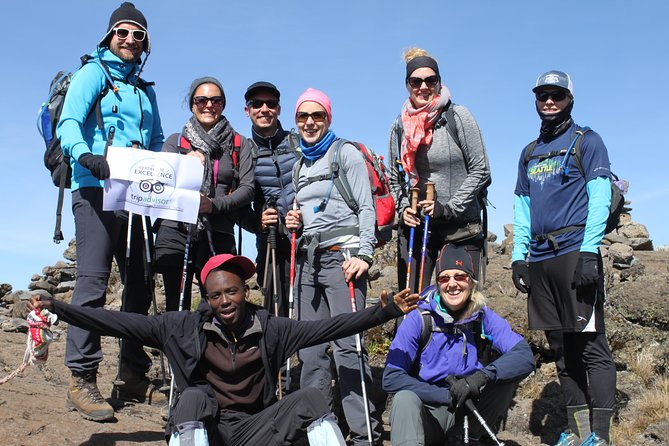
After breakfast, you travel from the hotel to Marangu National Park gate. The gate formalities take place before you enter the trail, so this first morning is not simply a matter of stepping out of the vehicle and walking. Your guide handles the mountain start with the group before the climb begins.
The trail enters the rainforest, where the first day feels more like a long uphill walk than a high-altitude expedition. The route from Marangu Gate to Mandara Hut reaches 2,700 meters and takes about five to six hours, although the schedule lists five hours as the activity time.
This is a good first day because the gain in height is steady rather than abrupt. You have time to settle into your pace, listen to your guide, and learn how your body responds to the climb. The forest also provides a cooler setting than the open upper slopes.
Mandara Hut is your first mountain overnight stop. You can have dinner, sleep, or simply rest around camp. Do not treat the relatively short distance as a reason to hurry. Your main job is to begin conserving energy for the days ahead.
Day Two: Moorland Views on the Way to Horombo
The climb from Mandara toward Horombo begins with a steep section through forest. Soon, the trees give way to moorland, opening views toward Kibo and Mawenzi when the weather is clear.
The walk takes about four to six hours and reaches Horombo Hut at 3,720 meters. This is the Low Alpine Zone, and the change in scenery is significant. You are no longer protected by dense forest, and the open setting makes the mountain feel much larger.
Horombo is an important base for this six-day plan. You arrive in the afternoon, which leaves time to relax and take in the views. The hut setting also gives you a chance to settle into the rhythm of mountain meals, shared dining, washing with warm water, and early rest.
The guide’s repeated advice to drink enough water and walk slowly matters here. You may feel strong at this altitude, but that feeling can change quickly. Keep your pace controlled, even if the trail seems manageable.
Day Three: Zebra Rocks and Better Acclimatization
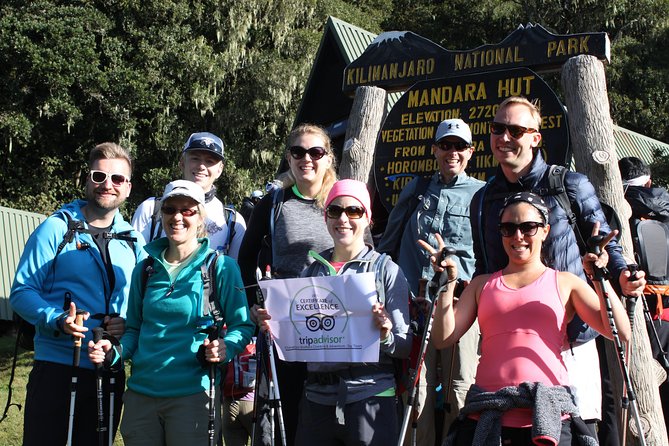
Day three is not a wasted day. You walk toward Mawenzi Hut and pass Zebra Rocks, using the day to gain some height before returning to Horombo for another night.
The walk lasts about six hours and moves from the Low Alpine Zone toward the High Alpine Zone. All meals are provided at Horombo, so you do not need to manage food during this acclimatization outing.
This is the schedule’s most valuable design feature. Spending another night at 3,720 meters gives your body more time to adjust before Kibo Hut and the summit. It also breaks up the climb, making the whole trip less rushed.
The practical rule is simple: drink regularly, walk slowly, and do not spend the day racing toward the next point. You want to arrive back at Horombo with energy left. That reserve becomes important once the trail rises toward Kibo.
A few more trips of this kind worth comparing:
- Kilimanjaro climb, Lemosho Route (6-day)
★ 5.0 · 129 reviews - Kilimanjaro climb, Marangu route (6-day)
★ 5.0 · 72 reviews - 6 Days 5 Night Safari
★ 5.0 · 57 reviews - 6 Days Tanzania Classic Safari
★ 5.0 · 52 reviews
Day Four: Across the Saddle to Kibo Hut
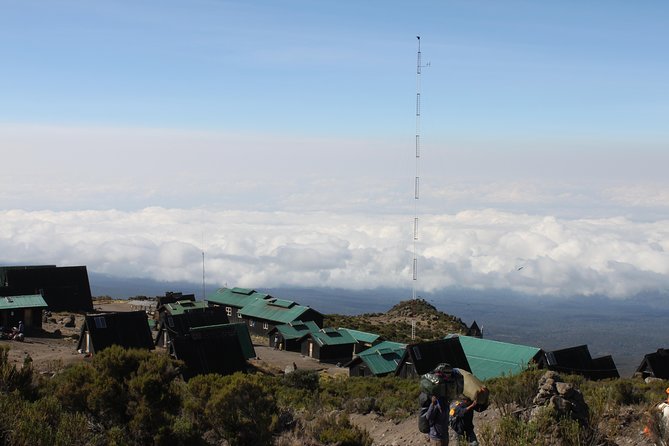
From Horombo, you climb gradually toward the Saddle, the broad, stark area between Mawenzi and Kibo. The surroundings become much more exposed and resemble a lunar desert, with little shelter and a growing sense that the summit is close.
The route to Kibo Hut reaches 4,700 meters. The schedule describes six to seven hours at a slow pace, while the activity listing gives about four hours. In practical terms, plan for a long, unhurried day and follow the guide’s timing rather than relying on the shorter figure.
Kibo Hut has no running water. You should expect a basic night and prepare your personal supplies before leaving Horombo. The remainder of the day is meant for rest, food, and preparation for the summit attempt.
The early night can be difficult because you need to wake before midnight. Even if sleep comes in short stretches, lying down and conserving energy helps. This is the point where the route stops feeling like a steady mountain walk and becomes a serious high-altitude effort.
Day Five: Gillman’s Point, Uhuru Peak, and the Long Descent
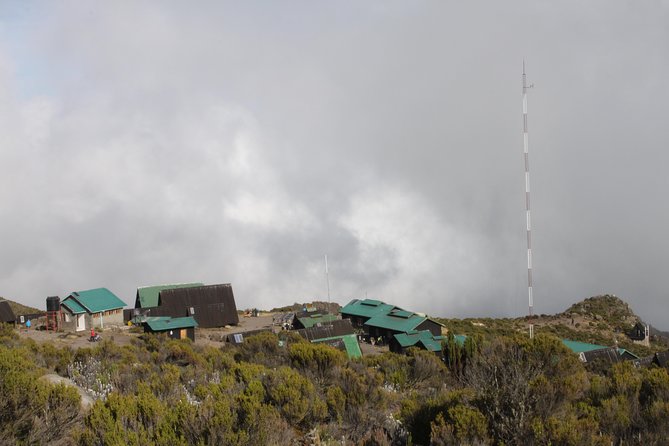
Summit day begins in darkness, before midnight. The first climb is steep, and loose volcanic scree can make every step slide slightly backward. The trail uses graded zigzags in places, but the pace remains slow and steady.
You first aim for the crater rim at Gillman’s Point, listed at 5,685 meters. After a short rest, climbers who still feel capable can continue along the crater rim toward Uhuru Peak, at 5,895 meters, the highest point in Africa.
The extra section to Uhuru Peak is described as a three-hour round trip from Gillman’s Point. You should treat this as a major effort, not a quick extension. The decision to continue depends on your condition, the guide’s advice, and how your body is handling the altitude.
Sunrise over Mawenzi is one of the special moments of the climb. The timing places you high on the mountain as the sky brightens, though cold and fatigue can make it hard to linger. Take a few minutes to appreciate the achievement, then begin the descent.
You return to Kibo Hut for refreshments before continuing to Horombo Hut. The entire day lasts about 13 hours. This is the biggest drawback of the route’s schedule. You climb in darkness, reach the summit area, descend to Kibo, and then keep walking to Horombo. Even strong climbers should expect this to be exhausting.
A porter carries your day pack during the summit attempt, which can make a real difference. You still need to carry personal essentials, but having support on this longest day helps you focus on your breathing and footing.
Day Six: Rainforest Descent and a Mountain-Inn Celebration
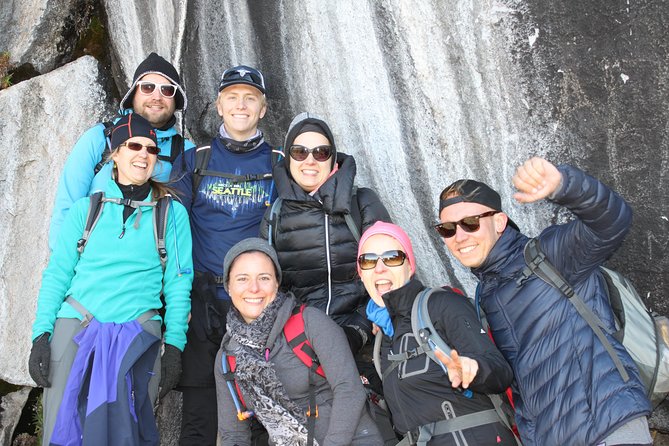
The final walking day takes you from Horombo past Mandara Hut and down to Marangu Gate. The descent lasts about six to seven hours, with six hours listed for the activity.
You return to the rainforest zone, and the familiar trees can feel like a welcome change after the open upper mountain. Descending is usually faster than climbing, but tired legs and uneven ground still deserve care.
At the park gate, successful climbers receive summit certificates. You are then transferred to Mountain Inn for dinner, a summit celebration, and an overnight stay. That post-climb hotel night gives you a proper place to recover after the mountain huts and long summit day.
What the $2,179.49 Price Covers
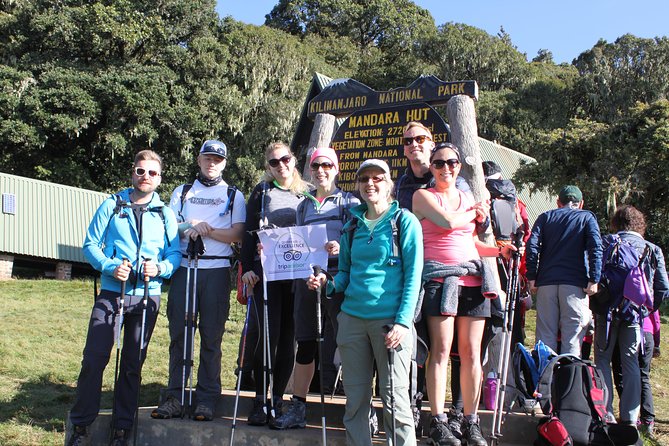
The price makes more sense when you look at what is bundled. You receive two nights of standard hotel accommodation, one before and one after the climb, with bed-and-breakfast arrangements. On the mountain, the package includes breakfast, lunch, and dinner, along with fresh, nutritious portions.
The mountain dining setup is more organized than a basic picnic. Meals are served using aluminum dining tables and large aluminum chairs with backs and armrests. That small comfort matters after several hours of walking.
Park entrance fees, government taxes, rescue fees, and local transportation are included. Arrival and departure transfers are also covered, which reduces the need to arrange transport around Moshi on your own.
Safety equipment is another major part of the value:
- Emergency oxygen tanks
- VHF handheld radios
- A Gamow Bag, which is a portable hyperbaric chamber
- A pulse oximeter
- Warm water for washing
- Clean, purified drinking water
The package also promises fair and ethical treatment of porters, professional English-speaking mountain guides, and a porter for your day pack during the summit attempt. Those services are central to a safe, organized climb, not decorative extras.
Tips are not included, and you should plan for them separately. A Tanzanian visa on arrival, personal expenses, laundry, telephone use, beverages, and optional tours such as a short safari also cost extra.
How the Organization Has Performed
The strongest praise centers on organization, food, and safety. One climber described the trip as well arranged from airport pickup through the mountain, with meals and drinks handled along the way. That is useful because the climb has many moving parts, from hotel transfers to park entry and hut meals.
The company’s sales and marketing director, George Mtaki, is named in the correspondence. George introduces the trip before the climb, and the company places clear emphasis on food and nourishment during the ascent.
That focus is practical. You burn energy for hours each day, and the difference between having regular, substantial meals and trying to get by on snacks can be significant. The package also includes six breakfasts, six lunches, and six dinners in its meal details, alongside the broader promise of full-board mountain accommodation.
Another strong point is communication. Guides carry VHF radios, and the safety kit includes oxygen, a Gamow Bag, and a pulse oximeter. These items do not remove the risks of altitude, but they show that the operator has planned for serious problems rather than treating the climb as a simple hike.
The experience is private, meaning only your group participates. That can make the pace and daily routine more personal than a large shared departure. Group discounts are also available, which may improve the value for friends, families, clubs, or organized teams.
Who Should Choose This Six-Day Climb
I would consider this route a good match for someone with moderate physical fitness who wants a structured Kilimanjaro climb and prefers huts to tents. The added Horombo acclimatization day also suits climbers who would rather allow more time for adjustment than rush through the mountain.
It is especially practical for a private group. An Alpine club in Iran used the company for teams in 2020 and 2021, suggesting that the format can work for organized climbing groups, though you should still confirm current group arrangements before booking.
You should think carefully if you strongly dislike basic accommodation, long summit days, or cold, early-morning starts. The Marangu label may sound gentle, but reaching Uhuru Peak still involves a high-altitude climb and a 13-hour summit day.
The route also permits a five-day, four-night version, but the six-day schedule is the wiser choice for most people. The added night at Horombo gives you more time to acclimatize and a better chance to approach the summit with energy.
Booking, Cancellation, and Practical Details
Confirmation is provided at booking. Pickup is offered, the experience is near public transportation, and all transportation in the destination location is included in the package details.
You can cancel up to 24 hours before the local start time for a full refund. Cancellations or changes made less than 24 hours before the start are not refunded or accepted. The climb requires suitable weather. If poor weather causes cancellation, you are offered another date or a full refund.
Because the summit attempt depends on conditions and personal health, you should view the schedule as a planned route rather than a promise that every climber will continue from Gillman’s Point to Uhuru Peak. The package includes safety support, but no equipment can replace a slow pace, adequate hydration, and honest communication with your guide.
Should You Book the Marangu Route?
I would choose this six-day climb if you want hut sleeping, included meals, private-group organization, and an extra acclimatization day. The price is substantial, but it covers the main mountain costs, hotel nights, transfers, meals, park fees, rescue fees, safety equipment, guides, and porter support.
I would not choose it if you want a relaxed holiday with only a little walking. The summit day is long, the huts are basic, Kibo has no running water, and altitude remains the central challenge.
For a first Kilimanjaro attempt, the six-day schedule is more sensible than the shorter option. It gives you time at Horombo, dependable logistical support, and a clear route from Marangu Gate to Africa’s highest summit. Just arrive prepared for a real climb, not a sightseeing excursion.
FAQ
Where does the Kilimanjaro Marangu Route climb begin?
The climb begins at Marangu National Park gate after pickup from the hotel and completion of the necessary gate formalities.
How long is the tour?
The tour lasts approximately six days and includes five nights on the mountain, plus hotel accommodation before and after the climb.
How much does the experience cost?
The listed price is $2,179.49 per person. Group discounts are offered.
Does the tour include accommodation?
Yes. You receive two nights of standard hotel accommodation, one before and one after the climb, plus hut accommodation on the mountain.
What type of accommodation is used on the mountain?
The Marangu Route uses simple mountain huts with rooms and dining facilities. Kibo Hut has no running water.
Is an acclimatization day included?
Yes. Day three is an additional acclimatization day based at Horombo Hut. You walk toward Mawenzi Hut and Zebra Rocks before returning to Horombo.
Are meals included?
Yes. Breakfast, lunch, and dinner are provided while you are on the mountain. The package details also list six breakfasts, six lunches, and six dinners.
Is transportation included?
Arrival and departure transfers, along with transportation in the destination location, are included. Pickup is offered.
What safety equipment is included?
The package includes emergency oxygen, VHF handheld radios, a Gamow Bag, a pulse oximeter, rescue fees, and purified drinking water.
What is not included in the price?
Tips, a Tanzanian visa on arrival, laundry, telephone use, beverages, personal expenses, and optional tours such as a short safari are not included.
Just added around Moshi
- Moshi: Lake Chala Tour: Hiking &/or Kayaking★ 4.5 · 3 reviews
- 3 Days Tanga Exclusive Beach Holiday★ 5.0 · 3 reviews
- Serengeti Wildebeest Migration.★ 5.0 · 3 reviews
- Chemka Hotpsrings E-Bike Day Trip★ 5.0 · 3 reviews
- Explore 1 day Ngorongoro Crater Budget Group Safari from Arusha★ 5.0 · 3 reviews
- Explore the 360° of Kilimanjaro★ 5.0 · 3 reviews
- Affordable Short Tanzania Safari (2 Days Camping Safari)★ 5.0 · 3 reviews
- Rongai Route 7 Days★ 5.0 · 3 reviews
Kilimanjaro Treks, compared.



8-Day Small-group Lemosho Kilimanjaro Summit Trekking
Read our review →


Climbing Kilimanjaro through 7 days Machame Route
Read our review →

Browse the lists this tour appears in