
Reviewed · KILIMANJARO TREKS
Machame Route 6 days 5 Nights/Kilimanjaro Climb
Africa’s highest peak demands patience. This six-day Machame Route climb gives you a strong mix of scenery, camping, and time to adjust to altitude. I like the private format, which keeps the experience focused on your group, and I like the route’s climb high, sleep lower pattern on Day 3. The main concern is the schedule: summit night lasts about 14 hours and is far harder than the earlier walking days.
I also like that the price of $1,990 per person includes camping, meals, bottled water, park access, and a private guide. The route offers more acclimatization time than Marangu, but six days is still a demanding timetable. You need a moderate fitness level, good cold-weather equipment, and a realistic attitude about reaching the top.
In This Review
- What makes this climb worth considering
- The route in context: why Machame suits many climbers
- Day 1: Moshi to Machame Camp through the rainforest
- Day 2: Heather country and the Shira campsite
- Day 3: Lava Tower, the Shark’s Tooth, and Barranco
- Day 4: Barranco Wall to Barafu Camp
- Day 5: The 14-hour summit day
- Day 6: Mweka descent and the return to Moshi
- What the $1,990 price covers
- Food, gear, and preparation
- Guide support and the feel of a private climb
- Who should book this Machame climb?
- Should you book it?
- FAQ
- How long is the Kilimanjaro Machame Route climb?
- Where does the climb begin?
- What is included in the price?
- Is the tour private?
- What fitness level is required?
- When does the summit attempt begin?
- What costs are not included?
What makes this climb worth considering
- The Machame Route uses a useful acclimatization day: Day 3 takes you up toward Lava Tower before dropping to Barranco Camp.
- Summit morning begins around midnight to 2 a.m.: You can reach Stella Point in time for sunrise, weather permitting.
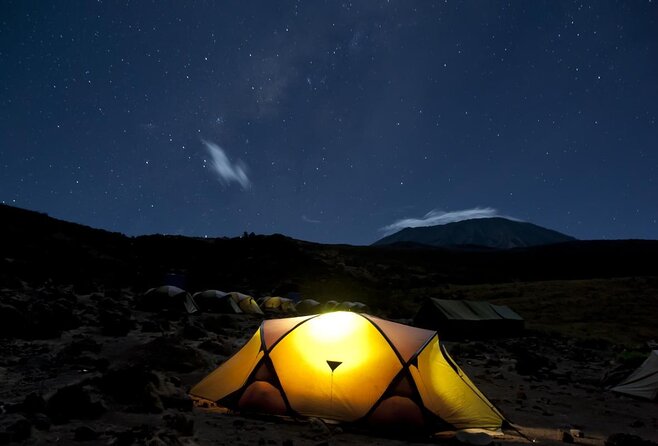
- Camping is part of the mountain experience: You sleep at Machame, Shira, Barranco, Karanga, and Barafu camps.
- The private format keeps the climb personal: Only your own group takes part in the activity.
- The support team has earned strong praise: Past groups specifically highlighted guides such as Epa, Goodluck, Vitto, Rama, David, Nicholas, and Eric, though guide assignments can change.
- The final day is quick but wet: The four-hour descent to Mweka Gate may be muddy, so gaiters and trekking poles are useful.
The route in context: why Machame suits many climbers
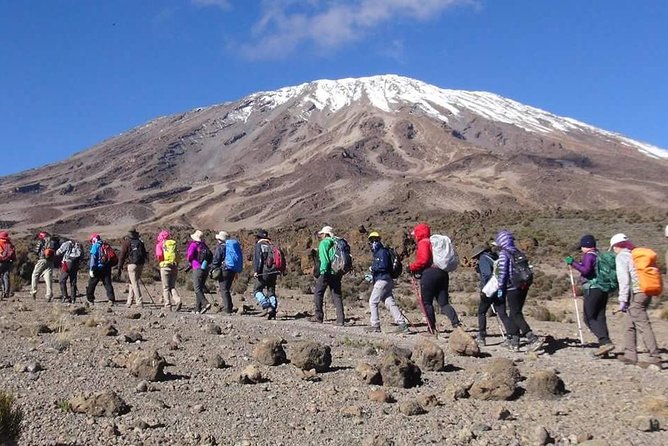
Machame is one of Kilimanjaro’s best-known routes because it gives you varied scenery and a better altitude profile than the shorter Marangu schedule. You begin in rainforest, cross the Shira Plateau, pass high volcanic features, and approach the summit through the southern circuit.
That variety matters. You are not simply walking uphill for six days. The vegetation changes as you climb, the air thins, and the views of Kibo and Mawenzi become more dramatic. You also get a proper acclimatization push on Day 3, when the trail rises toward Lava Tower before dropping to Barranco.
Still, do not mistake a higher success rate for an easy climb. Kilimanjaro is a high-altitude trek, and the summit day is the real test. The route asks you to walk slowly, sleep in tents, eat when you can, and follow your guide’s pace even when your legs want to hurry.
The private setup is useful here. Your guide can focus on your group’s walking rhythm, breaks, and general comfort rather than managing a large mixed party. The booking requires at least two people, so this is not designed for a solo booking.
More Kilimanjaro routes and climbs:
- Kilimanjaro climb by Lemosho Route (7-day)
★ 5.0 · 651 reviews - Kilimanjaro climb, Machame Route (7-day)
★ 5.0 · 262 reviews - Kilimanjaro Climbing Lemosho Route 8 Days.
★ 5.0 · 186 reviews
Day 1: Moshi to Machame Camp through the rainforest
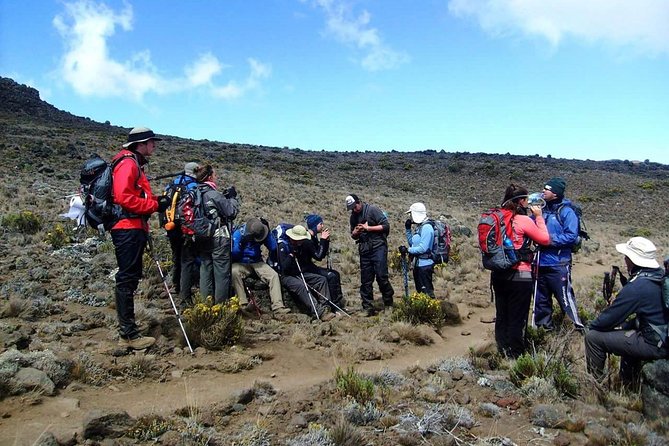
Your day begins with a drive from Moshi to the Mount Kilimanjaro National Park Gate, a trip of about 50 minutes. The road passes through Machame village on the mountain’s lower slopes, giving you a first look at the communities connected to the climb.
After park formalities, you start walking through rainforest on a winding trail up a ridge. The first day takes about seven hours, though your actual pace and stop times will shape the day. The forest is a pleasant opening to the climb, but the lower trail can be muddy and slippery.
Pack gaiters and trekking poles where you can reach them before walking begins. Do not bury them in the bottom of your bag. Waterproof layers should also be handy, since the provided guidance stresses that the climb operates in all weather.
Machame Camp is your first overnight stop. This is a full day, but it is not the most technically difficult section. The bigger challenge is settling into the rhythm of walking, eating, resting, and sleeping outdoors.
Day 2: Heather country and the Shira campsite
After breakfast, the rainforest gives way to heather and more open high-altitude ground. You cross a small valley and follow a steep, rocky ridge before turning west toward a river gorge.
The walking time is listed at about five hours, making this a shorter day than the first. That gives you a little room to rest and take in the changing surroundings. The trail continues to climb, but you are no longer enclosed by thick forest.
You spend the night at Shira campsite. Camping is included, as are breakfast, lunch, and dinner across the program. The mountain menu is not described in detail, so tell the operator about dietary needs when booking. That small step can make a big difference after several hours of walking.
Shira is also a good point to judge how your body is responding. Headaches, unusual tiredness, or poor sleep deserve attention. You should tell your guide early rather than trying to hide symptoms to appear tough.
Day 3: Lava Tower, the Shark’s Tooth, and Barranco
Day 3 is the route’s key acclimatization day. From the Shira Plateau, you walk east along a ridge, passing the junction toward Kibo. The trail then turns southeast toward Lava Tower, also called the Shark’s Tooth.
The route reaches about 16,000 feet near the Arrow Glacier junction before descending to Barranco Hut at around 13,000 feet. You finish the day at roughly the same elevation where you started, but that is exactly why the day helps your body prepare for the summit.
This seven-hour section can feel odd. You work hard to gain altitude, then lose much of it by evening. That effort is not wasted. It gives you time at higher elevation without forcing you to sleep there, an important part of the route’s design.
Barranco Camp is one of the more memorable stops because of the dramatic terrain around it. The next morning brings the Barranco Wall, so use the evening to eat, drink, and prepare your clothing. A good guide will help you keep a sensible pace here. The operator’s past groups repeatedly praised strong support from guides and camp crews, with Epa, Goodluck, Vitto, Rama, David, Nicholas, and Eric named in different accounts.
Names are not a guarantee of who will lead your climb. Ask for the confirmed guide team before departure, especially if personal communication with a coordinator such as Amos has been part of your booking.
A few more trips of this kind worth comparing:
- Kilimanjaro climb, Lemosho Route (6-day)
★ 5.0 · 129 reviews - Kilimanjaro climb, Marangu route (6-day)
★ 5.0 · 72 reviews - 6 Days 5 Night Safari
★ 5.0 · 57 reviews - 6 Days Tanzania Classic Safari
★ 5.0 · 52 reviews
Day 4: Barranco Wall to Barafu Camp
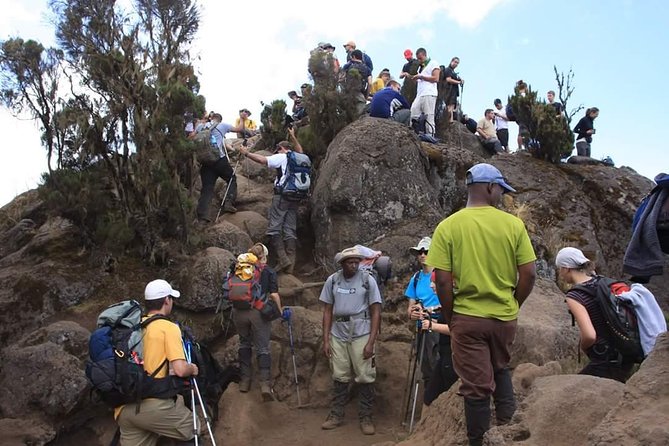
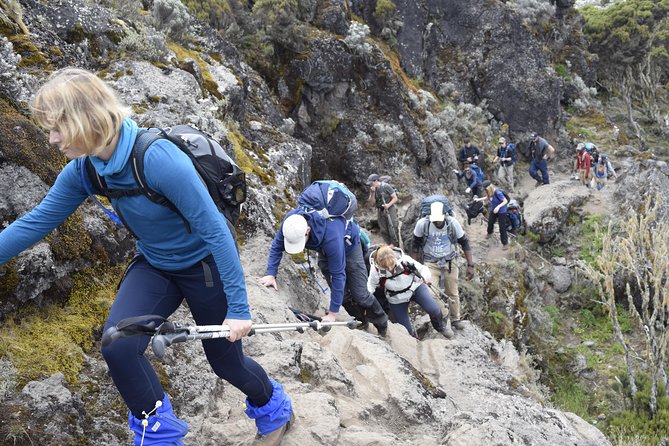
After breakfast, you leave Barranco and climb the steep ridge beside the Barranco Wall. This is a more hands-on section than the earlier trail, though the supplied details do not describe it as technical climbing.
You continue to Karanga Valley campsite, then join the junction connecting with the Mweka Trail. From there, the route rises to Barafu Hut. The day takes about nine hours, so it is one of the longest regular walking days before the summit push.
At Barafu, you have completed the South Circuit. The camp offers views of both Mawenzi and Kibo, and the summit can appear close enough to touch. It is not close in walking terms. You need to rest as soon as possible because the summit attempt starts very early.
Dinner is included, but you may not feel hungry. Eat what you can and drink steadily. Keep your warmest clothing, headlamp, gloves, and other summit equipment organized before trying to sleep. You may only get a short rest before leaving between midnight and 2 a.m.
Day 5: The 14-hour summit day
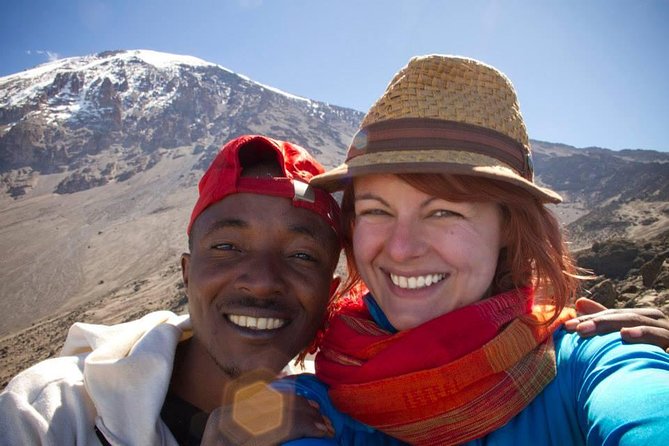
Summit day is the heart of the trip and its toughest section. You begin in darkness, heading toward the summit between the Rebmann and Ratzel glaciers. The trail rises through heavy scree toward Stella Point on the crater rim.
This is where the climb becomes a test of patience and mental strength. Loose rock makes progress slow, and the coldest hours arrive when you are already tired. You should expect this section to feel much harder than the walking times on the first two days.
At Stella Point, around 18,600 feet, you stop briefly. If the weather cooperates, sunrise provides the day’s great reward. From Stella Point, the final hour to Uhuru Peak may include snow. The destination is the highest point on Mount Kilimanjaro and the highest point in Africa.
After time at the summit, you descend to Barafu Camp for lunch and a short rest, then continue down to Mweka Hut for dinner and overnight. The schedule lists about 14 hours, so this is not just a summit walk. It is an all-day effort with a major descent after reaching the top.
The summit is never guaranteed. Weather, altitude, illness, and fatigue can change the plan. A good operator should put safety ahead of a photograph, and you should accept that judgment before you start.
Day 6: Mweka descent and the return to Moshi
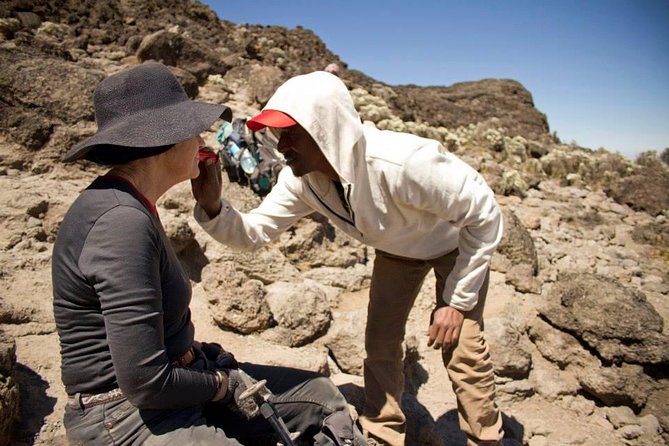
The final morning takes you down to Mweka Park Gate in about four hours. At the gate, you receive your summit certificates before continuing for another hour to Mweka village.
The lower trail can be wet and muddy. Gaiters and trekking poles are useful again, while shorts and a T-shirt may be comfortable at the warmer elevation. Keep rain gear and warmer layers within reach, since mountain weather can shift before you reach the vehicle.
A vehicle meets you at Mweka village and takes you back to your hotel in Moshi. After five nights camping, a hotel shower will feel less like a luxury and more like a minor miracle.
What the $1,990 price covers
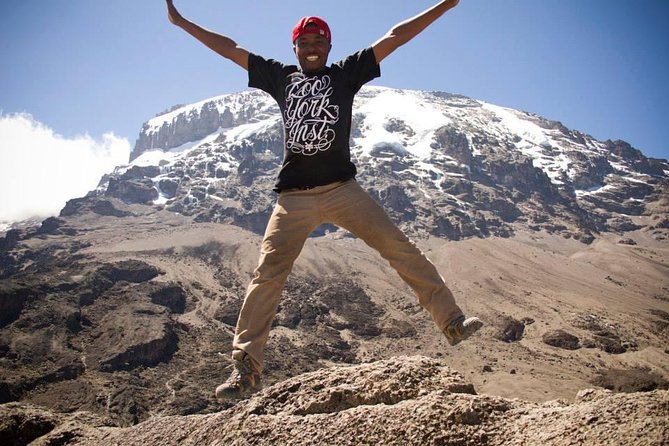
At $1,990 per person, this is not a cheap holiday, but Kilimanjaro costs include more than the walking itself. The price includes bottled water, six breakfasts, seven lunches, six dinners, camping accommodation, and the services connected with the private climb. Park admission is included in the daily route details.
The private format adds value if you care about personal attention or are traveling with friends or family. You are not simply buying a marked trail. You are paying for planning, guiding, mountain logistics, food, park access, and a support system that helps you handle a difficult environment.
Read the inclusions carefully before paying. International flights, visas, travel insurance, drinks, personal equipment, and post-climb activities are excluded. Safaris, waterfall visits, and massages after the climb also cost extra.
The tipping guidance is listed separately:
- Guide: $15 to $20 per guide per day
- Cook: $10 to $15 per day
- Porter: $8 to $10 per porter per day
The supplied details do not clearly state how every support role is handled within the $1,990 price. Ask the company to explain porter arrangements, crew numbers, equipment, and tipping expectations before you commit. That is not an awkward question. It is part of responsible mountain travel.
Food, gear, and preparation
Meals are included, but personal snacks are worth considering if the operator permits them. You should also advise the company of dietary requirements at booking time.
The most useful gear advice is simple:
- Bring gaiters for muddy sections.
- Carry trekking poles for slippery ground and the descent.
- Pack warm layers for Barafu and summit night.
- Keep rain gear close, not buried in luggage.
- Use clothing that handles changing conditions rather than relying on the stated formal dress code.
- Bring the required personal equipment, since additional personal equipment is excluded.
You need moderate physical fitness. That does not mean you must be an elite athlete, but you should be comfortable walking for five to nine hours on consecutive days. The summit day is a different category altogether, with a listed duration of 14 hours.
Guide support and the feel of a private climb
The strongest pattern in the published feedback is praise for the crew’s care, organization, and encouragement. Several accounts describe guides who helped with both the physical and mental strain of the route. Food also received repeated praise, which matters when you are burning energy day after day.
Past climbs named senior guide Epa, guides Goodluck and Vitto, Rama and David, and Nicholas with assistant guide Eric. Other accounts praised team members including Kim, Emmanuel, Shaban, and Joseph. These names show the depth of the local staff involved, but you should not assume a specific person will lead your departure.
A private trip can feel more supportive than a large group because decisions happen within your own party. It can also place more attention on each member’s fitness and altitude response. If one person struggles, the group may need to adjust its pace.
The tour may use a multilingual guide. Confirm your preferred language in advance if that affects your comfort or safety.
Who should book this Machame climb?
I would recommend this trip to you if you want:
- A classic Kilimanjaro route with changing vegetation and high camps
- A private experience for a group of at least two
- Camping rather than a hut-based route
- A summit sunrise attempt
- A route with more acclimatization than Marangu
- A package that includes meals, water, camping, and park access
I would be cautious if you dislike camping, struggle with long walking days, or want a relaxed mountain holiday. The six-day schedule is efficient, but it leaves little spare time if altitude affects you.
The route also suits people who value local human support. The strongest accounts describe the guides and crew as the emotional center of the climb, not just people who point toward the next camp.
Should you book it?
Book this Machame Route climb if you want a focused, private attempt at Kilimanjaro and accept that summit success depends on weather, health, and steady preparation. The route offers a sensible acclimatization pattern, memorable camps, included meals, and the chance to reach Uhuru Peak at sunrise.
Before booking, confirm the exact guide team, porter arrangements, personal equipment requirements, dietary plans, and all expected tips. If you can handle the 14-hour summit day and arrive properly insured and prepared, the $1,990 package offers solid value for a major African trekking goal.
FAQ
How long is the Kilimanjaro Machame Route climb?
The experience lasts six days and five nights, with approximately six days of mountain trekking and camping.
Where does the climb begin?
The experience begins in Moshi, Tanzania. The drive to the Mount Kilimanjaro National Park Gate takes about 50 minutes.
What is included in the price?
The price includes bottled water, six breakfasts, seven lunches, six dinners, camping accommodation, and the services specified for the private climb. Park admission is included in the route details.
Is the tour private?
Yes. Only your group participates in the private tour, and a minimum of two people is required per booking.
What fitness level is required?
You should have a moderate level of physical fitness. Walking days range from about four to nine hours, while summit day is listed at approximately 14 hours.
When does the summit attempt begin?
The summit walk begins very early, between midnight and 2 a.m. The route aims to reach Stella Point for sunrise, weather permitting.
What costs are not included?
International flights, visas, travel insurance, alcoholic and non-alcoholic drinks, additional personal equipment, and activities after the climb are excluded. Tips for guides, cooks, and porters are also listed separately.
Just added around Moshi
- Moshi: Lake Chala Tour: Hiking &/or Kayaking★ 4.5 · 3 reviews
- 3 Days Tanga Exclusive Beach Holiday★ 5.0 · 3 reviews
- Serengeti Wildebeest Migration.★ 5.0 · 3 reviews
- Chemka Hotpsrings E-Bike Day Trip★ 5.0 · 3 reviews
- Explore 1 day Ngorongoro Crater Budget Group Safari from Arusha★ 5.0 · 3 reviews
- Explore the 360° of Kilimanjaro★ 5.0 · 3 reviews
- Affordable Short Tanzania Safari (2 Days Camping Safari)★ 5.0 · 3 reviews
- Rongai Route 7 Days★ 5.0 · 3 reviews
Kilimanjaro Treks, compared.



8-Day Small-group Lemosho Kilimanjaro Summit Trekking
Read our review →


Climbing Kilimanjaro through 7 days Machame Route
Read our review →

Browse the lists this tour appears in