
Reviewed · KILIMANJARO TREKS
Marangu Route 6 Days 5 Nights/Kilimanjaro Climb
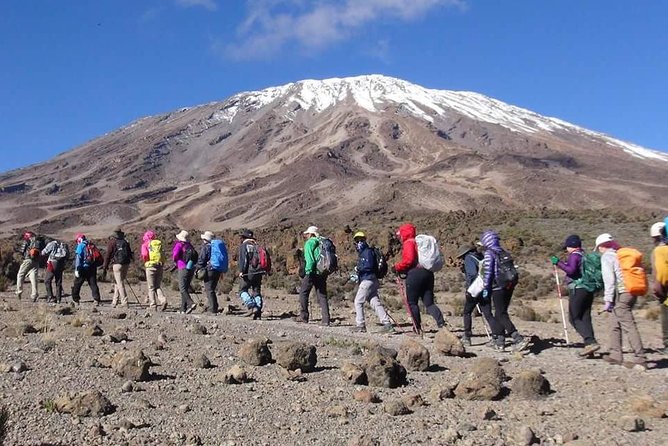
The summit starts long before sunrise. This six-day Marangu Route climb gives you a gradual trail, hut accommodation, and a built-in acclimatization day, making it one of the more approachable ways to attempt Kilimanjaro. I like the scenic change from rainforest to moorland, and I like that the plan includes time at Zebra Rocks instead of rushing straight upward. The main concern is the summit day: about 15 hours of hiking is a serious test, even for fit walkers.
The $1,900 price includes transport from Moshi, accommodation, meals, park fees, crew salaries, and professional mountain guides. That is a useful package for a major mountain climb, though you still need to budget for your visa, international flights, drinks, and gratuities. Previous climbers have praised the organization and guides, with names including Vitalis, Goodluck, Nicolas, JoJo, Amos, and Issa appearing in the trip feedback.
In This Review
- Five things to know before choosing this climb
- Why the Marangu Route appeals to first-time climbers
- From Moshi to Mandara Hut, 8.3 kilometers
- Horombo Hut and the first high views
- Zebra Rocks gives acclimatization a purpose
- Crossing the saddle to Kibo Hut
- Uhuru Peak and the 15-hour summit day
- Returning through the rainforest to Moshi
- What the $1,900 price covers
- Who should choose this itinerary
- Booking, cancellation, and practical checks
- Should you book the Marangu Route climb?
- FAQ
- How long is the Marangu Route climb?
- What is the price per person?
- Where does the climb begin?
- What time does the experience start?
- Is accommodation included?
- Are meals included?
- Is this a private activity?
- What level of fitness is required?
- What is not included in the price?
Five things to know before choosing this climb
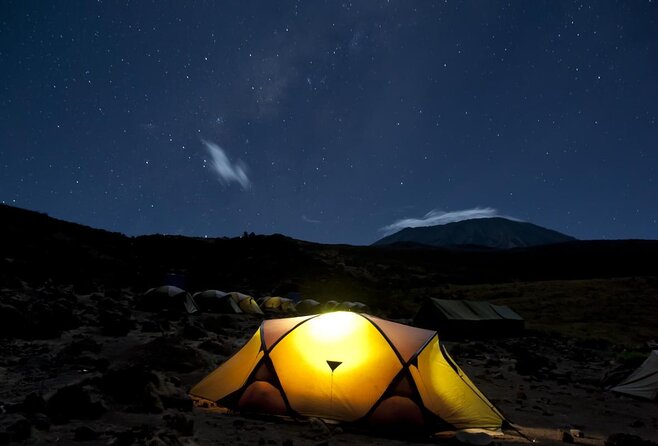
- The route uses huts instead of tents: You sleep at Mandara, Horombo, and Kibo huts, which may appeal to you if carrying camping gear and sleeping in a tent sounds less attractive.
- Day three is for acclimatization: The hike to Zebra Rocks at 4,020 meters gives your body extra time to adjust before the summit attempt.
- Summit day is very long: You leave around midnight, reach Uhuru Peak at 5,895 meters if conditions and fitness allow, then return to Horombo Hut.
- You see several distinct mountain zones: The route moves from tropical rainforest to heath, moorland, the bare saddle, and the high volcanic slopes near Kibo.
- The tour is sold as private: Only your group is scheduled to participate, while one account describes a group of four climbing together.
- The package is nearly all-inclusive: Park charges, crew pay, accommodation, breakfast, lunch, dinner, and airport pickup are included, but gratuities are not clearly covered.
Why the Marangu Route appeals to first-time climbers
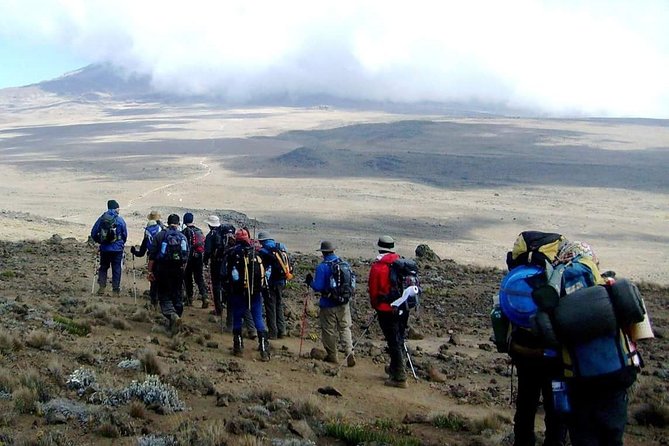
Marangu is often chosen for its steady gradients and hut-based sleeping arrangements. Here, that design gives you a simple rhythm: walk during the day, eat at camp, rest, then continue higher. You are not asked to set up a tent or carry a full camping system.
The route is still demanding. Gradual slopes do not remove the effects of altitude, and the highest point is 5,895 meters above sea level. The most important feature of this program may be the extra day at Horombo Hut. You walk to Zebra Rocks, return to the same hut, and gain time before tackling the upper mountain.
I especially like that the scenery changes in clear stages. Day one begins under thick rainforest. By day two, the trees give way to heath and moorland. Day four brings the nearly bare saddle between Mawenzi and Kibo, followed by the high, cold start point for the summit.
The huts add comfort, but you should not confuse hut accommodation with a resort stay. The supplied information confirms accommodation at the mountain huts, but it does not describe room layouts, bedding, washing facilities, or dining arrangements. Ask the operator what you need to bring and what equipment is supplied before departure.
More Kilimanjaro routes and climbs:
- Kilimanjaro climb by Lemosho Route (7-day)
★ 5.0 · 651 reviews - Kilimanjaro climb, Machame Route (7-day)
★ 5.0 · 262 reviews - Kilimanjaro Climbing Lemosho Route 8 Days.
★ 5.0 · 186 reviews
From Moshi to Mandara Hut, 8.3 kilometers
Your first morning begins with pickup from your lodge in Moshi at about 9:00 am. You are driven to Marangu Gate, where the paperwork is completed before you enter Kilimanjaro National Park.
The opening walk covers 8.3 kilometers and takes about five hours. The trail passes through dense rainforest, where the vegetation is a major part of the experience. You might also catch sight of primates along the way, though wildlife sightings are never guaranteed.
Mandara Hut is your first overnight stop. After resting, your guide can take you to Maundi Crater for views toward the Kenyan interior. This short outing is a good use of the afternoon because it gives you a first taste of the mountain scenery without adding another major stage to the day.
Breakfast, lunch, and dinner are included on this day. The route may look gentle on paper, but I would still treat day one as a real mountain walk. Start slowly, drink regularly, and avoid turning the first day into a race.
Horombo Hut and the first high views
Day two is longer, covering 12.5 kilometers in about nine hours. After leaving Mandara Hut, you reach the timberline and enter the heath and moor zone. The forest atmosphere falls away, replaced by more open ground and wider views.
Horombo Hut sits at about 3,700 meters. From here, you can look toward Mawenzi and Kibo, as well as across the broad plain of the Masai steppe. This is an important change in the trip. You are no longer simply walking through a forested mountain park. You are beginning to feel the scale and height of Kilimanjaro.
The nine-hour estimate includes a substantial walking day, so you should arrive ready for a slow evening. Dinner and overnight accommodation are included. Do not plan extra sightseeing after the walk. Your best task is to eat, organize your clothing, and rest.
This is also where your guide’s judgment matters. Previous trip accounts give strong praise to the guiding team, including Vitalis, Goodluck, Nicolas, and JoJo. Names and assignments can change, but the repeated praise for organization, flexibility, and personal support is a useful sign when you are choosing an operator.
Zebra Rocks gives acclimatization a purpose
Day three is not a rest day in the lazy sense. It is a four-hour acclimatization walk from Horombo Hut to Zebra Rocks at 4,020 meters and back.
The rocks get their name from their distinctive black and white stripes. The walk lets you spend time at a higher elevation, then sleep again at Horombo rather than pushing immediately toward Kibo. That pattern is valuable because altitude adjustment takes time, and the program gives you a chance to notice how your body responds before the hardest section.
A warm lunch is scheduled after your return. The afternoon is open for rest and preparation. Use it well. Check your layers, keep essential items close, and follow your guide’s advice about the next day.
This extra day is one of the strongest reasons to consider this itinerary instead of a shorter climb. It does add another day to the trip, but it gives you a better-paced ascent. No itinerary can guarantee a summit, and the schedule does not remove altitude risk. It simply gives you more time to adapt.
A few more trips of this kind worth comparing:
- Kilimanjaro climb, Lemosho Route (6-day)
★ 5.0 · 129 reviews - Kilimanjaro climb, Marangu route (6-day)
★ 5.0 · 72 reviews - 6 Days 5 Night Safari
★ 5.0 · 57 reviews - 6 Days Tanzania Classic Safari
★ 5.0 · 52 reviews
Crossing the saddle to Kibo Hut
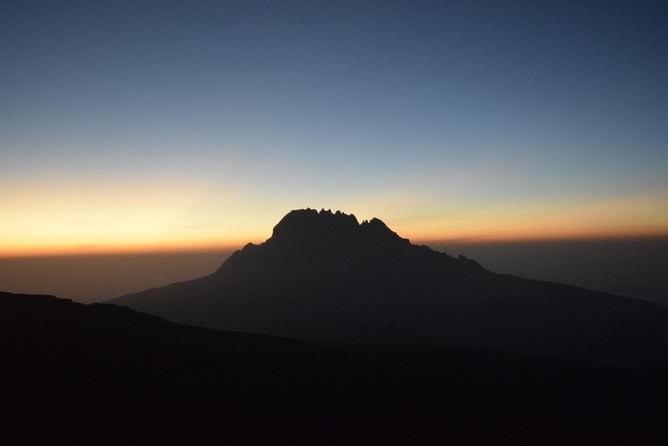
Day four takes you toward Kibo Hut in about five to six hours, with a total stage estimate of seven hours. The trail passes the Last Water point before reaching the saddle, a broad plateau with almost no vegetation.
The saddle connects Kibo and Mawenzi. It is a stark section of the route, and the lack of plant life makes the mountain feel more severe. You are now approaching the summit zone, so the views and open spaces come with a practical cost: there is little shelter from the conditions described by the climb plan.
Kibo Hut is usually reached in the afternoon. You eat an early evening meal and go to bed early because the summit attempt begins around midnight. This is not the night for a long meal, a late conversation, or last-minute sightseeing. Prepare your summit clothing before lying down, then try to sleep.
The itinerary does not give a detailed equipment list, so ask specifically about sleeping arrangements, luggage limits, walking poles, headlamps, warm layers, and any safety equipment. The package includes crew salaries and accommodation, but that does not automatically mean every personal item is supplied.
Uhuru Peak and the 15-hour summit day
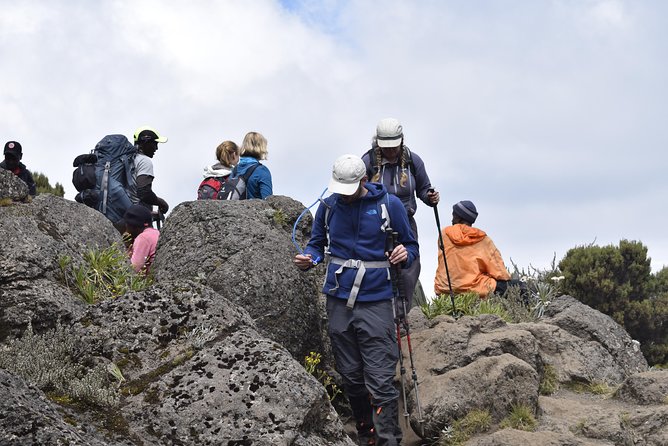
Summit day begins around midnight. The ascent is long and strenuous, and the early start is designed to bring you to the crater rim near sunrise.
You pass Hans Meyer Cave at about 5,220 meters before continuing upward. The pace is likely to feel slow, and that is exactly what you need at this height. Your immediate goal is Gillman’s Point at 5,681 meters, where the route reaches Kilimanjaro’s crater rim.
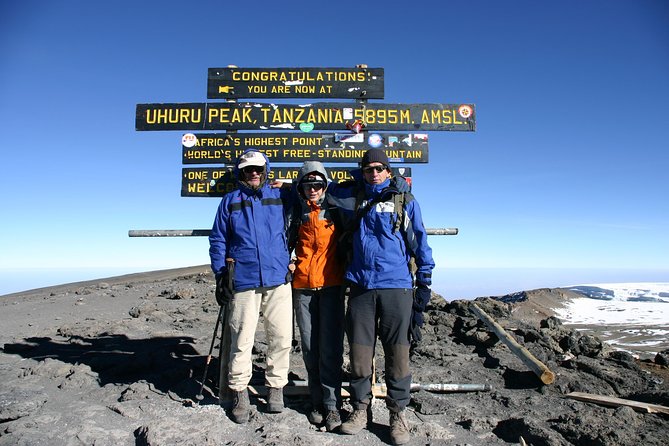
Sunrise at Gillman’s Point is one of the great rewards of this climb. Afterward, you continue for another one to two hours toward Uhuru Peak, the highest point at 5,895 meters. Reaching the summit depends on your health, acclimatization, weather, and the guidance of the mountain team. A certificate of achievement is included after the climb.
The descent is not an easy afterthought. You return to Kibo Hut for a warm meal and a one to two-hour break, then continue down to Horombo Hut. The full day is listed at about 15 hours, so fatigue is a real concern. I would judge this climb by the whole day, not just the final uphill section.
Plan to keep your summit pack light, but make sure it contains the essentials you personally need. The supplied information does not specify the contents of the pack, so this is an important pre-trip question for the company.
Returning through the rainforest to Moshi
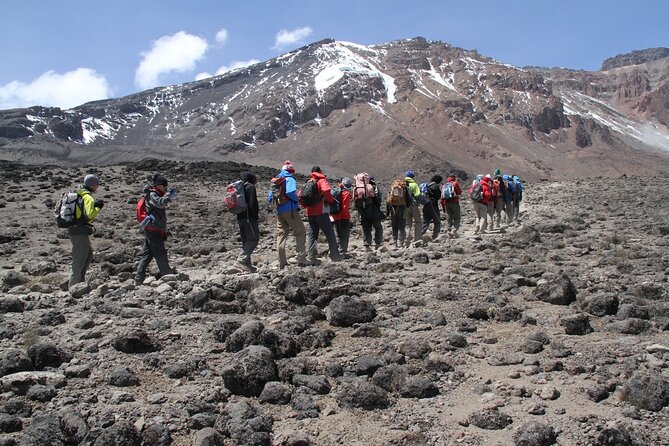
The final stage leads from Horombo Hut back through the heath and moor zone to Mandara Hut, where lunch is provided. You then re-enter the tropical rainforest and continue to Kilimanjaro National Park Gate at about 1,860 meters.
The final trekking section is estimated at four hours, although the description also refers to about six hours of trekking for the full stage. Treat the timing as approximate. After leaving the mountain guides at the gate, a short transfer returns you to your hotel in Moshi.
A hot shower and a proper rest will feel well earned. The final evening is also a practical chance to settle gratuities, collect your certificate if it has not already been presented, and confirm onward travel.
The package includes airport pickup, but the trip description specifically describes pickup from your lodge in Moshi for the climb. If you are arriving at Kilimanjaro International Airport, confirm how airport transport is arranged and whether the stated pickup applies to your arrival date.
What the $1,900 price covers
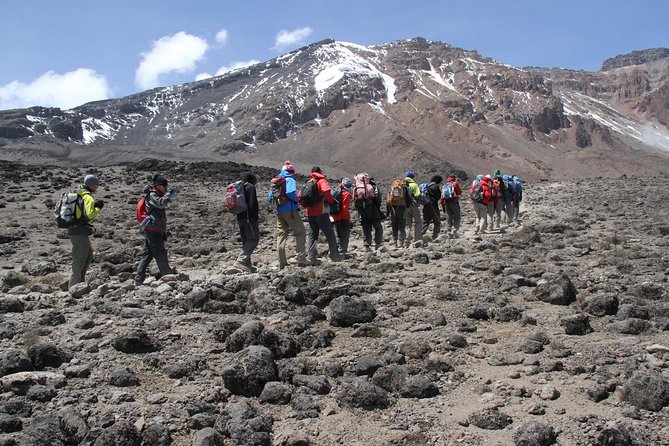
At $1,900 per person, the cost is easier to judge because many major expenses are included. The package lists all fees and taxes, crew salaries, accommodation, airport pickup, breakfast, lunch, and dinner.
That matters on Kilimanjaro. Park charges and mountain support can form a large part of the cost, and having meals arranged removes much of the planning burden. You are also paying for guides and the logistics of moving between Moshi, the park gate, and the mountain huts.
The exclusions are important. You pay separately for:
- International flights
- A Tanzanian visa
- Alcohol and soft drinks
- Gratitude, which appears to mean gratuities for the crew
The meal information is slightly uneven. The inclusion list states five breakfasts, six lunches, and six dinners, while the daily plan describes meals throughout the six-day schedule. Ask for a final meal count before booking, especially if your arrival and departure plans need extra hotel nights or meals.
Accounts from solo climbers and small groups give the operator credit for arranging bookings, transport, equipment, food, and payment in a dependable way. One solo female account specifically praises Amos for handling arrangements and Issa for helping with local transfers. That kind of practical help can be worth a great deal when you are managing a major climb alone.
Who should choose this itinerary
This climb suits you if you want a structured Kilimanjaro attempt with hut accommodation and a dedicated acclimatization day. It is also a good match if you prefer a private activity, since only your own group is scheduled to take part.
You need a moderate level of physical fitness. The plan includes five-hour and nine-hour walking days, a long approach to Kibo, and a summit day of about 15 hours. You do not need to be a technical mountaineer based on the information provided, but you do need stamina, patience, and the ability to keep moving for many hours.
I would be cautious about booking this if you dislike early starts, cold high-altitude conditions, basic mountain accommodation, or long descents after a summit attempt. The gradual route helps, but it does not make the mountain easy.
The feedback gives particular praise to professional service, flexible staff, reliable equipment, good food, and experienced guides. Still, you should ask for current guide assignments and a clear equipment list. The company has used several guide teams, so names such as Vitalis, Goodluck, Nicolas, JoJo, Amos, and Issa are useful points of reference, not a promise that one specific person will lead your climb.
Booking, cancellation, and practical checks
Confirmation is provided at booking, and the activity offers a mobile ticket. The listed meeting time is 9:00 am, with pickup offered. The tour is described as private, and public transportation is nearby, though the mountain transfer itself is arranged as part of the activity.
Free cancellation is available if you cancel at least 24 hours before the local start time. Changes made inside that 24-hour window are not accepted, and the amount paid is not refunded for a late cancellation. If poor weather forces cancellation, you are offered another date or a full refund.
Before paying, I would ask these direct questions:
- What exact equipment is included?
- How many people will be in my private group?
- Which meals are covered on each day?
- What bedding and washing facilities are available at the huts?
- How are gratuities handled?
- Does airport pickup include my arrival date?
- What happens if I need to stop the climb below the summit?
Those answers will help you compare the $1,900 price with other operators on equal terms.
Should you book the Marangu Route climb?
I would book this trip if you want a well-paced six-day climb with huts, a dedicated acclimatization day, and a package that handles the main mountain costs. The route offers impressive variety, from rainforest to the open saddle, and the sunrise approach to Gillman’s Point gives the summit attempt a memorable shape.
I would not book it without first confirming the equipment, meal count, hut arrangements, and gratuity expectations. The 15-hour summit day is the biggest warning sign, so you should choose this climb only if you are comfortable with long, strenuous walking and a midnight departure.
For a fit, prepared climber who values strong guide support and straightforward logistics, this is a sensible Kilimanjaro option. The route is gradual, but the mountain still gets the final word.
FAQ
How long is the Marangu Route climb?
The experience lasts six days and five nights, approximately.
What is the price per person?
The listed price is $1,900 per person.
Where does the climb begin?
Pickup is offered from your lodge in Moshi, followed by transport to Marangu Gate.
What time does the experience start?
The listed start time is 9:00 am.
Is accommodation included?
Yes. Accommodation is included, including stays at mountain huts along the route.
Are meals included?
Breakfast, lunch, and dinner are included in the package. The inclusion list states five breakfasts, six lunches, and six dinners.
Is this a private activity?
Yes. The experience is described as private, with only your group participating.
What level of fitness is required?
You should have a moderate level of physical fitness. The route includes walking days of up to nine hours and a summit day listed at about 15 hours.
What is not included in the price?
International flights, a visa, alcohol, soft drinks, and gratitude, which appears to refer to gratuities, are not included.
Just added around Moshi
- Moshi: Lake Chala Tour: Hiking &/or Kayaking★ 4.5 · 3 reviews
- 3 Days Tanga Exclusive Beach Holiday★ 5.0 · 3 reviews
- Serengeti Wildebeest Migration.★ 5.0 · 3 reviews
- Chemka Hotpsrings E-Bike Day Trip★ 5.0 · 3 reviews
- Explore 1 day Ngorongoro Crater Budget Group Safari from Arusha★ 5.0 · 3 reviews
- Explore the 360° of Kilimanjaro★ 5.0 · 3 reviews
- Affordable Short Tanzania Safari (2 Days Camping Safari)★ 5.0 · 3 reviews
- Rongai Route 7 Days★ 5.0 · 3 reviews
Kilimanjaro Treks, compared.



8-Day Small-group Lemosho Kilimanjaro Summit Trekking
Read our review →


Climbing Kilimanjaro through 7 days Machame Route
Read our review →

Browse the lists this tour appears in