
Reviewed · KILIMANJARO TREKS
Mountain Kilimanjaro Climbing 7 Days Machame Route
Africa’s highest summit demands a steady pace. This seven-day Machame Route climb takes you from Moshi through rainforest, high moorland, glacier country, and finally Uhuru Peak at 5,895 meters. I like the route’s seven-day acclimatization plan and its changing scenery, from wet forest to bare volcanic slopes. I also like that the group size is limited to 15 and that the climbing crew includes porters who meet you at Machame Gate.
The catch is simple: Machame is known as the Whiskey route for good reason. It uses tents rather than mountain huts, includes steep sections, and has a very long summit day of about 15 hours. You need moderate physical fitness, patience, and a willingness to walk slowly when the altitude starts making even easy steps feel serious.
In This Review
- Key Points Before You Book
- Why the Machame Route Is a Serious but Rewarding Choice
- Day 1: Machame Gate and the Wet Kilimanjaro Rainforest
- Day 2: Climbing Toward the Shira Plateau
- Day 3: Lava Tower, 4,600 Meters, and High Moorland
- Day 4: The Barranco Wall and Karanga Camp
- Day 5: The Stark Approach to Barafu Camp
- Day 6: Stella Point, Uhuru Peak, and a 15-Hour Summit Day
- Day 7: Mweka Gate and the Return to Moshi
- What $2,564.11 Per Person Gets You in Practical Terms
- Who Will Enjoy This Climb Most
- Booking Details, Group Size, and Cancellation Terms
- FAQ
- How long is the Machame Route climb?
- Where does the climb begin?
- Where does the climb finish?
- What is the highest point reached?
- How long is summit day?
- Is the Machame Route suitable for beginners?
- How large can the group be?
- Can I cancel for a full refund?
- Should You Book the Seven-Day Machame Route?
Key Points Before You Book
- Seven days gives you a better altitude schedule: The itinerary uses the walk-high, sleep-low approach on Day 3, reaching up to 4,600 meters before sleeping lower.
- The route changes character every day: You move from dense rainforest to the Shira Plateau, high moorland, scree, glaciers, and finally the summit crater.
- The summit day is the real test: You begin around midnight, reach Stella Point at 5,739 meters, continue to Uhuru Peak, then descend to Millennium Camp.
- Machame is a tent-based trek: Unlike the Marangu Route, this climb does not use hut accommodation and follows steeper trails.
- The price is $2,564.11 per person: Park admission tickets are included in the daily itinerary, but you should confirm all other inclusions before paying.
- The descent uses a different trail: You return through the rainforest on the Mweka route, finishing at Mweka Gate before transport back to Moshi.
Why the Machame Route Is a Serious but Rewarding Choice
Machame is often compared with Marangu, but the difference is more than a nickname. Marangu is known as the Coca Cola route and generally follows a more gradual path with hut accommodation. Machame, called the Whiskey route, asks more of you: steeper walking, longer days, and nights in tents.
That extra effort brings a route with more variety. You do not simply walk uphill and back down the same way. Machame crosses the southern side of Kilimanjaro, approaches the summit from the east, and descends by Mweka. You see the mountain from several angles, which helps the seven days feel like a real journey rather than one long staircase.
I particularly like the seven-day version instead of the six-day minimum. The extra night gives your body more time to adjust to thinner air. No itinerary can guarantee a summit, but a slower schedule gives you a better foundation than rushing the mountain in five nights.
The tradeoff is comfort. You sleep in tents, deal with wet or muddy ground on the first day, and face a demanding summit night after already spending several days at altitude. This is not a casual walk with a dramatic final viewpoint. It is a proper high-altitude climb.
More Kilimanjaro routes and climbs:
- Kilimanjaro climb by Lemosho Route (7-day)
★ 5.0 · 651 reviews - Kilimanjaro climb, Machame Route (7-day)
★ 5.0 · 262 reviews - Kilimanjaro Climbing Lemosho Route 8 Days.
★ 5.0 · 186 reviews
Day 1: Machame Gate and the Wet Kilimanjaro Rainforest
Your climb begins with about an hour of driving from Moshi to Machame Gate. Park formalities are completed here, and you meet the porters and climbing crew before setting off into the forest.
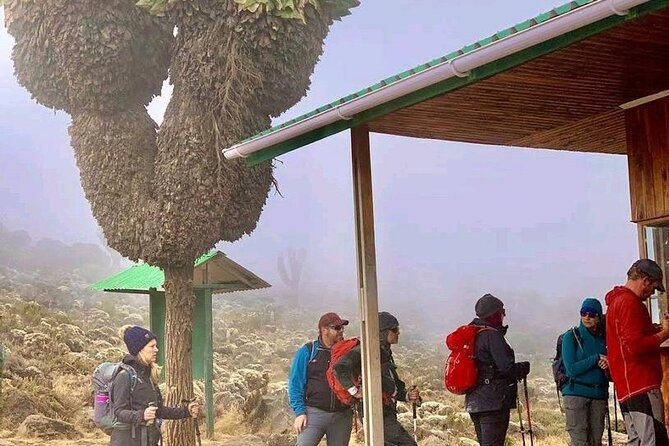
The first day takes about six hours. The path rises steadily through thick rainforest, with tall vegetation and a damp feel underfoot. This is an attractive opening because Kilimanjaro does not begin as a bare volcanic mountain. It starts green, shaded, and fertile.
The trail can be overgrown in places and is often wet and muddy. That matters when you are choosing footwear and clothing. You should expect dirty boots rather than a neat, dry stroll. The route is less well trodden in this section, which may give the opening a quieter feel, but it can also make progress slower.
The main challenge on Day 1 is not altitude. It is settling into the pace. You have a long week ahead, so conserve energy from the start. Six hours may sound manageable, but it is better to finish feeling capable than to treat the first day like a race.
Day 2: Climbing Toward the Shira Plateau
Day 2 continues upward through the forest before reaching a steeper ascent onto the Shira Plateau. The walking time is about five hours, making this a shorter day than the first.
The change in scenery is the reward. The forest begins to give way to open high country, and views of Kilimanjaro open up. Looking back, you can see Mount Meru rising above the direction of Arusha. That backward view is easy to miss if you focus only on the trail ahead, so remember to turn around.
This day is useful for finding your rhythm. The route is no longer simply shaded forest walking, but you have not yet reached the stark upper slopes. You gain altitude steadily, and the group can settle into the slow, consistent pace needed later.
The possible drawback is that the steep climb onto the plateau can feel abrupt after the softer forest trail. If your legs are still adjusting to carrying a pack, take the ascent carefully. The point is not to arrive first. It is to arrive ready for the much higher terrain ahead.
Day 3: Lava Tower, 4,600 Meters, and High Moorland
Day 3 is one of the most important acclimatization days. It lasts about eight hours and crosses the southwest side of Kilimanjaro through high moorland. The scenery becomes more exposed, and the mountain begins to feel much bigger and more severe.
The route passes beneath Lava Tower and the final section of the Western Breach before reaching camp. At its highest point, the day reaches about 4,600 meters. You then sleep lower, following the mountaineering principle of walk high, sleep low.
That pattern is valuable because altitude affects people differently. You might feel fine at a lower camp and then notice a headache, tiredness, or shortness of breath after gaining height. The itinerary gives your body time to experience higher altitude without making you sleep at the day’s highest point.
Eight hours is still a long day. You should not read the acclimatization benefit as an easy outing. It is a demanding hike, and the combination of altitude and distance can drain you even when the trail is not technically difficult.
A few more trips of this kind worth comparing:
- Climbing Kilimanjaro through 7 days Machame Route
★ 5.0 · 151 reviews - 7 Days Kilimanjaro via Machame route affordable price
★ 5.0 · 110 reviews - Private Kilimanjaro Hike 7 Day Lemosho Route
★ 5.0 · 60 reviews - 7-Day Magical Tanzania Safari -Premium High End Package
★ 5.0 · 53 reviews
Day 4: The Barranco Wall and Karanga Camp
Day 4 begins with a descent into the Great Barranco, followed by the climb up the Barranco Wall. This is one of the route’s most memorable sections, but it is also tiring.
The wall requires scrambling over rock, though it is described as non-technical. In practical terms, you will climb with your hands and feet in places, but you are not being asked to complete a technical mountaineering pitch. The effort is long rather than specialized.
After passing beneath the Heim and Kersten glaciers, you continue toward Karanga Valley. The final climb to Karanga Camp brings you to about 3,963 meters. The walking time is around five hours, with an optional afternoon acclimatization walk to roughly 4,200 meters for those feeling strong.
I like the shape of this day. You gain and lose height instead of simply marching straight upward, and the Barranco Wall provides a clear physical goal. You also get a chance to test how your body is coping before the summit push.
Still, do not underestimate the wall. A non-technical climb can remain strenuous, especially after several days of walking. If you feel weak or unwell, the optional afternoon hike is exactly that: optional.
Day 5: The Stark Approach to Barafu Camp
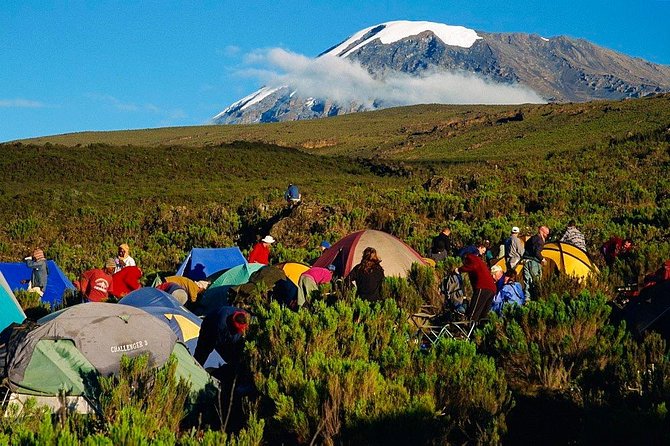
Day 5 is shorter on paper, at about three hours, but it is not an easy day. The route climbs to Barafu Camp at approximately 4,640 meters across steep, barren scree slopes.
There is no vegetation around the upper camp, and the open volcanic terrain gives you a clear sense of what lies ahead. The climb is made harder by altitude, even though the walking time is brief. You reach camp, eat, rest through the afternoon, and prepare for the summit night.
This is when the schedule becomes unusual. Dinner comes early, and you try to sleep before getting up between 11 p.m. and midnight. Hydration and warmth matter here, as you are preparing for a cold, dark climb after an already demanding week.
The afternoon rest is not wasted time. It is part of the climb. Keep your energy for the summit rather than treating Barafu as a sightseeing stop. The high camp may feel rough and exposed, but it serves an important purpose by putting you close enough to begin the final ascent around midnight.
Day 6: Stella Point, Uhuru Peak, and a 15-Hour Summit Day
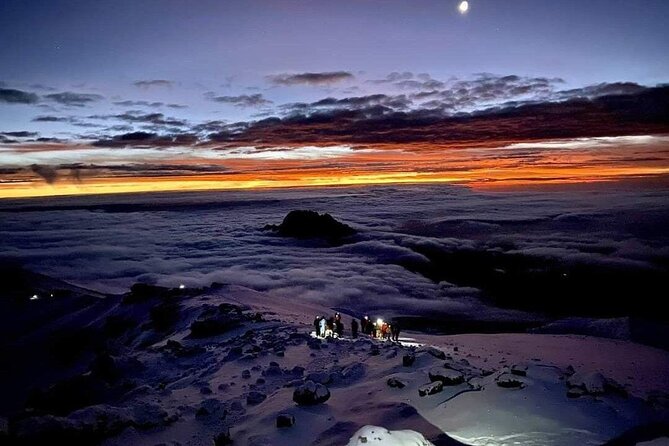
Day 6 is the hardest day by far. You start around midnight and climb steeply toward the summit glaciers. The initial ascent across scree takes about four to five hours, with a large gain in height over a relatively short distance.
You aim to reach Stella Point at 5,739 meters as the first light appears. From there, the crater ice cliffs surround you, with views toward Mawenzi Peak and beyond. Stella Point is already extremely high, so reaching it is a major achievement even before the final walk to the summit.
The route continues for about another hour to Uhuru Peak at 5,895 meters. This is the highest point in Africa and the goal of the climb. The summit section can feel slow because the altitude is extreme. You should expect a careful, measured pace rather than a normal hiking stride.
After the summit, you return to Stella Point and descend the scree to Barafu Camp for breakfast. Then you continue down to Millennium Camp for a long rest. Taken together, the day lasts about 15 hours, combining a midnight start, the summit ascent, and a major descent.
This is the part of the trip that requires the clearest expectations. The sunrise and crater views are powerful rewards, but the summit is not the only challenge. You still have to walk downhill after reaching the top. The decision to join this climb should rest heavily on your ability to handle a long day, limited sleep, steep ground, and high altitude.
The strongest praise connected with this experience centers on reaching the summit and the care of the Exceed Expectations Tours crew. A solo climber from the United States joined a group for the seven-day route at a competitive price, while another account describes reaching the summit after leaving Barafu at about 2 a.m. Those details fit the actual structure of the day: the night climb is central, not a minor add-on.
Oscar Swai, identified as the company director, handled detailed and reasonably priced arrangements for at least one booking. The crew also received warm appreciation for looking after climbers during difficult travel conditions. That does not remove the physical demands, but it suggests that communication and group support are important parts of the experience.
Day 7: Mweka Gate and the Return to Moshi
After the summit day, Day 7 feels gentle by comparison. You walk down through rainforest to Mweka Gate, with about six hours of trekking.
The descent is still long, especially after the previous day, but the lower altitude and forest setting should make it feel less severe than the upper mountain. At Mweka Gate, you complete park formalities and receive a certificate. Vehicles then take you back to your hotel in Moshi.
The hot shower waiting in Moshi is not a small detail. After a week of tents, cold upper camps, mud, scree, and a night climb, returning to a hotel marks a real change in comfort. Plan to keep Day 7 simple. Your body may be tired even if the trail is easier.
What $2,564.11 Per Person Gets You in Practical Terms
The listed price is $2,564.11 per person. That is a substantial cost, but Kilimanjaro climbs involve park access, a professional mountain crew, transport between Moshi and the gates, camping arrangements, and several days of logistical support. The itinerary specifically includes admission tickets, and you meet a crew of porters at Machame Gate.
You should still ask for a written breakdown before booking. The supplied details do not specify meals, equipment, hotel nights, airport transfers, tipping expectations, or exactly what camping supplies are provided. Do not assume that every cost connected with a seven-day mountain trip is included simply because park admission is included.
The price may be good value if it covers the major climbing services and gives you a properly paced seven-day schedule. The group limit of 15 is also useful. A group this size can still feel social while remaining more manageable than a very large departure.
The company’s past quotes were praised for being detailed and reasonable, and the experience received a five-star rating from six submitted reviews. The individual entries do not show numerical scores, so treat the praise as encouraging evidence rather than a guarantee. The most consistent positive themes are the competitive cost, summit success, and support from the crew.
Who Will Enjoy This Climb Most
This route suits you if you want a full mountain experience rather than the easiest possible route to the summit. You should be comfortable with seven days of walking, steep trails, tents, changing weather, and a summit attempt beginning around midnight.
It is also a good fit if you value changing scenery. The rainforest, Shira Plateau, high moorland, glaciers, volcanic scree, crater rim, and Mweka descent give the week a strong sense of progress.
You may prefer another option if hut accommodation is important, if you dislike camping, or if a 15-hour summit day sounds unreasonable. The Machame route is not presented as gentle. Its reward is a more varied approach, but you pay for that variety with steeper and longer walking.
A moderate fitness level is required. That phrase should be taken seriously, though the provided information does not give a detailed training plan. Before booking, ask the operator what pack weight you carry, what medical support is available, what happens if you cannot continue, and which items you need to bring yourself.
Booking Details, Group Size, and Cancellation Terms
Pickup is offered, and the experience uses a mobile ticket. The stated start time is 12 a.m., which matches the midnight start for the summit attempt, but you should confirm your exact pickup time in Moshi because the daily transfer to Machame Gate begins earlier on Day 1.
The maximum group size is 15. Confirmation is provided at booking, and the operator is Exceed Expectations Tours & Safari.
Cancellation is free up to 24 hours before the local start time for a full refund. Cancellations or changes made less than 24 hours before the start are not accepted for a refund.
FAQ
How long is the Machame Route climb?
The climb lasts approximately seven days, including six nights on the mountain according to the route description.
Where does the climb begin?
The trek begins at Machame Gate, reached by about a one-hour drive from Moshi.
Where does the climb finish?
The descent finishes at Mweka Gate. Vehicles then return you to your hotel in Moshi.
What is the highest point reached?
The summit is Uhuru Peak at 5,895 meters. The route also reaches Stella Point at 5,739 meters.
How long is summit day?
Day 6 lasts about 15 hours. You begin around midnight, reach the summit, return to Barafu Camp for breakfast, and continue down to Millennium Camp.
Is the Machame Route suitable for beginners?
The supplied information says you need a moderate physical fitness level. It also describes Machame as a tough route with steep trails, long distances, tents, and a very demanding summit day.
How large can the group be?
The maximum group size is 15 people.
Can I cancel for a full refund?
Yes. You can cancel at least 24 hours before the experience start time for a full refund. Cancellations or changes made less than 24 hours before the start are not refunded or accepted.
Should You Book the Seven-Day Machame Route?
I would choose this climb if you want Kilimanjaro’s varied scenery, prefer a seven-day acclimatization schedule, and accept that the route will be hard. The Barranco Wall, high camps, midnight summit attempt, and long descent make it a serious undertaking, but the route gives you a memorable approach and a different trail down.
The strongest reasons to book are the seven-day pacing, limited group size, included admission tickets, competitive listed price, and positive praise for Oscar Swai and the Exceed Expectations Tours crew. Before committing, get every inclusion in writing and make sure you understand the summit-day schedule.
Book it if you are ready for a tent-based climb and can train for long uphill and downhill days. Skip it if you want hut comfort, short walking days, or a relaxed mountain holiday.
Just added around Moshi
- Moshi: Lake Chala Tour: Hiking &/or Kayaking★ 4.5 · 3 reviews
- 3 Days Tanga Exclusive Beach Holiday★ 5.0 · 3 reviews
- Serengeti Wildebeest Migration.★ 5.0 · 3 reviews
- Chemka Hotpsrings E-Bike Day Trip★ 5.0 · 3 reviews
- Explore 1 day Ngorongoro Crater Budget Group Safari from Arusha★ 5.0 · 3 reviews
- Explore the 360° of Kilimanjaro★ 5.0 · 3 reviews
- Affordable Short Tanzania Safari (2 Days Camping Safari)★ 5.0 · 3 reviews
- Rongai Route 7 Days★ 5.0 · 3 reviews
Kilimanjaro Treks, compared.



8-Day Small-group Lemosho Kilimanjaro Summit Trekking
Read our review →


Climbing Kilimanjaro through 7 days Machame Route
Read our review →

Browse the lists this tour appears in