
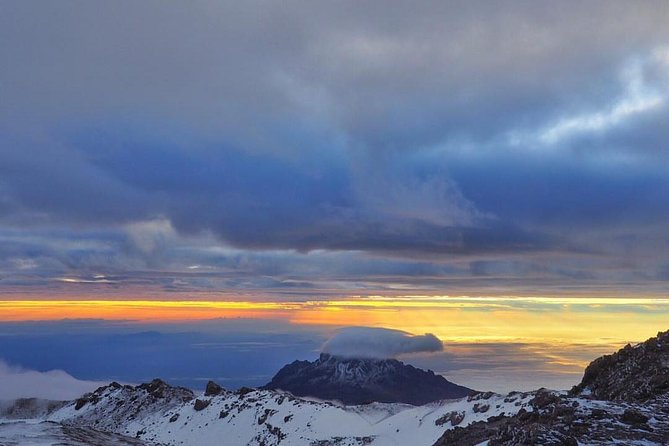
Reviewed · KILIMANJARO TREKS
Mt Kilimanjaro 6 days Marangu route hike
Africa’s highest point rewards steady pacing.
This six-day Kilimanjaro hike follows the Marangu Route from Moshi through rainforest, heathland, alpine desert, and the icy upper slopes near Uhuru Peak. I like the route’s gradual climb and direct path, and I like having a full acclimatization day at Horombo before the summit push. The private format, pickup option, included park admission, and meals also make the package easy to organize. The main concern is altitude: the route may be called the easiest, but summit day is still a serious physical test.
Safari Soles Tours charges $2,269.24 per person. That is a considerable price, yet the six-day plan includes guided mountain travel, park access, meals, transport back to Moshi or the airport, and a private group arrangement. The company has received especially strong praise for planning, food, accommodation, and a careful pace. Guides named in the feedback include Gasto, the head guide, and Lucas, who handled a Marangu day hike.
In This Review
- Key points to know before you book
- Why the Marangu Route appeals to first-time climbers
- Day 1: Rainforest from Marangu Gate to Mandara
- Day 2: Open heathland and the Horombo huts
- Day 3: A rest day with an optional Mawenzi hike
- Day 4: Across the saddle into alpine desert
- Day 5: Gilman’s Point, Uhuru Peak, and the long return
- Day 6: Forest descent to Marangu Gate
- What the $2,269.24 price offers
- Practical strengths and possible drawbacks
- Who should choose this Kilimanjaro hike?
- Should you book the six-day Marangu Route?
- FAQ
- Where does the Kilimanjaro hike start?
- What time does the experience start?
- How long is the Marangu Route experience?
- Is this a private tour?
- What is the highest point reached?
- Can I cancel for a full refund?
Key points to know before you book
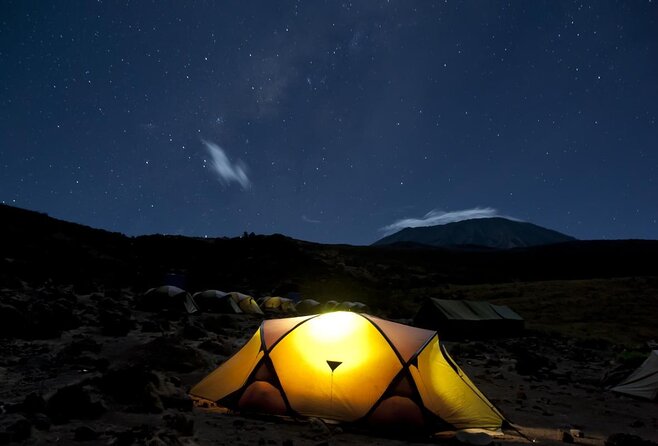
- Marangu uses a gradual route to Uhuru Peak: The path is direct and generally less rugged than some other Kilimanjaro routes, though the final ascent is steep, cold, and tiring.
- Horombo provides a full acclimatization day: You can rest or take the optional hike toward Mawenzi Hut at 4,600 meters.
- You cross four distinct habitats: Expect rainforest, heathland, alpine desert, and the high summit zone.
- Summit day starts around midnight to 2:00 AM: You need a headlamp, warm layers, patience, and enough energy for the long descent.
- The private format is useful: Only your group participates, which can make pacing and rest stops easier to manage.
- The final descent can be muddy: Gaiters and trekking poles are specifically useful on the forest path near Marangu Gate.
Why the Marangu Route appeals to first-time climbers
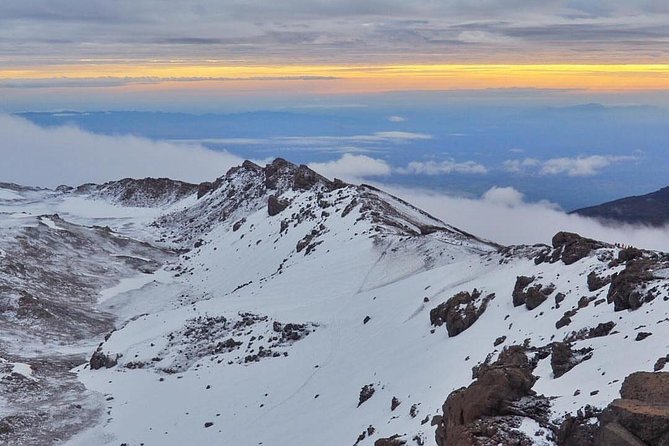
Marangu is popular because its route rises in a fairly direct line toward Kibo, Kilimanjaro’s summit cone. Instead of camping in tents, the itinerary uses hut or encampment accommodation, which can be appealing if you prefer a roof over your head at night.
The gradual slope helps you settle into the rhythm of mountain walking. You still gain substantial altitude, though, so easy does not mean effortless. By Day 2, you are already at 3,700 meters, where headaches, tiredness, and shortness of breath may begin.
I like the way this plan builds in a rest day rather than rushing straight upward. That pause at Horombo gives your body time to adjust before you cross the high saddle between Mawenzi and Kibo. It also gives you a better chance to understand how you respond to altitude before the hardest section.
The private setup adds another practical benefit. You are not tied to a large group’s pace, though your guide will still set a safe walking rhythm. One piece of advice from the company’s feedback is worth taking seriously: go slowly. On Kilimanjaro, a comfortable pace matters more than proving how fast you can walk.
More Kilimanjaro routes and climbs:
- Kilimanjaro climb by Lemosho Route (7-day)
★ 5.0 · 651 reviews - Kilimanjaro climb, Machame Route (7-day)
★ 5.0 · 262 reviews - Kilimanjaro Climbing Lemosho Route 8 Days.
★ 5.0 · 186 reviews
Day 1: Rainforest from Marangu Gate to Mandara
The first morning begins with breakfast and a briefing, followed by a drive of about two hours to Kilimanjaro National Park Gate. Registration comes before the actual climb, so the early part of the day includes practical preparation rather than nonstop walking.
From the gate, you follow a forest path to Mandara Encampment. The elevation rises from about 1,860 meters to 2,700 meters, with roughly 8 kilometers of walking and three to four hours on the trail.
This is a welcoming start. The rainforest is cool and shaded, with tall eucalyptus trees, birds, and the chance to spot colobus monkeys. The forest also helps you ease into the mountain routine before the air becomes noticeably thinner.
A short side trip to Maundi Crater is offered as a way to see the surrounding area, including northern Tanzania and Kenya. If your legs and schedule allow, this is a worthwhile addition because it gives you a wider view before the route climbs into open country.
You receive breakfast, lunch, and dinner on this day. The walking time is modest by Kilimanjaro standards, but wet ground can make the forest path slower than the figures suggest. Good shoes and rain protection are sensible from the start.
Day 2: Open heathland and the Horombo huts
Day 2 leaves the rainforest behind. The path rises through open moorland toward Horombo Encampment, with views of Mawenzi and Kibo opening up as the trees thin out.
You cover about 12 kilometers in five to six hours, climbing from 2,700 meters to 3,700 meters. Giant lobelias and groundsels add a distinctly Kilimanjaro feel to the route. These plants look almost unreal against the open slopes, and they are a reminder that you are moving through a high-altitude ecosystem rather than simply walking uphill.
This is also the first day when altitude may become a real issue. You may feel slower, breathe harder, or develop a headache. The correct response is to tell your guide, drink as directed, and keep your pace controlled. Trying to hide symptoms does not make the mountain easier.
Horombo is a valuable overnight stop because it gives you a proper base before the high crossing. Breakfast, lunch, and dinner are included, so you do not need to worry about finding food after a full day on the trail. The company has received praise for both food and accommodation, which matters more than usual when you are tired and cold.
Day 3: A rest day with an optional Mawenzi hike
Day 3 is the quiet hinge of the trip. You remain at Horombo to allow your body to adjust to the altitude.
You can rest at the hut or take an optional day hike toward Mawenzi Hut, reaching about 4,600 meters. This is used for further acclimatization, but it is not a day to race. The point is to walk higher and return to sleep lower, while giving your guide more information about how you are handling the altitude.
Breakfast and dinner are served at the hut. Lunch can be packed or taken at the hut, depending on your preference for the day.
I consider this one of the strongest features of the schedule. A shorter itinerary might look attractive on paper, but losing this day would mean less time for altitude adjustment. You should still understand that acclimatization does not guarantee a summit. It simply improves the plan’s chances and gives you a more measured approach.
The views around Horombo are another reason not to treat this as wasted time. Mawenzi and Kibo create a dramatic pair, and the saddle between them becomes your route on the next day.
A few more trips of this kind worth comparing:
- Private Kilimanjaro Hike 7 Day Lemosho Route
★ 5.0 · 60 reviews - Best Kilimanjaro hiking day trip tour with Kilinge Adventures
★ 4.5 · 54 reviews - #1. Best Kilimanjaro Day hike Tour-Machame Route-ISMANI
★ 4.2 · 47 reviews - Best Kilimanjaro Adventure 7 days Machame route Trekking
★ 5.0 · 42 reviews
Day 4: Across the saddle into alpine desert
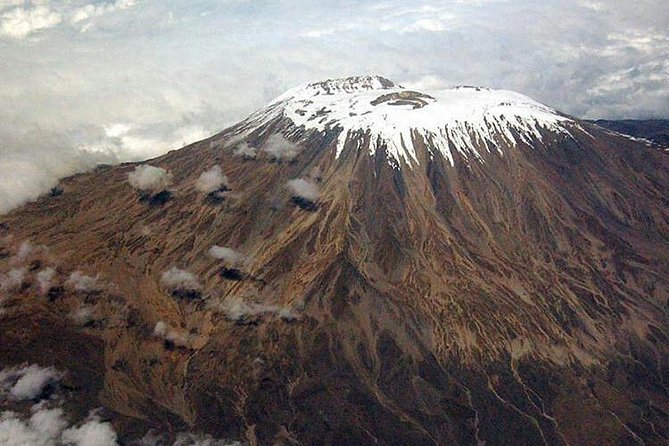
After Horombo, the route passes the last watering point and heads onto the broad saddle between Mawenzi and Kibo. The vegetation changes quickly. Upper heathland fades, then gives way to a stark alpine desert often described as moonscape.
You walk about 9 kilometers in five to six hours, climbing from 3,700 meters to 4,700 meters. The distance is not extreme, but the altitude changes the effort. Your steps may become slower, and even simple tasks can take more time.
This is a visually striking day because the trees and familiar plants are gone. The open ground, high peaks, and sparse vegetation make the mountain feel remote. At the same time, the lack of shade means you need sun protection and careful water management.
Dinner is followed by rest and final preparation for the summit climb. Since the ascent begins between midnight and 2:00 AM, you should organize your warmest clothing, headlamp, snacks, and other essentials before trying to sleep.
Do not expect a long, comfortable night. You may sleep only briefly, if at all. That is normal for this schedule, but it is one reason the summit day demands both fitness and patience.
Day 5: Gilman’s Point, Uhuru Peak, and the long return
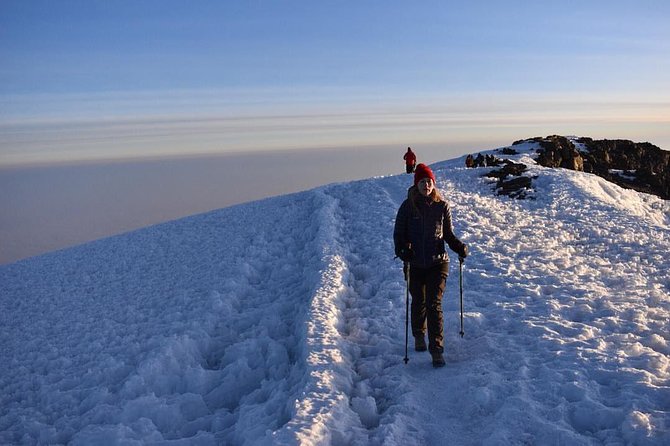
Day 5 is the decisive day. You begin in darkness, climbing steep scree or snow toward Gilman’s Point on the crater rim. A headlamp or flashlight is required, and the cold can be intense until you start descending.
The route then continues toward Uhuru Peak, the highest point in Africa. The final section is physically demanding because you are working at high altitude after several days of walking. The supplied schedule describes this as the most difficult part of the trip, and that is a fair warning.
The summit views can be extraordinary, but you should not treat the summit photograph as the only measure of success. Reaching Gilman’s Point, turning back safely, or stopping because of altitude symptoms can all be responsible decisions. Your guide’s judgment matters here.
After the summit attempt, you descend to Kibo for lunch and a rest, then continue to Horombo Encampment. That return to Horombo makes this an exceptionally long day. The upward climb gets most of the attention, but descending tired legs over loose ground can be hard on knees and ankles.
Pack your warm layers where you can reach them easily. The early hours are cold, and the temperature may change sharply as you lose elevation. A headlamp is not optional for this departure time, and gloves, a hat, and several warm layers are practical rather than excessive.
Day 6: Forest descent to Marangu Gate
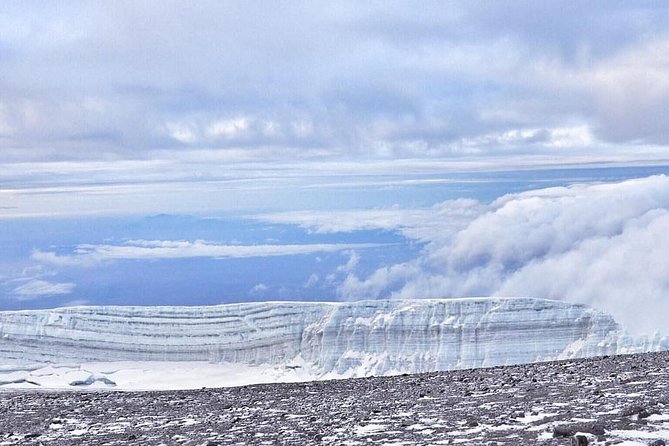
After breakfast, you descend through moorland to Mandara Hut, then continue along the lush forest path toward Marangu Gate.
The stated walking distance is about 20 kilometers, with four to five hours of hiking, dropping from roughly 3,700 meters to 1,700 meters. This is a long descent, but the lower altitude usually makes breathing easier even as your legs remain tired from the summit day.
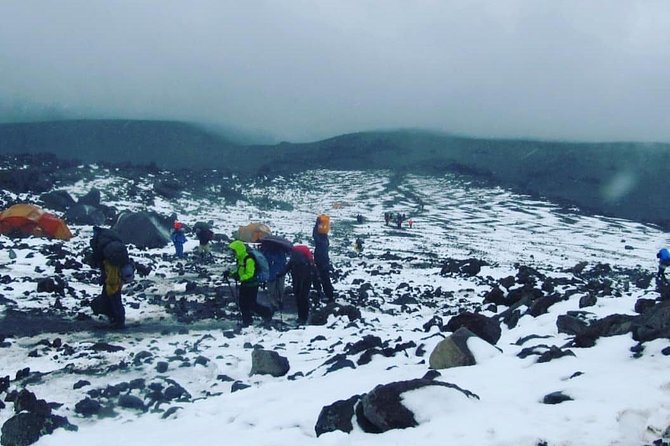
The forest section may be wet and muddy. Gaiters and trekking poles are specifically recommended, and you should keep rain gear and warmer clothing within reach even if shorts and a T-shirt become comfortable at lower elevations.
At the Marangu Gate, a vehicle meets you for the drive back to your hotel or the airport. The day ends with a celebration and the customary need to tip guides and porters. Tipping is not a minor afterthought on a mountain trip, so carry enough local currency or confirm the preferred method with the operator before you set out.
What the $2,269.24 price offers
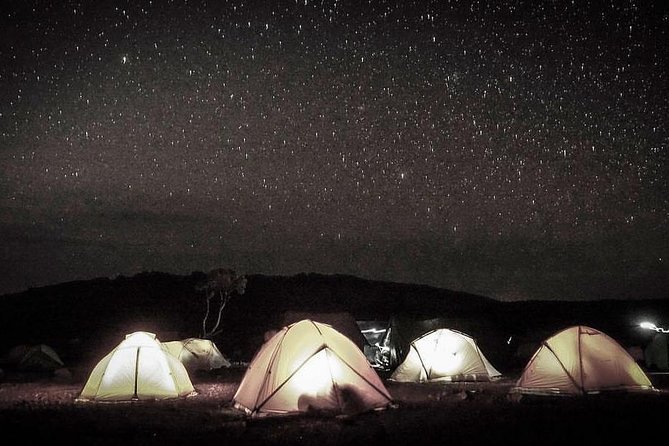
The price is $2,269.24 per person. You are paying for a six-day private Kilimanjaro program rather than a simple park entry or a short guided walk.
The package includes park admission on the main hiking days, meals during the route, and transport from the mountain back to your hotel or the airport. Pickup is offered, and confirmation arrives at booking. Group discounts may also be available, which could improve the value if you are arranging a larger private party.
The company’s strongest praise centers on organization, food, accommodation, and the mountain crew. Gasto is identified as a head guide connected with a successful summit trip, while Lucas handled a Marangu day hike. That does not promise that every departure will be identical, but it gives you useful names to ask about when confirming your guide team.
The price is harder to judge without a full list of inclusions such as equipment rental, airport transfers before the climb, or porter arrangements. Those details are not specified here, so ask the operator exactly what is covered before paying. The private format and acclimatization day help justify a higher price than a bare-bones group walk, but you should still compare the inclusions carefully.
Practical strengths and possible drawbacks
The best part of this trip is its pacing. The route is gradual, and Day 3 gives you time to acclimatize. A private group can also make it easier to walk at the slow pace recommended by the company.
The food and hut accommodation have been praised, another important point when you are spending nearly a week above the foothills. Three meals are included on the first four days, while breakfast is listed on the final descent day.
The main drawback is the route’s popularity and direct profile. You receive less time on the mountain than on longer routes, and the summit day remains very demanding. The phrase easiest route should never be confused with easy summit.
You also need to accept a rough final day. Twenty kilometers of descent, wet forest, and muddy sections can feel like a second challenge after the summit. Trekking poles and gaiters are small items that can make a big difference.
The activity is listed as suitable for most participants, but the altitude and long walking days still require preparation. Anyone with concerns about fitness or high-altitude travel should seek medical advice before booking.
Who should choose this Kilimanjaro hike?
I would recommend this trip to you if you want a direct Kilimanjaro route, prefer hut accommodation, and value a private arrangement. The six-day schedule is especially appealing if you want a built-in acclimatization day without committing to a longer mountain program.
It suits people who can handle several consecutive days of walking and who are willing to accept an early summit start. It is also a good match if you want an operator that offers pickup and handles meals, park access, and the return drive.
I would be more cautious if you are choosing it because the Marangu Route sounds easy. The summit attempt involves darkness, cold, steep scree or snow, high altitude, and a long descent. You need to prepare for a real mountain challenge, not a scenic stroll.
Booking is more convincing when you confirm the precise inclusions, ask who will lead your climb, and discuss the slow pace needed for acclimatization. Free cancellation is available up to 24 hours before the experience starts, while poor weather may lead to a new date or a full refund.
Should you book the six-day Marangu Route?
Book it if you want Kilimanjaro with a clear route, hut-based nights, private-group flexibility, and a useful acclimatization day. The plan covers the mountain’s major environments and gives you a strong chance to approach Uhuru Peak at a sensible pace.
Do not book it simply because it is advertised as the easiest route. The altitude cannot be removed, and summit day will test you. For a prepared walker who values organization and direct logistics, Safari Soles Tours offers a practical and well-supported way to take on Africa’s highest point.
FAQ
Where does the Kilimanjaro hike start?
The experience is based in Moshi, Tanzania. Pickup is offered, and the first mountain transfer takes about two hours to Kilimanjaro National Park Gate.
What time does the experience start?
The listed start time is 8:00 AM. The summit climb on Day 5 begins much earlier, between midnight and 2:00 AM.
How long is the Marangu Route experience?
The hike lasts approximately six days.
Is this a private tour?
Yes. Only your group participates in the activity.
What is the highest point reached?
The route continues from Gilman’s Point to Uhuru Peak, which is the highest point in Africa.
Can I cancel for a full refund?
Yes, if you cancel at least 24 hours before the experience start time. Cancellations made less than 24 hours in advance are not refunded.
More 6-Day Experiences
- Kilimanjaro climb, Lemosho Route (6-day)
★ 5.0 · 129 reviews - Kilimanjaro climb, Marangu route (6-day)
★ 5.0 · 72 reviews - 6 Days 5 Night Safari
★ 5.0 · 57 reviews - 6 Days Tanzania Classic Safari
★ 5.0 · 52 reviews
Just added around Moshi
- Moshi: Lake Chala Tour: Hiking &/or Kayaking★ 4.5 · 3 reviews
- 3 Days Tanga Exclusive Beach Holiday★ 5.0 · 3 reviews
- Serengeti Wildebeest Migration.★ 5.0 · 3 reviews
- Chemka Hotpsrings E-Bike Day Trip★ 5.0 · 3 reviews
- Explore 1 day Ngorongoro Crater Budget Group Safari from Arusha★ 5.0 · 3 reviews
- Explore the 360° of Kilimanjaro★ 5.0 · 3 reviews
- Affordable Short Tanzania Safari (2 Days Camping Safari)★ 5.0 · 3 reviews
- Rongai Route 7 Days★ 5.0 · 3 reviews
Kilimanjaro Treks, compared.



8-Day Small-group Lemosho Kilimanjaro Summit Trekking
Read our review →


Climbing Kilimanjaro through 7 days Machame Route
Read our review →

Browse the lists this tour appears in