
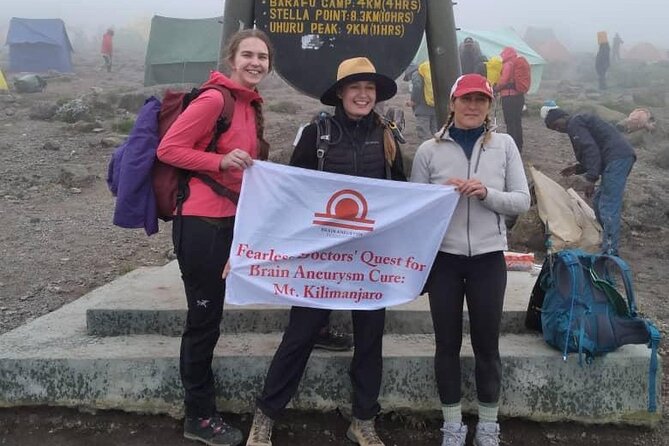
Reviewed · KILIMANJARO TREKS
Mt Kilimanjaro Climb – 6 days Marangu
Africa’s highest peak rewards patience. This six-day Mount Kilimanjaro climb from Moshi uses the Marangu Route, a famous trail with dormitory huts, a private guide, full board, and an extra acclimatization day. I like the slow summit plan, which gives you a better chance to adjust before the hardest night, and I like that park fees, meals, transport, rescue fees, and an oxygen cylinder are included.
The main drawback is simple: Marangu may be the cheapest and easiest route in terms of terrain, but Kilimanjaro is still a serious high-altitude climb. The final ascent takes place at night, the facilities become basic at Kibo Hut, and personal mountain gear, insurance, tips, and pre- or post-climb lodging cost extra.
In This Review
- Key points about this Kilimanjaro climb
- Why the Marangu Route works for some climbers
- Day 1: Rainforest, coffee, and Mandara Hut
- Day 2: Giant plants on the way to Horombo
- Day 3: The acclimatization walk to Mawenzi Saddle
- Day 4: Across the alpine desert to Kibo Hut
- Day 5: Uhuru Peak and the long return to Horombo
- Day 6: Forest descent and a Kilimanjaro beer
- Huts, food, and what is included
- The guide team and personal service
- Gear, fitness, and extra costs
- Who should book this climb?
- Should you book the six-day Marangu climb?
- FAQ
- How long is the Mount Kilimanjaro climb?
- Which route does this experience use?
- Is accommodation included?
- Is there an acclimatization day?
- Are meals and drinking water included?
- Is mountain gear included?
- Are airport transfers included?
- Can the experience be canceled for a refund?
Key points about this Kilimanjaro climb
- Six days with an acclimatization day: You spend an extra night at Horombo Hut and take a walk toward Mawenzi Saddle before summit day.
- Marangu Route hut accommodation: You sleep in dormitory-style mountain huts rather than carrying a tent for every night.
- A private guided climb: Your group has its own professional guide, allowing for a more personal pace and closer support.
- Five nights on the mountain: Meals, drinking water, park charges, rescue fees, transport to the gate, and basic camping facilities are covered.
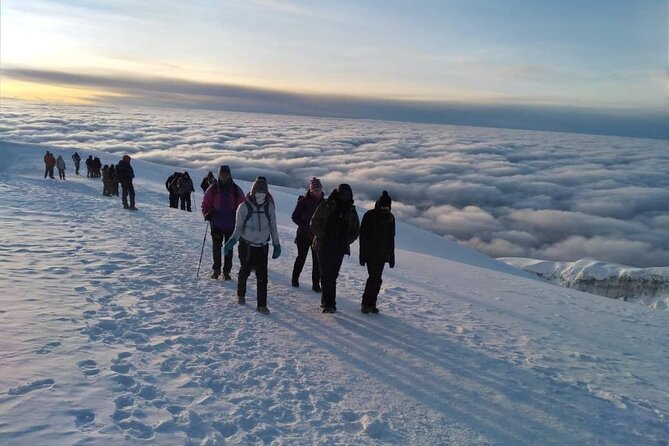
- A demanding summit night: The climb to Uhuru Peak begins just before midnight and includes heavy scree, switchbacks, cold, and a major descent.
- Strong company reputation: Nyange Adventures is rated 4.9 from 12 reviews, with 100 percent recommendation, and past clients particularly praise guides such as Musa, Freddy, Benny, Francis, Eric, Nicolas, and Steven.
Why the Marangu Route works for some climbers
Marangu is often called the easiest Kilimanjaro route. That description needs a little care. The trail is generally well maintained, the route is direct, and hut accommodation removes the need to sleep in a tent each night. Those are real advantages.
Still, the mountain does not become easy. You gain altitude quickly over the first four days, and the summit push remains long and tiring. The route also uses the same trail for the ascent and descent, so you do not get the changing scenery found on some other routes.
For me, the best feature of this version is the extra acclimatization day at Horombo Hut. On a shorter schedule, you may reach high camp without giving your body enough time to adjust. Here, Day 3 gives you a useful pause, with a recommended walk toward the Mawenzi Saddle and Zebra Rocks.
The private format also matters. You are not simply folded into a large group with one fixed pace. Your guide can watch how you are moving, remind you to drink, and encourage the steady pole, pole rhythm, which means slowly, slowly.
More Kilimanjaro routes and climbs:
- Kilimanjaro climb by Lemosho Route (7-day)
★ 5.0 · 651 reviews - Kilimanjaro climb, Machame Route (7-day)
★ 5.0 · 262 reviews - Kilimanjaro Climbing Lemosho Route 8 Days.
★ 5.0 · 186 reviews
Day 1: Rainforest, coffee, and Mandara Hut
Your first morning begins after breakfast, with pickup from your hotel or hostel in Moshi. The drive to Marangu Gate takes about 45 minutes. The published meeting information also gives Kilimanjaro Airport as a starting point at 8:30 a.m., so confirm the exact pickup arrangement before you arrive.
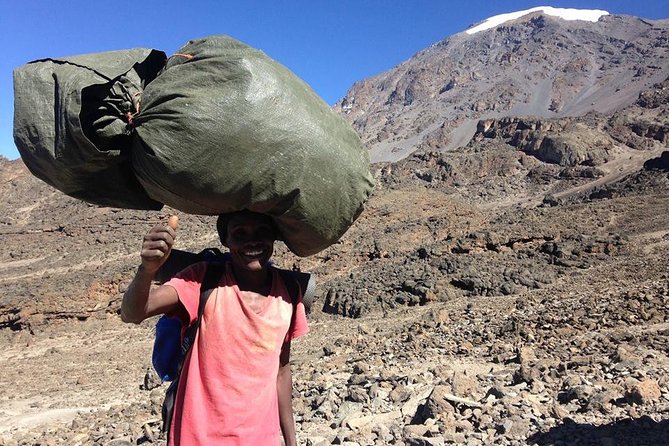
At the gate, you register and begin walking through Montane Forest. The first section gains about 870 meters, or 2,900 feet, and takes roughly four to five hours. This is a pleasant opening to the climb, with dense rainforest, coffee plantations, colorful birds, and a good chance of seeing black-and-white colobus monkeys.
That wildlife possibility gives this route a special character. You are not starting on bare rock. You begin among thick vegetation, then gradually leave the warmer forest behind as the mountain rises.
Mandara Hut is the first overnight stop. The accommodation is dormitory-style, not a private room, so bring patience and earplugs if you are a light sleeper. Dinner and water are provided, and the short first day gives you time to settle into the walking routine.
Day 2: Giant plants on the way to Horombo
Day 2 is longer and steeper. You walk for about six to eight hours and gain another 1,020 meters, or 3,300 feet. The route first continues through forest, then changes into moorland.
This change in vegetation is one of the pleasures of the climb. The thick trees give way to open alpine meadows, giant heather, and unusual plants such as giant lobelia and giant groundsel. Some of these plants can reach around 16 feet in height, making the moorland feel distinct from any ordinary mountain walk.
Horombo Hut is your home for the next two nights. You receive hot water for washing, an evening meal, and a dormitory bed. The facilities are limited, but this is a useful stop because the extra night here is central to the schedule.
Pay attention to the length of this day. Six to eight hours on foot, after a full first day, is not a casual hike. A moderate level of fitness is required, and you should keep your pack as light as possible while leaving room for warm layers and water.
Day 3: The acclimatization walk to Mawenzi Saddle
Day 3 is not a rest day in the lazy sense. It is an acclimatization day, and it may be the most important part of the itinerary.
You take a four- to five-hour round-trip walk near Horombo Hut, with Mawenzi Saddle and Zebra Rocks as popular goals. The point is to spend time at a higher elevation, then return to sleep at Horombo. That pattern gives you useful altitude practice without forcing you to sleep at the day’s highest point.
Your guide should keep the pace controlled. Drink enough water, move slowly, and report headaches, nausea, unusual tiredness, or other symptoms rather than trying to hide them. The climb is not a contest, and reaching the top depends as much on careful pacing as on determination.
This day also gives you a chance to appreciate the mountain without the pressure of a major transfer. The view toward Mawenzi is a highlight, and the walk helps break up the long upward progression.
A few more trips of this kind worth comparing:
- Kilimanjaro climb, Lemosho Route (6-day)
★ 5.0 · 129 reviews - Kilimanjaro climb, Marangu route (6-day)
★ 5.0 · 72 reviews - 6 Days 5 Night Safari
★ 5.0 · 57 reviews - 6 Days Tanzania Classic Safari
★ 5.0 · 52 reviews
Day 4: Across the alpine desert to Kibo Hut
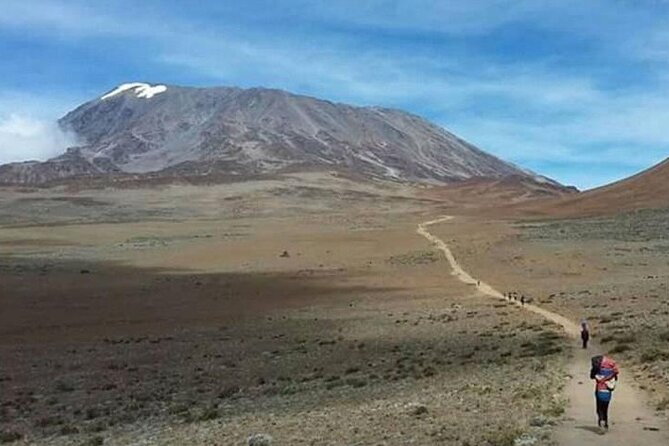
After the sunrise and breakfast, you leave the moorland behind. The route crosses the saddle between Mawenzi and Kibo, with about 980 meters, or 3,200 feet, of elevation gain. Expect six to eight hours of walking.
The scenery becomes much barer here. Heathland changes into an alpine desert with a stark, almost lunar feel. You may begin to notice altitude symptoms, so this is another day to speak plainly with your guide. The included oxygen cylinder and oximeter provide useful safety equipment, but they do not make it sensible to ignore how you feel.
Kibo Hut is a drystone-walled building with dormitories and limited facilities. It is not a place for a long evening. You rest, eat, organize your summit clothing, and prepare for an early start.
This is the point where your packing choices become important. You need your warmest clothes, headlamp, gloves, hat, and personal climbing equipment ready before bed. The tour does not include your personal mountain gear, so you must arrange that separately.
Day 5: Uhuru Peak and the long return to Horombo
Summit day begins just before midnight. You leave Kibo Hut in darkness and walk northwest over heavy stone scree, using switchbacks between the Ratzel and Rebmann glaciers.
This is the toughest part of the route. The climb to Stella Point reaches 5,685 meters, or 18,652 feet, and requires about six to seven hours. The air is thin, the ground is loose, and the cold can be severe. Your guide’s pacing and judgment matter greatly here.
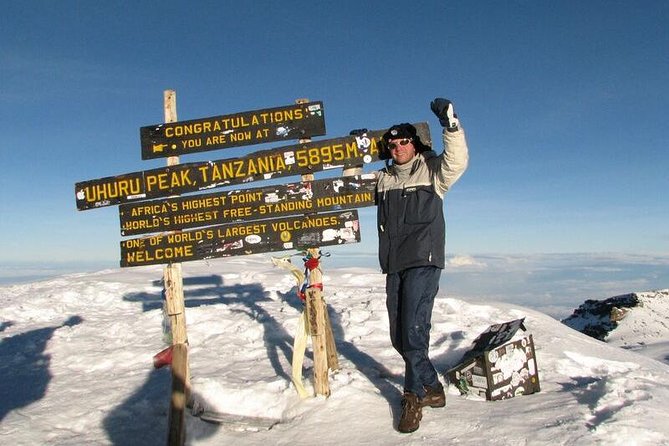
At Stella Point, you continue around the crater rim toward Uhuru Peak, the highest point on Mount Kilimanjaro. After reaching the summit, you descend to Kibo Hut, rest briefly, and continue down to Horombo Hut. The published schedule gives about five to six hours from Kibo to Horombo, with a total day of around 13 hours.
That descent is easy to underestimate. Your legs have already worked hard, and the drop of about 2,785 meters, or 9,100 feet, is substantial. Eat, drink, and follow your guide’s instructions even after the summit photographs are finished.
Weather conditions can change quickly at high elevation. The summit plan is demanding, so you should approach the day with a clear understanding that reaching Stella Point is a significant achievement, even though Uhuru Peak is the stated goal.
Day 6: Forest descent and a Kilimanjaro beer
The final walking day returns you to Marangu Gate through the rainforest. After breakfast, you descend for about five to seven hours and lose roughly 1,890 meters, or 6,200 feet.
Compared with summit day, this is the easiest section, but tired knees can make downhill walking uncomfortable. The forest feels warmer and fuller after the stark upper mountain. At the gate, successful climbers who reached Stella Point and Uhuru Peak receive certificates.
Transport then takes you back to your hotel. A shower, dinner, and a Kilimanjaro beer are part of the natural rhythm of the day, though the beer is best understood as a suggested celebration rather than a listed inclusion.
Huts, food, and what is included
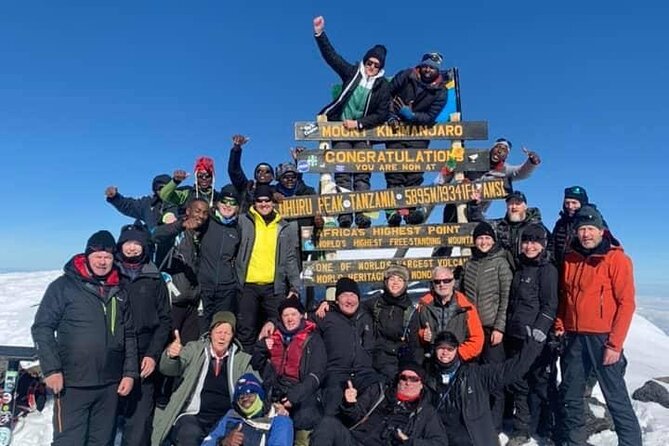
The price is $2,185.90 per person. That is not a budget walk, but it covers many expensive parts of a Kilimanjaro operation: park entry, camping and forest fees, rescue fees, government taxes, transport to and from the gate, five nights of accommodation, three meals a day, drinking water, a professional guide, oxygen, and an oximeter.
The accommodation is described as dormitory-style huts in the daily plan. The inclusions also mention a tent, mattresses, and mess tent. Confirm how those camping facilities apply to this specific Marangu departure, since the route description centers on mountain huts.
Meals include breakfast, lunch, and dinner, with lunch listed separately as four included lunches. You should still clarify the exact meal plan before booking if you have allergies or dietary restrictions, as no special menu details are provided.
A particularly good sign is the stated commitment to fair and ethical salaries for the mountain team under KPAP guidelines. Porters and cooks do much of the physical work behind a climb like this. You should also budget for tips, which are not included and are shared among the guide, cook, and porters.
The guide team and personal service
The strongest praise for Nyange Adventures focuses on the guides and the way they look after people. Specific guides named in past trips include Musa, Freddy, Benny, Francis, Eric, Nicolas, and Steven. That does not guarantee who will lead your climb, but it gives you a useful point of comparison when you communicate with the company.
Freddy and Benny were praised for careful instruction and explanations about nature, wildlife, the mountain, and the route. Musa led a six-day Marangu climb for a group of friends and was described, along with his team, as wonderful. Francis received repeated praise for being helpful and friendly, while Steven was remembered for making the experience feel personal.
One important practical note is that a private tour does not mean you climb without a support team. Your group participates privately, but the mountain operation still includes guides, cooks, and porters. Ask how large your support team will be and how tipping is handled before departure.
Past feedback also includes praise for the company’s organization and ethical approach, along with a few references to delays. That is a fair expectation for a mountain trip. Build flexibility into your plans, especially if you have a safari, flight, or hotel reservation immediately after the climb.
Gear, fitness, and extra costs
You need moderate physical fitness for this experience. The daily walks are manageable for a fit hiker, but the summit day is a different test. It combines a midnight start, cold, altitude, loose rock, a climb to 5,895 meters at Uhuru Peak, and a long descent.
Personal climbing gear is not included. The exact equipment list is not supplied, so ask Nyange Adventures for its current requirements. At minimum, you should clarify clothing for arctic conditions, footwear, head protection, gloves, a headlamp, sleeping equipment, and protection from changing weather before you arrive.
Also budget for:
- Tips for the guide, cook, and porters
- Personal mountain clothing and equipment
- Travel insurance
- Accommodation before and after the climb
- Airport transfers, unless arranged separately
Hotel pickup and drop-off are included, but pre- and post-climb accommodation and airport transfers can be booked on request. Pickup is offered, and group discounts are available, so ask for the current price if you are traveling with friends.
Who should book this climb?
I would recommend this route to a reasonably fit first-time Kilimanjaro climber who prefers huts over tents and wants a private guide. The extra acclimatization day is a major benefit, and the route’s direct trail makes the schedule easy to understand.
It also suits friends traveling together. A private format gives your group control over the pace and creates a more personal relationship with the guide. The company’s past work has also combined Kilimanjaro climbs with short safaris, which may be useful if you want to add a wildlife trip in Tanzania.
I would think twice if you want a relaxed mountain holiday, dislike dormitories, or have no time for careful preparation. Marangu is often labeled easy, but the summit night is long and physically demanding. You also need to arrange personal gear, insurance, and tips.
Free cancellation is available if you cancel at least 24 hours before the experience start time. Changes or cancellations within 24 hours are not accepted for a refund, and the local time cutoff applies.
Should you book the six-day Marangu climb?
Book it if you want a private, well-supported route with hut accommodation, a built-in acclimatization day, and major park and meal costs included. The price is easier to justify because it covers rescue fees, transport, oxygen, an oximeter, five nights, and the mountain team.
Before paying, confirm the pickup point, the hut and camping arrangements, the personal gear list, the guide assigned to your group, and the tip expectations. If those details suit you, Nyange Adventures offers a strong option for a first Kilimanjaro climb.
FAQ
How long is the Mount Kilimanjaro climb?
The climb lasts approximately six days, with five nights of accommodation on the mountain.
Which route does this experience use?
It uses the Marangu Route, one of Kilimanjaro’s best-known routes and the route described as the easiest.
Is accommodation included?
Yes. Five nights of accommodation are included. The daily schedule describes dormitory-style huts, while the inclusions also mention camping facilities, so confirm the exact arrangement before booking.
Is there an acclimatization day?
Yes. Day 3 is an extra acclimatization day at Horombo Hut, with a recommended four- to five-hour walk toward Mawenzi Saddle and Zebra Rocks.
Are meals and drinking water included?
Yes. The package includes breakfast, lunch, dinner, and drinking water. Lunch is also listed as four included lunches.
Is mountain gear included?
No. Personal mountain climbing gear and equipment are not included.
Are airport transfers included?
No. Pre- and post-climb accommodation and airport transfers are not included, although booking assistance is available on request. Hotel pickup and drop-off are included.
Can the experience be canceled for a refund?
Yes. You can receive a full refund if you cancel at least 24 hours before the experience start time. Cancellations or changes made less than 24 hours before the start are not accepted.
Just added around Moshi
- Moshi: Lake Chala Tour: Hiking &/or Kayaking★ 4.5 · 3 reviews
- 3 Days Tanga Exclusive Beach Holiday★ 5.0 · 3 reviews
- Serengeti Wildebeest Migration.★ 5.0 · 3 reviews
- Chemka Hotpsrings E-Bike Day Trip★ 5.0 · 3 reviews
- Explore 1 day Ngorongoro Crater Budget Group Safari from Arusha★ 5.0 · 3 reviews
- Explore the 360° of Kilimanjaro★ 5.0 · 3 reviews
- Affordable Short Tanzania Safari (2 Days Camping Safari)★ 5.0 · 3 reviews
- Rongai Route 7 Days★ 5.0 · 3 reviews
Kilimanjaro Treks, compared.



8-Day Small-group Lemosho Kilimanjaro Summit Trekking
Read our review →


Climbing Kilimanjaro through 7 days Machame Route
Read our review →

Browse the lists this tour appears in