
Reviewed · KILIMANJARO TREKS
Mt Kilimanjaro Climb – 7 days Machame
Africa starts with a long uphill walk. This seven-day Machame Route climb gives you a clear path to Uhuru Peak, with meals, tents, porters, and guides included. I like the careful climb-high, sleep-lower plan, and I like that Nyange Adventures lists fair team salaries under KPAP guidelines. The main consideration is the price, $2,543.59 per person, before tips, personal gear, insurance, drinks, and some airport or pre and post-trip costs.
The Machame Route is often called the Whisky Route, but you will find very little whisky on the mountain. You will find rainforest, moorland, alpine desert, a midnight summit push, and a tough return to Barafu Camp. This is a private trip for your group, which makes pacing easier, though the route still demands moderate physical fitness and real preparation.
In This Review
- Key points before you book
- What the $2,543.59 price really covers
- Day 1: From the park gate into the rainforest
- Day 2: Leaving the forest for Shira Plateau
- Day 3: Lava Tower and the climb-high, sleep-low plan
- Day 4: The Barranco Wall and the mountain ridge
- Day 5: Barafu Camp and the wait for summit night
- Day 6: The midnight push to Uhuru Peak
- Day 7: Rainforest descent and the farewell ceremony
- Guides, safety, and the human side of the climb
- Food, camping, and what you must bring
- Who should choose this Machame Route climb?
- Booking details worth checking
- Should you book the seven-day Machame climb?
- FAQ
- How long does the Kilimanjaro climb last?
- What meals are included?
- Is camping equipment provided?
- Is the climb private or shared?
- What level of fitness do I need?
- Are tips included in the price?
Key points before you book
- Seven days gives you useful acclimatization: The route takes you up to Lava Tower at about 4,640 meters, then down to Barranco Camp before the summit push.
- The scenery changes fast: You move from ancient rainforest to heath, moorland, alpine desert, glacier views, and the crater rim.
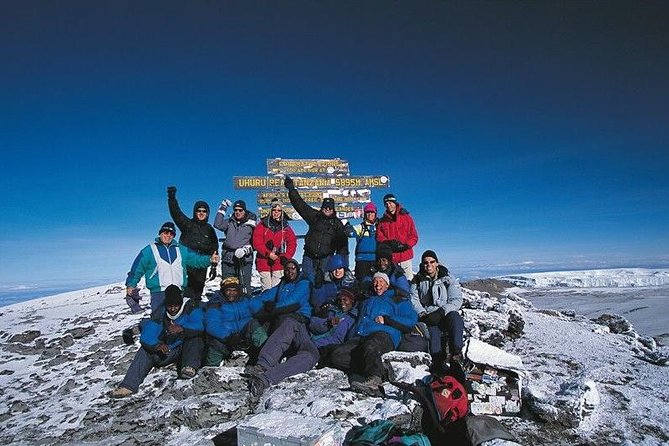
- Summit night is the hard part: You start around midnight, reach Stella Point after roughly five to seven hours, then continue to Uhuru Peak at 5,895 meters.
- A full mountain crew is included: Your package covers a professional guide, assistant guide, cook, porters, tents, mattresses, and a mess tent.
- The Barranco Wall looks worse than it is: You may use your hands for balance and grip, but the route has no technical climbing passages.
- Budget for the extras: Team tips are not included, and you must bring or hire personal climbing gear, arrange travel insurance, and check airport transfer details.
What the $2,543.59 price really covers
At first glance, this is a substantial price for a seven-day walking trip. On Kilimanjaro, though, your money pays for far more than a guide leading you up a trail.
The package includes six nights of camping, three meals each day, drinking water, transport to and from the park gate, government taxes, and the mountain crew. You also receive a tent, mattress, mess tent, oxygen cylinder, and pulse oximeter. Coffee and tea are included, as are breakfast, lunch, and dinner for the climb.
The support structure matters. Porters carry much of the camp equipment, while the cook prepares meals and the guides watch your progress. This lets you concentrate on walking slowly, drinking water, staying warm, and dealing with altitude.
I also pay attention to the company’s statement that it provides fair and ethical salaries in line with KPAP guidelines. That is important on Kilimanjaro, where the treatment and pay of porters deserve serious attention. Still, tips are expected separately. The stated recommendations are $20 per day for the head guide, $12 to $15 for an assistant guide, $12 for the cook, and $5 to $8 for each porter, divided among everyone in your group.
Personal mountain clothing and equipment are not included. You should also allow money for alcoholic and soft drinks, travel insurance, and accommodation before or after the climb. The information says airport transfers before and after the trip can be arranged on request, but they are not part of the listed package. Confirm exactly where your pickup begins, especially since the itinerary refers to an airport pickup while the inclusions focus on hotel pickup and drop-off.
More Kilimanjaro routes and climbs:
- Kilimanjaro climb by Lemosho Route (7-day)
★ 5.0 · 651 reviews - Kilimanjaro climb, Machame Route (7-day)
★ 5.0 · 262 reviews - Kilimanjaro Climbing Lemosho Route 8 Days.
★ 5.0 · 186 reviews
Day 1: From the park gate into the rainforest
The first day begins with transport to Kilimanjaro National Park and the Machame Gate. The guide handles entrance forms while you watch the mountain teams organize food, tents, cooking equipment, and other supplies.
That gate scene gives you a useful introduction to how a Kilimanjaro climb works. You see the amount of work behind a simple campsite before taking your first steps uphill. Once the formalities are finished, the route enters the rainforest.
The walk to Machame Camp takes about five to six hours. The forest is one of the most enjoyable parts of the opening day, with old trees, ferns, liana, and lichen. It is cool and green, but the path still climbs steadily, so do not treat the first day as a casual stroll.
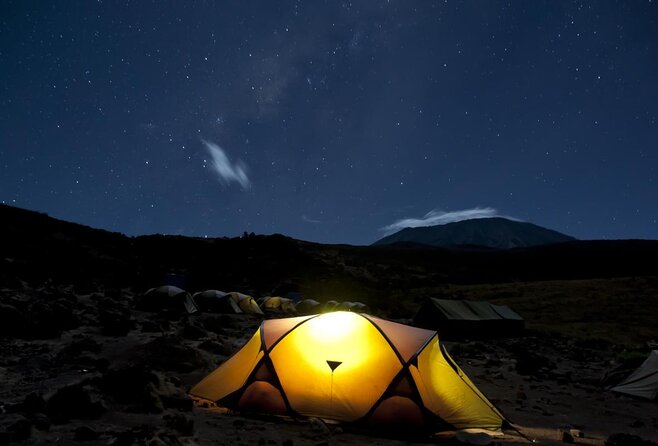
Your first night is in a tent rather than a lodge. That is part of the deal here. Camping facilities are supplied, but you still need personal layers, a sleeping bag or suitable sleeping system, and clothing that can handle damp conditions.
Day 2: Leaving the forest for Shira Plateau
Day two is shorter in distance but still listed at roughly seven hours. You leave the rainforest behind and enter moorland and heath, where the trees thin out and the mountain feels much more open.
Shira Plateau is an important change in the trip. The forest no longer encloses you, and the high mountain begins to feel exposed. From camp, you may see the Kibo glacier catching the evening light. That view gives you a first strong sense of the summit ahead.
The timing is sensible. An early start aims to put you at camp by mid-afternoon, leaving time to eat, rest, and adjust to the altitude. Do not waste that quiet period by pushing yourself to socialize or wander unnecessarily. On this climb, rest is part of the work.
The guide and cook make a real difference here. You do not need to find food or set up a full camp after a long walk. You can arrive, change into dry layers, drink, eat, and focus on how your body feels.
Day 3: Lava Tower and the climb-high, sleep-low plan
Day three is one of the most useful days for altitude adjustment. From Shira Plateau, you climb toward Lava Tower, reaching about 4,640 meters, then continue down through Barranco Valley to Barranco Camp.
The walking takes about six to seven hours, with the day described elsewhere as roughly six hours. Either way, this is not a throwaway transfer day. You gain around 700 meters during the climb, but sleep at a level not much higher than the previous night.
That pattern is the point. Your body gets time at a higher elevation before you rest lower. It cannot guarantee that you will avoid altitude sickness, but it gives the itinerary a more measured rhythm than a direct rush toward the summit.
The scenery becomes stark and spare. You pass through alpine desert, then reach the Barranco Valley, where small lobelia plants and giant senecios add strange shapes to the dry ground. Dinner follows at camp, and an early rest is wise.
Pay attention to your guide on this day. The supplied oxygen cylinder and pulse oximeter are safety equipment, not shortcuts. They do not make poor pacing safe, and they do not replace honest communication if you feel unwell.
A few more trips of this kind worth comparing:
- Climbing Kilimanjaro through 7 days Machame Route
★ 5.0 · 151 reviews - 7 Days Kilimanjaro via Machame route affordable price
★ 5.0 · 110 reviews - Private Kilimanjaro Hike 7 Day Lemosho Route
★ 5.0 · 60 reviews - 7-Day Magical Tanzania Safari -Premium High End Package
★ 5.0 · 53 reviews
Day 4: The Barranco Wall and the mountain ridge
After breakfast, you tackle the famous Barranco Wall. This is the section many people worry about before the climb, but it is not described as technical climbing. You may place your hands on the rock for balance or grip, and you should follow the guide’s instructions closely.
The day includes repeated ascents and descents. That can be more tiring than one long, steady uphill walk. After the wall, the route follows a mountain ridge toward camp, with views of Kibo’s glacier on your left.
The listed walking times vary from three to four hours to about seven hours, which likely reflects the difference between walking time and the full day on the mountain. Allow the longer figure when planning your energy. Mountain pace, breaks, meals, and camp routines all take time.
I like this section because it offers a physical challenge without requiring technical mountaineering skills. Still, the word wall should not make you careless. You need steady footing, sensible clothing, and enough balance to move comfortably over uneven rock.
Day 5: Barafu Camp and the wait for summit night
The route to Barafu Camp takes about three to four hours, with the day shown as roughly six hours in total. The setting is now a moon-like alpine desert, with little shelter and a much colder, harsher feel than the lower forest.
Barafu is the launch point for the summit. After dinner, you go to bed early, although sleep may be difficult because of altitude, cold, nerves, or all three. Organize your headlamp, warm clothing, water, snacks, gloves, and other summit gear before lying down.
This is a good place to be realistic. The summit attempt begins around midnight, so day five is not a normal rest day. You need to conserve energy from the moment you reach camp. Eat even if your appetite is poor, drink regularly, and ask the guide if you need help adjusting clothing or equipment.
Day 6: The midnight push to Uhuru Peak
Summit day is the toughest and most memorable part of the climb. You are woken shortly before midnight for tea and biscuits, then begin the slow ascent toward Stella Point.
The climb to the crater rim takes about five to seven hours. From Stella Point, you continue for another one to two hours to Uhuru Peak, at 5,895 meters, the highest point in Africa. The goal is to arrive around sunrise, when the light spreads across the crater and surrounding high ground.
This is where the seven-day schedule earns its keep. You have already crossed several altitude zones and spent time at Lava Tower before facing the summit. That preparation helps, but it does not make the final push easy.
At this height, cold and fatigue can become serious problems. Walk slowly. Keep close to the guide. Tell the crew if you have symptoms of altitude sickness or cannot continue safely. The oxygen cylinder and pulse oximeter are useful parts of the safety plan, but your guide’s judgment and your own honesty matter just as much.
After Uhuru Peak, you descend by the same route to Barafu Camp, reaching it after roughly one to two hours from the summit according to the supplied schedule. The full day is listed at about seven hours, though the summit section alone can occupy much of the night and morning. Expect to feel worn out when you return.
The mountain team waits with snacks and refreshments before you continue the descent. This return to Barafu is easy to underestimate. Going down may feel simpler than climbing up, but tired legs and loose ground can make it demanding.
Day 7: Rainforest descent and the farewell ceremony
The final morning starts with breakfast and a farewell ceremony for the mountain crew. This is a fitting close to a climb that depends on many people, not only the person walking toward the summit.
You then descend through the rainforest for about two to three hours to Mweka Gate. The route is shorter than the summit day, but your legs may still be tired and your knees may welcome a careful pace.
At Mweka Gate, the driver takes you back to your hotel. The day also includes a shower, a cold drink, a debrief, and a certificate of achievement. Those small comforts will feel well earned after several nights in tents and a night spent climbing in the dark.
The stated total for day seven is about five hours. That gives you the rest of the day to relax and think back over the climb rather than rushing straight into another activity.
Guides, safety, and the human side of the climb
The strongest praise for Nyange Adventures centers on its guides and wider crew. Names that come up include Amnaay, Antipas, Robert, Musa, Mo, and Satorine, whose experience is described as especially valuable during the summit attempt. One guide, Satorine, is noted as having more than 20 years of experience.
That does not mean you will receive one particular guide. Ask who will lead your group during the pre-climb briefing. One useful part of that briefing is an equipment check, which gives you a chance to identify missing or unsuitable gear before entering the park.
The crew is also praised for being friendly, supportive, and professional. That matters on a private climb, where your relationship with the guide shapes the pace and mood of every day. The team can push you when you need encouragement, but a good guide should also know when safety requires slowing down or stopping.
The package includes an oxygen cylinder and ox meter. You should see these as reassuring equipment, not proof that altitude risk has been removed. Travel insurance is not included, and the supplied information does not state specific evacuation coverage, so read your policy carefully before departure.
Food, camping, and what you must bring
Three meals a day are provided, including breakfast, lunch, and dinner. Coffee and tea are included, and a vegetarian option is available if you request it when booking.
The value here is practical. You do not need to carry seven days of food, plan camp cooking, or prepare dinner after a hard walk. The cook and porters handle that side of the trip while you manage hydration, clothing, and recovery.
Camping facilities include tents, mattresses, and a mess tent. Reviews describe the tents as appearing new, but you should still ask what personal sleeping equipment is supplied. One climber hired a sleeping bag rather than bringing one from the United Kingdom, so rental may be possible, but confirm availability and cost directly.
Bring personal climbing equipment suitable for cold, wet, and high-altitude conditions. The package does not include your mountain gear, so do not assume that the presence of tents and porters means every item is waiting for you.
Who should choose this Machame Route climb?
This trip suits you if you want a supported Kilimanjaro climb with a private group and a full seven-day schedule. It is also a good fit if you value having meals, camping gear, transport, and a dedicated mountain crew arranged in advance.
You should have a moderate level of physical fitness. You do not need to be a technical climber, and the Barranco Wall has no climbing passages, but you do need to walk for several hours on consecutive days and manage a midnight summit attempt.
The route is less suitable if you dislike camping, struggle with cold nights, or want a relaxed holiday with plenty of free time. The summit morning is physically demanding, and no operator can promise that you will reach Uhuru Peak.
Because this is a private activity, only your group takes part. That gives you more control over the group’s pace and can make communication easier. Group discounts are available, so traveling with friends may improve the value per person.
Booking details worth checking
Confirmation is provided at booking, and the operating hours are listed as Monday through Sunday, 7:00 a.m. to 6:30 p.m. The stated date range runs through June 18, 2026.
A visa must be obtained at the border or airport. Hotel pickup and drop-off are included, while the wording around airport pickup and separate airport transfers is not perfectly consistent. I would confirm the exact transfer plan before paying, especially if you are arriving at Kilimanjaro Airport rather than staying in Moshi first.
Free cancellation applies if you cancel at least 24 hours before the experience start time. Cancellations within 24 hours are not refunded, and late changes are not accepted.
Should you book the seven-day Machame climb?
I would consider this a strong choice if you want a well-supported route with a sensible altitude plan and clear coverage of meals, camping, porters, guides, water, taxes, and gate transport. The repeated praise for the guides, including Amnaay, Antipas, Musa, Mo, Robert, and Satorine, adds confidence, particularly for a climb where patient supervision matters.
The price is fair only if you use the included services. Add tips, travel insurance, gear, drinks, and possible airport transfers before comparing it with other operators. Ask for a written equipment list and clarify the airport pickup language.
Book this climb if you are ready for cold nights, long walking days, and a midnight summit attempt, not simply a scenic hike. If you prepare properly and want a private, crew-supported route to Africa’s highest summit, the seven-day Machame itinerary offers a solid balance of scenery, support, and time for altitude adjustment.
FAQ
How long does the Kilimanjaro climb last?
The climb lasts approximately seven days and includes six nights of accommodation in camping facilities.
What meals are included?
Breakfast, lunch, and dinner are included throughout the trip. The package lists six breakfasts, seven lunches, and six dinners, along with coffee and tea.
Is camping equipment provided?
Yes. The package includes a tent, mattresses, and a mess tent. Personal mountain clothing and climbing equipment are not included.
Is the climb private or shared?
It is a private activity, so only your group participates. Group discounts are also available.
What level of fitness do I need?
The activity states that you should have a moderate physical fitness level. The route includes several multi-hour walking days and a midnight summit attempt.
Are tips included in the price?
No. Tips for the guides, assistant guides, cook, and porters are not included. The stated recommendations range from $5 to $20 per day depending on the crew role.
Just added around Moshi
- Moshi: Lake Chala Tour: Hiking &/or Kayaking★ 4.5 · 3 reviews
- 3 Days Tanga Exclusive Beach Holiday★ 5.0 · 3 reviews
- Serengeti Wildebeest Migration.★ 5.0 · 3 reviews
- Chemka Hotpsrings E-Bike Day Trip★ 5.0 · 3 reviews
- Explore 1 day Ngorongoro Crater Budget Group Safari from Arusha★ 5.0 · 3 reviews
- Explore the 360° of Kilimanjaro★ 5.0 · 3 reviews
- Affordable Short Tanzania Safari (2 Days Camping Safari)★ 5.0 · 3 reviews
- Rongai Route 7 Days★ 5.0 · 3 reviews
Kilimanjaro Treks, compared.



8-Day Small-group Lemosho Kilimanjaro Summit Trekking
Read our review →


Climbing Kilimanjaro through 7 days Machame Route
Read our review →

Browse the lists this tour appears in