
Reviewed · KILIMANJARO TREKS
Mt Kilimanjaro Trek, 6 Days – Umbwe Route
Umbwe wastes no time. This six-day Kilimanjaro trek takes the mountain’s steepest, least-used route, with quiet trails, a strong support crew, and a direct approach to the summit. I like the seclusion and the efficient airport-to-hotel arrangements. I also like that the package includes guides, porters, a cook, camping equipment, meals, emergency oxygen, and two hotel nights.
The catch is the route itself. Umbwe climbs hard and fast, giving you less time to adjust to altitude than longer routes such as Machame, Lemosho, or Shira. You need excellent fitness, real confidence on steep ground, and previous experience at altitude. Six days is the minimum, not the comfortable choice.
The strongest part of the service is the personal care. Owner Wence arranged trips around individual preferences, while the guides, porters, and cook earned repeated praise for support and meals. If you want a quiet, demanding climb and understand the altitude risk, this is a serious option. If you want the best odds of acclimatizing, choose a longer itinerary.
In This Review
- Key points to know before choosing Umbwe
- What the $2,260 price really covers
- Day one: Umbwe Gate to 2,850 meters
- Day two: Moorland and the approach to Barranco
- Day three: Barranco Wall, Karanga, and the South Circuit
- Day four: Karanga to Barafu Camp at 4,700 meters
- Day five: Uhuru Peak and the hardest 14 hours
- Day six: Mweka Trail and the return to Moshi
- The crew and the private-trip setup
- What to bring and what costs extra
- Who should choose this six-day route?
- Should you book the Umbwe Route?
- FAQ
- Where does the trek begin?
- How long is the Umbwe Route trek?
- How high is Uhuru Peak?
- How far do you hike on summit day?
- What is the most difficult part of the trek?
- Is airport transportation included?
- Are hotel nights included?
- Are meals included on the mountain?
- Is personal trekking gear included?
- Can I cancel for a full refund?
Key points to know before choosing Umbwe
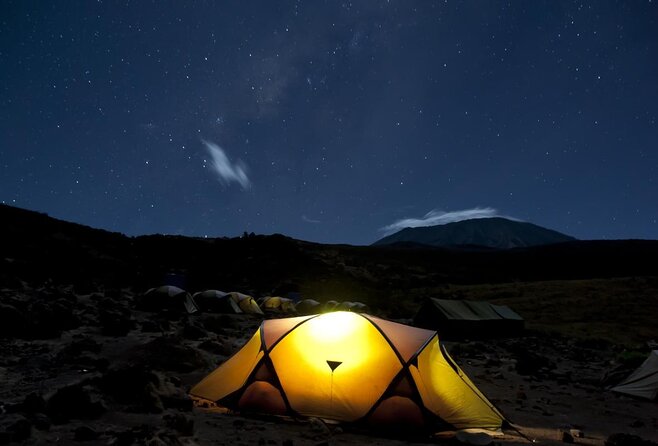
- The steepest schedule: You climb from 1,660 meters to 4,700 meters in four days before summit night.
- A genuinely quiet route: Umbwe is the least-used route on Kilimanjaro, making it a good fit for climbers who dislike busy trails.
- Six days is aggressive: The route can be completed in six days, but seven days is recommended for a more forgiving pace.
- A long summit day: Day five combines the climb to 5,895 meters with a descent of about 13 kilometers.
- Strong logistical value: Airport transfers, hotel nights, meals, camping gear, crew, taxes, and emergency equipment are included.
- Wet final descent: The Mweka Trail can be muddy near the bottom, so gaiters and trekking poles are useful.
What the $2,260 price really covers
At $2,260 per person, this is not a cheap mountain walk. It is also not simply a fee for a guide and a tent. The price includes the major moving parts of a Kilimanjaro climb: return airport transfers, a hotel night before and after the trek, dinner and breakfast at those hotels, park-related fees and taxes, mountain guides, assistant guides, porters, a cook, camping equipment, drinking water, warm water for washing, and all scheduled meals on the mountain.
That matters because a Kilimanjaro trip has many separate costs. You are paying for a working mountain camp, not just a marked trail. The crew carries equipment and supplies, prepares five breakfasts, six lunches, and five dinners, and supports you through the summit attempt. A cook is part of the package, and the food received particular praise, including special evening meals that gave climbers something to anticipate after hard days.
The package also includes emergency oxygen and a basic first aid kit. These are safety provisions for emergencies, not substitutes for acclimatization or a way to push through altitude sickness. You still need travel insurance, health insurance, personal medicine, snacks, and water-purifying tablets.
Personal hiking gear is not included, although some equipment can be rented from the operator’s store in Tanzania. A portable toilet is optional but strongly recommended. That extra may be worth considering if you prefer more privacy at camp, since the standard package does not say that one is provided.
The value is strongest if you use the included hotel nights and transfers. Airport pickup and drop-off remove two tiring pieces of planning, especially if you arrive after a long international flight. For a private trip, with only your own group participating, the price also buys some flexibility and direct support from the operator.
More Kilimanjaro routes and climbs:
- Kilimanjaro climb by Lemosho Route (7-day)
★ 5.0 · 651 reviews - Kilimanjaro climb, Machame Route (7-day)
★ 5.0 · 262 reviews - Kilimanjaro Climbing Lemosho Route 8 Days.
★ 5.0 · 186 reviews
Day one: Umbwe Gate to 2,850 meters
Your first morning begins with about an hour of driving from Moshi to Umbwe Gate. The official starting point is Umbwe Gate, near Umbwe in Tanzania, and this is where you begin the climb after the park formalities.
The trail rises through rainforest, covering about 11 kilometers in five to six hours. You start at 1,660 meters and finish at 2,850 meters, a substantial gain for the first day. A packed lunch is eaten along the route, so the day has a practical rhythm: walk, pause, eat, and keep moving upward.
The forest gives you shade and a cooler setting for the opening hours, but do not mistake this for an easy introduction. Umbwe is steep from the beginning. The route is famous for its direct climb, and your legs will notice that soon enough.
I would use this day to settle into a slow pace. The goal is not to prove how fast you can walk. It is to protect energy for the altitude and the much harder days ahead. Keep rain gear accessible, since the lower mountain can be wet, and avoid packing lunch or spare clothing where you cannot reach them quickly.
Day two: Moorland and the approach to Barranco
After breakfast, you leave the forest behind and enter open moorland. The trail covers only about 6 kilometers, but the climb is demanding, rising from 2,850 meters to roughly 4,000 meters in four to five hours.
This is where the route’s steep ascent profile becomes impossible to ignore. You gain about 1,150 meters in one day, then sleep at a much higher elevation than the night before. For climbers with strong altitude experience, that directness may be part of the appeal. For anyone new to high altitude, it is the main concern.
Barranco Camp is an important stopping point because the route begins to reveal the high mountain environment beyond the forest. You are no longer walking under a canopy. The open moorland gives you wider views and a sense that the summit is becoming a real, immediate goal.
The drawback is limited acclimatization time. A six-day Umbwe trek gives your body fewer gradual adjustment days than longer routes. Follow the guides’ pace, drink regularly, and report symptoms early. Emergency oxygen is available for emergencies, but it is not summit assistance and should not be treated as a backup plan for poor acclimatization.
Day three: Barranco Wall, Karanga, and the South Circuit
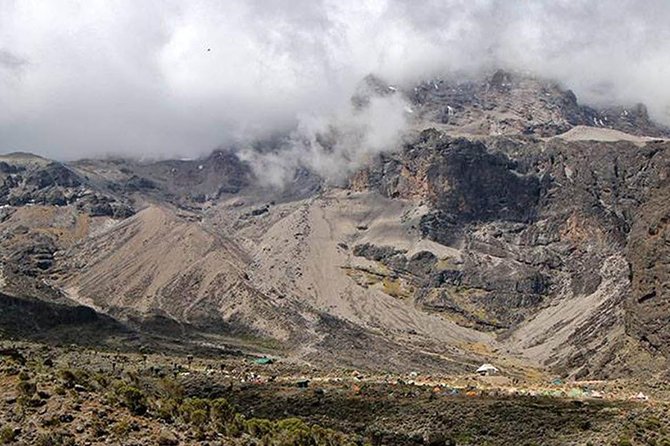
Day three is shorter in distance, with about 5 kilometers taking three to four hours. The elevation changes only slightly, from 4,000 to 4,050 meters, but the terrain makes this one of the most memorable days.
You leave Barranco and climb the steep ridge known as the Barranco Wall. This is a hands-on section in the sense that you negotiate a steep mountain feature rather than simply walking along a gentle path. The route continues toward Karanga Valley and then reaches the junction connecting with the Mweka Trail.
The day’s small net elevation gain is helpful. After the hard push from the forest to moorland, you get a shorter stage before Barafu. Still, the Barranco Wall requires concentration, careful footing, and comfort with steep slopes. Anyone who dislikes exposed or awkward uphill sections should think carefully before choosing Umbwe.
From here, you are on what is described as the South Circuit, which gives views of the summit from several angles. That variety helps compensate for one weakness of Umbwe: the route up and the route down are relatively close together, so it offers less scenic variety than Machame, Lemosho, or Shira.
A few more trips of this kind worth comparing:
- Private Kilimanjaro Hike 7 Day Lemosho Route
★ 5.0 · 60 reviews - Best Kilimanjaro hiking day trip tour with Kilinge Adventures
★ 4.5 · 54 reviews - #1. Best Kilimanjaro Day hike Tour-Machame Route-ISMANI
★ 4.2 · 47 reviews - Best Kilimanjaro Adventure 7 days Machame route Trekking
★ 5.0 · 42 reviews
Day four: Karanga to Barafu Camp at 4,700 meters
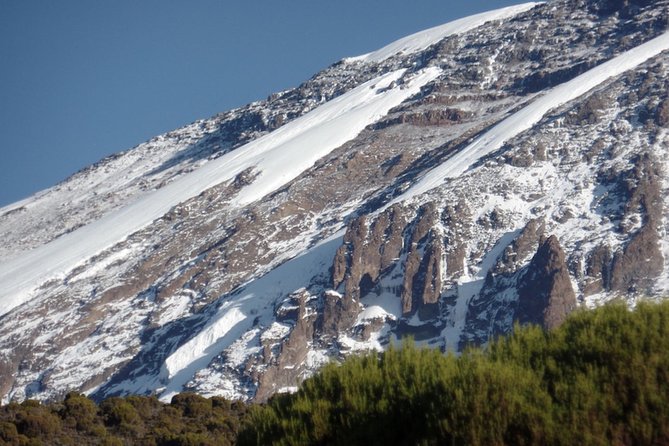
The next stage covers about 4 kilometers and takes three to four hours. You climb from 4,050 meters to Barafu Camp at 4,700 meters, where you prepare for the summit attempt.
The short distance does not mean the day is easy. At this altitude, every uphill step costs more, and the thin air changes the effort required for ordinary tasks. Barafu is a staging camp, not a place for a long afternoon adventure. You eat, rest, organize your summit clothing, and try to sleep before the midnight-to-2 a.m. start.
The support team matters here. Your guides, assistant guides, porters, and cook handle the camp work while you focus on food, hydration, clothing, and rest. The company’s strongest praise centers on this care, with the crew described as attentive and supportive from start to finish.
Pack your summit items before lying down. Keep warm layers, gloves, head protection, water, snacks, and trekking poles close at hand. The provided information does not list a complete personal gear package, so you remain responsible for bringing or renting the clothing and equipment that make this night possible.
Day five: Uhuru Peak and the hardest 14 hours
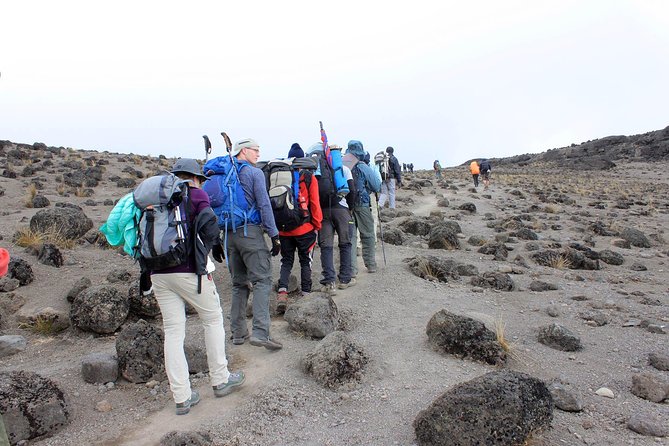
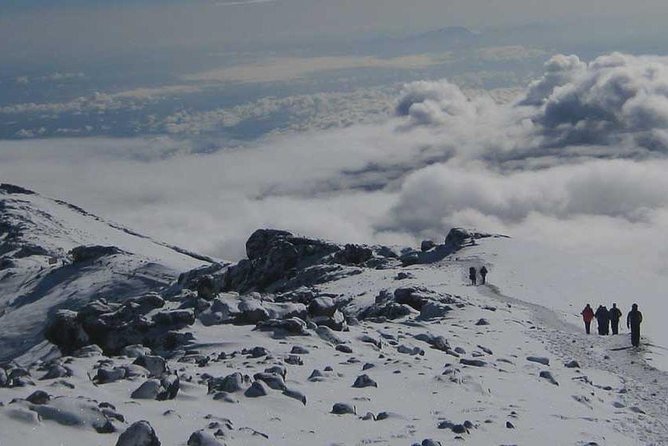
Summit day is the test. You leave Barafu between midnight and 2 a.m., climbing from 4,700 meters toward Uhuru Peak at 5,895 meters. The uphill distance is about 5 kilometers, followed by roughly 13 kilometers downhill, for a total hiking time of about 14 hours.
The route heads northwest between the Rebmann and Ratzel glaciers, then climbs through heavy scree toward Stella Point on the crater rim. Scree is loose volcanic gravel, and it can make each step feel like two steps. This is the most physically and mentally demanding part of the trek, especially after four days of rapid elevation gain.
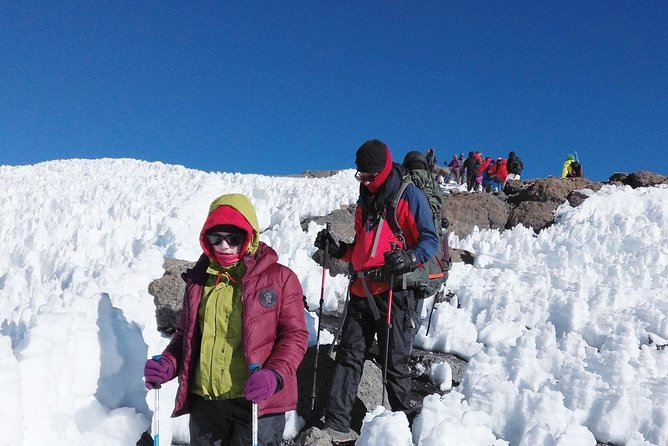
At Stella Point, you get a short rest and, if timing and weather cooperate, a sunrise over the mountain. Faster climbers may see sunrise from the summit itself. From Stella Point, the final hour to Uhuru Peak may include snow. The summit is the highest point in Africa, but reaching it is only half the day’s work.
After time at the summit, you descend to about 3,090 meters. The descent is long and can be hard on tired knees. The schedule leaves little room for lingering, so you need to be ready for a full day rather than a brief summit photo.
This is the clearest reason to consider seven days instead of six. The supplied route can be done in six, but the extra day recommended for Umbwe may give your body more time to adjust and your legs more recovery before the summit. The six-day version suits a strong, experienced climber who accepts a demanding schedule. It is a poor match for someone choosing Kilimanjaro as a first high-altitude challenge.
Day six: Mweka Trail and the return to Moshi
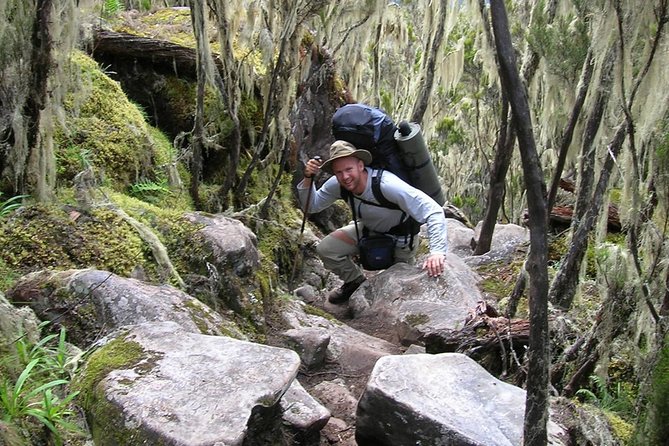
After breakfast, you continue down the Mweka Trail from about 3,090 meters to 1,680 meters. The hike is around 10 kilometers and takes three to four hours.
The lower trail can be wet and muddy. Gaiters and trekking poles are practical here, not fancy extras. At lower elevations, shorts and a T-shirt may be comfortable, but keep rain gear and warmer clothing within reach because mountain weather can change and the descent begins higher up.
You continue from the park gate for about another hour to Mweka Village. A vehicle meets you there for the roughly 30-minute drive back to your hotel in Moshi. The final transfer is a welcome finish after the summit day, and the post-climb hotel night is included.
The meeting information identifies Umbwe as the start and says the activity ends back at the meeting point, while the day-by-day plan describes the final transfer from Mweka Village to Moshi. In practical terms, you should expect the organized return to your Moshi hotel and confirm the exact final handoff before departure.
The crew and the private-trip setup
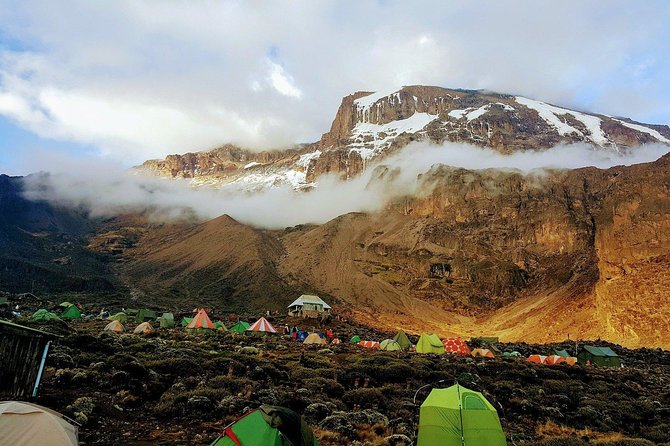
This is a private activity, so only your group participates. That can make a major difference on a route as demanding as Umbwe. You are not tied to the pace of a large mixed group, and the operator can respond more directly to your preferences.
Wence, the owner, is specifically credited with shaping the trip around individual preferences. The mountain team includes a qualified guide, assistant guides, porters, and a cook. The most consistent praise is aimed at the whole crew rather than one single feature: organization, personal care, support on the trail, and food at camp.
That structure is valuable on a private climb, but it does not remove the route’s physical demands. A well-run trek can help you manage a hard schedule. It cannot make rapid altitude gain harmless. Your fitness, experience, and willingness to turn back if necessary remain central.
What to bring and what costs extra
The package includes tents, camp chairs, tables, sleeping mattresses, meals, drinking water, and warm water for washing. Your personal kit is separate.
You should plan around the following gaps:
- Flights, visas, and health or travel insurance are not included.
- Personal hiking and trekking gear is not included, though some items may be available to rent in Tanzania.
- Snacks and personal medicine are your responsibility.
- Water-purifying tablets are not included.
- A portable toilet is optional and highly recommended.
- Meals, drinks, and snacks not specifically included cost extra.
The information does not provide a detailed packing list, so do not assume that sleeping gear, rain protection, summit clothing, or trekking poles are supplied beyond the listed camping equipment. Ask the operator what can be rented before you fly.
Who should choose this six-day route?
I would choose Umbwe for a fit climber who values quiet trails more than a gentle acclimatization schedule. Previous experience at altitude is especially important because the ascent is fast and the route reaches 4,700 meters by the fourth day.
This is also a good fit if you want a private trip with a full mountain crew and you like the idea of a direct, strenuous climb. The route’s solitude is a real benefit for anyone who finds crowded trails distracting.
I would not choose it for a first mountain trek, a relaxed holiday, or an itinerary where summit success matters more than route privacy. The low success rate associated with Umbwe is a serious consideration. If you have flexibility, ask about the recommended seven-day version before committing to the six-day schedule.
Free cancellation is available up to 24 hours before the start time for a full refund. Changes or cancellations inside that window are not accepted or refunded, based on local time.
Should you book the Umbwe Route?
Book this trek if you want Kilimanjaro at its most direct and secluded, and if you already understand how your body responds to altitude. The included transfers, hotel nights, crew, meals, camping setup, and emergency equipment make $2,260 a reasonable package price for a private climb.
Choose a longer route instead if you are new to altitude or want more time to adjust. The Umbwe Route rewards toughness, but it does not offer much margin for a slow start. For the right climber, the quiet trail, close-knit crew, Barranco Wall, South Circuit views, and sunrise attempt can make this an unforgettable mountain challenge.
FAQ
Where does the trek begin?
The trek begins at Umbwe Gate in Umbwe, Tanzania, after a drive of about one hour from Moshi.
How long is the Umbwe Route trek?
The listed trek lasts six days, although seven days is recommended because the six-day schedule allows limited time for altitude adjustment.
How high is Uhuru Peak?
Uhuru Peak is at 5,895 meters.
How far do you hike on summit day?
Summit day covers about 5 kilometers uphill and 13 kilometers downhill, with approximately 14 hours of hiking.
What is the most difficult part of the trek?
The climb from Barafu toward Stella Point and Uhuru Peak is described as the most physically and mentally challenging section. It includes heavy scree and a very early start.
Is airport transportation included?
Yes. Return transfers between Kilimanjaro Airport and Moshi are included.
Are hotel nights included?
Yes. One hotel night before the climb and one night after it are included, with dinner and breakfast provided at those hotels.
Are meals included on the mountain?
Yes. The package includes five breakfasts, six lunches, and five dinners, along with drinking water and warm water for washing.
Is personal trekking gear included?
No. Personal hiking and trekking gear is not included, although some gear may be available to rent from the operator’s equipment store in Tanzania.
Can I cancel for a full refund?
Yes. You can cancel at least 24 hours before the experience start time for a full refund. Cancellations or changes made less than 24 hours before the start are not accepted.
More 6-Day Experiences
- Kilimanjaro climb, Lemosho Route (6-day)
★ 5.0 · 129 reviews - Kilimanjaro climb, Marangu route (6-day)
★ 5.0 · 72 reviews - 6 Days 5 Night Safari
★ 5.0 · 57 reviews - 6 Days Tanzania Classic Safari
★ 5.0 · 52 reviews
Just added around Moshi
- Moshi: Lake Chala Tour: Hiking &/or Kayaking★ 4.5 · 3 reviews
- 3 Days Tanga Exclusive Beach Holiday★ 5.0 · 3 reviews
- Serengeti Wildebeest Migration.★ 5.0 · 3 reviews
- Chemka Hotpsrings E-Bike Day Trip★ 5.0 · 3 reviews
- Explore 1 day Ngorongoro Crater Budget Group Safari from Arusha★ 5.0 · 3 reviews
- Explore the 360° of Kilimanjaro★ 5.0 · 3 reviews
- Affordable Short Tanzania Safari (2 Days Camping Safari)★ 5.0 · 3 reviews
- Rongai Route 7 Days★ 5.0 · 3 reviews
Kilimanjaro Treks, compared.



8-Day Small-group Lemosho Kilimanjaro Summit Trekking
Read our review →


Climbing Kilimanjaro through 7 days Machame Route
Read our review →

Browse the lists this tour appears in