
Reviewed · KILIMANJARO TREKS
Our Top 5-Day Kilimanjaro Marangu Route: 2025 and 2026 Updates
Africa begins above the clouds. This five-day climb takes you from Moshi to Uhuru Peak on Kilimanjaro’s classic Marangu Route, using huts instead of tents each night. I like the hut accommodation and the clear daily structure, which make this the most approachable option for many first-time climbers. I also like that hotel pickup in Moshi, meals, a professional guide, and a trekking certificate are included. The main concern is the tight schedule: five days gives you little room to adjust to high altitude, and the summit day is long and demanding.
Marangu is often called the Coca-Cola Route, but that friendly nickname should not fool you. This is a serious high-altitude climb, reaching 5,895 meters. The $1,080 price looks attractive, yet park fees, personal equipment, insurance, hotels, flights, and tips are extra. Ask for a full cost breakdown before paying, especially because the included camping fees do not appear to cover the separate Kilimanjaro park fees.
In This Review
- Key points to know before booking
- Why the Marangu Route appeals to first-time climbers
- Day 1: Marangu Gate to Mandara Hut through forest
- Day 2: Mandara Hut to Horombo Hut and the moorland
- Day 3: Horombo Hut to Kibo Hut across high, bare ground
- Day 4: Kibo Hut to Uhuru Peak, then down to Horombo
- Day 5: Horombo Hut to Marangu Gate through the rainforest
- What the $1,080 price really covers
- Huts, meals, guides, and the human side of the climb
- Who should choose this five-day climb?
- Booking details and cancellation terms
- Should you book the Marangu Route in five days?
- FAQ
- Where does the Kilimanjaro climb begin?
- What time does the activity start?
- How long is the Marangu Route experience?
- Where do you sleep during the trek?
- Is hotel pickup included?
- Are Kilimanjaro park fees included?
- Are meals included?
- Is airport transportation included?
- What happens if bad weather cancels the climb?
Key points to know before booking
- Huts every night: Sleep in basic dormitory-style huts rather than carrying a tent or sleeping under canvas.
- Five days to Uhuru Peak: The schedule is short, with the hardest summit push beginning soon after arrival at Kibo Hut.
- A major altitude challenge: You rise from 1,830 meters at the gate to 5,895 meters at the summit in only a few days.
- Moshi pickup included: Collection from your booked hotel in Moshi town is part of the package, with a 7:00 am start.
- A strong guide-focused experience: Past climbs have included guides such as Victor, Thomas, Noah, Gabriel, Samson, Budah, and Martin, with special praise for calm support and close attention.
- Park fees are separate: This is the biggest pricing detail to clarify before you commit.
Why the Marangu Route appeals to first-time climbers
The Marangu Route is the oldest and one of the best-known ways up Kilimanjaro. Its biggest practical advantage is simple: you sleep in huts throughout the trek. That saves you from camping equipment and gives the route a more settled feel at the end of each day.
The route also uses the same trail for the ascent and descent. That makes navigation straightforward, but it means you do not get the changing scenery of routes that go up one side of the mountain and down another. If variety is your top priority, Marangu may feel repetitive. If comfort and a simple trail matter more, it makes good sense.
The five-day version is aimed at beginners, but I would add an important qualification. Beginner-friendly does not mean easy. The first two days are manageable for a reasonably fit person, while the altitude becomes the real test. A moderate fitness level is required, and you should be ready for long walking days, cold conditions, and a very early summit start.
The route’s appeal also comes from its sense of progression. You begin in thick forest, move into open moorland, cross a stark semi-desert zone, and then climb toward the summit in darkness. Each stage feels different, which helps you understand how high you have climbed.
More Kilimanjaro routes and climbs:
- Kilimanjaro climb by Lemosho Route (7-day)
★ 5.0 · 651 reviews - Kilimanjaro climb, Machame Route (7-day)
★ 5.0 · 262 reviews - Kilimanjaro Climbing Lemosho Route 8 Days.
★ 5.0 · 186 reviews
Day 1: Marangu Gate to Mandara Hut through forest
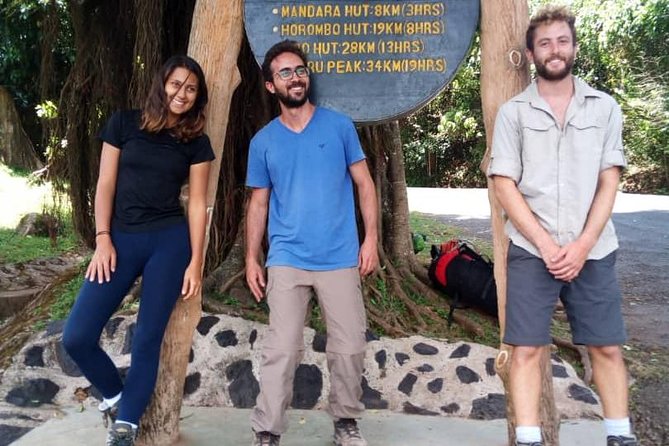
The day begins at Marangu Gate, where you register and meet the mountain crew. Pickup from your Moshi hotel is included, and the listed start time is 7:00 am. Confirm the exact pickup arrangement in advance, since a prompt start matters on a five-day schedule.
From the gate, the route covers about 7 kilometers and climbs from 1,830 meters to 2,740 meters. The walk takes roughly four to five hours. You enter a lush rainforest filled with plant life, bird calls, and changing forest sounds.
This is a pleasant first day because the trail gives you time to settle into the rhythm of walking. You can check your boots, adjust your pack, learn how your guide manages breaks, and notice how your body responds to the climb. I recommend using this day to walk slowly from the start. Saving energy now is more useful than trying to impress anyone.
The itinerary identifies Marangu Falls as the first stop. The admission ticket is not included, so clarify what that means for your planned visit and the park charges. The main overnight stop is Mandara Hut, where you rest and prepare for the next stage.
The hut is the reason many people choose this route. It is not a hotel, and you should not expect private rooms or luxury. Still, having a fixed roof and a bed-style sleeping arrangement can feel like a real comfort after several hours on your feet.
Day 2: Mandara Hut to Horombo Hut and the moorland
Day two covers about 11 kilometers and takes six to eight hours. You climb from 2,740 meters to Horombo Hut at 3,690 meters, leaving the dense forest behind for open moorland.
This is one of the most scenic parts of the route. The trees thin out, the views widen, and Kilimanjaro begins to feel like a high mountain rather than a forest walk. The open ground can also expose you to changing weather, so keep a warm layer and rain protection easy to reach.
Horombo Hut is an important stop because it gives you your first proper night at a higher altitude. The schedule allows time to rest and acclimatize, but the five-day plan still moves quickly. Pay attention to headaches, nausea, dizziness, unusual tiredness, or breathlessness. Tell your guide early if you feel unwell. High-altitude problems should never be treated as a test of character.
The phrase pole pole, meaning slowly slowly, is useful here. Walk at the pace your guide sets, drink regularly, and do not race uphill. A steady pace helps conserve energy and gives your body the best chance to cope with the altitude.
The itinerary does not include a separate acclimatization day at Horombo. That is an important difference between this trip and longer Kilimanjaro programs. A six-day Marangu climb adds more time, and that extra day can make the high sections less rushed.
Day 3: Horombo Hut to Kibo Hut across high, bare ground
The third day covers about 10 kilometers and takes six to eight hours. You climb from 3,690 meters to Kibo Hut at 4,695 meters.
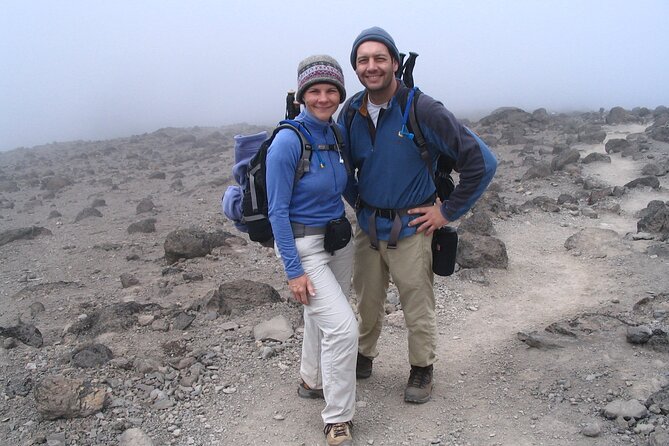
The scenery changes again. Plants become scarce, paths turn rockier, and the surroundings take on a semi-desert character. It can feel stark and exposed, especially after the forest and moorland. I like this section because it gives you a clear sense that the summit is close, but it also makes the physical challenge impossible to ignore.
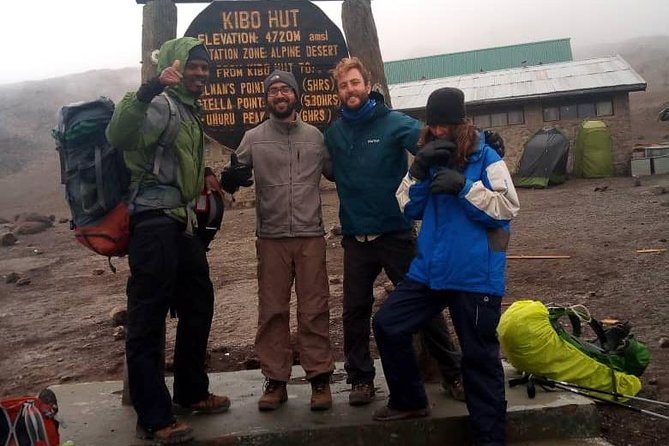
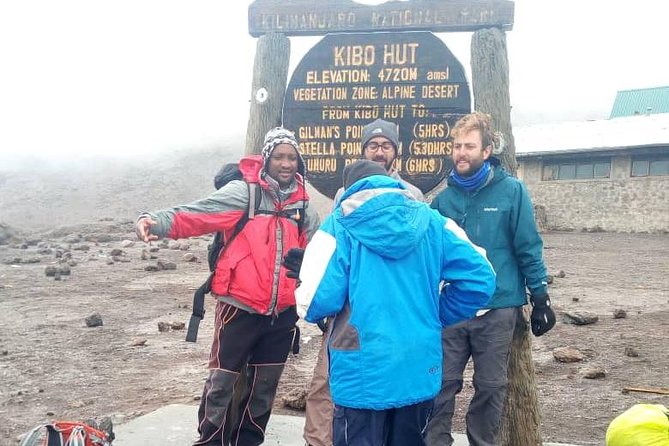
Kibo Hut is the staging point for the summit attempt. You rest here, eat, organize your clothing, and prepare for a very early departure. The itinerary says the summit push begins in the early hours, so use the time at Kibo for practical preparation rather than sightseeing.
Lay out your warm layers, gloves, headlamp if you have one, water, snacks, and any personal medication before you try to sleep. The short rest period can be difficult because of excitement, altitude, or both. Do not worry if you do not sleep perfectly. Resting quietly still helps.
This is also the point at which you should be honest with yourself and your guide. The next day includes the summit climb and a long descent to Horombo. If you are already struggling badly at Kibo, speak up. A professional mountain crew should focus on safety rather than treating the summit as the only acceptable result.
A few more trips of this kind worth comparing:
- 5 Days Camping Tarangire, Serengeti & Ngorongoro crater & Visiting Maasai
★ 5.0 · 58 reviews - 5-Day Majestic Tanzania Safari – High End All Inclusive
★ 5.0 · 44 reviews - 5 Day Mid range Tanzania Safari
★ 5.0 · 34 reviews - 5 days Tanzania Camping Safari
★ 5.0 · 29 reviews
Day 4: Kibo Hut to Uhuru Peak, then down to Horombo
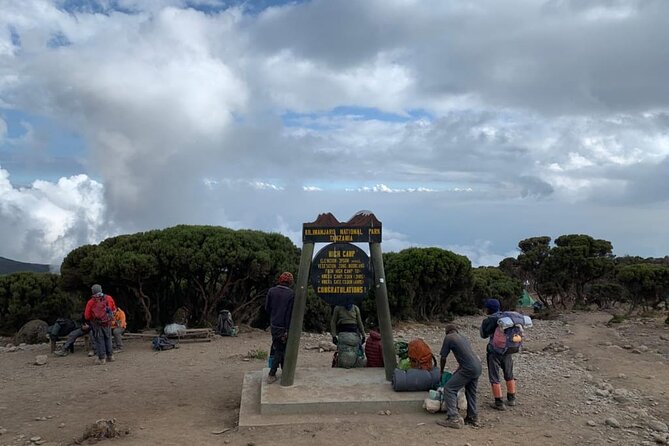
This is the central test of the climb. You leave Kibo Hut in the early hours and ascend about 4 kilometers to Uhuru Peak, at 5,895 meters. The climb to the summit takes roughly five to seven hours, followed by a descent of about 14 kilometers to Horombo Hut in another five to six hours.
The total day is much longer than the six-hour label suggests. The stated timing for the summit section and the descent adds up to roughly 10 to 13 hours, depending on pace, conditions, and rest breaks. Plan for a full, exhausting day.
The early start is designed to bring you toward the summit around dawn. That timing can offer memorable views as the sky brightens, but it also means you begin in darkness and cold. The upper route is steep and physically demanding. Your guide will set the pace, and the best strategy is slow, steady movement with short breaks.
Reaching Uhuru Peak, the highest point on Kilimanjaro, is a major achievement. You have climbed to 5,895 meters, or 19,340 feet, on Africa’s highest free-standing mountain. Take your photographs, but do not linger too long if you are cold or feeling unwell. The summit is a place to celebrate, not a place to ignore warning signs.
The descent to Horombo is not an afterthought. Your knees and feet may find it harder than expected, and the distance is substantial. Once back at Horombo, food, water, and sleep will matter more than conversation. This is where the crew’s attitude can make a major difference.
Past climbers have singled out guides and crew members including Gabriel, Martin, Budah, Victor, Thomas, Noah, Samson, and server Jackson. One account gave special thanks to Gabriel for providing such strong assistance near the summit. That does not guarantee the same crew on your departure, but it does point to the importance of asking who will guide your group and how the company handles support on summit day.
Day 5: Horombo Hut to Marangu Gate through the rainforest
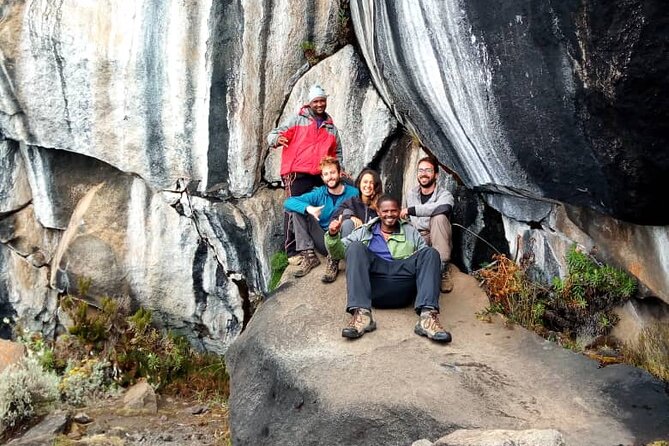
The final day covers about 18 kilometers and takes six to seven hours. You descend from 3,690 meters to 1,830 meters at Marangu Gate, passing back through the rainforest.
After the summit day, this is a long walk. The good news is that altitude pressure eases as you descend, and the return to thick greenery feels like a change of world. You may have enough energy to notice wildlife and forest details that passed unnoticed on the way up.
At the gate, the trek ends and you return to Moshi. A trekking certificate is included, giving you a tangible reminder of the climb. The package includes breakfast, lunch, and dinner during the trek, but your hotel before and after the climb is not included. Plan those nights separately.
What the $1,080 price really covers
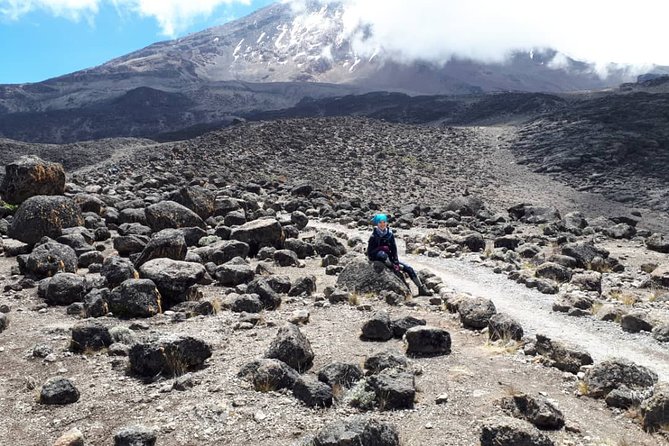
At $1,080 per person, this trip can offer reasonable value if you want a guided climb with hut accommodation and meals. Included services are hotel pickup in Moshi, a briefing, a professional Kilimanjaro guide, trekking meals, camping fees, and a certificate.
The price does not include all the major costs. You must budget separately for:
- Kilimanjaro park fees
- Hotels before and after the trek
- Airport pickup and drop-off
- International and domestic flights
- Travel or medical insurance
- Personal hiking equipment
- Crew tips
The park-fee wording deserves special attention. Camping fees are listed as included, while all Mount Kilimanjaro park fees are excluded. Since this is a hut-based route, ask the operator to explain exactly which accommodation and conservation charges are covered and which are not.
The maximum group size is listed as 100 people. That is a very large possible group, even if actual departures are smaller. Ask for the expected group size, guide-to-climber ratio, and sleeping arrangements. A smaller group usually makes communication easier, especially if someone needs extra help at altitude.
Huts, meals, guides, and the human side of the climb
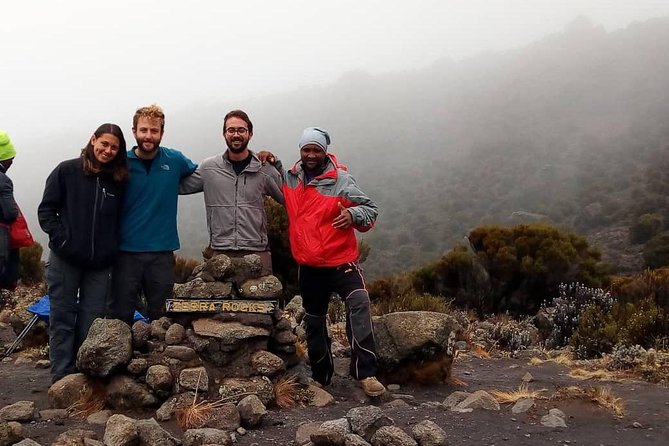
The huts are the comfort feature, but they remain basic mountain accommodation. You will not have the privacy or quiet of a normal hotel. Bring earplugs if you use them, and keep your expectations practical.
Three meals a day are included during the trek. The information provided does not specify menus, dietary arrangements, or snacks, so ask about allergies and special diets before departure. You should also confirm how drinking water is handled, since that detail is not supplied.
The strongest praise connected with this operator focuses on care, communication, and guide support. One solo climber felt reassured throughout the climb, while another highlighted clear communication from Godfrey Ngaiza before, during, and after the hike. Those details matter. A guide who checks how you are coping can be more valuable than a guide who simply walks quickly.
Crew tips are not included. Set aside money for this customary end-of-climb expense and ask the company for its recommended tipping practice. Clear guidance helps avoid awkwardness after a demanding week.
Who should choose this five-day climb?
I would consider this route if you want:
- A first Kilimanjaro experience with hut sleeping
- A direct, well-established route
- Moshi hotel pickup and meals included
- A fixed five-day schedule
- Support from a guide and mountain crew
- A less gear-heavy approach than tent camping
I would think twice if you want a slow acclimatization program, quiet trails, or a strong chance of summit success based on extra time. The five-day schedule is compact, and the summit day is long. A longer itinerary may suit you better if altitude is a concern, if you have limited mountain experience, or if you prefer a gentler pace.
You also need moderate physical fitness. You do not need to be an elite athlete, but you must manage repeated long walks and one very strenuous summit day. Training with long uphill walks, stairs, and a loaded daypack can help you understand what the schedule demands.
Booking details and cancellation terms
The activity starts at 7:00 am and ends back at the meeting point after transfer to Moshi. Pickup is offered from a hotel you booked in Moshi town, and the experience provides a mobile ticket. It is near public transportation, although the actual trek begins with the transfer to Marangu Gate.
Confirmation is provided when you book. The activity requires suitable weather. If poor weather causes cancellation, you are offered another date or a full refund.
You can cancel for a full refund up to 24 hours before the local start time. Cancellations or changes made inside that 24-hour window are not accepted for a refund. Read the exact terms before booking flights or hotels around the climb.
Should you book the Marangu Route in five days?
I would book it if hut accommodation is your main priority and you want a clearly organized introduction to Kilimanjaro. The route offers a sensible first-day forest walk, striking changes in scenery, three included meals a day, Moshi pickup, and a crew-focused approach that has earned strong praise for personal support.
I would not choose it simply because it is the cheapest or shortest option. Five days is a demanding timetable, and the price excludes park fees and several important expenses. Before committing, ask for the final all-in cost, expected group size, guide names, equipment advice, and the company’s plan for altitude problems.
For a fit beginner who values a roof over a tent and accepts a very tough summit day, this can be a practical way to reach Uhuru Peak. If you can spare an extra day, ask about the six-day Marangu option. More time on the mountain may be worth far more than the initial savings.
FAQ
Where does the Kilimanjaro climb begin?
The climb begins at Marangu Gate after pickup from your booked hotel in Moshi town.
What time does the activity start?
The listed start time is 7:00 am.
How long is the Marangu Route experience?
The scheduled duration is five days, approximately.
Where do you sleep during the trek?
You stay in huts throughout the trek. The route is known for hut accommodation rather than standard tent camping.
Is hotel pickup included?
Yes. Pickup from your hotel in Moshi town to Marangu Gate is included.
Are Kilimanjaro park fees included?
No. All Mount Kilimanjaro park fees are listed as excluded and may be paid directly to the park or through the tour operator.
Are meals included?
Yes. Breakfast, lunch, and dinner are included during the trek.
Is airport transportation included?
No. Airport pickup and drop-off are not included.
What happens if bad weather cancels the climb?
You are offered a different date or a full refund if the experience is canceled because of poor weather.
Just added around Moshi
- Moshi: Lake Chala Tour: Hiking &/or Kayaking★ 4.5 · 3 reviews
- 3 Days Tanga Exclusive Beach Holiday★ 5.0 · 3 reviews
- Serengeti Wildebeest Migration.★ 5.0 · 3 reviews
- Chemka Hotpsrings E-Bike Day Trip★ 5.0 · 3 reviews
- Explore 1 day Ngorongoro Crater Budget Group Safari from Arusha★ 5.0 · 3 reviews
- Explore the 360° of Kilimanjaro★ 5.0 · 3 reviews
- Affordable Short Tanzania Safari (2 Days Camping Safari)★ 5.0 · 3 reviews
- Rongai Route 7 Days★ 5.0 · 3 reviews
Kilimanjaro Treks, compared.



8-Day Small-group Lemosho Kilimanjaro Summit Trekking
Read our review →


Climbing Kilimanjaro through 7 days Machame Route
Read our review →

Browse the lists this tour appears in