
Reviewed · KILIMANJARO TREKS
Rongai Route 6 Days 5 Nights/Kilimanjaro climb
Africa’s highest summit rewards steady feet. The six-day Rongai Route climb offers a quieter northern approach to Kilimanjaro, wide views toward Kenya, a striking camp below Mawenzi, and a demanding summit night. I like the less crowded northern trail and the careful pace built into the itinerary. I also like that the $1,850 price includes park fees, camping gear, meals, crew pay, accommodation, and transfers.
The main concern is the schedule. You reach the summit after several long days at altitude, then descend a great distance in the same day. The summit day can last 10 to 16 hours, so this is not a casual holiday with a mountain walk added on. It suits people with moderate fitness who are ready for cold, basic camping, steep climbs, and an early start in the dark.
In This Review
- Key points to know before booking
- The real story behind the Rongai Route name
- Day 1: Moshi to Nale Moru and the pine forest
- Day 2: Second Cave to Kikelelwa at 3,800 meters
- Day 3: Mawenzi Tarn and a useful acclimatization walk
- Day 4: Crossing the saddle to Kibo Hut
- Day 5: Gilman’s Point, Uhuru Peak, and a very long descent
- Day 6: Descending through forest to Marangu Gate
- What the $1,850 price actually covers
- How the group size affects the experience
- The strongest reasons to choose this route
- Practical advice for making the climb easier
- Should you book the six-day Rongai climb?
- FAQ
- Where does the Rongai Route climb actually begin?
- How long is the Kilimanjaro climb?
- What time does the experience start?
- How fit do I need to be?
- What is the largest possible group size?
- What is included in the $1,850 price?
- Can I cancel for a full refund?
Key points to know before booking
- The Rongai name is not quite accurate: The route now used from Kilimanjaro’s northern side is also called the Loitokitok or Nalemoru route.
- The northern approach feels quieter: You begin near Nale Moru and look across the Kenyan plains before reaching the high mountain camps.
- Mawenzi Tarn is a special overnight stop: At 4,330 meters, it gives you a strong sense of wilderness and includes an acclimatization walk.
- Summit day is the real test: You start around 1:00 am, reach Gilman’s Point, continue to Uhuru Peak, then descend to Horombo.
- The package covers major costs: Park fees, camping equipment, crew salary, five nights of dinner and breakfast, six lunches, accommodation, and transfers are included.
- The group can have up to 15 people: That is small enough for a shared expedition, but not the same as a private climb.
The real story behind the Rongai Route name
The route name needs a little explanation. The original Rongai trail began near the border village of Rongai, but authorities closed it several years ago. The northern approach now used by climbers starts near Nale Moru, close to the village of Loitokitok.
You may see several names on maps and trail signs. Loitokitok is common, while Nalemoru or Nalemoru Route also appears on signs. Most people still call the climb Rongai Route, so that is the name you will see when booking.
This matters mainly because you should not expect to begin at the old Rongai border route. You will start from the Nale Moru area after a drive from Moshi, with registration at Kilimanjaro National Park before the walk begins.
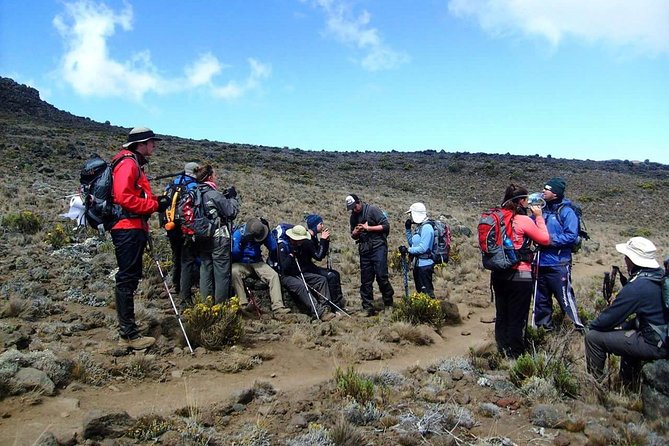
The northern side is appealing because it offers a different feel from the more heavily used southern approaches. The scenery changes steadily from cultivated fields to pine forest, then open moorland and high, dry volcanic terrain. The views toward Kenya are an early reward.
More Kilimanjaro routes and climbs:
- Kilimanjaro climb by Lemosho Route (7-day)
★ 5.0 · 651 reviews - Kilimanjaro climb, Machame Route (7-day)
★ 5.0 · 262 reviews - Kilimanjaro Climbing Lemosho Route 8 Days.
★ 5.0 · 186 reviews
Day 1: Moshi to Nale Moru and the pine forest
Your morning begins with breakfast at your hotel and collection by the head guide at about 9:00 am. You are driven to Kilimanjaro National Park for registration, then continue by vehicle toward Nale Moru, which sits at roughly 1,950 meters.
The first walk takes about three to four hours. The path begins among maize and potato fields, giving you a quick look at local farming before you enter the pine forest. The ascent is gradual, which is helpful on day one. You are starting to gain altitude without being asked to push hard.
The forest is attractive, but it can be wet. Keep waterproof clothing near the top of your daypack rather than buried in your luggage. This is a small packing choice that can save you from a cold, damp afternoon.
As the trees thin, you reach the edge of the moorland zone. The broad views across the Kenyan plains are the day’s highlight. Dinner and your first night in camp follow.
The short first day can feel easy, but do not treat it as a free pass. Your body is beginning the adjustment to altitude, and a slow start is useful. Eat, drink, and rest rather than spending the afternoon trying to prove your fitness.
Day 2: Second Cave to Kikelelwa at 3,800 meters
Day two is longer and more serious. You walk for roughly six to seven hours over about nine kilometers, climbing from the first camp toward Second Cave at 3,450 meters and then onward to Kikelelwa Cave, where you spend the night at about 3,800 meters.
The path climbs steadily through increasingly open country. Weather permitting, you can see Kibo, Kilimanjaro’s main summit cone, along with the eastern ice fields around the crater rim. Those views help you understand the mountain’s shape long before summit day.
The altitude gain is about 950 meters, or 3,110 feet. That is a substantial increase, and the day may feel harder than the distance suggests. The best approach is the familiar mountain rule of walking slowly. Here, patience is not just a nice idea. It is part of your summit strategy.
The camp near Kikelelwa Caves gives you a high, exposed night. Dinner and camping are included, but you should expect basic mountain conditions rather than hotel comfort. The value of this stop is its position on the route and the chance to sleep higher before the next climb.
Day 3: Mawenzi Tarn and a useful acclimatization walk
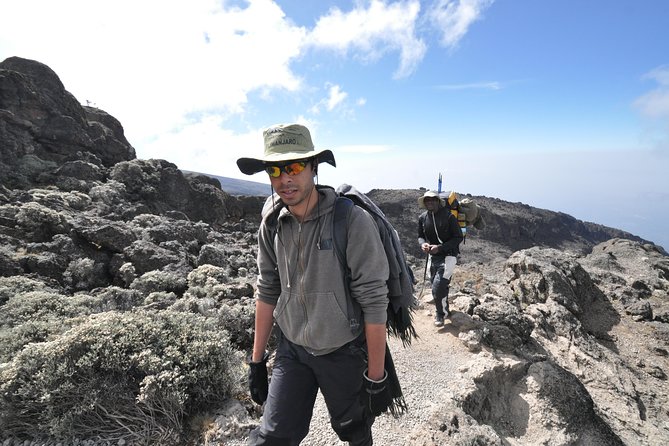
The third day is shorter, but the trail becomes steeper. You leave camp with a brief, sharp climb up grassy slopes. The effort is rewarded with open views in every direction and a stronger feeling of being away from ordinary roads and settlements.
You leave the vegetation zone behind and continue to Mawenzi Tarn Hut at 4,330 meters. The jagged form of Mawenzi, Kilimanjaro’s second-highest peak, gives this camp a more dramatic setting than the early forest stops.
The scheduled walk takes about three to four hours, covering six kilometers and gaining approximately 730 meters. In the afternoon, you take an acclimatization walk to around 4,500 meters before returning to camp.
That extra climb is valuable. You gain altitude during the day, then return to sleep lower than your highest point. It gives the guide a chance to watch how you are responding, and it lets you experience thinner air before the more demanding stages.
Do not underestimate this day because it is short. Steeper ground and altitude can make three hours feel like much longer. Keep your pace calm, and use the afternoon walk as an acclimatization exercise, not a race.
A few more trips of this kind worth comparing:
- Kilimanjaro climb, Lemosho Route (6-day)
★ 5.0 · 129 reviews - Kilimanjaro climb, Marangu route (6-day)
★ 5.0 · 72 reviews - 6 Days 5 Night Safari
★ 5.0 · 57 reviews - 6 Days Tanzania Classic Safari
★ 5.0 · 52 reviews
Day 4: Crossing the saddle to Kibo Hut
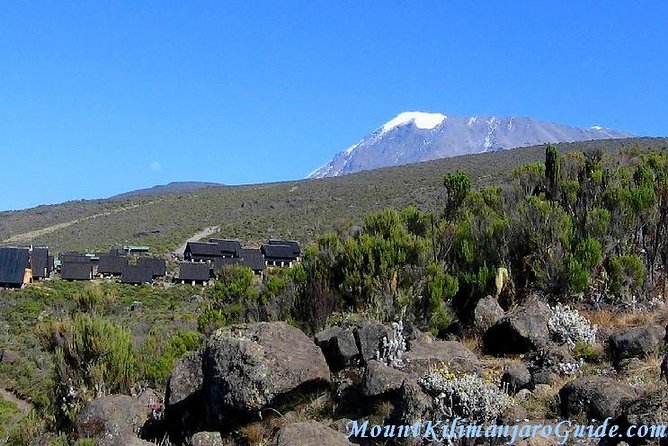
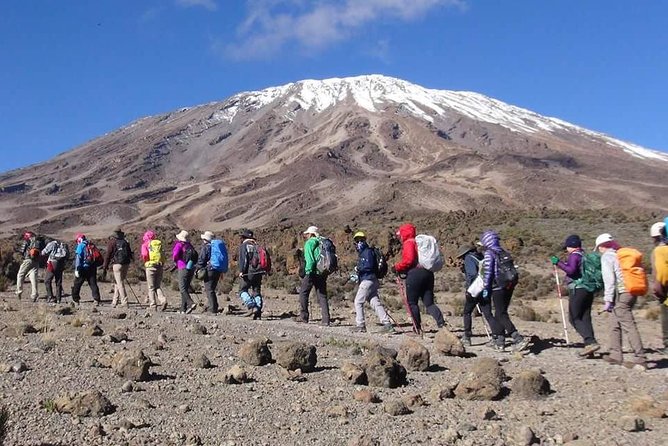
Day four crosses the broad, stark saddle between Mawenzi and Kibo, Kilimanjaro’s two highest peaks. The walk takes around four to five hours and covers about nine kilometers, with a modest altitude gain of 370 meters.
This is the mountain’s lunar desert section. The vegetation is largely gone, and the open terrain gives you little shelter from weather. The walk itself is not the steepest part of the climb, but the altitude and barren surroundings make it feel serious.
You finish at Kibo Hut, at about 4,700 meters. An early dinner follows, then an attempt at sleep before the midnight or 1:00 am wake-up.
The practical challenge here is rest. You may not sleep well at this altitude, and the early alarm leaves little time to recover. Lay out your summit clothes, torch, water, and snack before bed. You will be grateful not to search through your pack while half-awake.
Day 5: Gilman’s Point, Uhuru Peak, and a very long descent
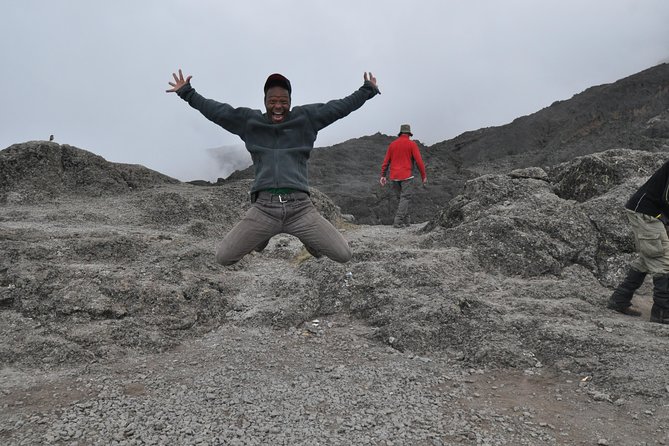
Summit day begins around 1:00 am with a hot drink and a snack. You set off by torchlight, moving slowly up the steep route toward Gilman’s Point on the crater rim at 5,685 meters.
This is usually the hardest physical and mental section. The cold, darkness, altitude, and loose or steep ground demand concentration. The slow pace is deliberate. If you rush early, you may pay for it later.
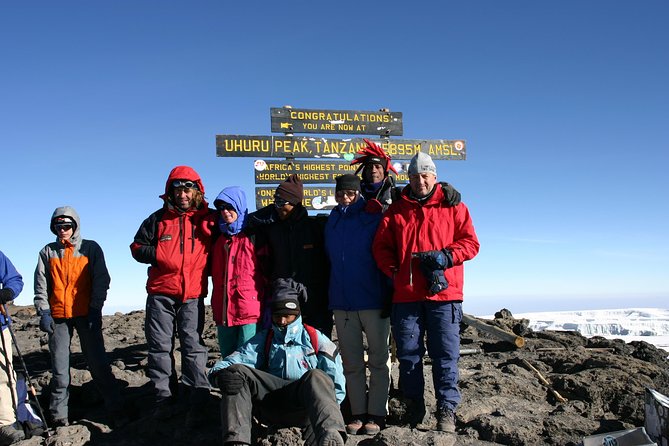
At Gilman’s Point, you can pause and watch sunrise over Mawenzi Peak. This is one of the great visual moments of the climb, but keep the stop short enough to avoid getting chilled. You still have more walking ahead.
From Gilman’s Point, you continue around the crater rim toward Uhuru Peak at 5,895 meters, the highest point in Africa. The summit section adds distance and time when your energy is already low. Reaching Uhuru requires an additional altitude gain of about 195 meters from Gilman’s Point.
After the summit, you descend to Kibo Hut at 4,700 meters for rest and brunch. Then you continue down to Horombo Hut at 3,720 meters. The total walking distance is about five kilometers up and fifteen kilometers down, with a total day that can range from ten to sixteen hours.
The descent to Horombo is not an afterthought. It is a major part of the day, and tired knees can make downhill walking surprisingly difficult. Trekking poles may be useful, though the supplied information does not specify whether they are included, so ask the operator before departure.
This is also the day when the value of a good mountain crew becomes clear. Migration Venture Africa receives strong praise for its guides and support team. Names associated with especially positive trips include Vitalis, Eric, Size Mrema, and Nicholas Wiso, while Amos is praised for handling permits, transfers, and trip details. Your assigned crew may differ, but you should ask for the guide names and confirm the support arrangements before you go.
Day 6: Descending through forest to Marangu Gate
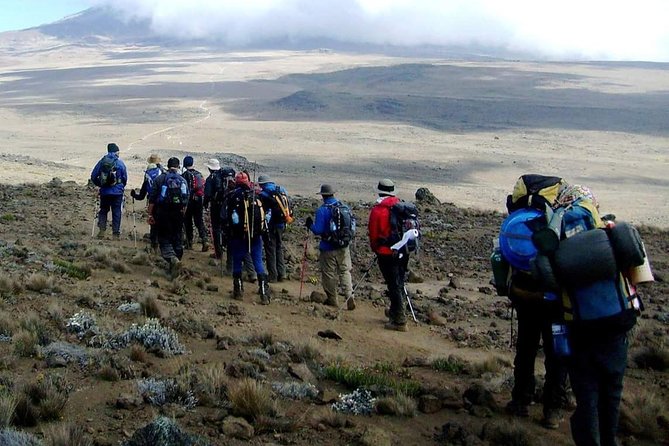
The final day takes about five to seven hours and covers approximately twenty kilometers to Marangu Park Gate at 1,700 meters. The descent is long, but the trail through lush forest and the return to lower altitude should feel welcome after the high camps.
At the gate, you sign out of the mountain. A driver then transfers you to your hotel in Moshi or Arusha.
The last day is practical rather than scenic in the grand summit sense. You are moving tired legs toward a proper bed, a shower, and the end of the climb. Still, the forest provides a pleasant change from the dry upper slopes.
The twenty-kilometer distance deserves attention. Even though the altitude is dropping, you should not plan a packed schedule for the evening. Give yourself time to eat, rest, and let the experience settle.
What the $1,850 price actually covers
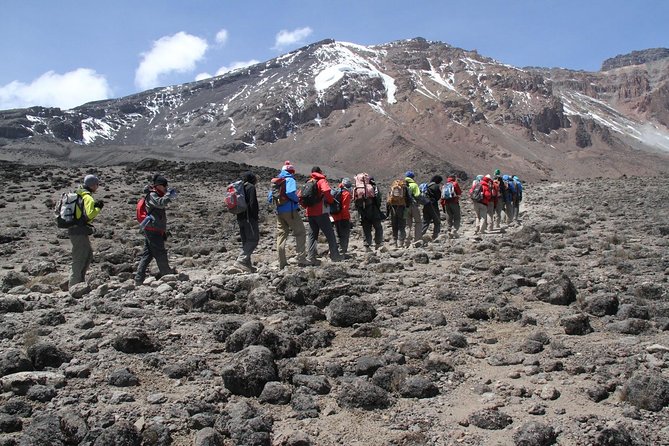
At $1,850 per person, this is a substantial purchase, but the price includes many of the expensive essentials. Park fees alone can represent a large share of a Kilimanjaro climb, and this package also includes camping equipment and crew salary.
You receive:
- Camping equipment
- Kilimanjaro National Park fees
- Crew salary
- Accommodation
- Airport transfers
- Six lunches
- Five dinners
- Five breakfasts
The package description lists six lunches, five dinners, and five breakfasts. Since this is a six-day climb, ask the operator to clarify exactly where each meal is provided, especially on the final day.
International flights, visas, alcohol, and soft drinks are not included. You should also confirm what personal gear you must bring, since the supplied details only specify that camping equipment is included, not every item of clothing or technical equipment.
The included transfers add real value if your arrival and departure plans fit the arrangement. Pickup is offered, and the final transfer goes to a hotel in Moshi or Arusha. Confirm the exact airport transfer details before booking, particularly if your flights are outside the scheduled timing.
How the group size affects the experience
The maximum group size is 15 people. That is not a private expedition, but it is still a manageable group for a guided climb.
A group of this size can provide company during the long days and support if someone needs to slow down. The trade-off is that people walk at different speeds and may have different summit goals. Ask how the guides manage pace, rest stops, and anyone who develops altitude problems.
Children must be accompanied by an adult, and all climbers should have a moderate level of physical fitness. The data does not set a minimum age or describe a medical screening process, so families and anyone with health concerns should ask the operator directly before paying.
The strongest reasons to choose this route
I would choose this route for the northern approach, open views toward Kenya, and the quieter feel associated with the Rongai side. The overnight at Mawenzi Tarn is another strong point. It gives you a memorable high camp and includes a planned acclimatization walk.
I would also choose it if you value a company that pays attention to logistics. Amos and the Migration Venture Africa team have earned particularly warm praise for organizing permits, transfers, and the wider trip, while several guides are singled out for strong support during climbs.
The main reason to hesitate is the compressed schedule. Six days and five nights is enough for this route, but it leaves less time for acclimatization than longer itineraries. The summit day is especially demanding, with the climb to Uhuru followed by a long descent to Horombo.
Practical advice for making the climb easier
Keep waterproofs in your daypack on day one. The forest can be wet, and reaching for rain gear from your main luggage is not practical once the walk begins.
Use the acclimatization walk on day three wisely. Walk slowly and pay attention to how you feel at 4,500 meters. Tell your guide promptly if you feel unwell. The supplied information does not provide a medical protocol, so ask the company how altitude symptoms are handled before departure.
Prepare for the 1:00 am summit wake-up. Put on warm layers before leaving your sleeping area, keep your snack ready, and make sure your torch works. You will have a better chance of enjoying sunrise at Gilman’s Point if you save energy during the early climb.
Plan for simple conditions. Camping equipment, meals, and accommodation are included, but this is a mountain expedition, not a lodge-to-lodge holiday. Alcohol and soft drinks are excluded, and the high camps are basic.
The booking terms allow free cancellation up to 24 hours before the start time for a full refund. Cancellations or changes within 24 hours are not accepted for a refund, with cut-off times based on local time.
Should you book the six-day Rongai climb?
Book this climb if you want a northern Kilimanjaro route, prefer a smaller organized group, and can handle long walking days at altitude. It is a good fit for an active person who values scenery, structured logistics, and a real summit attempt rather than a soft adventure.
Think carefully if you want a leisurely schedule or have limited mountain experience and little time to prepare. The route is not described as technically difficult, but the altitude, cold, steep sections, and summit-day length are serious.
At $1,850, the package offers solid value because it includes park fees, crew pay, equipment, meals, accommodation, and transfers. Before booking, confirm the exact guide team, personal gear requirements, meal schedule, airport arrangements, and how the company handles altitude illness.
FAQ
Where does the Rongai Route climb actually begin?
The current northern route begins near Nale Moru, also called the Loitokitok or Nalemoru route. The original Rongai Route near the border village of Rongai was closed several years ago.
How long is the Kilimanjaro climb?
The experience lasts six days and five nights.
What time does the experience start?
The listed start time is 9:00 am, after breakfast and collection from your hotel.
How fit do I need to be?
You should have a moderate level of physical fitness. The climb includes steep sections, high altitude, long walking days, and a summit day that can last 10 to 16 hours.
What is the largest possible group size?
The maximum group size is 15 people.
What is included in the $1,850 price?
The price includes camping equipment, park fees, crew salary, accommodation, airport transfers, six lunches, five dinners, and five breakfasts.
Can I cancel for a full refund?
Yes. You can cancel at least 24 hours before the experience start time for a full refund. Cancellations or changes made within 24 hours are not accepted for a refund.
Just added around Moshi
- Moshi: Lake Chala Tour: Hiking &/or Kayaking★ 4.5 · 3 reviews
- 3 Days Tanga Exclusive Beach Holiday★ 5.0 · 3 reviews
- Serengeti Wildebeest Migration.★ 5.0 · 3 reviews
- Chemka Hotpsrings E-Bike Day Trip★ 5.0 · 3 reviews
- Explore 1 day Ngorongoro Crater Budget Group Safari from Arusha★ 5.0 · 3 reviews
- Explore the 360° of Kilimanjaro★ 5.0 · 3 reviews
- Affordable Short Tanzania Safari (2 Days Camping Safari)★ 5.0 · 3 reviews
- Rongai Route 7 Days★ 5.0 · 3 reviews
Kilimanjaro Treks, compared.



8-Day Small-group Lemosho Kilimanjaro Summit Trekking
Read our review →


Climbing Kilimanjaro through 7 days Machame Route
Read our review →

Browse the lists this tour appears in