
Reviewed · KILIMANJARO TREKS
The Best of Machame Route in 6 Days: Your World’s Summit Guide
Africa’s highest peak rewards steady effort. This six-day Machame Route climb takes you from Moshi through rainforest, moorland, alpine desert, and the high summit zone before returning through Mweka. I like the route’s careful climb-high, sleep-lower design, especially the Lava Tower and Barranco day, and I like that meals, tents, mattresses, guides, and Moshi transfers are included.
The main consideration is the pace. Summit day can last 10 to 13 hours, park fees are extra, and the price does not include hotels, flights, airport transfers, tips, or personal hiking gear. You need moderate fitness and a real tolerance for early starts, cold, steep ground, and long hours on your feet.
In This Review
- Key points before you book
- Why the Machame Route works well in six days
- Day 1: Moshi to Machame Gate and the rainforest
- Day 2: Shira Camp and the change to moorland
- Day 3: Lava Tower, Shark’s Tooth, and Barranco
- Day 4: Barranco Wall and the approach to Barafu
- Day 5: Stella Point, Uhuru Peak, and the long descent
- Day 6: Mweka Gate, certificates, and Moshi
- What the $1,150 price really covers
- Food, equipment, and preparation
- Who should choose this Kilimanjaro climb
- Booking, pickup, and cancellation details
- FAQ
- How long is the Kilimanjaro Machame Route tour?
- What is the price per person?
- Are meals included?
- Are camping tents and mattresses included?
- Are Kilimanjaro park fees included?
- Is hotel pickup included?
- Is airport transportation included?
- What fitness level do I need?
- What is the cancellation policy?
- Should you book this six-day Machame climb?
Key points before you book
- Machame gives you a useful acclimatization pattern: Day 3 climbs to Lava Tower at 4,650 meters before dropping to Barranco Camp.
- Summit day is the test: You start between midnight and 2 a.m., reach Stella Point, continue to Uhuru Peak at 5,895 meters, then descend to Mweka Camp.
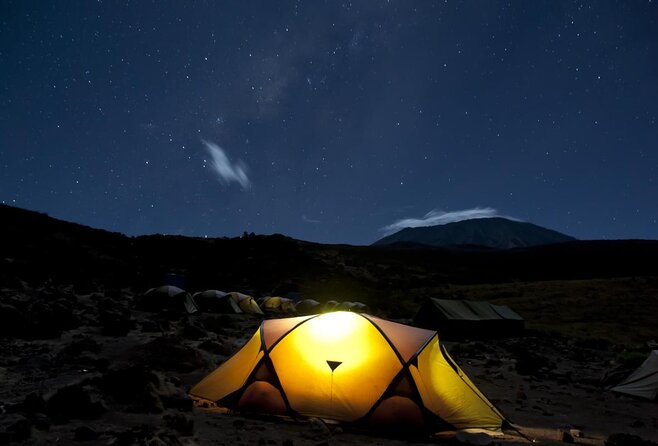
- The scenery changes quickly: Expect rainforest on Day 1, moorland near Shira, semi-desert around Barranco, and alpine desert near Barafu.
- Meals and camping equipment are included: Breakfast, lunch, dinner, tents, and mattresses are part of the package during the trek.
- The price needs a closer look: At $1,150 per person, you receive core trekking services, but park fees and several major extras remain outside the quoted amount.
- The finish is practical: A vehicle meets you at Mweka Gate and returns you to your Moshi hotel in about an hour.
Why the Machame Route works well in six days
The Machame Route is popular because it does more than point uphill in a straight line. It moves through several mountain zones and includes a key acclimatization day in which you climb high, then sleep lower. That pattern gives your body a better chance to adjust than a route that simply gains height every day.
The six-day plan is efficient, but it is not relaxed. You cover 11 kilometers on the first day, 10 kilometers on Day 3, and up to 13 kilometers downhill after reaching the summit. I would treat the stated times as useful planning estimates, not promises. Mountain conditions, group pace, and altitude can affect the day.
This is a camping trek, not a hut-to-hut walk. Your tent and mattress are supplied, along with meals, but you still need to bring suitable personal clothing and hiking equipment. The operator says groups can include up to 100 people, so I would ask about the expected group size before booking if a quieter mountain experience matters to you.
More Kilimanjaro routes and climbs:
- Kilimanjaro climb by Lemosho Route (7-day)
★ 5.0 · 651 reviews - Kilimanjaro climb, Machame Route (7-day)
★ 5.0 · 262 reviews - Kilimanjaro Climbing Lemosho Route 8 Days.
★ 5.0 · 186 reviews
Day 1: Moshi to Machame Gate and the rainforest
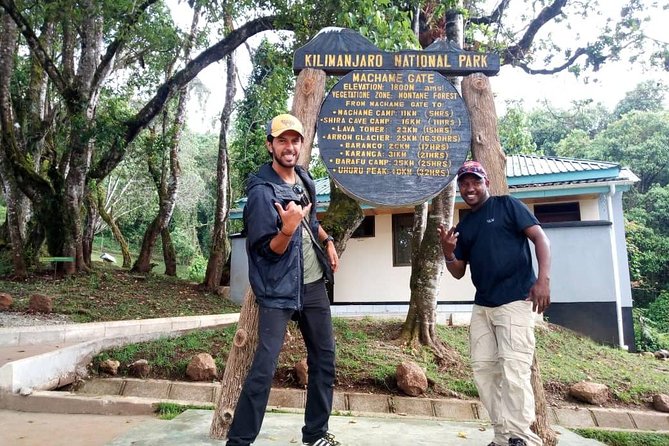
The first transfer takes about 45 minutes from your Moshi hotel to Machame Gate, passing through the village of Machame. This short drive gets you from town life to the park entrance and the practical start of the climb.
From the gate, you walk 11 kilometers through montane forest. The route rises from 1,830 meters to 3,050 meters and usually takes five to six hours. The trail winds uphill rather than launching straight into a brutal grade, but the combination of distance and rising altitude makes this a proper first day.
The forest is the most enclosed part of the route. It gives you shade and a sense of moving into a different world, though muddy conditions are possible. After lunch and dinner, you sleep at Machame Camp.
I like this opening because it lets you settle into the rhythm of walking before the high, open slopes arrive. The drawback is that the first day can feel longer than the distance suggests, especially if you are carrying a full personal pack or have not trained for sustained uphill walking.
Day 2: Shira Camp and the change to moorland
After breakfast, the trail leaves the rainforest. The surroundings become moorland as the route climbs from 3,050 meters to 3,850 meters over only 5 kilometers. The shorter distance does not mean an easy day. The path rises along a steep rocky ridge, crosses a valley, and turns west toward a river gorge before reaching Shira Camp.
You should expect four to five hours of hiking. Breakfast, lunch, and dinner are included, which matters here because the shorter walking day still asks your body to work at a higher altitude.
Shira brings a clear change in feel. The forest is behind you, and the route becomes more exposed and spare. The elevation gain is also noticeable. I would use this day to walk slowly, drink regularly, and keep your effort controlled. Trying to race ahead now gains you little and may make later days harder.
Shira Camp also gives you a useful pause before the longer acclimatization day. The route has already taken you above 3,800 meters, but the biggest altitude lesson is still ahead.
Day 3: Lava Tower, Shark’s Tooth, and Barranco
Day 3 is one of the most important parts of the climb. You leave Shira Camp and head east along a ridge, passing the junction toward Kibo before turning southeast toward Lava Tower, also called Shark’s Tooth. The high point is about 4,650 meters.
You then descend to Barranco Camp, finishing around 4,000 meters, close to your starting elevation for the day. The total distance is 10 kilometers, and the walking time is about five to six hours. The habitat is semi-desert, with little of the forest character you saw at the beginning.
This is the classic climb-high, sleep-lower day. You gain height during daylight, then give your body a lower sleeping elevation at Barranco. That is why this route is often chosen for its acclimatization profile.
The Lava Tower section can be mentally demanding because the air feels thinner and the surroundings are stark. The descent to Barranco is not wasted effort. It is the part that makes the day useful. Breakfast, lunch, and dinner are provided, so you can focus on pacing rather than finding food at altitude.
A few more trips of this kind worth comparing:
- Kilimanjaro climb, Lemosho Route (6-day)
★ 5.0 · 129 reviews - Kilimanjaro climb, Marangu route (6-day)
★ 5.0 · 72 reviews - 6 Days 5 Night Safari
★ 5.0 · 57 reviews - 6 Days Tanzania Classic Safari
★ 5.0 · 52 reviews
Day 4: Barranco Wall and the approach to Barafu
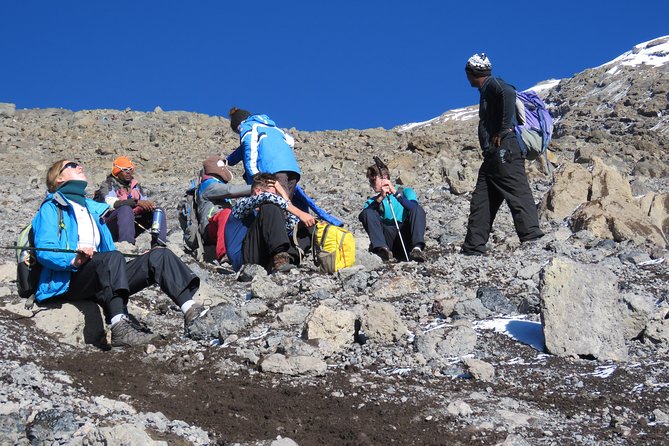
Day 4 begins with the Barranco Wall, the most obvious technical-feeling feature of the route. You climb to about 4,250 meters, then cross the Karanga Valley at around 4,050 meters before continuing to Barafu Camp.
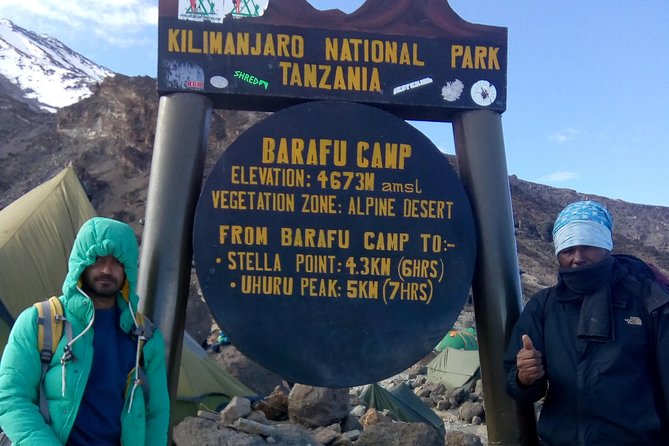
The day covers 9 kilometers and takes six to eight hours. You finish at 4,700 meters in alpine desert. Breakfast, lunch, and dinner are included, but this is a long day before the hardest stretch of all.
The Barranco Wall is steep, and it may demand careful foot placement and the use of your hands in places. The supplied information describes it as a challenging ascent, so I would not treat this as a casual scenic walk. After the wall, the route traverses the Karanga Valley and continues across the South Circuit, with summit views along the way.
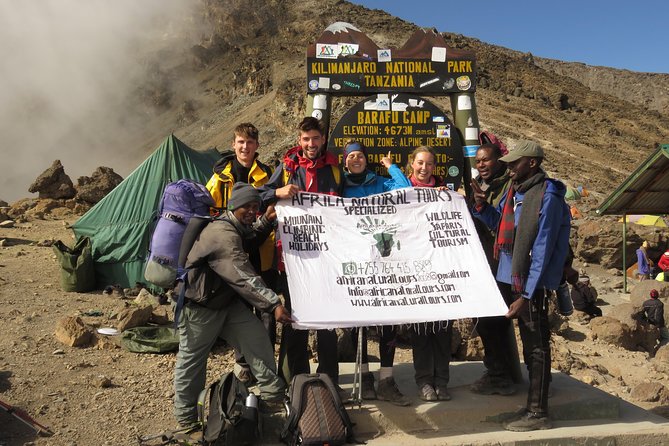
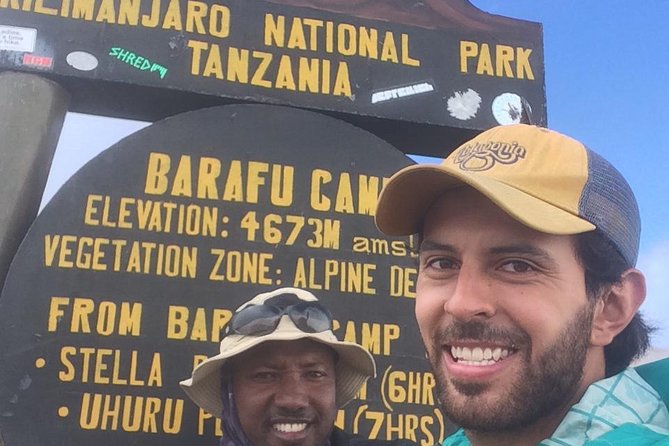
Barafu means you are close to the final push, but it is not a place to celebrate too early. At 4,700 meters, rest becomes part of the work. Your guide provides the briefing and controls the walking rhythm, yet you still need to communicate clearly if you feel unwell or need a slower pace.
Day 5: Stella Point, Uhuru Peak, and the long descent
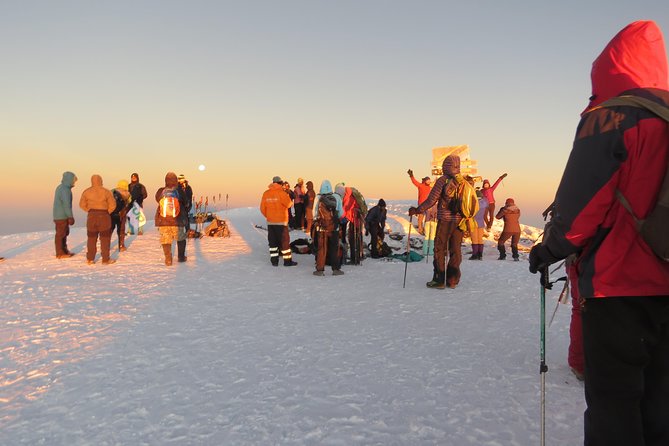
Summit day begins between midnight and 2 a.m. The early departure is designed to get you up through the dark hours, reach the crater rim around sunrise, and continue to Uhuru Peak. The climb passes between the Rebmann and Ratzel glaciers and continues over scree toward Stella Point.
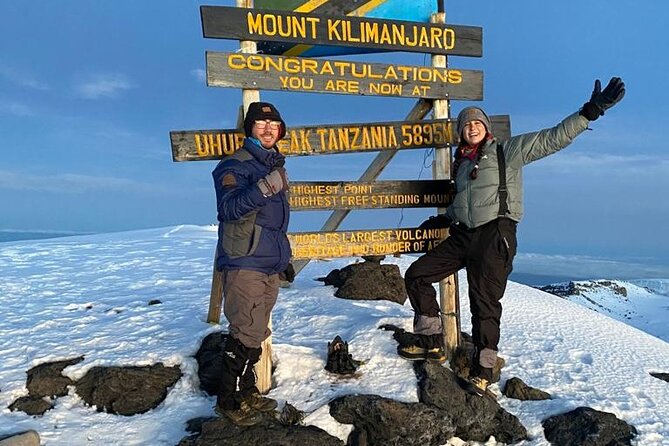
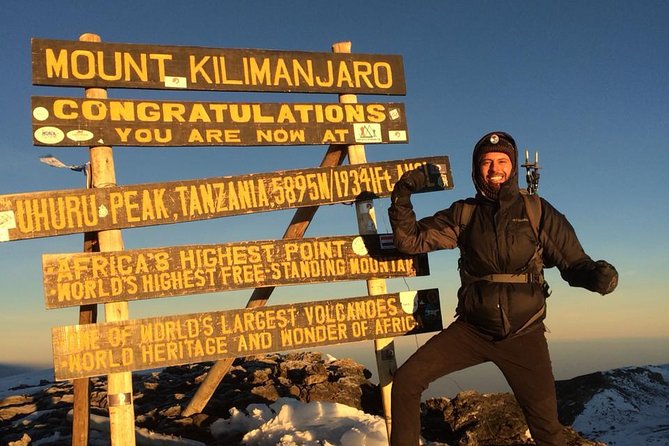
From Barafu, the route climbs to Stella Point on the crater rim, then continues to Uhuru Peak at 5,895 meters, or 19,340 feet. This is the highest point in Africa and the central achievement of the trek.
The summit push covers about 5 kilometers uphill. After reaching Uhuru Peak, you descend 13 kilometers to Mweka Camp, stopping at Barafu for lunch. The total day takes 10 to 13 hours and includes breakfast, lunch, and dinner.
This is where the six-day schedule earns its reputation as a serious challenge. You are climbing at the highest altitude after several days of effort, then descending a long way while tired. The summit reward is the view and the sense of reaching Africa’s highest point, but the descent is not an afterthought. It is a major part of the day.
The tour highlights an unforgettable sunset from the summit, weather permitting, but the detailed schedule centers on a midnight start and a sunrise at Stella Point. I would clarify the exact summit timing with Africa Natural Tours before booking. Do not assume you will be standing at Uhuru Peak for sunset.
Day 6: Mweka Gate, certificates, and Moshi
The final morning is much shorter than summit day. After breakfast, you descend from Mweka Camp at 3,090 meters to Mweka Park Gate at 1,680 meters. The 10-kilometer walk usually takes three to four hours.
Lower sections can be wet and muddy. Gaiters and trekking poles are specifically recommended, and I would take that advice seriously. After several days on the mountain, a slippery descent can be more irritating than difficult, but tired legs make small problems feel larger.
At Mweka Gate, you receive your summit certificate. The Monkey Adventures vehicle then drives you back to your Moshi hotel, a journey of about 60 minutes. Breakfast is provided before the trek ends.
This final transfer is one of the practical strengths of the package. You do not need to arrange your own transport from the gate, though you do need to book and pay for your Moshi accommodation separately.
What the $1,150 price really covers
At $1,150 per person, the price covers the central structure of the climb:
- Hotel pickup in Moshi to Machame Gate
- Hotel drop-off in Moshi from Mweka Gate
- Breakfast, lunch, and dinner during the trek
- Camping equipment, including a tent and mattress
- A pre-trek briefing
- A professional Kilimanjaro hiking guide
- A trekking certificate
That is a useful package for someone who wants the main logistics handled. Food and camp equipment can add a lot of planning work on a mountain trip, so their inclusion improves the value.
The price does not include Kilimanjaro park fees. These may be paid directly to the park or through the tour operator, but you should confirm the exact amount and payment process before you commit. Tips for the mountain crew are also extra, and the package does not include hotels before or after the trek.
You also pay separately for airport transfers, flights, personal hiking gear, and pickup locations outside the stated Moshi hotel arrangement. The advertised amount is therefore a starting price, not the complete cost of your Kilimanjaro trip.
Food, equipment, and preparation
Three meals per trekking day are included. That removes one major concern, but the supplied information does not describe menus, snacks, drinks, or special dietary arrangements. If you have dietary needs, ask Africa Natural Tours about them before departure.
A tent and mattress are supplied. Personal hiking gear is not. You should plan for the gear you will wear and carry, including protection for wet and muddy conditions on the final descent. Gaiters and trekking poles are specifically useful there.
The tour requires moderate physical fitness. That phrase should not be read as meaning easy. You need to handle five to eight hours of walking on several days, then a 10 to 13-hour summit day with a midnight start. Training for long uphill walks and long downhill walks is sensible preparation.
A pre-trek briefing is included. Use it to confirm the schedule, park fees, equipment arrangements, meeting times, and the plan for summit day. The provider is Africa Natural Tours, and the supplied response to a Spanish-language five-star review thanks the climber for choosing the company for this six-day Machame trek. The same review praised the adrenaline, scenery, and positive feeling among the people involved, which matches the route’s strongest appeal: this is hard work in striking surroundings with a strong group element.
Who should choose this Kilimanjaro climb
I would recommend this experience to you if you want the most scenic parts of the Machame Route in a compact six-day format and you are comfortable camping. It suits people who value included meals, a supplied tent and mattress, a professional guide, and arranged Moshi transfers.
It is also a good fit if you want a route with a meaningful acclimatization day rather than a simple uphill march. Lava Tower followed by Barranco is the key design feature, and the South Circuit approach gives you several views toward the summit.
I would pause before booking if you want a slow, gentle schedule. Six days leaves less room for recovery than a longer version, and the summit day is long. I would also pause if you are counting every dollar, since park fees, tips, hotels, airport transfers, flights, and personal gear are outside the quoted price.
The maximum listed group size is 100 people. That does not mean your group will contain 100, but it does mean you should ask for the expected number before paying if group size matters to you.
Booking, pickup, and cancellation details
Pickup is offered from the Moshi hotel you book, with return to that hotel after the descent. Other pickup locations shown in the package are not included, and airport pickup and drop-off are separate.
Confirmation is received at booking, and a mobile ticket is available. The activity is near public transportation, though the actual mountain transfer is handled as part of the stated hotel pickup and return arrangement.
Cancellation is free up to 24 hours before the experience begins. Canceling or changing the booking within 24 hours is not accepted for a refund, and the cut-off uses local time.
FAQ
How long is the Kilimanjaro Machame Route tour?
The experience lasts approximately six days. The supplied description also refers to a six or seven-day option, so you should confirm the exact departure format when booking.
What is the price per person?
The listed price is $1,150 per person.
Are meals included?
Yes. Breakfast, lunch, and dinner are included during the trekking portion of the experience.
Are camping tents and mattresses included?
Yes. Camping equipment, including a tent and mattress, is included.
Are Kilimanjaro park fees included?
No. All Mount Kilimanjaro park fees are excluded and can be paid directly to the park or through the tour operator.
Is hotel pickup included?
Pickup is included from the hotel you book in Moshi town to Machame Gate. Return transport from Mweka Gate to that Moshi hotel is also included.
Is airport transportation included?
No. Airport pickup and drop-off are not included.
What fitness level do I need?
The tour requires a moderate physical fitness level. You should be prepared for several hours of hiking each day and a 10 to 13-hour summit day.
What is the cancellation policy?
You can cancel up to 24 hours before the start time for a full refund. Cancellations or changes made within 24 hours are not accepted for a refund.
Should you book this six-day Machame climb?
I would book it if you want a serious Kilimanjaro challenge with varied scenery, included trekking meals, camping equipment, a professional guide, and straightforward Moshi transfers. The route’s best feature is its acclimatization design, especially the Lava Tower to Barranco section, while the summit day provides the clear goal of Uhuru Peak.
Before paying, ask for the final park-fee total, expected group size, exact summit timing, and what you must bring personally. If you accept the long summit day and budget for the excluded costs, this is a strong-value way to take on Africa’s highest mountain.
Just added around Moshi
- Moshi: Lake Chala Tour: Hiking &/or Kayaking★ 4.5 · 3 reviews
- 3 Days Tanga Exclusive Beach Holiday★ 5.0 · 3 reviews
- Serengeti Wildebeest Migration.★ 5.0 · 3 reviews
- Chemka Hotpsrings E-Bike Day Trip★ 5.0 · 3 reviews
- Explore 1 day Ngorongoro Crater Budget Group Safari from Arusha★ 5.0 · 3 reviews
- Explore the 360° of Kilimanjaro★ 5.0 · 3 reviews
- Affordable Short Tanzania Safari (2 Days Camping Safari)★ 5.0 · 3 reviews
- Rongai Route 7 Days★ 5.0 · 3 reviews
Kilimanjaro Treks, compared.



8-Day Small-group Lemosho Kilimanjaro Summit Trekking
Read our review →


Climbing Kilimanjaro through 7 days Machame Route
Read our review →

Browse the lists this tour appears in