
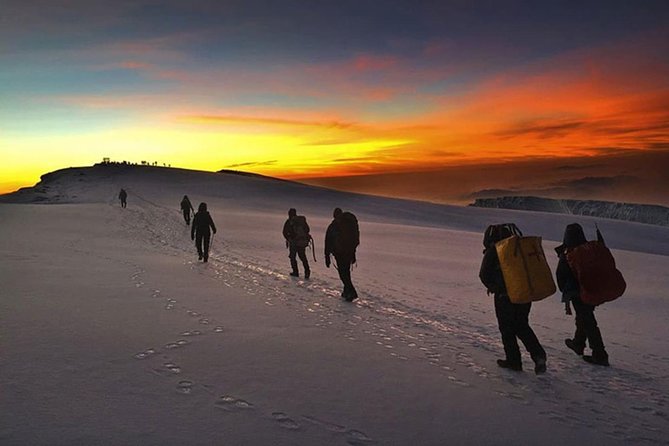
Reviewed · CAMPING SAFARIS
Mt Kilimanjaro 360° Trek with Once-in-a-Lifetime Crater Camping
Sleep beneath the glaciers. This 10-day Northern Circuit trek combines quiet northern slopes, strong acclimatization, and a rare night inside Kilimanjaro’s crater. I especially like the low trail traffic and the careful climb-high, sleep-lower rhythm, but the price is substantial and the high-altitude camping demands real preparation.
The trip costs $4,211.27 per person and is run as a private experience for your own group. It includes airport transfers, a post-climb hotel night, guides, porters, a cook, tents, meals, and park fees. The main caution is that personal gear, insurance, visas, snacks, medicine, and a portable toilet cost extra.
In This Review
- Key points to know before booking
- Why the Northern Circuit route earns its keep
- Day 1: Mti Mkubwa Camp and the wet rainforest
- Days 2 and 3: Shira Plateau and colder nights
- Day 4: Lava Tower, altitude practice, and Barranco
- Day 5: Moir Valley, Little Lent Hill, and Buffalo Camp
- Day 6: Rongai Third Cave and a shorter mountain day
- Day 7: The Saddle and preparation at School Hut
- Day 8: Uhuru Peak and the rarest night of the trek
- Day 9: Ash Pit and Millennium Camp
- Day 10: Mweka Gate and the return to Moshi
- What the $4,211.27 price includes
- Who should book this climb?
- Final decision: a rare route at a serious price
- FAQ
- How long does the Kilimanjaro trek take?
- Is this a private tour?
- What fitness level is required?
- Is crater camping included?
- Are airport transfers and a hotel night included?
- Is personal trekking gear included?
Key points to know before booking
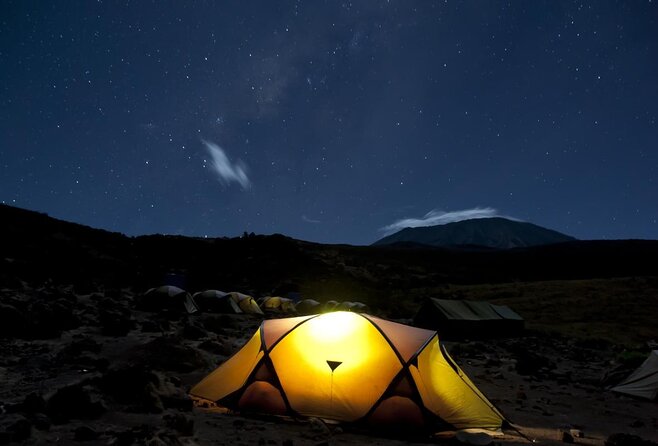
- Crater camping at 5,895 meters: After reaching Uhuru Peak, you descend into Kilimanjaro’s crater for the night beneath the glaciers.
- A quieter route: The Northern Circuit uses less-traveled paths around the northern side of the mountain, with wide views toward Kenya and Tanzania.
- Nine or ten days on the mountain: The longer schedule gives you more time to adjust to altitude than shorter routes.
- Strong mountain support: A qualified guide, assistant guides, porters, and cook are included, along with camping equipment and daily hot wash water.
- A serious summit day: You climb from School Hut before midnight, reach the summit near dawn, then continue to Crater Camp.
- Private departure: Only your group participates, with pickup offered and group discounts available.
Why the Northern Circuit route earns its keep
Kilimanjaro is not technically a rock-climbing trip, but it is a demanding high-altitude trek. The main challenge is the thin air, not the need for ropes or specialist climbing skills. That makes the number of days important.
This route takes nine or ten days, depending on the exact arrangement. The extra time lets you gain height gradually, spend nights at different elevations, and include useful acclimatization days. You still need moderate physical fitness, but the schedule is kinder than a rushed ascent.
I like the Northern Circuit because it gives you more than a summit photograph. You pass from rainforest to open moorland, then to the Shira Plateau, alpine desert, volcanic ridges, and the stark upper slopes of Kibo. The route also gives you a less crowded experience than the more popular approaches.
The private format matters here. Your pace, rest stops, and daily routine can be handled within your own group rather than around strangers with different fitness levels. Ask before booking how large your party will be, since the information confirms a private tour but does not give a maximum group size.
More Camping Safaris in Moshi
- 5 Days Camping Tarangire, Serengeti & Ngorongoro crater & Visiting Maasai
★ 5.0 · 58 reviews - 4 Days Group Joining Camping Safari to Tarangire Serengeti Ngorongoro Crater
★ 5.0 · 50 reviews - 4 days adventure camping safari
★ 5.0 · 44 reviews
Day 1: Mti Mkubwa Camp and the wet rainforest
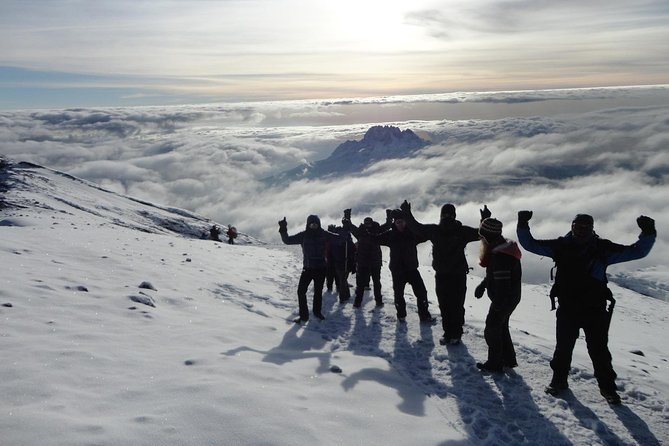
Your journey starts in Moshi with a roughly 45-minute drive to the Kilimanjaro National Park Gate. Permit processing can take time, so this is not a quick jump from vehicle to trail. You will see trekking crews getting organized while your own mountain team prepares.
The first walk leads through rainforest to Mti Mkubwa Camp. The elevation rises from 2,389 meters to 2,785 meters, a gain of 396 meters. The trek takes about four hours.
This lower section is scenic but can be muddy and slippery. I would pack gaiters and trekking poles, exactly because this is where a seemingly gentle opening walk can become awkward. Your guide can point out local plants, wildlife, and the changing forest as you climb.
The camp is a useful introduction to the rhythm of the trip. You walk, eat, rest, and prepare for the next day. Do not judge the whole climb by this first stage. The rainforest feels relatively warm and enclosed, while the upper mountain will be colder, drier, and much more exposed.
Days 2 and 3: Shira Plateau and colder nights
Day two leaves the forest behind and climbs toward Shira Camp One. You gain 719 meters, reaching 3,504 meters after about six hours of walking.
This is the first major change in scenery. The trees thin out, the views widen, and the temperature drops. The route reaches the rim of the Shira Plateau, one of the high plateaus on Earth, according to the tour description. The open ground can make the mountain feel much larger than it did in the forest.
On day three, you cross the plateau from Shira One to Shira Two. The altitude rises another 391 meters to 3,895 meters, with about four hours of trekking. Nine-day schedules spend the night at Shira Two and join climbers coming from the Machame route.
Shira Two is worth treating as a cold-weather camp. The plateau is exposed, and temperatures can fall below zero. Bring a warm sleeping system and keep clothes for the following morning inside your sleeping bag or dry bag. The extra walk above camp offers views across the valley and toward Kilimanjaro’s Western Breach, but only take that detour if your guide agrees that you have the energy.
Day 4: Lava Tower, altitude practice, and Barranco
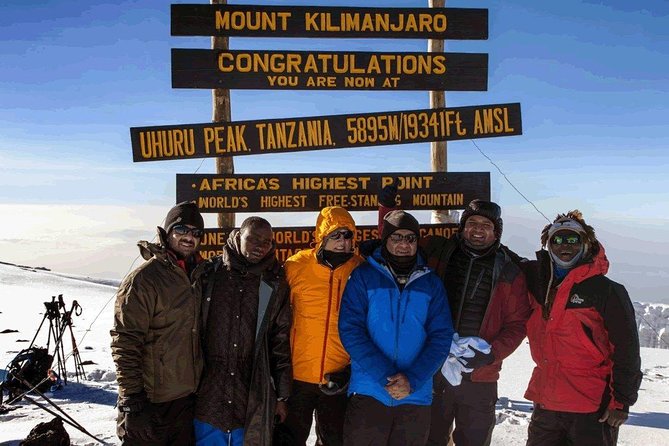
Day four is one of the most useful days on the entire route. You begin at 3,895 meters and finish near 3,986 meters, so the net gain is only 91 meters. The walking time is about seven hours because you climb much higher during the day, reaching Lava Tower at roughly 4,650 meters, then descend to Barranco Camp.
This is the classic acclimatization pattern: gain height during the day, then sleep lower. It can feel counterintuitive when your legs are tired but your overnight elevation has barely changed. That is the point.
Lava Tower, also called the Shark’s Tooth, is a stark volcanic feature. The route passes junctions for Kibo Peak and the Arrow Glacier before descending toward Barranco. This section gives you an early sense of how your body responds to altitude. Tell your guide promptly about headache, nausea, dizziness, or unusual fatigue. Emergency oxygen is supplied for emergencies only, not as a way to push through a summit attempt.
Barranco Camp is also where the mountain begins to feel more severe. The air is thin, the ground is rougher, and weather can change quickly. Follow your guide’s instructions rather than trying to prove anything during this acclimatization day.
More Kilimanjaro routes and climbs:
- Kilimanjaro climb by Lemosho Route (7-day)
★ 5.0 · 651 reviews - Kilimanjaro climb, Machame Route (7-day)
★ 5.0 · 262 reviews - Kilimanjaro Climbing Lemosho Route 8 Days.
★ 5.0 · 186 reviews - Climbing Kilimanjaro – Machame Route
★ 5.0 · 170 reviews
Day 5: Moir Valley, Little Lent Hill, and Buffalo Camp
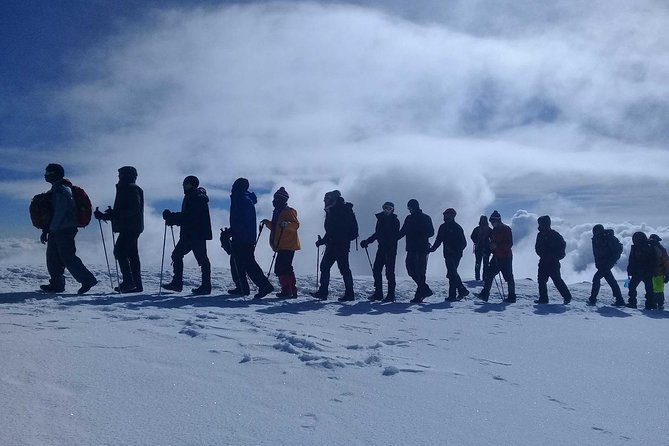
The itinerary begins this day around 4,155 meters and finishes at Buffalo Camp around 4,033 meters. You lose about 122 meters overall, but the trail rises and falls repeatedly, with roughly seven hours of walking.
The first section climbs out of Moir Valley. If your energy and acclimatization are good, you can ask about the short detour to Little Lent Hill at 4,375 meters before returning to the Northern Circuit path. This is optional, so it should not become a personal contest. The main route already provides plenty of exertion.
You then follow the northern slopes of Kibo toward Buffalo Camp. The major reward is the view north toward the plains and the Kenya-Tanzania border. This is one of the route’s strongest scenic sections because you see a side of Kilimanjaro that many shorter routes do not emphasize.
You arrive around midday, eat lunch, and have time to rest. That rest is valuable. The repeated inclines and declines can be more tiring than one steady climb, and you still have several high days ahead.
Day 6: Rongai Third Cave and a shorter mountain day
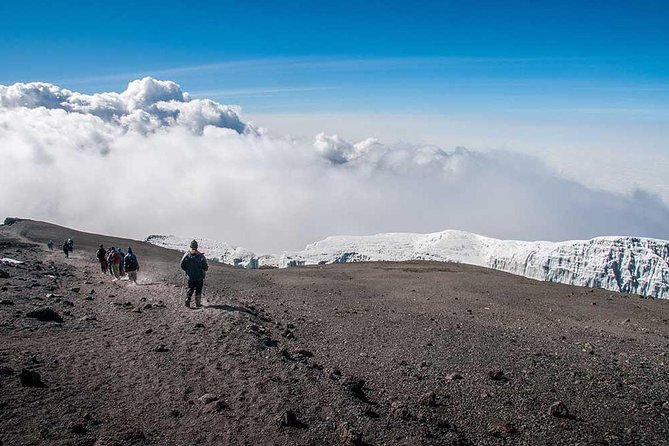
Day six begins at Buffalo Camp, around 4,033 meters, and finishes at Rongai Third Cave near 3,936 meters. The net altitude loss is about 97 meters, though the walking time is still listed at roughly seven hours.
You climb Buffalo Ridge, descend into Pofu Camp for lunch, and continue east around Kibo’s northern slopes. The trail reaches Rongai Third Cave in the afternoon.
This is a good place to appreciate the route’s quieter character. You are away from the main crowds and moving through a broad, dry upper-mountain setting. The day is shorter in feel than the previous one, and the lower sleeping elevation may help you feel better acclimatized.
Use the afternoon wisely. Eat, drink, organize your summit clothes, and sleep as much as possible. The next stage is not an ordinary trekking day.
Day 7: The Saddle and preparation at School Hut
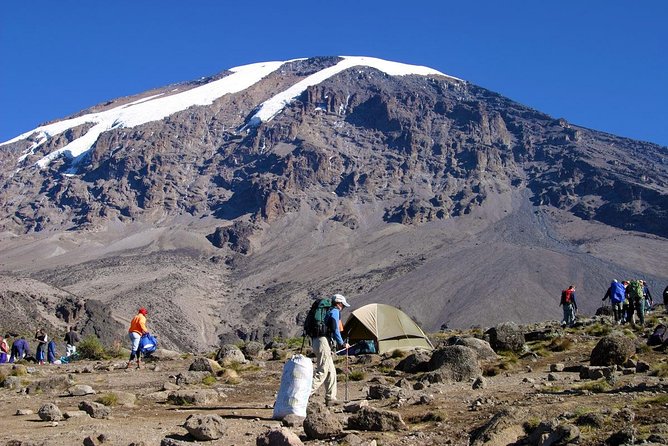
You climb from roughly 3,936 meters to School Hut at about 4,717 meters, gaining 781 meters over approximately seven hours. The path crosses the Saddle between Kibo and Mawenzi Peak, a broad and exposed volcanic zone.
The scenery becomes severe and spare. There are fewer signs of plant life, and wind and cold can become more important than distance. You continue southwest to School Hut, where you have an early dinner and rest before the summit attempt.
The summit push starts just before midnight. Prepare before sleeping, not when everyone is trying to leave. Set out warm clothing, insulated water bottles, snacks, a headlamp, camera, gloves, and any personal medicine you need.
This is where the trip’s difficulty becomes clear. The itinerary labels the trek medium, but the summit night is physically demanding because you walk in darkness, climb on little sleep, and gain altitude quickly. Your guide team becomes especially important here. Past praise for Pinnacle repeatedly centers on careful support, with guides named JT, Jobeth, Jacob, and Kennedy receiving strong personal commendation on different climbs.
Day 8: Uhuru Peak and the rarest night of the trek
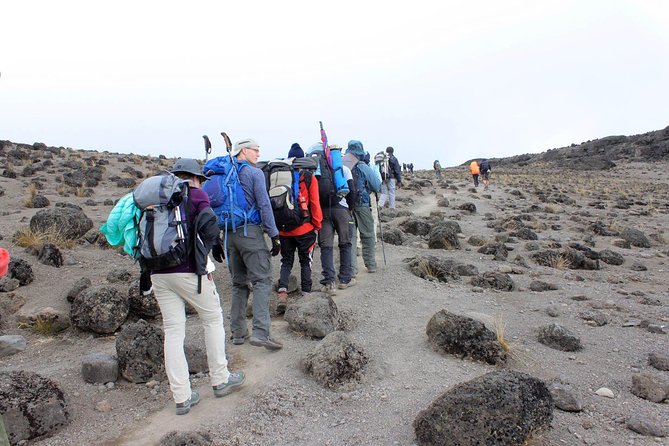
The ascent from School Hut to Uhuru Peak takes about seven to nine hours. You reach 5,895 meters, the highest point in Africa, usually aiming for the early morning summit window.
The effort is slow and steady. The exact experience depends on weather, altitude response, and your physical condition. Reaching the summit is a major achievement, but you should not treat it as guaranteed. A responsible guide may turn someone around for safety.
The unusual feature comes after the summit. Instead of descending directly to a lower camp, you descend into Kilimanjaro’s crater for an overnight stay beneath the glaciers. Few standard Kilimanjaro itineraries include this.
Crater Camp is the trip’s defining experience, but it is also the part I would examine most carefully before paying. You have already completed a hard summit climb, and the crater remains extremely high. The night can be cold and uncomfortable. Ask the operator for current advice on crater conditions, sleeping arrangements, and the precise plan for your dates.
Still, if your health and weather conditions allow it, sleeping inside the crater gives the climb a rare sense of place. You are not simply passing the summit and rushing down. You get time near the glaciers and volcanic interior of Kibo.
Day 9: Ash Pit and Millennium Camp
The morning includes exploration of the Ash Pit inside the crater before you descend to Millennium Camp. The day takes about five to six hours.
This is another reason the schedule needs care. You are still recovering from the summit and crater night, so the ash pit visit should be approached at an easy pace. Your guide should help decide how much walking is sensible.
The descent to Millennium Camp brings you lower and gives your body a better chance to recover. You can expect a well-earned rest after a demanding sequence of summit, crater, and ash-pit activities.
Day 10: Mweka Gate and the return to Moshi
The final descent passes through lush rainforest to Mweka Gate. The walking time is about four to five hours.
The return to green forest is a satisfying change after the cold, open upper mountain. At Mweka Gate, you receive a certificate of achievement before driving back to Moshi for celebration and relaxation.
The included hotel night after the climb is a practical touch. You can shower, sleep in a proper bed, and recover without needing to arrange the first night back yourself. Breakfast is included, as are airport transfers from Kilimanjaro Airport to Moshi and from Moshi back to the airport.
What the $4,211.27 price includes
This is an expensive trek, but the price covers many costs that can add up quickly on Kilimanjaro. Park fees and taxes are included, along with guides, assistant guides, porters, and a cook. Camping equipment includes tents, camp chairs, tables, and a sleeping mattress.
You also receive fresh drinking water and hot water for a daily wash. Meals include nine breakfasts, ten lunches, and nine dinners. That level of meal and camp support matters on a long mountain route, especially when you are too tired to manage food logistics yourself.
The team structure is one of the strongest parts of the package. Pinnacle has received repeated praise for professional organization, airport pickup, summit support, and the hard work of its mountain crews. One account even singled out porters for obtaining fresh fruit and vegetables during a climb, a small detail that matters when camp food becomes repetitive.
Budget separately for flights, visas, insurance, personal trekking equipment, medicines, water-purifying tablets, snacks, and unspecified drinks. A portable toilet is optional but highly recommended, and it costs extra. Personal gear can be rented from equipment stores in Moshi, which may help if you do not want to buy bulky cold-weather equipment.
Who should book this climb?
I would recommend this trip to a fit hiker who values time, quiet trails, and unusual mountain experiences more than a low price. It suits someone willing to spend ten days on the mountain and accept cold nights, long walking days, and a difficult summit attempt.
The private format is useful for couples, families, or a small group of friends who want their own schedule. Group discounts may improve the value if several people book together.
I would be more cautious if you have limited hiking experience, dislike cold camping, or want a simple summit-and-descent itinerary. The crater night is special, but it adds exposure and fatigue after the hardest day. You should also confirm current arrangements for crater access and camping before committing.
Booking confirmation is provided at the time of booking. The stated cancellation policy allows a full refund if you cancel at least three full days before the local start time. Within three days, payment is not refunded, so insurance is worth considering.
Final decision: a rare route at a serious price
This is one of Kilimanjaro’s more distinctive itineraries. The Northern Circuit gives you quiet paths, changing scenery, and a gradual altitude schedule, while Crater Camp turns the summit into a longer mountain experience rather than a quick photo stop.
I like the strong support package, the post-climb hotel, and the repeated emphasis on attentive guides and porters. I would book it if the crater night is the main dream and you are prepared for the cost and physical demands.
If your priority is simply reaching Uhuru Peak for the lowest sensible price, compare shorter routes and standard descent plans. If you want time, space, and a rare night beneath Kilimanjaro’s glaciers, this private trek makes a persuasive case.
FAQ
How long does the Kilimanjaro trek take?
The experience lasts approximately 10 days, with the mountain itinerary described as nine or ten days depending on the arrangement.
Is this a private tour?
Yes. Only your own group participates in the activity.
What fitness level is required?
A moderate level of physical fitness is required. The summit attempt includes a climb from School Hut before midnight, so you should be ready for long walking days and high altitude.
Is crater camping included?
Yes. After reaching Uhuru Peak, the itinerary includes a night camping inside Kilimanjaro’s crater beneath the glaciers.
Are airport transfers and a hotel night included?
Yes. Return transfers between Kilimanjaro Airport and Moshi are included, as is a hotel night after the climb with breakfast.
Is personal trekking gear included?
No. Personal hiking and trekking gear is not included, though equipment can be rented from stores in Moshi. A portable toilet is optional and highly recommended, and it is also not included.
More Hiking & Trekking
- Private Kilimanjaro Hike 7 Day Lemosho Route
★ 5.0 · 60 reviews - Best Kilimanjaro hiking day trip tour with Kilinge Adventures
★ 4.5 · 54 reviews - #1. Best Kilimanjaro Day hike Tour-Machame Route-ISMANI
★ 4.2 · 47 reviews - Best Kilimanjaro Adventure 7 days Machame route Trekking
★ 5.0 · 42 reviews
More Camping Safaris
- 6 Days Tanzania Budget Camping Safari with Migration
★ 5.0 · 31 reviews - 5 days Tanzania Camping Safari
★ 5.0 · 29 reviews - 6 Days: Classic Camping( Tarangire, Manyara, Serengeti And Ngorongoro).
★ 5.0 · 26 reviews - 3 Days Camping Safari Tarangire, Lake Manyara and Ngorongoro Crater
★ 4.5 · 6 reviews
Just added around Moshi
- Moshi: Lake Chala Tour: Hiking &/or Kayaking★ 4.5 · 3 reviews
- 3 Days Tanga Exclusive Beach Holiday★ 5.0 · 3 reviews
- Serengeti Wildebeest Migration.★ 5.0 · 3 reviews
- Chemka Hotpsrings E-Bike Day Trip★ 5.0 · 3 reviews
- Explore 1 day Ngorongoro Crater Budget Group Safari from Arusha★ 5.0 · 3 reviews
- Explore the 360° of Kilimanjaro★ 5.0 · 3 reviews
- Affordable Short Tanzania Safari (2 Days Camping Safari)★ 5.0 · 3 reviews
- Rongai Route 7 Days★ 5.0 · 3 reviews
Camping Safaris, compared.



3 Days Serengeti & Ngorongoro Group Camping Safari
Read our review →
5 Days Camping Tarangire, Serengeti & Ngorongoro crater & Visiting Maasai
Read our review →
2 Days Tarangire and Ngorongoro Group Camping Safari
Read our review →
3 Day Serengeti National Park & Ngorongoro Crater Camping Safari
Read our review →
3 Days Tarangire, Ngorongoro & Lake Manyara Group Camping Safari
Read our review →Browse the lists this tour appears in