
Reviewed · KILIMANJARO TREKS
7 Day Trek To The Roof Of Africa Kilimanjaro via Machame Route
The mountain saves its hardest test for sunrise. This Machame Route trek combines rainforest, moorland, high desert, glaciers, and a demanding summit push into a nine-day Tanzania trip. I like the extra acclimatization day at Lava Tower, and I like the practical support, including airport transfers, mountain meals, health checks, oxygen, and experienced wilderness guides.
The main caution is simple: this is not a sightseeing walk. The summit reaches 19,341 feet, and summit day requires an overnight start, a steep climb, and a long descent. The advertised price is $3,190 per person, a serious sum, though much of the expensive mountain logistics are already covered.
The route suits a fit novice as well as an experienced hiker. You do not need technical climbing skills based on the information provided, but you do need patience, steady pacing, and a willingness to sleep in tents for several nights. The group limit of 15 keeps this from becoming a crowded expedition.
In This Review
- Key points at a glance
- What the $3,190 price really covers
- Arrival in Moshi and the first night
- Day 2: rainforest from Machame Gate to Machame Camp
- Day 3: heather and moorland to Shira Camp
- Day 4: Lava Tower and Barranco Camp
- Day 5: crossing the Barranco Wall to Karanga
- Day 6: high alpine desert to Barafu Camp
- Day 7: Barafu to Uhuru Peak, then Mweka Camp
- Day 8: Mweka Gate and back to the hotel
- Day 9: airport transfer or more time in Tanzania
- Meals, tents, and daily support
- Who should book this Machame trek?
- Booking details and cancellation terms
- My verdict: a well-supported route for a serious goal
- FAQ
- How long does the Kilimanjaro experience last?
- Where does the trip begin?
- What accommodation is included?
- Are meals included on the mountain?
- Is personal climbing equipment included?
- What safety support is provided?
Key points at a glance
- A carefully paced Machame itinerary: Seven hiking days are paired with arrival and departure days, giving you time to adjust before and during the climb.
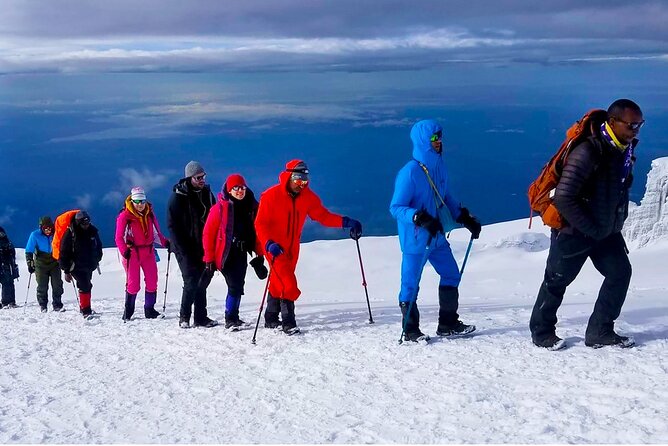
- Five major vegetation zones: You move from rainforest to heather and moorland, then into alpine desert and the ice near Uhuru Peak.
- Lava Tower acclimatization: The trek rises to 15,190 feet on Day 4 before sleeping lower at Barranco Camp, a useful high-climb, low-sleep pattern.
- Strong mountain safety system: Certified Wilderness First Responder guides, emergency oxygen, a medical kit, and two daily oximeter checks are included.
- Full camp support: Tents, sleeping mats, dining equipment, three daily meals, and ground transport are covered.
- A demanding summit day: You climb from Barafu Camp to Uhuru Peak, then descend to Mweka Camp in the same day.
What the $3,190 price really covers
At first glance, $3,190 is a lot for a hiking trip. Kilimanjaro, though, is not a self-guided weekend in the hills. The price includes park fees, rescue and camping fees, airport pickup and drop-off, all ground transport, two hotel nights, tented mountain accommodation, meals, guides, and a support crew.
Those park charges alone are a major part of any Kilimanjaro budget. You are also paying for food and equipment that must reach camps at high altitude, plus staff who organize camp, cook, carry supplies, and monitor your condition.
The value is strongest if you want a guided trip with the major logistics handled. You do not need to arrange a separate airport transfer or find a hotel for the nights around the climb. The two hotel nights include breakfast, while lunch and dinner at the hotel are extra.
You should still budget for several important costs. Airfare, a Tanzanian visa, travel insurance, staff tips, alcoholic drinks, and personal climbing gear are not included. Sleeping bags, hiking boots, and similar equipment are yours to supply or rent separately. Travel insurance is especially important for a high-altitude trip, though the package does include park rescue fees and an emergency medical kit.
More Kilimanjaro routes and climbs:
- Kilimanjaro climb by Lemosho Route (7-day)
★ 5.0 · 651 reviews - Kilimanjaro climb, Machame Route (7-day)
★ 5.0 · 262 reviews - Kilimanjaro Climbing Lemosho Route 8 Days.
★ 5.0 · 186 reviews
Arrival in Moshi and the first night
Your trip begins with pickup at Kilimanjaro International Airport. Ground transportation is included, and the plan provides two nights at Kili Wonders Hotel in Moshi or a similar hotel, with breakfast.
That first hotel night matters. You can arrive, sleep, organize your pack, and meet the team before heading onto the mountain. The schedule also gives you a little breathing room after a long flight instead of sending you straight from the airport to a trailhead.
The hotel plan is not all-inclusive. Lunch and dinner there are not covered, and your arrival time may affect how much free time you have. The stated operating hours cover the full day, but you should still confirm your pickup details before flying.
Day 2: rainforest from Machame Gate to Machame Camp
The climb begins at Machame Gate, at about 5,905 feet. From there, the trail rises through rainforest to Machame Camp at approximately 9,875 feet.
This first day gives you the most obvious change in scenery. The forest is thick and green, and the steady uphill grade introduces your legs to the rhythm of the mountain. Do not burn energy trying to race ahead. The best early habit is a slow, even pace.
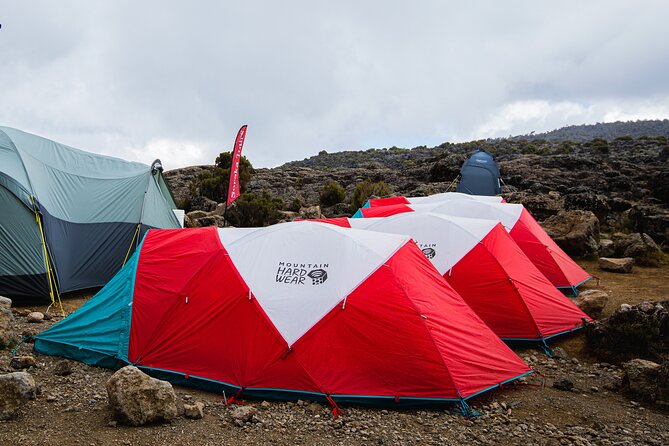
Machame Camp is high enough for you to begin noticing the effects of altitude, but the day is not the hardest on paper. You will sleep in a four-season Mountain Hardware tent, with two people per tent unless you pay extra for single accommodation.
A dining tent, tables, chairs, and cutlery are provided. That small touch is more valuable than it sounds after several hours of walking. You can eat a hot meal, sort your gear, and rest without balancing dinner on your knees inside a sleeping tent.
Day 3: heather and moorland to Shira Camp
Day 3 takes you from Machame Camp to Shira Camp, climbing from 9,875 feet to around 12,600 feet. The rainforest gives way to heather and moorland, with more open views and a drier feel.
This is a useful day for learning how your body responds to altitude. The elevation gain is substantial, even though the distance may feel manageable. You may find that ordinary tasks, such as putting on boots or packing your bag, take longer than expected.
The camping is more exposed than in the forest. Wind and temperature can change quickly, so keep warm layers and rain protection easy to reach rather than buried at the bottom of your duffel. Your personal gear matters here. The operator supplies tents and warm sleeping mats, but not sleeping bags or boots.
Meals are freshly prepared three times daily on the mountain. Vegetarian, gluten-free, halal, and kosher meal plans can be accommodated. Tell the operator about your needs when booking, not after you reach the trail.
A few more trips of this kind worth comparing:
- Private Kilimanjaro Hike 7 Day Lemosho Route
★ 5.0 · 60 reviews - Best Kilimanjaro hiking day trip tour with Kilinge Adventures
★ 4.5 · 54 reviews - #1. Best Kilimanjaro Day hike Tour-Machame Route-ISMANI
★ 4.2 · 47 reviews - Best Kilimanjaro Adventure 7 days Machame route Trekking
★ 5.0 · 42 reviews
Day 4: Lava Tower and Barranco Camp
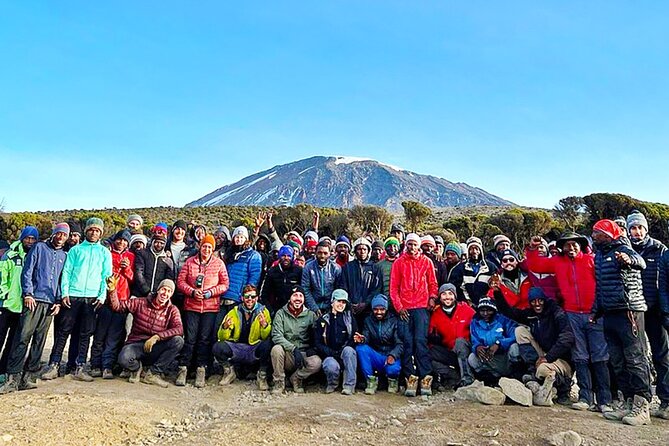
Day 4 is one of the smartest parts of the route. You climb from Shira Camp to Lava Tower at about 15,190 feet, then continue to Barranco Camp at roughly 12,960 feet.
The day follows the high-climb, lower-sleep pattern that helps your body adjust. You reach a higher point during the day, then rest at a lower camp. It is still a strenuous day, but the design gives you more time at altitude than a shorter route would.
Lava Tower also brings a change in scenery. Heather and moorland give way to high alpine desert, with stark rock, sparse plant life, and wide views toward the Western Breach and Southern Glacier. The air is thinner here, so take the pace seriously even if you feel strong.
Barranco Camp is known for its position below the Barranco Wall. The altitude is still considerable, and sleeping may be difficult for some people. The twice-daily health checks become especially important from this point onward. The guides use an oximeter and ask specific questions about your health, rather than relying only on how cheerful you look at dinner.
Day 5: crossing the Barranco Wall to Karanga
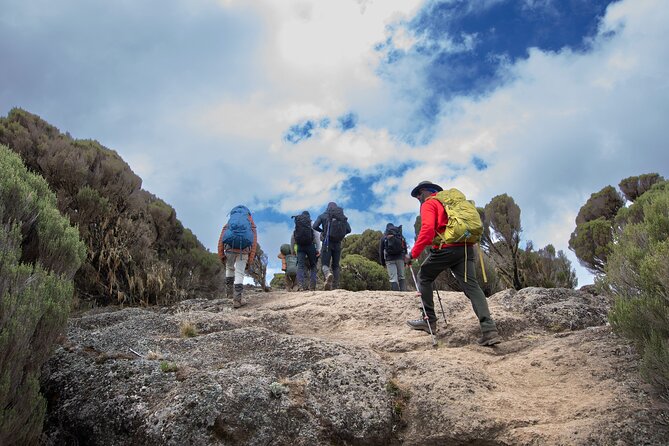
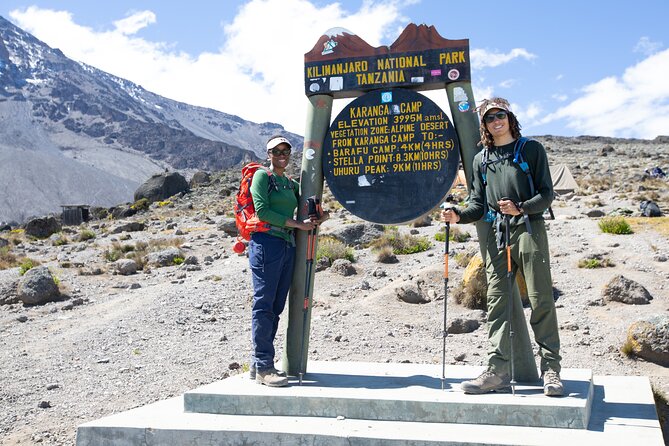
The move from Barranco Camp to Karanga Camp covers a shorter altitude gain, from about 12,960 feet to 13,270 feet, but the Barranco Wall makes this a memorable day.
You climb along the wall and enjoy views from above. The route involves uneven, steep terrain, so this is not the place for a rushed step or an overloaded daypack. Your guides and porters provide support, and previous summit accounts specifically praise the assistance offered by Baraka and Baltasari.
Karanga Camp is another high camp, and you are now firmly in the alpine part of the mountain. The scenery becomes more severe and open. There are fewer comforts, but the dining tent, prepared meals, mats, and organized camp routine keep the experience manageable.
Use this evening to prepare for the final two hiking days. Keep summit clothing together. Charge devices if possible, check your gloves and headwear, and make sure your water system is easy to use. The less you need to search for later, the better.
Day 6: high alpine desert to Barafu Camp
From Karanga Camp, you climb to Barafu Camp at approximately 15,190 feet. The route passes through high alpine desert, where vegetation is sparse and the mountain feels more remote.
Barafu is the final camp before the summit attempt. You do not simply arrive and relax for the evening. The main job is to eat, drink, organize your summit clothing, and rest as much as possible before the early start.
This is often a mentally difficult stage. Uhuru Peak is close on the map, but the height makes every task slower. You may feel tired even before the summit day begins. That is normal for a schedule designed to bring you high on the mountain.
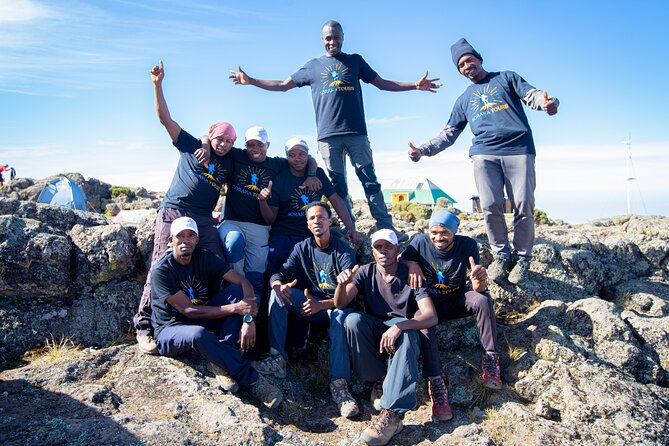
The professional crew is a major part of the package here. Certified Wilderness First Responder guides with more than 10 years of climbing experience each lead the trip, and the crew receives fair wages under the stated Kilimanjaro National Park arrangement. Tips are not included, so plan for that cost separately.
Day 7: Barafu to Uhuru Peak, then Mweka Camp
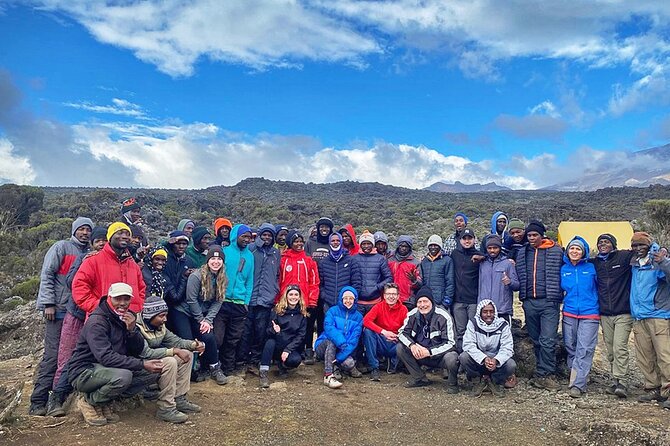
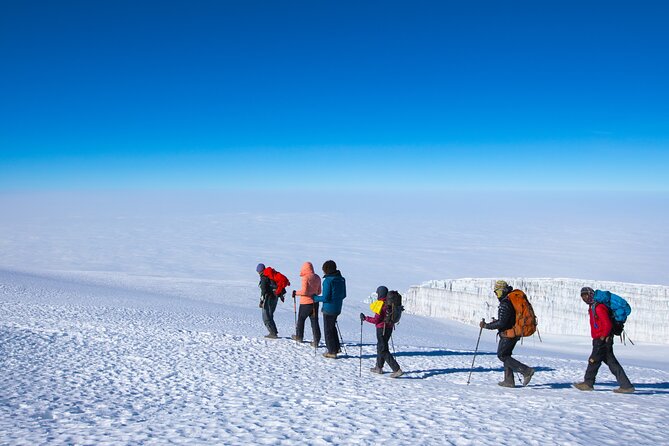
Summit day begins from Barafu Camp at 15,190 feet and climbs to Uhuru Peak at 19,341 feet. You aim to reach the summit around sunrise, when the glaciers and surrounding peaks are lit by the first light.
This is the toughest part of the trek by a wide margin. The altitude, cold, darkness, and slow uphill progress can test your confidence. The final target is the Roof of Africa, but your guides will also be watching for signs that continuing is unsafe.
The package includes emergency oxygen and a medical kit. The twice-daily health checks continue to provide a useful safety routine. These features do not remove the risks of altitude, but they show that the operator has built medical monitoring into the expedition rather than treating it as an afterthought.
After Uhuru Peak, you descend to Mweka Camp at about 10,170 feet. The descent is long, and many people underestimate it because the summit has already been reached. Your legs are tired, your concentration may be fading, and the trail can be rough. Keep eating and drinking, and follow the guide’s pace.
Reaching Mweka Camp gives you a well-earned rest, but do not expect a luxurious finish. You are still sleeping in a mountain tent. The reward is a lower altitude and the knowledge that the hardest climb is behind you.
Day 8: Mweka Gate and back to the hotel
The final hiking day takes you from Mweka Camp to Mweka Gate, descending to about 5,380 feet. The forest returns as you lose altitude, and the change can feel dramatic after the stark upper mountain.
At the gate, the mountain portion ends and ground transportation takes you back to the hotel. This is when a shower, clean clothes, and a real bed become more appealing than any postcard view.
The schedule identifies the hotel as part of the plan, but lunch and dinner there remain your responsibility. You may also want time to rest rather than stack another activity onto the same afternoon.
Day 9: airport transfer or more time in Tanzania
The final day includes transfer to the airport or the option to continue with safari adventures. The airport drop-off is included, which makes the end of the trip easier to manage.
Pay attention to flight timing. A mountain descent can run late if the group moves slowly or if conditions affect the schedule. The information provided does not promise a set transfer time, so leave a sensible margin before your flight.
If you continue into a safari, the trek can work well as the first part of a larger Tanzania trip. That extension is not included in the $3,190 price, so it must be arranged separately.
Meals, tents, and daily support
I like the level of practical support built into this trip. Three freshly prepared meals each day give you regular chances to replace energy, and the kitchen can handle vegetarian, gluten-free, halal, and kosher diets.
The dining tent is another useful feature. Mountain camping becomes much easier when meals are served at a table with proper cutlery and chairs. It also gives you a place to gather with the group outside your sleeping tent.
The tents are four-season Mountain Hardware models, shared by two people. Single accommodation is available for an additional charge. Warm sleeping mats are supplied, but sleeping bags are not, so check your equipment plan before departure.
A maximum group size of 15 is a reasonable middle ground. You get the social energy of a group without the scale of a large procession. The exact number in your departure group may be smaller, but the published limit gives you an idea of the largest possible party.
Who should book this Machame trek?
I would recommend it to someone with moderate physical fitness who wants a serious mountain goal without arranging every detail independently. The route gives you varied scenery, several nights for altitude adjustment, and a support system that covers much of the hard planning.
It is also a good fit if food requirements are important to you. The operator specifically accepts several meal plans, which removes one common source of worry on a long trek.
I would hesitate to recommend it to anyone seeking comfort, a short hiking day, or a guaranteed summit. The itinerary includes difficult terrain, high camps, cold conditions, and a summit day that lasts from the early morning climb through a long descent.
Training should focus on steady uphill walking and long days on your feet. The supplied information does not specify a required training program, so you should speak with a medical professional about high-altitude travel and make sure your insurance covers the trip.
Booking details and cancellation terms
Confirmation is provided at booking, and pickup is offered from Kilimanjaro International Airport. Public transportation is nearby, though the mountain trip itself relies on the included ground transfers.
You can cancel up to 24 hours before the experience begins for a full refund. Cancellations or changes made less than 24 hours before the start time are not accepted for a refund, and the cut-off follows local Tanzanian time.
My verdict: a well-supported route for a serious goal
I would book this trek if I wanted the classic Machame scenery and preferred a company that handles meals, camps, transport, medical checks, and park fees in one package. The Lava Tower acclimatization day, experienced guide team, emergency oxygen, and two daily health checks give the itinerary a sensible structure.
I would not book it without first pricing personal gear, insurance, visa costs, and staff tips. Those extras can add up quickly. Still, at $3,190, the package offers substantial value for a guided Kilimanjaro climb, especially if you want a clear plan rather than a bare-bones ascent.
The final decision comes down to your appetite for discomfort. If you can accept cold tents, thin air, long walking days, and a punishing summit morning, this route gives you a strong chance to experience Kilimanjaro’s full range, from rainforest to glacier. If that sounds exciting rather than alarming, Soraka Tours’ Machame itinerary deserves serious consideration.
FAQ
How long does the Kilimanjaro experience last?
The experience lasts approximately nine days, including arrival, seven hiking days, and the final transfer day.
Where does the trip begin?
The trip begins with pickup at Kilimanjaro International Airport in Tanzania, followed by accommodation in Moshi.
What accommodation is included?
Two hotel nights at Kili Wonders Hotel in Moshi or a similar hotel are included, with breakfast. On the mountain, you stay in four-season tents, normally two people per tent. Single tent accommodation costs extra.
Are meals included on the mountain?
Yes. Three freshly prepared meals each day are included during the mountain trek. Vegetarian, gluten-free, halal, and kosher meal plans can be accommodated.
Is personal climbing equipment included?
No. You must provide personal equipment such as sleeping bags and hiking boots. Airfare, visa fees, travel insurance, staff tips, alcoholic drinks, and hotel lunch and dinner are also excluded.
What safety support is provided?
The trip includes Certified Wilderness First Responder guides, emergency oxygen, a medical kit, and two daily health checks using an oximeter and health questions.
More 7-Day Experiences
- Climbing Kilimanjaro through 7 days Machame Route
★ 5.0 · 151 reviews - 7 Days Kilimanjaro via Machame route affordable price
★ 5.0 · 110 reviews - 7-Day Magical Tanzania Safari -Premium High End Package
★ 5.0 · 53 reviews - 7 Days Machame route – Kilimanjaro
★ 5.0 · 45 reviews
Just added around Moshi
- Moshi: Lake Chala Tour: Hiking &/or Kayaking★ 4.5 · 3 reviews
- 3 Days Tanga Exclusive Beach Holiday★ 5.0 · 3 reviews
- Serengeti Wildebeest Migration.★ 5.0 · 3 reviews
- Chemka Hotpsrings E-Bike Day Trip★ 5.0 · 3 reviews
- Explore 1 day Ngorongoro Crater Budget Group Safari from Arusha★ 5.0 · 3 reviews
- Explore the 360° of Kilimanjaro★ 5.0 · 3 reviews
- Affordable Short Tanzania Safari (2 Days Camping Safari)★ 5.0 · 3 reviews
- Rongai Route 7 Days★ 5.0 · 3 reviews
Kilimanjaro Treks, compared.



8-Day Small-group Lemosho Kilimanjaro Summit Trekking
Read our review →


Climbing Kilimanjaro through 7 days Machame Route
Read our review →

Browse the lists this tour appears in