
Reviewed · KILIMANJARO TREKS
7 Days Kilimanjaro Trekking Machame Route
The roof of Africa takes patience. This seven-day Machame Route trek appeals to me because it gives you changing habitats, from montane forest to alpine desert, and includes a proper acclimatization day at Lava Tower before Barranco Camp. I also like the private format and the repeated praise for guides such as Sebastian Shirima and Henry, who are described as encouraging and highly supportive. The main drawback is clear: Machame is steeper and more demanding than the Marangu Route, and you sleep in tents rather than huts.
At $2,500 per person, this is a serious purchase, but the price is easier to understand when you consider the seven days of guiding, camping, summit support, park access, and transfers described in the program. I would look closely at the final list of inclusions before paying, since food, porter support, equipment, tips, and airport transfers are not fully itemized here. This climb is best for someone with moderate fitness and some hiking experience, not for a first-time casual walker.
In This Review
- Key points before you book
- Why Machame is such a rewarding Kilimanjaro route
- Day 1: Machame Gate to Machame Camp
- Day 2: Machame Camp to Shira Camp
- Day 3: Shira Plateau, Lava Tower, and Barranco Camp
- Day 4: The 257-meter Barranco Wall to Karanga Camp
- Day 5: Karanga Camp to Barafu Base Camp
- Day 6: Barafu to Uhuru Peak and down to Mweka
- Day 7: Mweka Camp to the park gate and Arusha
- Guides, support, and the private format
- Is $2,500 good value?
- Who should book this Machame trek?
- Should you book it?
- FAQ
- How long is the Machame Route trek?
- Where does the trek start?
- What is the highest point reached?
- Where do you sleep during the trek?
- How difficult is the Machame Route?
- When does the summit climb begin?
- What happens after the final descent?
Key points before you book
- The Machame Route covers about 62 kilometers from gate to gate, with long uphill and downhill sections rather than a steady, gentle climb.
- Day three is the key acclimatization stage, taking you up to Lava Tower before dropping to Barranco Camp.
- The Barranco Wall requires basic scrambling, with a 257-meter rock face and steep, exposed-feeling sections.
- Summit night begins around midnight to 2:00 am, followed by the climb to Stella Point and Uhuru Peak.
- The route passes through several habitats, including rainforest, heath, moorland, semi-desert, high alpine terrain, and alpine desert.
- The private tour format lets only your group participate, with pickup offered and a stated 7:00 am start time.
Why Machame is such a rewarding Kilimanjaro route
Machame is popular for a good reason. You do not simply walk uphill through one setting for a week. The route changes as you gain height, and each day feels different in terms of plants, ground, weather, and effort.
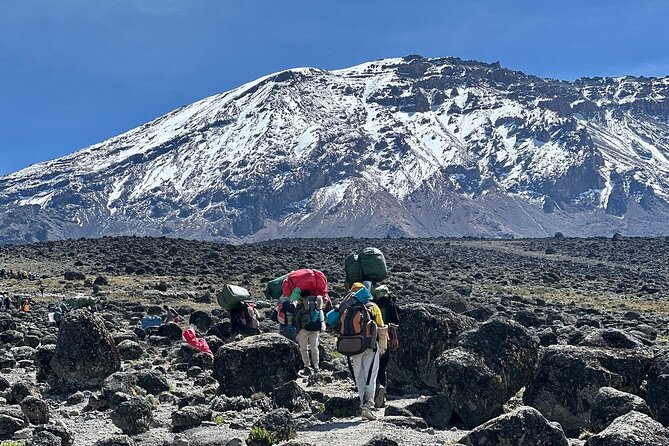
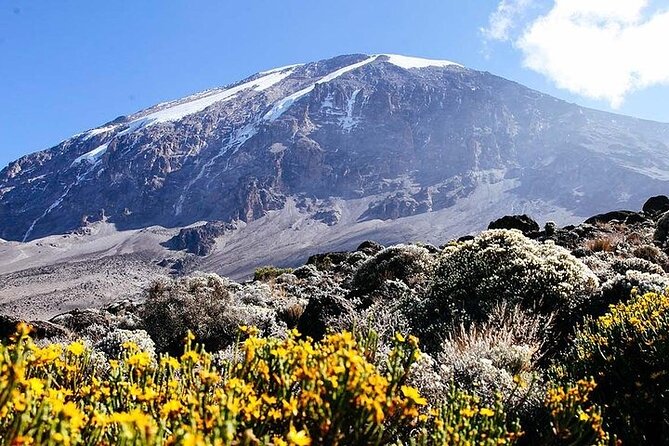
You begin in the rainforest, where the trail is enclosed and damp. Higher up, the trees thin into heather and moorland. The Shira Plateau opens the view, then the trail turns into rocky high country, semi-desert, and finally the stark alpine zone near Barafu Camp.
I like this sense of progression. You can feel the mountain changing around you, not just the altitude in your legs. The price of that variety is effort. Machame uses steeper trails and longer hiking days than the Marangu Route, and the tent camping means fewer fixed comforts at the end of a hard day.
The full route is approximately 62 kilometers from gate to gate. That figure does not tell the whole story, because the summit day combines a very early start, a long ascent, and a major descent. The schedule is demanding even before you account for cold, thin air, uneven rocks, and changing weather.
More Kilimanjaro routes and climbs:
- Kilimanjaro climb by Lemosho Route (7-day)
★ 5.0 · 651 reviews - Kilimanjaro climb, Machame Route (7-day)
★ 5.0 · 262 reviews - Kilimanjaro Climbing Lemosho Route 8 Days.
★ 5.0 · 186 reviews
Day 1: Machame Gate to Machame Camp
Your first morning begins after breakfast, with transfer to Machame Gate. The stated start time is 7:00 am, though the exact pickup time should be confirmed with the operator.
At the gate, you sign in and prepare for the climb. The first section travels through montane forest toward Machame Camp. The route covers about 11 kilometers and takes roughly five to seven hours, reaching an altitude of approximately 3,000 meters.
This is a full first day, not a gentle warm-up. The forest section can be wet and the path may feel busy or muddy underfoot. You should keep rain protection accessible instead of burying it at the bottom of your bag.
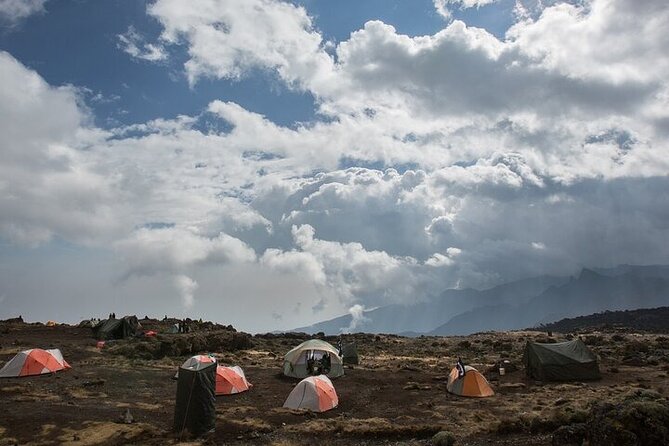
The reward is the first clear change in habitat. You leave behind ordinary lowland surroundings and begin to feel the scale of Kilimanjaro. Your support team sets up camp, and dinner is followed by an overnight stay at Machame Camp.
Because this is a private activity, the pace can be handled within your group rather than set by a large mixed party. That does not make the trail easy, but it can make breaks and encouragement more personal.
Day 2: Machame Camp to Shira Camp
Day two leaves the rainforest behind. The trail climbs through heather and open moorland, crossing rocky ridges before reaching the Shira Plateau.
You gain about 850 meters, moving from 3,000 to 3,850 meters. The distance is shorter than day one at about nine kilometers, and the hiking time is listed as four to six hours, but the increase in altitude makes this a meaningful test.
The path includes a steep rocky ridge, then crosses a large river gorge on the way to Shira 2 Camp. The route later turns west toward the river gorge and Shira Campsite, where camp is set up for the night.
I would treat this as an early check on how your body handles height. Do not race simply because the distance is short. A slow, steady pace is more useful than arriving early and exhausting yourself.
The open moorland also gives you a different kind of view. After the enclosed forest of day one, the trail feels more exposed and spacious. That change is one of Machame’s strengths, although it also means you may notice wind and colder temperatures more readily.
Day 3: Shira Plateau, Lava Tower, and Barranco Camp
Day three is the most important day for acclimatization. You climb from the Shira Plateau toward Lava Tower, also called the Shark’s Tooth, reaching about 12,500 feet before descending to Barranco Camp at approximately 13,000 feet.
The route covers about 10 kilometers and takes six to eight hours through semi-desert terrain. It also passes a junction toward Kibo and another route toward Arrow Glacier at around 16,000 feet.
The clever part of this day is the climb high, sleep lower pattern. You finish at roughly the same general elevation at which you began, but your body has spent time higher on the mountain. That gives you a better chance to adjust before the summit push.
This is not an easy sightseeing day. The altitude can make a moderate walk feel slow, and the rocky route asks for concentration. Your guide team matters here. Sebastian Shirima receives repeated praise for motivation and support, and that kind of calm leadership is useful when each step feels more expensive than it did lower down.
Barranco Camp is reached after the descent from Lava Tower. Dinner and sleep follow, but do not expect the day to feel short simply because you lose some height. This is one of the longest and most useful days on the route.
A few more trips of this kind worth comparing:
- Private Kilimanjaro Hike 7 Day Lemosho Route
★ 5.0 · 60 reviews - Best Kilimanjaro hiking day trip tour with Kilinge Adventures
★ 4.5 · 54 reviews - #1. Best Kilimanjaro Day hike Tour-Machame Route-ISMANI
★ 4.2 · 47 reviews - Best Kilimanjaro Adventure 7 days Machame route Trekking
★ 5.0 · 42 reviews
Day 4: The 257-meter Barranco Wall to Karanga Camp
The Barranco Wall is the visual star of day four. The trail climbs a 257-meter rock face, requiring basic scrambling skills before reaching the top of Karanga Valley.
The day covers about seven kilometers, with roughly seven hours of hiking through the high alpine zone. Distance is modest, but the wall and the repeated inclines and declines make this a physical day.
Scrambling here means using your hands at times on rocky sections. You do not need technical climbing skills according to the program, but you should be comfortable moving carefully over uneven ground. Keep your hands free and store loose items securely.
After the wall, the path rises and falls toward Karanga Camp at about 3,960 meters. You spend the night here before the final move to Barafu.
I like the way this day breaks up the route. It is not a long mileage day, but it gives you a memorable physical challenge and keeps the acclimatization pattern going. The limitation is that the terrain can feel slow and tiring, especially after the long day at Lava Tower.
Day 5: Karanga Camp to Barafu Base Camp
Day five is deliberately short. You travel about six kilometers in roughly three hours, joining the Mweka trail and continuing to Barafu Camp at 4,680 meters.
The terrain becomes alpine desert, with little shelter compared with the lower forest. This is the point where the mountain feels much more severe. The program recommends taking the day easily and conserving energy for the summit.
That advice should guide your whole afternoon. Barafu is not a place to spend your remaining energy wandering around. Eat, drink, organize your summit clothing, and rest as much as possible.
You also need to think ahead. Summit night starts between midnight and 2:00 am, so your useful preparation happens before normal bedtime. Put warm layers, gloves, head protection, rain gear, water, and any personal essentials where you can reach them quickly.
The short day is valuable because the following stage is the hardest part of the climb. Still, do not confuse short with comfortable. Sleeping at 4,680 meters can be difficult, and the cold and altitude may affect rest even when the walking time is low.
Day 6: Barafu to Uhuru Peak and down to Mweka
Summit day begins in darkness, usually between midnight and 2:00 am. You climb between the Rebmann and Ratzel Glaciers toward Stella Point at 18,600 feet.
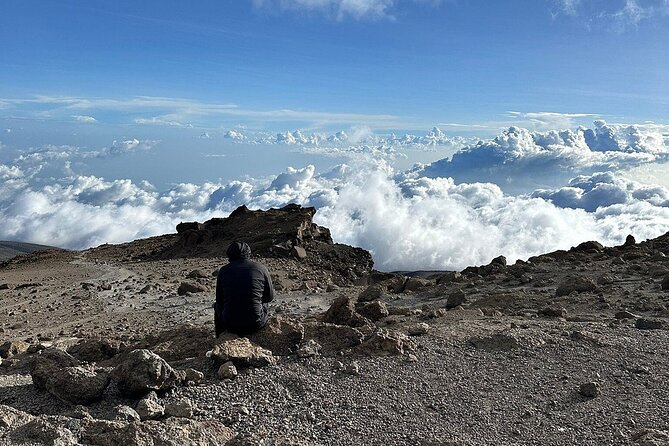
The trail is steep and slow. At Stella Point, you can stop briefly and, if the weather cooperates, watch sunrise. From there, the route continues for about another hour to Uhuru Peak, the highest point on Kilimanjaro and in Africa.
Fast hikers may reach the summit in time for sunrise, while others may see it from Stella Point. I would not treat that difference as a failure. The major goal is reaching Uhuru Peak safely, and weather, pace, and altitude affect every group differently.
Snow may appear on the final ascent. Conditions can change, so warmer clothing and rain protection should remain easy to access. The summit portion is only half of this day.
After Uhuru Peak, you descend to Mweka Hut Campsite, stopping at Barafu for lunch. The descent involves loose gravel, so gaiters and trekking poles are specifically useful. This is where tired knees and feet can become a bigger problem than the uphill climb.
The full summit day is the most demanding part of the itinerary. You should expect a very early start, cold conditions, thin air, a long descent, and a late arrival at camp. The encouragement of the guide team becomes especially important here. Feedback about Sebastian, Henry, Gift, Amani, and the wider support crew highlights motivation, songs, dancing, and positive energy during the climb.
Those human details matter. A summit attempt is not only a test of legs. It is also a test of patience and mood when the night is long and each step is slow.
Day 7: Mweka Camp to the park gate and Arusha
The final hiking day descends from Mweka Camp at about 10,000 feet to Mweka Park Gate at roughly 5,400 feet.
The route covers about 10 kilometers and takes three to four hours through rainforest. Lower down, the trail can be wet and muddy, so keep your gaiters and trekking poles available. The program notes that shorts and T-shirts may be enough in the lower section, but warmer clothing and rain gear should remain handy because conditions can change.
At the gate, you receive summit certificates. From there, the plan continues for another hour to Mweka Village, where a vehicle meets you for the drive back to your hotel in Arusha.
That final transfer is worth clarifying before departure. The tour is based around Moshi, but the stated return is to Arusha, so you should confirm the exact hotel destination and whether any extra transfer charge applies.
Guides, support, and the private format
The strongest theme in the available feedback is the support from the guide and porter team. Sebastian Shirima is named several times, with Henry also receiving specific praise. Charles is mentioned for on-site agency support, while Evaline handled questions through WhatsApp for one booking.
You should not book a mountain climb based only on friendly communication, but quick answers and reliable coordination are useful before a seven-day trek. On the mountain, patient encouragement matters even more. The feedback describes a team that helped climbers through the physical and mental strain of the route.
This is a private tour, so only your group participates. That can be a good fit if you want a more personal pace and direct communication with the guides. It may be less suitable if you prefer the social energy of a large shared group or want a lower-cost group departure.
The program allows service animals and notes access to public transportation, but those details should not be confused with easy trail access. Machame includes steep, rocky, muddy, and high-altitude sections. A moderate fitness level is listed, with some hiking experience recommended.
Is $2,500 good value?
At $2,500 per person, the trek is not a budget purchase. Still, seven days on Kilimanjaro involve much more than trail time. The published plan includes gate registration, camping arrangements, meals at camp, guiding, the summit schedule, and transport to and from key points.
The value depends on what is included in your final booking. Ask for a written breakdown covering park fees, tents, sleeping arrangements, meals, porters, guide services, transfers, certificates, and gratuities. Equipment rental is not specified, so ask about that too.
I like that the route uses six hiking stages before the final descent and includes the Lava Tower acclimatization pattern. A cheaper itinerary that removes a day may save money but can also leave you with a harder adjustment to altitude.
The eight submitted ratings are shown as five out of five overall, and the praise focuses on organization, prompt communication, reliable support, and the guide team. That is encouraging, but you should still confirm current inclusions and the exact operating details before paying.
Free cancellation is available if you cancel at least 24 hours before the start time. Changes or cancellations within 24 hours are not accepted for a refund.
Who should book this Machame trek?
I would choose this route if you:
- Have some hiking experience and a moderate fitness level.
- Prefer dramatic habitat changes and mountain scenery.
- Accept tent camping and long days on uneven ground.
- Want a private trip with your own group.
- Can manage a midnight-to-2:00 am summit start.
- Value direct support from a guide team.
I would think twice if you want hut accommodation, gentle gradients, short daily walks, or a relaxed holiday schedule. Machame is rewarding because it asks a lot from you. That tradeoff is central to the experience.
Should you book it?
Book this seven-day Machame trek if you want a demanding, varied Kilimanjaro route with a strong emphasis on acclimatization and personal guide support. The route gives you the rainforest, Shira Plateau, Lava Tower, Barranco Wall, Barafu Camp, Uhuru Peak, and Mweka descent in one focused program.
Before committing, get the full price breakdown and confirm the Arusha transfer, equipment arrangements, porter support, and exact pickup details. If those answers are clear and you are ready for steep trails, tents, thin air, and a long summit day, this is a solid choice for an ambitious first Kilimanjaro climb.
FAQ
How long is the Machame Route trek?
The program lasts approximately seven days. The Machame Route is about 62 kilometers from gate to gate, though the daily distances and return transfer are separate parts of the schedule.
Where does the trek start?
The trek starts at Machame Gate after breakfast and transfer from the meeting or pickup point. The stated start time is 7:00 am.
What is the highest point reached?
The trek reaches Uhuru Peak, the highest point on Mount Kilimanjaro and the highest point in Africa.
Where do you sleep during the trek?
You sleep in tents at the camps along the Machame Route. The program contrasts this with the hut accommodation used on the Marangu Route.
How difficult is the Machame Route?
It is designed for people with moderate physical fitness and some hiking experience. The route includes steep trails, long distances, the Barranco Wall, high altitude, and a demanding summit day.
When does the summit climb begin?
The summit push begins very early, between midnight and 2:00 am on day six. You climb to Stella Point and then continue to Uhuru Peak.
What happens after the final descent?
After reaching Mweka Park Gate and receiving your summit certificate, you walk about another hour to Mweka Village. A vehicle then takes you back to your hotel in Arusha, according to the stated plan.
More 7-Day Experiences
- Climbing Kilimanjaro through 7 days Machame Route
★ 5.0 · 151 reviews - 7 Days Kilimanjaro via Machame route affordable price
★ 5.0 · 110 reviews - 7-Day Magical Tanzania Safari -Premium High End Package
★ 5.0 · 53 reviews - 7 Days Machame route – Kilimanjaro
★ 5.0 · 45 reviews
Just added around Moshi
- Moshi: Lake Chala Tour: Hiking &/or Kayaking★ 4.5 · 3 reviews
- 3 Days Tanga Exclusive Beach Holiday★ 5.0 · 3 reviews
- Serengeti Wildebeest Migration.★ 5.0 · 3 reviews
- Chemka Hotpsrings E-Bike Day Trip★ 5.0 · 3 reviews
- Explore 1 day Ngorongoro Crater Budget Group Safari from Arusha★ 5.0 · 3 reviews
- Explore the 360° of Kilimanjaro★ 5.0 · 3 reviews
- Affordable Short Tanzania Safari (2 Days Camping Safari)★ 5.0 · 3 reviews
- Rongai Route 7 Days★ 5.0 · 3 reviews
Kilimanjaro Treks, compared.



8-Day Small-group Lemosho Kilimanjaro Summit Trekking
Read our review →


Climbing Kilimanjaro through 7 days Machame Route
Read our review →

Browse the lists this tour appears in