
Reviewed · KILIMANJARO TREKS
Kilimanjaro 7 Days Machame Route Private Tour
The summit starts long before sunrise. This private Machame Route climb gives you seven mountain days, a professional crew, cooked meals, and a careful acclimatization plan on the way to Uhuru Peak. I like the built-in trek to Lava Tower before Barranco, and I like that the crew includes wilderness first responders, pulse oximeters, oxygen, and a first-aid kit. The main caution is simple: this is a serious high-altitude climb, not a scenic walk, and summit day can last 12 to 14 hours.
You pay $1,895 per person for a private trip with camping gear, park fees, porters, guides, and most meals included. That is a useful package for anyone who wants the mountain handled by a local operator rather than arranging each service alone. Still, you must bring or rent personal gear, budget for tips, and arrive in Tanzania ready for cold, fatigue, and thin air.
In This Review
- Key things to know before choosing this climb
- What the $1,895 price really covers
- Day 1 in Moshi: preparation before the trail
- Day 2: rainforest walking from Machame Gate
- Day 3: the forest gives way to moorland
- Day 4: Lava Tower and the Barranco acclimatization test
- Day 5: the Barranco Wall and Karanga Camp
- Day 6: Barafu Camp and the wait for summit night
- Day 7: Uhuru Peak and the longest day
- Day 8: the long return through forest
- Day 9 in Moshi: recovery, checkout, and onward plans
- Food, camp life, and porter support
- Safety and the limits of the private format
- What the strongest praise tells you
- Who should book this Machame climb?
- FAQ
- How long is the full Kilimanjaro experience?
- What route does this climb use?
- What time does the experience start?
- Is airport pickup included?
- Are meals included?
- Is camping equipment provided?
- Do I need to bring my own hiking gear?
- Are guides and safety equipment included?
- Can I cancel for a full refund?
- Should you book it?
Key things to know before choosing this climb
- Seven days on the mountain, nine days overall: Arrival in Moshi and the final hotel day make this a roughly nine-day trip.
- The Machame acclimatization plan is sensible: You climb toward 4,600 meters at Lava Tower, then sleep lower at Barranco.
- Uhuru Peak requires a huge effort: Expect a midnight start, 12 to 14 hours of hiking, and a descent to 3,100 meters the same day.
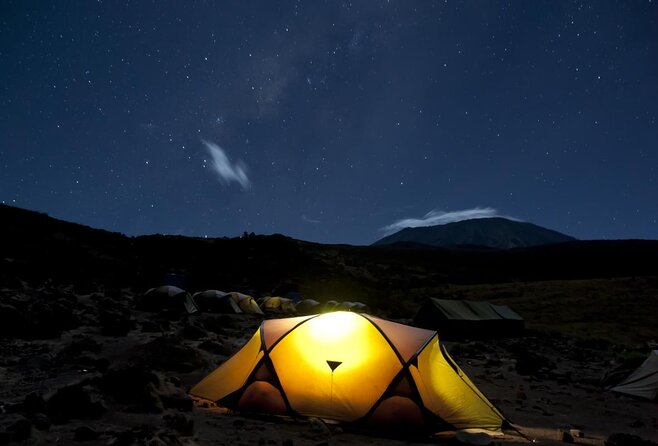
- Your crew carries the camp system: Tents, dining equipment, sleeping pads, cookware, and meals are included, while personal clothing and sleeping bags are your responsibility.
- Safety equipment is part of the package: Certified Wilderness First Responder guides, portable oxygen, pulse oximeters, and a first-aid kit are provided.
- The service record is strong: The 4.9 rating from 15 posted reviews highlights planning, food, guide support, and porter organization.
What the $1,895 price really covers
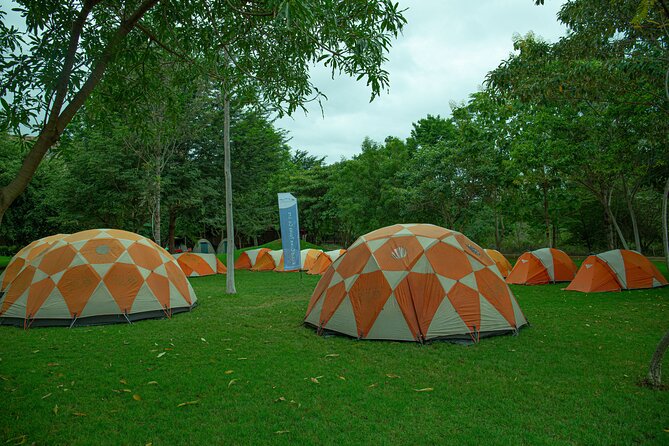
The price makes more sense when you look at what has to reach a high mountain camp. Your fee covers all park fees and taxes, a private guiding operation, porters, a cooking team, sleeping tents, a dining tent, tables, chairs, sleeping pads, crockery, and cutlery.
You also receive eight breakfasts, seven lunches, and six dinners. The meal count fits the mountain portion of the trip, though you should confirm the exact meal schedule before departure because the first and last hotel days are handled differently.
I consider this good value for a private Kilimanjaro climb. You are not simply paying for a guide to walk beside you. You are paying for permits, food supply, camp transport, crew wages, safety equipment, and the work of setting up a functioning camp each day.
The package does not cover your hiking outfit, boots, sleeping bag, or other personal gear. An equipment review takes place during the pre-trek briefing, and the operator says you can rent needed items at its store. That is helpful if you are flying in with limited luggage, but do not leave every equipment decision until the last minute.
Tips for the mountain crew are also extra. Put this into your budget from the start. The listed price includes fair wages approved by the Kilimanjaro National Park Authority, which is a positive point, but tipping remains your responsibility.
More Private Tours in Moshi
- Private Kilimanjaro Hike 7 Day Lemosho Route
★ 5.0 · 60 reviews - Private Tour to Materuni waterfalls, coffee tour & Kikuletwa hot- springs
★ 5.0 · 49 reviews - 4 Day Private Tour Throughout Tarangire, Serengeti and Ngorongoro
★ 5.0 · 42 reviews
Day 1 in Moshi: preparation before the trail
You should plan to arrive at least one day before the climb begins. If you book the optional airport transfer, the company can collect you at Kilimanjaro Airport and take you to your hotel in Moshi or Arusha.
The first day is not wasted time. You meet your guide for a pre-trek briefing, check your equipment, and rent anything missing. This is when you should speak plainly about boots, warm layers, rain protection, sleeping bags, headlamps, and anything that does not feel right.
The stated meeting time is 9:00 a.m., but airport pickup is optional. Confirm the exact pickup arrangement, hotel location, and briefing time before flying. The final day also includes airport transfers only if you book them.
Day 2: rainforest walking from Machame Gate
The vehicle takes you from the hotel to Machame Gate, where registration comes first. The route then enters the montane forest, climbing from about 1,200 meters to 3,000 meters over roughly 13 kilometers.
Allow five to seven hours of walking. The forest is a gentle introduction compared with what comes later, but mud, humidity, roots, and a steady uphill grade can make the first day more tiring than the distance suggests.
You sleep at Machame Camp, where the tents are already set up. That small detail matters after a full day on foot. You can focus on eating, drinking, and resting instead of helping build camp.
Day 3: the forest gives way to moorland
The second mountain day climbs from 3,000 to 3,800 meters over nine kilometers. The route leaves the rainforest and enters moorland, with heather plants, rocky ridges, and small valleys.
This is one of the more rewarding visual changes on the route. From camp, you may see Mount Meru, the Shira Plateau, Kibo Peak, and the sunset. The walk takes about five to six hours, so you have time to settle into the slower pace that high-altitude hiking demands.
The key advice here is to walk slowly, even if you feel strong. Kilimanjaro is not won by racing the early days. Save your legs and let your body adjust.
More Kilimanjaro routes and climbs:
- Kilimanjaro climb by Lemosho Route (7-day)
★ 5.0 · 651 reviews - Kilimanjaro climb, Machame Route (7-day)
★ 5.0 · 262 reviews - Kilimanjaro Climbing Lemosho Route 8 Days.
★ 5.0 · 186 reviews - Climbing Kilimanjaro – Machame Route
★ 5.0 · 170 reviews
Day 4: Lava Tower and the Barranco acclimatization test
This is a long day, covering about 13 kilometers in seven to eight hours. You climb from 3,800 meters toward Lava Tower at roughly 4,600 meters, then descend to Barranco Camp at about 3,950 meters.
That climb high and sleep lower pattern is one of the best features of the itinerary. It gives you time at a higher altitude without forcing you to spend the night at the highest point reached during the day.
The route remains in moorland and leads to Barranco, located below the Barranco Wall. You should expect an early breakfast and a full day of walking. If you develop headache, nausea, unusual weakness, or other altitude symptoms, tell your guide immediately. The itinerary has safety tools, but your honesty about how you feel is just as important.
Day 5: the Barranco Wall and Karanga Camp
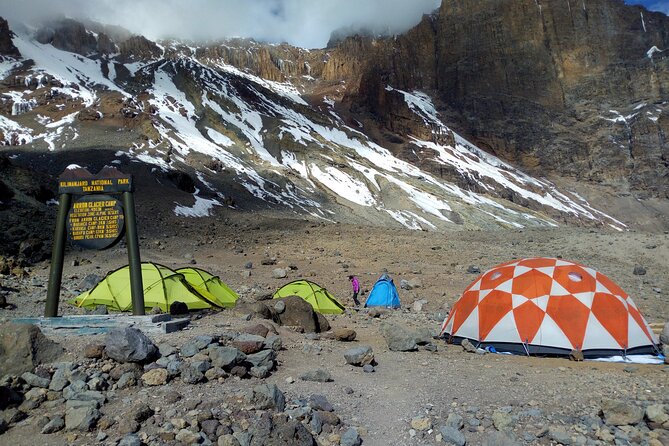
Day five covers only about 5.5 kilometers, but do not mistake that for an easy morning. You descend into the beginning of the Great Barranco, then climb the Barranco Wall on rock.
The climb is not described as technical, but it is steep, tiring, and exposed enough to demand careful footwork. You continue beneath the Heim and Kersten glaciers before reaching Karanga Valley and climbing again to Karanga Camp at about 3,963 meters.
If you are feeling strong, the schedule allows a short afternoon acclimatization walk toward 4,200 meters, followed by a descent to camp. That extra outing can help with altitude adjustment, but rest is also valuable. Your guide should judge the choice according to your condition.
This is a good example of why distance alone does not tell you how hard a Kilimanjaro day will feel. Short climbs at high altitude can be tougher than longer walks lower down.
Day 6: Barafu Camp and the wait for summit night
The walk to Barafu Camp is only about three kilometers and takes three to four hours, yet it is physically demanding. You climb from roughly 3,963 to 4,643 meters across barren scree with no vegetation.
At Barafu, the mountain feels stark and exposed. You eat, rest, and prepare for the summit attempt. The final ascent begins at night, so this afternoon is not sightseeing time. It is when you should organize thermal clothing, hiking poles, headlamp, spare batteries, water, and camera equipment.
The notes specifically advise replacing your headlamp and camera batteries before the summit push. That is practical advice. Cold drains batteries, and a dead headlamp is more than an inconvenience on a midnight start.
Day 7: Uhuru Peak and the longest day
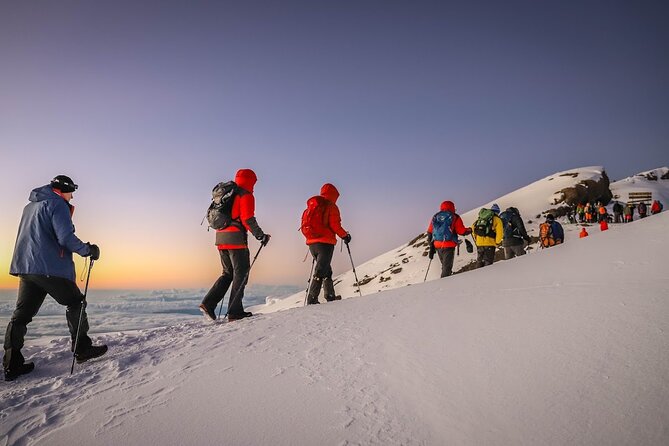
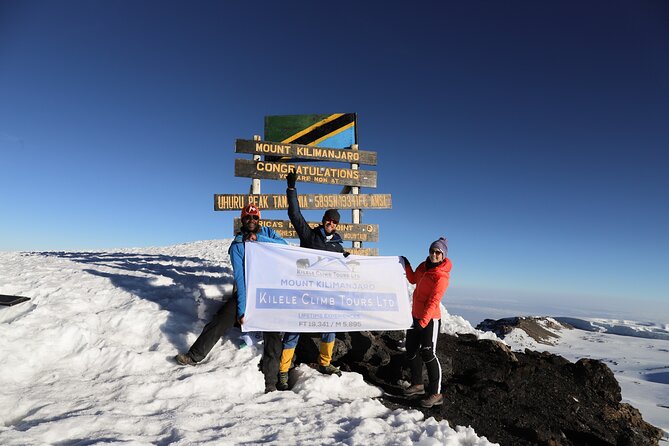
Summit day is the physical heart of the trip. You wake around midnight for a light breakfast, then begin the climb from approximately 4,620 meters to Uhuru Peak at 5,895 meters.
The route follows steep switchbacks over scree, with possible snow. You aim to reach Stella Point on the crater rim between 4:00 and 5:00 a.m., then continue for about an hour along the rim toward the true summit.
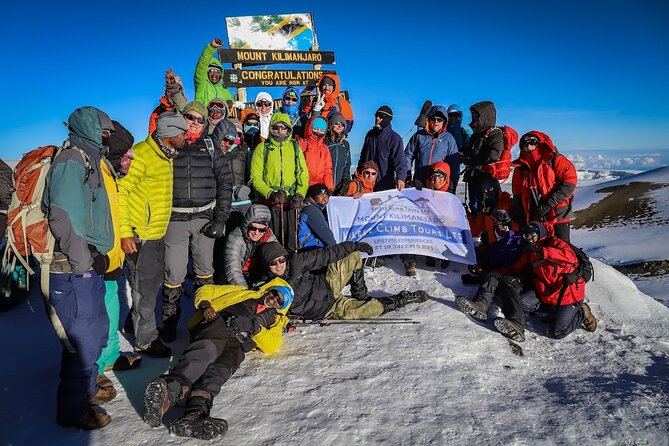
The views at Stella Point include the crater and glaciers. At Uhuru Peak, you reach the highest point in Africa. The exact time at the top may be brief because cold, wind, fatigue, and altitude all matter. Take your photograph, enjoy the achievement, and listen to your guide about the descent.
The full day takes 12 to 14 hours and covers about 15 kilometers. You descend all the way to around 3,100 meters, so this is not just a summit climb. It is a summit climb followed by a long return to camp.
This is where the private format can help. Your guide can focus on your pace, rest stops, and condition rather than managing a large mixed group. Private does not make the mountain easy, but it can make communication clearer.
Day 8: the long return through forest
After breakfast, you descend from about 3,100 to 1,700 meters. The nine-kilometer walk through montane forest takes about three to four hours.
The downhill motion may feel kind to your lungs, but tired knees and feet can complain after summit day. Walking poles are useful if you have them. At Mweka Park Gate, you sign out and board the vehicle back to the hotel.
A certificate presentation and celebration follow at the hotel. That is a pleasant finish, especially after the cold and darkness of summit night. You should still treat this as a recovery day, not a chance to schedule a packed afternoon.
Day 9 in Moshi: recovery, checkout, and onward plans
The final day is free for rest before your flight. Breakfast is included in the hotel routine, and scheduled checkout is at 10:00 a.m.
If you want to stay in the room until 6:00 p.m., you can request a day room for an added cost. This is useful if your flight leaves late, but confirm the price when booking.
Airport transfer is available if arranged in advance. You can also continue with a safari, Zanzibar plans, or other Tanzania activities. The operator provides a pre-safari briefing for people continuing to a safari.
Food, camp life, and porter support
The cooking team is a major part of the experience. You receive hot breakfasts, lunches, and dinners rather than relying only on snacks carried in your daypack. Posted praise repeatedly focuses on good food, with comments about meals being excellent and the crew making people feel comfortable.
Do not expect restaurant service on the mountain. The value is in having a regular food supply, a dining tent, and a crew that manages the practical work. You should still carry personal snacks if you have dietary needs or strong food preferences, but the supplied plan is designed to provide full meals.
Porters carry your equipment, while the crew handles tents and dining equipment. Pack a small daypack with the items you need while walking, and keep heavier personal gear organized for the porter system. Ask during the briefing about weight limits, luggage labeling, and access to your bag at camp.
The company lists fair wages for the mountain crew as part of its operating standards. Tips remain separate, so ask for current tipping guidance before you start.
Safety and the limits of the private format
The safety setup is one of the stronger parts of this trip. Guides are certified Wilderness First Responders, and the crew carries pulse oximeters, portable oxygen tanks, and a first-aid kit.
These tools do not guarantee a summit. Kilimanjaro is high enough for altitude illness, and a guide may decide that turning around is the safest choice. You should see that as responsible mountain management, not failure.
The tour is marked for people with moderate physical fitness. That description should not be read as a promise that the climb is moderate. Seven days of uphill walking, the Barranco Wall, cold camps, and a 12 to 14-hour summit day require preparation.
I would train with long walks, hills, stair sessions, and a loaded daypack. Your preparation should also include breaking in boots and learning to use every rented item before the climb.
What the strongest praise tells you
The most consistent positive points are organization, guide experience, food, and crew care. One account describes four veterans with prosthetics reaching the summit, which shows the operation has handled ambitious and complex attempts. It does not mean the climb is easy for anyone, but it suggests the crew is used to adapting its support.
Other positive accounts praise guides who had reached the summit hundreds of times, careful luggage and equipment organization, and a team that kept everything running on time. Names appearing in the wider company feedback include Freddy, Rebecca, and Yitzhack, though the specific guide assigned to your climb is not identified here.
Several comments also describe the crew as kind and caring during the hardest parts. That matters on summit night, when a calm guide and clear encouragement can make a real difference.
Keep the scope of those comments in mind. Some feedback concerns other routes, including Rongai, Mount Meru, and safari combinations. The praise supports the company’s wider service record, but it should not be treated as a guarantee about a particular guide or departure date.
Who should book this Machame climb?
I would recommend it to you if you want a private Kilimanjaro experience with a clear seven-day route, organized camping, and a professional mountain crew. It suits hikers who can prepare seriously and who value having food, transport, safety equipment, and permits arranged together.
It is less suitable if you want a short, gentle excursion or if you dislike early starts, shared camp facilities, steep rock sections, and long days at altitude. The private format also does not remove the need to share the mountain environment with other climbing groups.
The cancellation terms are flexible up to 24 hours before the start time for a full refund. Changes or cancellations inside that window are not accepted for a refund, and cut-off times follow local time.
FAQ
How long is the full Kilimanjaro experience?
The trip lasts approximately nine days overall. Seven days are spent on the mountain, with an arrival and briefing day in Moshi and a final recovery and departure day.
What route does this climb use?
The ascent follows the Machame Route. You descend through the Mweka side of the mountain after reaching the summit.
What time does the experience start?
The stated start time is 9:00 a.m. Confirm the exact meeting details with the operator, especially if you have arranged an airport transfer.
Is airport pickup included?
Pickup is offered as an optional service. The operator can collect you from Kilimanjaro Airport and transfer you to a hotel in Moshi or Arusha if you book it.
Are meals included?
Yes. The package includes eight breakfasts, seven lunches, and six dinners.
Is camping equipment provided?
Yes. Camping equipment includes sleeping tents, a dining tent, tables, chairs, sleeping pads, crockery, and cutlery.
Do I need to bring my own hiking gear?
Yes. Personal equipment such as hiking clothes, boots, and a sleeping bag is not included. Equipment can be reviewed and rented at the company store during the pre-trek briefing.
Are guides and safety equipment included?
Yes. The package includes certified Wilderness First Responder guides, pulse oximeters, portable oxygen tanks, and a first-aid kit.
Can I cancel for a full refund?
You can cancel for a full refund if you do so at least 24 hours before the experience start time. Cancellations or changes made less than 24 hours before the start are not refunded or accepted.
Should you book it?
Book this climb if you want a well-supported private ascent and understand that Uhuru Peak demands real endurance. The $1,895 price is reasonable for the permits, crew, camp system, meals, safety equipment, and logistics included.
Before paying, confirm the assigned guide, airport transfer cost, day-room price, equipment rental rates, tipping guidance, and the exact hotel arrangements. If you arrive prepared, pace yourself, and accept that the summit is never guaranteed, this Machame itinerary offers a strong balance of structure, support, and mountain challenge.
More 7-Day Experiences
- Climbing Kilimanjaro through 7 days Machame Route
★ 5.0 · 151 reviews - 7 Days Kilimanjaro via Machame route affordable price
★ 5.0 · 110 reviews - 7-Day Magical Tanzania Safari -Premium High End Package
★ 5.0 · 53 reviews - 7 Days Machame route – Kilimanjaro
★ 5.0 · 45 reviews
Just added around Moshi
- Moshi: Lake Chala Tour: Hiking &/or Kayaking★ 4.5 · 3 reviews
- 3 Days Tanga Exclusive Beach Holiday★ 5.0 · 3 reviews
- Serengeti Wildebeest Migration.★ 5.0 · 3 reviews
- Chemka Hotpsrings E-Bike Day Trip★ 5.0 · 3 reviews
- Explore 1 day Ngorongoro Crater Budget Group Safari from Arusha★ 5.0 · 3 reviews
- Explore the 360° of Kilimanjaro★ 5.0 · 3 reviews
- Affordable Short Tanzania Safari (2 Days Camping Safari)★ 5.0 · 3 reviews
- Rongai Route 7 Days★ 5.0 · 3 reviews
Kilimanjaro Treks, compared.



8-Day Small-group Lemosho Kilimanjaro Summit Trekking
Read our review →


Climbing Kilimanjaro through 7 days Machame Route
Read our review →

Browse the lists this tour appears in