
Reviewed · KILIMANJARO TREKS
Kilimanjaro Trek 7 Days – Machame Route
Africa’s highest summit demands patience. This seven-day Machame Route trek earns its Whiskey Route nickname with steep trails, changing climates, and a stronger sense of adventure than the gentler Marangu Route. I like the excellent scenery, which shifts from rainforest to heath, moorland, volcanic rock, and snow-cold summit terrain. I also like the thoughtful acclimatization pattern, especially the climb to Lava Tower followed by a descent to Barranco Camp.
The main drawback is simple: summit day is brutally long. You start around midnight, climb through darkness and cold, reach Uhuru Peak at 5,895 meters, then descend to Mweka Camp. The itinerary is well planned, but seven days leaves little room for a slow recovery if altitude affects you.
In This Review
- Key Points Before You Book
- Why Machame Is Kilimanjaro’s Scenic Choice
- Day 1: Machame Gate to Machame Camp
- Day 2: Heath and Moorland on the Shira Plateau
- Day 3: Lava Tower and the Descent to Barranco
- Day 4: Barranco Wall and Karanga Camp
- Day 5: Karanga to Barafu Camp
- Day 6: Midnight to Uhuru Peak, Then Down to Mweka
- Day 7: Mweka Gate and Return to Moshi
- What the $2,890 Price Really Covers
- Crew Care, Food, and Comfort on the Mountain
- Who Should Choose This Seven-Day Trek?
- Booking Details and Cancellation
- FAQ
- How long is the Kilimanjaro Machame Route trek?
- Where does the trek begin?
- What is the highest point reached?
- How difficult is the trek?
- How long is summit day?
- Are meals included?
- Are hotel nights included?
- Is camping equipment provided?
- Are airport transfers included?
- Are tips and personal gear included?
- Should You Book the Machame Route?
Key Points Before You Book
- Machame gives you Kilimanjaro’s greatest scenery: Rainforest, Shira Plateau, Senecio Forest, Barranco Wall, and the volcanic slopes all appear along the way.
- The Lava Tower day helps with altitude: You climb to 4,603 meters, then sleep much lower at Barranco Camp.
- Summit day is the real test: Expect seven to eight hours to Uhuru Peak, followed by another four to six hours down to Mweka Camp.
- The price includes major expedition costs: Park fees, camping, crew wages, meals, tents, airport transfers, rescue fees, and hotel nights are covered.
- The trek is private: Only your group participates, so the walking pace and daily routine can be more personal than on a large shared departure.
- Budget extra for tipping and gear: Tips are not included, and sleeping bags, boots, walking sticks, and duffle bags may cost more to hire.
Why Machame Is Kilimanjaro’s Scenic Choice
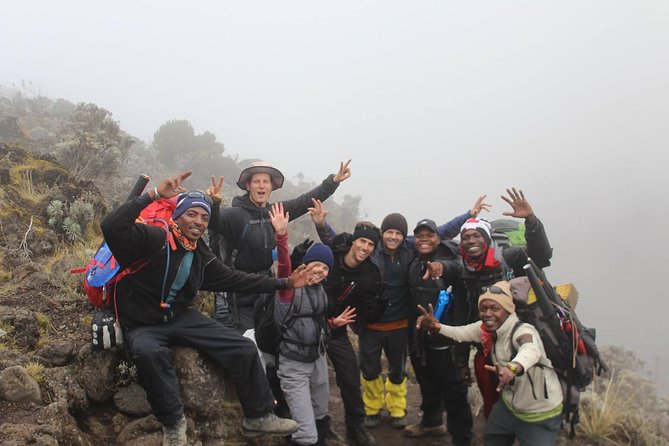
Machame is often called the most beautiful route on Mount Kilimanjaro, and the reason is the steady change in scenery. You begin under thick forest, move into open heather and moorland, cross volcanic terrain, and finish among Arctic conditions near the summit.
The route is also popular because it can be completed in seven days while still allowing useful altitude adjustment. That does not make it easy. The trail is steeper and more uneven than the Marangu Route, and camping replaces hut accommodation. You need to be comfortable walking several hours a day and sleeping in a tent.
I see the route as a good middle ground for an ambitious hiker. You get varied scenery and a carefully arranged ascent, but you also accept rocky trails, early starts, and a demanding final push.
The tour is a private activity, which matters here. A private group can receive more direct attention from the guides, and the pace may be easier to manage than on a large group departure. The tour requires a moderate fitness level, but that should not be confused with a casual walking holiday.
More Kilimanjaro routes and climbs:
- Kilimanjaro climb by Lemosho Route (7-day)
★ 5.0 · 651 reviews - Kilimanjaro climb, Machame Route (7-day)
★ 5.0 · 262 reviews - Kilimanjaro Climbing Lemosho Route 8 Days.
★ 5.0 · 186 reviews
Day 1: Machame Gate to Machame Camp
Your morning begins with pickup from your Moshi hotel after breakfast. The drive to Machame Gate takes about an hour and passes through Machame village on the lower slopes of the mountain.
At the gate, the crew handles park registration before you start walking. The trail enters Kilimanjaro National Park and climbs through dense rainforest on a winding path. This first day covers about 11 kilometers, or seven miles, in five to seven hours.
The habitat is the attraction. The rainforest feels humid, shaded, and full of plant life. It is a dramatic opening compared with the bare volcanic ground higher up.
You finish at Machame Camp, at 2,833 meters. The climb is steady rather than technical, but wet conditions can make the forest trail slippery. Take this day slowly. It is tempting to walk quickly while you still feel fresh, but saving energy is more useful than proving a point before dinner.
Camping begins here. Your package includes a sleeping tent, dining tent, mattress, tables, chairs, lanterns, meals, and a portable flush toilet with a toilet tent. Those extras matter after a long day on your feet.
Day 2: Heath and Moorland on the Shira Plateau
After breakfast, the forest gives way to heath and open moorland. The trail climbs toward a steep, rocky ridge before reaching the Shira Plateau.
This is a shorter day by distance, about five kilometers, or three miles, with four to six hours of walking. Yet the steep ground and rising altitude can make it feel more serious than the figures suggest.
The open setting changes your sense of scale. You are no longer enclosed by trees. Heather, rocky ground, and wide views replace the darker forest. The route crosses a large river gorge before reaching Shira Cave Camp.
The camp sits in a high, exposed area, so the weather may feel less forgiving than it did on Day 1. The daily schedule gives you time to eat, rest, and adjust to the altitude. Use it. On Kilimanjaro, the sensible goal is not to finish each day quickly. It is to arrive at the next camp with enough strength for the next morning.
Day 3: Lava Tower and the Descent to Barranco
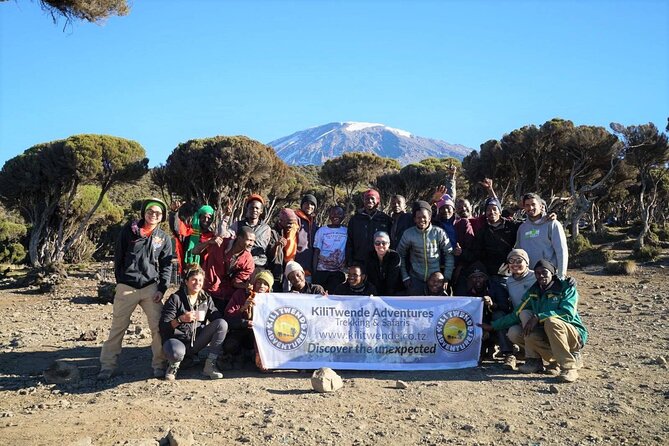
Day 3 is one of the most useful parts of the route for altitude adjustment. You climb east along a ridge, then turn southeast toward Lava Tower, a volcanic rock formation about 300 feet tall.
The climb to Lava Tower reaches 4,603 meters, or 15,190 feet. After lunch, you descend to Barranco Camp at 3,953 meters, or 13,044 feet. The stated hiking time is about four to five hours for the first section, followed by another two to three hours for the descent.
The day ends at nearly the same general elevation where it began, but that is not the point. Spending time high on the mountain and then sleeping lower gives your body a useful chance to adjust. This is often described as climb high, sleep low, and here it is built into the route.
The Senecio Forest is the visual highlight. Giant senecio plants give the alpine desert an odd, almost prehistoric character. The scenery feels unlike the rainforest from two days earlier.
You should still treat the altitude seriously. Headache, nausea, unusual tiredness, or poor coordination are not things to ignore. Your guide’s judgment matters, and the package includes an oxygen tank for emergencies. That is useful safety equipment, but it is not a substitute for a careful guide or honest communication about how you feel.
A few more trips of this kind worth comparing:
- Private Kilimanjaro Hike 7 Day Lemosho Route
★ 5.0 · 60 reviews - Best Kilimanjaro hiking day trip tour with Kilinge Adventures
★ 4.5 · 54 reviews - #1. Best Kilimanjaro Day hike Tour-Machame Route-ISMANI
★ 4.2 · 47 reviews - Best Kilimanjaro Adventure 7 days Machame route Trekking
★ 5.0 · 42 reviews
Day 4: Barranco Wall and Karanga Camp
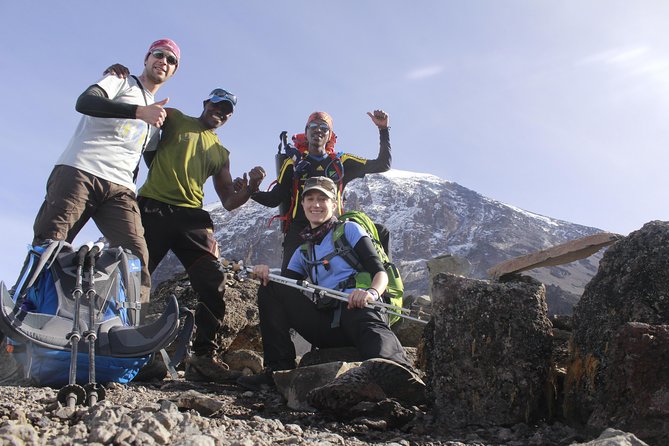
The morning begins with a descent to the base of the Great Barranco Wall. You then climb the steep, nearly 900-foot cliff.
The wall is non-technical, meaning you do not need climbing equipment or advanced rock-climbing skills. It is still steep, and the route requires attention. You may use your hands for balance in places, and the narrow or rocky sections can feel demanding if you dislike heights.
From the top, the trail crosses hills and valleys before dropping sharply into Karanga Valley. The Karanga River is the last water point mentioned on the route, an important detail for understanding the mountain’s increasing dryness and remoteness.
You then climb again to Karanga Camp, arriving around lunchtime. The day covers about five kilometers and takes four to five hours, followed by a shorter acclimatization walk in the afternoon.
This is a relatively short day on paper, but it has repeated climbs and descents. I would use the afternoon walk as a gentle check of your condition, not as an excuse to push hard. Eat well, drink regularly, and prepare your summit clothing before bedtime.
Day 5: Karanga to Barafu Camp
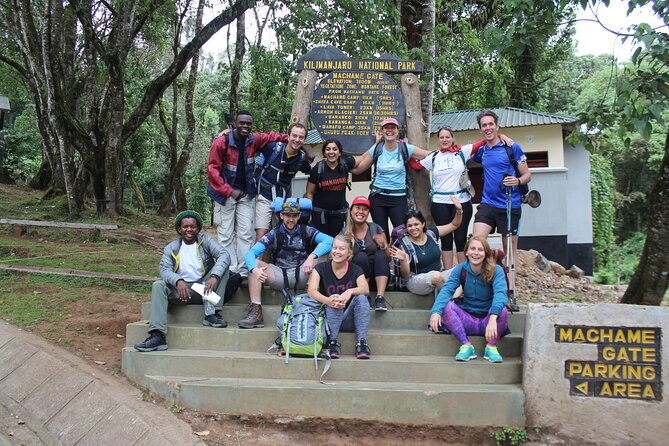
From Karanga, the trail passes the junction connecting with the Mweka Trail and continues over rocky ground to Barafu Hut. The distance is only about four kilometers, with four to five hours of walking.
Barafu means ice, and the camp’s high, exposed setting makes the name understandable. You have completed the Southern Circuit, which gives views of Kibo and Mawenzi from different angles. When the sky is clear, the two volcanic peaks can be seen from camp.
The short mileage hides the importance of this day. Barafu Camp is your launch point for the summit attempt, so the afternoon is less about sightseeing and more about resting, eating, and organizing your equipment.
You have an early dinner and prepare for a midnight start. Keep your headlamp, warm layers, water, snacks, gloves, and camera ready. The practical benefit of the included dining tent, chairs, tables, and food service is clear here. You can focus on preparation instead of sorting out camp logistics yourself.
Day 6: Midnight to Uhuru Peak, Then Down to Mweka
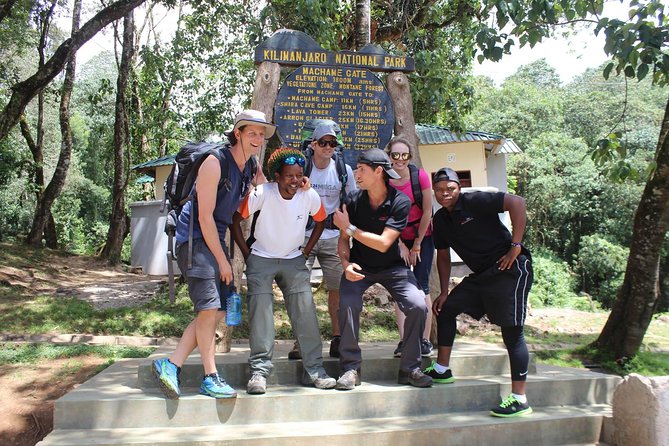
Summit day is the hardest part of the trek by a wide margin. You begin around midnight and climb in darkness through cold, windy conditions.
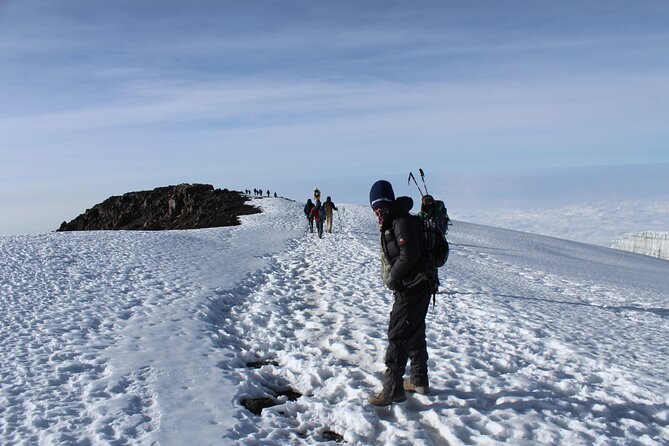
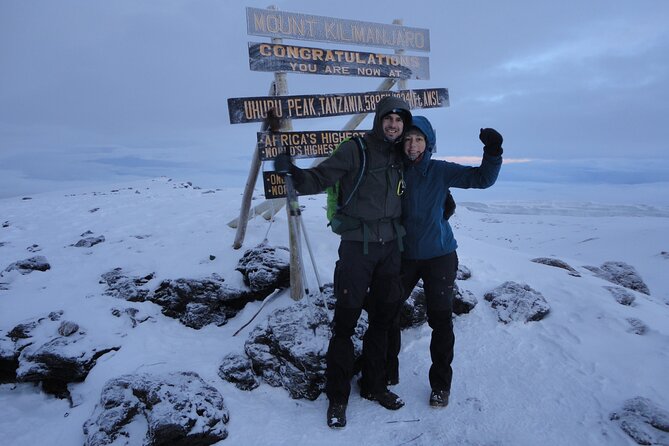
The ascent to Stella Point takes about seven to eight hours. You reach Stella Point at roughly 5,761 meters, or 18,900 feet, around sunrise. From there, you continue to Uhuru Peak, the highest point on Kilimanjaro and the highest point in Africa, at 5,895 meters, or 19,341 feet.
The distance to the summit is listed as about five kilometers, or three miles. The figures matter less than the conditions. At this altitude, every step can feel slow. The cold, darkness, steep trail, and thin air make the climb mentally demanding as well as physical.
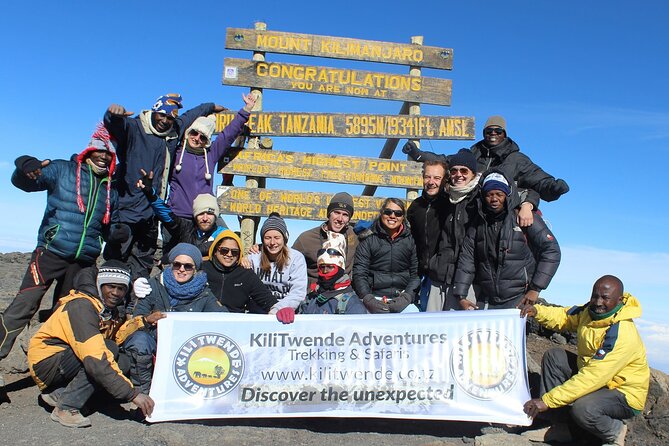
At Uhuru Peak, you have time for photographs before beginning the descent. Keep that stop short and sensible. The summit is a wonderful achievement, but the day is far from finished.
You descend to Barafu Camp and continue to Mweka Camp, covering another 12 kilometers, or seven miles, in about four to six hours. The habitat changes back toward rainforest, and Mweka Camp sits at 3,100 meters, or 10,065 feet.
The full day is listed at about eight hours, though the separate ascent and descent figures show why you should plan for a very tiring day. This is the point where strong crew support becomes especially valuable. The company provides professional guides, cooks, porters, and other support staff, along with three meals a day during the climb.
Day 7: Mweka Gate and Return to Moshi
The final morning is a three to four-hour descent through rainforest. You cover about 10 kilometers, or six miles, to Mweka Gate.
At the gate, you sign out with the national park authority and collect summit certificates. A vehicle waits to take you back to your Moshi hotel.
This last walk is easier than summit day, but tired legs and downhill pressure can make it uncomfortable. Trekking poles can help, and walking sticks are available to hire for $10 according to the supplied gear prices.
The package includes one hotel night before the trek and one after it, both with breakfast. That gives you a practical buffer around the mountain days and avoids having to arrange your own Moshi transfers immediately after the descent.
What the $2,890 Price Really Covers
At $2,890 per person, this is not a cheap walk. It is also not simply a seven-day hotel-to-trail excursion. The price covers a full supported expedition with park entry, camping, forest and rescue fees, 18 percent VAT on tour fees and services, mountain crew wages, meals, tents, transfers, and accommodation before and after the climb.
Airport transfers to and from Kilimanjaro International Airport are included too. That can be useful if you are arriving specifically for this trek and want one company handling the main transport pieces.
The included equipment is substantial:
- Sleeping and dining tents
- A 1.5-inch foam mattress
- Tables, chairs, and lanterns
- Portable flush toilet and toilet tent
- Three meals daily on the mountain
- Oxygen tank for emergencies
- Guides, cooks, and porters
- Transfers to and from the mountain gates
You still need to budget for tipping the guides, porters, cook, and waiters. That is a major extra cost to remember because the crew is central to the experience.
Personal equipment is also outside the price. Listed rental examples include $40 for a sleeping bag, $35 for a duffle bag, $40 for hiking boots, and $10 for walking sticks. Visas, insurance, flights, camera costs, hotel drinks, lunches and dinners in Moshi, and laundry are also excluded.
The value is strongest if you need airport transfers, hotel nights, and rental equipment. If you already own your gear and have separate accommodation, compare the package carefully with other operators. The crew wages and park charges remain important parts of the cost, and you should never judge a mountain company on price alone.
Crew Care, Food, and Comfort on the Mountain
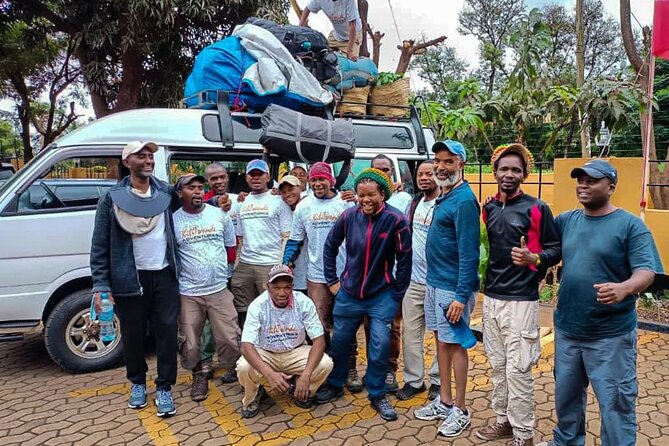
The strongest praise connected with Kilitwende Adventures concerns organization, personal care, food, and the human side of the trek. Names connected with the company include Bobby, Robert, John, Bob, Jerry, Joseph, and Sadhi, although you should confirm exactly who will lead your departure before booking.
The service has been described as warm and attentive, with special care for dietary restrictions and generous portions. That is not a small matter on a seven-day climb. Food becomes part of your energy plan, and a proper dining tent is far more comfortable than eating in a cramped sleeping tent.
The included portable toilet is another practical advantage. Mountain camping is never a hotel stay, but small comforts make a real difference after the Barranco Wall or before summit night.
The company also receives strong praise for helping with equipment hire, transport, accommodation, and travel arrangements beyond the mountain. Some trips have combined the trek with a safari, though the safari is not part of this $2,890 package.
Who Should Choose This Seven-Day Trek?
I would recommend this route to you if you want:
- A private Kilimanjaro climb with a full support team
- More scenery and route variety than the Marangu option
- A seven-day schedule rather than a shorter ascent
- Camping with dining and toilet facilities provided
- A company that can also help with airport transfers and Moshi accommodation
- A serious physical challenge without technical climbing
You should think twice if you want a relaxed holiday, dislike camping, or have little experience walking uphill for several hours. The final summit day is especially demanding, and the route includes steep rocky sections, long descents, cold weather, and high altitude.
The listed requirement is moderate fitness, but I would prepare beyond the minimum. The route’s success depends on steady pacing, patience, and careful attention to your health. No operator can guarantee a summit.
Booking Details and Cancellation
Pickup is offered, and the stated start time is 8:30 a.m. Confirmation is provided at booking. The activity is private, with only your group participating.
Free cancellation is available if you cancel at least 24 hours before the local start time. Cancellations or changes made less than 24 hours before the start are not refunded or accepted. Because the climb depends on suitable weather, a cancellation caused by poor conditions should result in a different date or a full refund.
FAQ
How long is the Kilimanjaro Machame Route trek?
The trek takes approximately seven days, from the Moshi hotel pickup and Machame Gate arrival through the descent to Mweka Gate and return to Moshi.
Where does the trek begin?
The trek begins with a drive from your hotel in Moshi to Machame Gate, which takes about one hour.
What is the highest point reached?
The trek reaches Uhuru Peak at 5,895 meters, or 19,341 feet, the highest point on Mount Kilimanjaro.
How difficult is the trek?
A moderate physical fitness level is required. The route includes several hours of walking each day, steep rocky sections, a climb up Barranco Wall, cold conditions, and a demanding summit day.
How long is summit day?
The ascent to Uhuru Peak takes about seven to eight hours. After reaching the summit, you descend to Mweka Camp in another four to six hours.
Are meals included?
Yes. Three meals a day are provided during the climb. The package lists six breakfasts, six dinners, and seven lunches.
Are hotel nights included?
Yes. One hotel night before the trek and one night after the trek are included in Moshi with breakfast.
Is camping equipment provided?
Yes. A sleeping tent, dining tent, foam mattress, tables, chairs, lanterns, and a portable flush toilet with a toilet tent are included.
Are airport transfers included?
Yes. Round-trip airport transfers to and from Kilimanjaro International Airport are included.
Are tips and personal gear included?
No. Tips for the guides, porters, cooks, and waiters are not included. Personal gear is also excluded, although some items can be hired, including sleeping bags, duffle bags, hiking boots, and walking sticks.
Should You Book the Machame Route?
Book this trek if you want Kilimanjaro’s most varied scenery, a private group, strong camp support, and a seven-day schedule that gives you useful time for altitude adjustment. The company’s best qualities are its attentive crew, organized service, food, and broad list of inclusions.
Go in with clear eyes. The Machame Route is scenic, but it is not gentle. Summit night will test your patience, legs, and ability to stay calm in the cold. If you prepare properly, budget for tips and gear, and accept that the mountain makes the final decision, this is a well-supported and memorable way to attempt Kilimanjaro.
More 7-Day Experiences
- Climbing Kilimanjaro through 7 days Machame Route
★ 5.0 · 151 reviews - 7 Days Kilimanjaro via Machame route affordable price
★ 5.0 · 110 reviews - 7-Day Magical Tanzania Safari -Premium High End Package
★ 5.0 · 53 reviews - 7 Days Machame route – Kilimanjaro
★ 5.0 · 45 reviews
Just added around Moshi
- Moshi: Lake Chala Tour: Hiking &/or Kayaking★ 4.5 · 3 reviews
- 3 Days Tanga Exclusive Beach Holiday★ 5.0 · 3 reviews
- Serengeti Wildebeest Migration.★ 5.0 · 3 reviews
- Chemka Hotpsrings E-Bike Day Trip★ 5.0 · 3 reviews
- Explore 1 day Ngorongoro Crater Budget Group Safari from Arusha★ 5.0 · 3 reviews
- Explore the 360° of Kilimanjaro★ 5.0 · 3 reviews
- Affordable Short Tanzania Safari (2 Days Camping Safari)★ 5.0 · 3 reviews
- Rongai Route 7 Days★ 5.0 · 3 reviews
Kilimanjaro Treks, compared.



8-Day Small-group Lemosho Kilimanjaro Summit Trekking
Read our review →


Climbing Kilimanjaro through 7 days Machame Route
Read our review →

Browse the lists this tour appears in