
Reviewed · KILIMANJARO TREKS
Kilimanjaro Trekking 7Days 6Night Lemosho Route
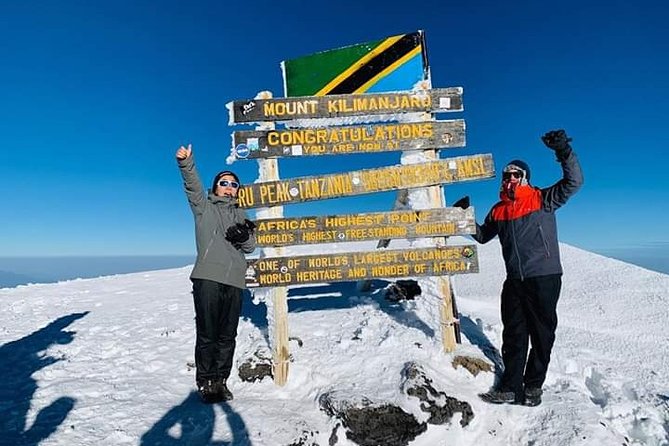
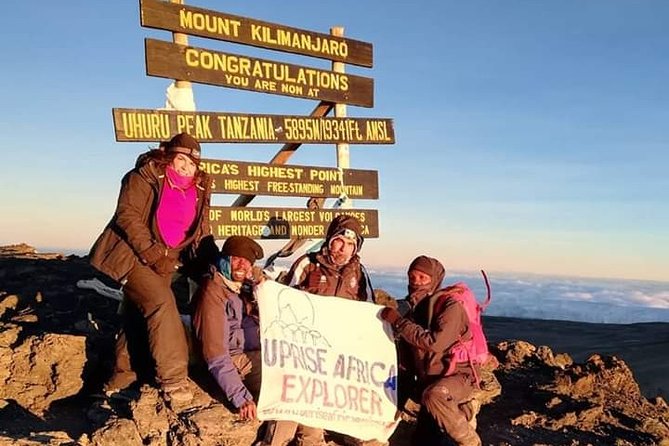
Africa’s highest summit rewards patience. This seven-day Kilimanjaro climb from Moshi follows the scenic Lemosho route, a quieter approach with changing vegetation, wide mountain views, and a steady path toward Uhuru Peak. You camp each night, walk with a small group of up to 10 people, and have a guide-led team handling meals, permits, and camp equipment.
I like the route’s scenery and lower crowd levels, especially the walk across Shira Ridge and the views toward the Northern Icefields. I also like that the price includes park fees, camping arrangements, and six breakfasts and dinners, which removes much of the usual trip planning. The main consideration is the physical demand and itinerary gap: Lemosho is more scenic than Marangu, but it is also tougher, and the supplied schedule does not clearly describe Day 3 or the full summit day.
This is sold by Uprise Africa Explorer for $3,000 per person, with pickup offered and a maximum group size of 10. The company has received a 5 out of 5 rating from 23 listed reviews, with especially warm praise for guides such as Sanga, Francis, Nguma, Kissima, Peter, and Innocent, along with the cook and porter team.
In This Review
- Key points before you book
- Why the seven-day Lemosho route is appealing
- Day 1: Londorossi Gate to Mti Mkubwa Camp
- Day 2: Shira Ridge and the move to Shira 2
- Day 3: A schedule that needs clarification
- Day 4: Barranco Wall and Karanga Valley
- Day 5: Karanga to Barafu Camp
- Day 6: The summit day is not fully described
- Day 7: Descent to Mweka Park Gate
- What the $3,000 price covers
- Food, guides, porters, and camp support
- Who will appreciate this climb most
- Booking details and cancellation terms
- Should you book the Uprise Africa Explorer Lemosho trek?
- FAQ
- Where does this Kilimanjaro trek begin?
- How long is the Lemosho trek?
- What is the maximum group size?
- Is pickup available?
- What meals are included?
- Are fees and taxes included?
- Is camping equipment included?
- How much does the trek cost?
- Is a Tanzania visa included?
- What is the cancellation policy?
Key points before you book
- Londorossi Gate begins the trek in a wildlife area: The opening forest track can include buffalo, elephant, and other wildlife, with an armed park ranger accompanying the group.
- Shira Ridge brings the first big mountain views: On Day 2, you may see Uhuru Peak and the Northern Icefields if clouds stay away.
- The route climbs through several climate zones: Expect forest, giant heather, moorland, rocky high-altitude camps, and the summit zone.
- Barranco Wall is the route’s hands-on section: The steep ridge takes about 90 minutes to reach the top, followed by a descent into Karanga Valley.
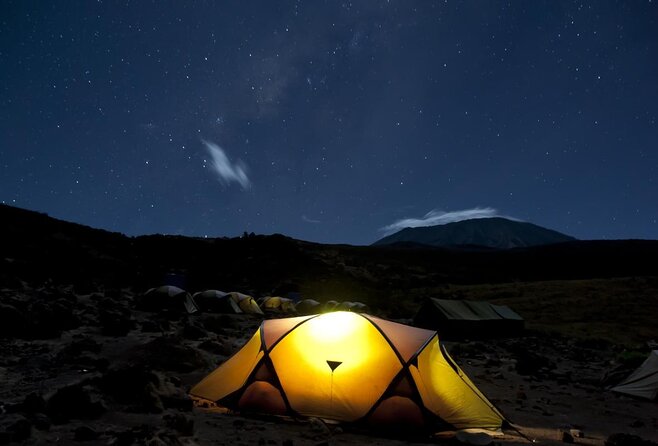
- Barafu Camp marks the final preparation point: At this high camp, you complete the South Circuit and prepare for the summit push.
- A small team can mean closer support: With no more than 10 participants, your guide may be able to give more direct attention to pacing and altitude concerns.
Why the seven-day Lemosho route is appealing
Kilimanjaro is not a technical climb in the usual mountaineering sense, but it is a serious high-altitude trek. The mountain rises through distinct climate zones, and the route asks you to walk for several hours on consecutive days before attempting the summit.
The Lemosho route begins on the western side of Kilimanjaro. Its appeal is visual and practical. You start in forest, move into heather and moorland, cross the Shira Plateau, then circle toward the southern slopes before making the summit attempt from Barafu Camp.
Compared with the Marangu route, Lemosho is described here as more scenic but tougher. That is an important trade-off. You should choose it because you want a fuller mountain experience, not because you expect an easy path to the summit.
The group limit of 10 is another useful feature. A smaller party can make camp routines, walking speeds, and conversations with the guide easier to manage. It does not make the altitude less demanding, but it can make the experience feel more personal.
More Kilimanjaro routes and climbs:
- Kilimanjaro climb by Lemosho Route (7-day)
★ 5.0 · 651 reviews - Kilimanjaro climb, Machame Route (7-day)
★ 5.0 · 262 reviews - Kilimanjaro Climbing Lemosho Route 8 Days.
★ 5.0 · 186 reviews
Day 1: Londorossi Gate to Mti Mkubwa Camp
The day begins with a briefing and a gear check. This is valuable because your guide can identify missing or unsuitable trekking equipment before you are deep in the mountain route.
From Moshi, the drive to Londorossi Park Gate takes about three hours. At the gate, the group registers before starting the hike. The first walking section covers about 6 kilometers, or 4 miles, and takes roughly two to three hours.
An armed park ranger accompanies the group on the forest track. The route passes through an area inhabited by buffalo, elephant, and other wildlife. Seeing animals is not guaranteed, but their presence gives this first day a different character from a straightforward walk through planted woodland.
The goal is Mti Mkubwa Camp at 2,650 meters. The short hiking day is a sensible introduction after the drive and registration. You gain altitude without starting with a punishing distance, though the combination of road travel and a late start may make the day feel longer than the hiking time suggests.
Day 2: Shira Ridge and the move to Shira 2
Day 2 is one of the most scenic and demanding early sections. After breakfast, the path steepens as it enters the giant heather and moorland zone.
You cover about 16 kilometers, or 10 miles, in seven to eight hours. That is a long day, and the terrain is described as heather scattered with volcanic rock formations, with several streams along the way.
The route crosses Shira Ridge. If the weather is clear, you may see Uhuru Peak ahead and the Northern Icefields on the western side of the mountain. Clouds can change the view quickly, so this is a place where timing and weather matter as much as the route itself.
The night is at Shira 2 Camp, at about 3,850 meters. The steady climb is intended to help with acclimatization. That does not remove the risk of altitude sickness, but the gradual gain is one reason a seven-day route can be a better choice than a rushed itinerary.
This is also the day when you may first appreciate the value of a capable support team. After seven or eight hours on uneven ground, arriving at a prepared camp and receiving dinner is not a small convenience.
Day 3: A schedule that needs clarification
The supplied program repeats part of the Day 1 and Day 2 description under Day 3, rather than clearly explaining the actual route and campsite. That is a practical issue, not just a typing error, because the third day is normally important for understanding how the climb gains altitude and prepares you for the southern circuit.
The listed itinerary later refers to Barranco Camp, Karanga Camp, and Barafu Camp, so the route clearly continues across Kilimanjaro’s upper slopes. However, you should ask Uprise Africa Explorer for the exact Day 3 plan before paying the balance or beginning the trek.
Ask for four details:
- The departure and arrival camps for Day 3
- The expected hiking distance and time
- The elevation at the overnight camp
- How the schedule handles the summit attempt and descent
That clarification is especially important for anyone comparing this trip with other seven-day Lemosho programs. The overall route makes sense, but the written schedule is incomplete.
A few more trips of this kind worth comparing:
- Private Kilimanjaro Hike 7 Day Lemosho Route
★ 5.0 · 60 reviews - Best Kilimanjaro hiking day trip tour with Kilinge Adventures
★ 4.5 · 54 reviews - #1. Best Kilimanjaro Day hike Tour-Machame Route-ISMANI
★ 4.2 · 47 reviews - Best Kilimanjaro Adventure 7 days Machame route Trekking
★ 5.0 · 42 reviews
Day 4: Barranco Wall and Karanga Valley
The fourth described stage begins at Barranco Camp and covers about 5 kilometers in three to four hours. The distance is short, but this is not an easy stroll.
You climb the Barranco Wall, a steep ridge reaching about 4,250 meters. The ascent to the top takes roughly an hour and a half. The route then levels out before dropping sharply into Karanga Valley at about 4,050 meters.
The contrast between a short distance and a four-hour walking time tells you what to expect. This section is shaped by steep ground, careful foot placement, and changes in elevation, not by mileage. You should not judge the day by the number of kilometers alone.
The route reaches the junction with the Mweka Trail before continuing to Karanga Campsite. This connection matters because Mweka is used for the descent. You are beginning to see the full shape of the climb: the approach routes you upward, while the Mweka side brings you down after the summit.
The Barranco Wall is likely to be one of the most memorable physical sections. It is also a good reason to listen closely to your guide and avoid rushing. The information provided does not describe technical climbing equipment, so treat it as a steep trekking section rather than an easy path.
Day 5: Karanga to Barafu Camp
Day 5 covers about 4 kilometers in three to four hours. The short distance is deceptive because the destination, Barafu Camp, sits at high elevation and serves as the launch point for the summit attempt.
At Barafu, you have completed the South Circuit. The route has allowed views of the summit and glaciers from different angles, rather than taking you directly up and back along the same approach.
The camp offers views toward the summit, according to the program. More important, it is where you rest and organize yourself for the final push. You will want your summit clothing, water, snacks, and other essential items easy to reach.
The itinerary does not state the exact summit departure time or the length of the summit hike. This is another detail worth confirming. A summit day from Barafu is the hardest part of the trip for most people, and the lack of a clear description makes it difficult to judge the full physical workload from the published schedule alone.
Day 6: The summit day is not fully described
The Day 6 entry is incomplete. It lists about five hours and repeats earlier itinerary text, but it does not clearly state the route to Uhuru Peak, the summit elevation, the descent distance, or the camp used after the summit.
The tour description promises a climb to Mount Kilimanjaro’s summit, and the final Day 7 description begins at an altitude of 3,090 meters. That suggests the group descends substantially before the final park-gate walk, but the precise sequence is not provided.
You should request the full Day 6 plan in writing. Confirm:
- Whether Uhuru Peak is attempted on Day 6
- The planned starting time from Barafu Camp
- Where you sleep after the summit
- Whether the five-hour figure covers only one part of the day
- How meals and water are handled during the summit push
This is the most important weakness in the tour information. The route’s key goal is the summit, so you deserve a clear account of the most demanding day before booking.
Day 7: Descent to Mweka Park Gate
The final listed day starts after breakfast at 3,090 meters. You continue down to Mweka Park Gate, covering about 10 kilometers, or 6 miles, in three to four hours.
The descent can be a relief after the summit, but downhill walking works different muscles and can be tiring on knees and feet. Take this part seriously. Reaching the gate marks the formal end of the mountain portion, and you receive summit certificates there.
A vehicle waits at Mweka Gate to return you to your hotel. That transfer is a welcome finish after a week of walking and camping.
One small point needs checking: the itinerary calls this Day 7, but it does not identify the overnight camp immediately before the descent. Again, the provider should explain how Day 6 flows into the 3,090-meter breakfast point.
What the $3,000 price covers
The $3,000 per-person price includes the Kilimanjaro trekking program, all fees and taxes, camping equipment, and meals. The meal list specifies seven lunches, six breakfasts, and six dinners.
That package has real value. Park fees and mountain logistics can form a large part of a Kilimanjaro budget, and arranging food and camping equipment independently would be difficult. You also have a guide team, cook, porters, and transport from Mweka Gate back to the hotel reflected in the overall service.
Still, you should ask exactly what equipment is included. The published information says all camping equipment is included, but it does not list tents, sleeping bags, sleeping mats, tables, chairs, or personal gear. One piece of practical feedback specifically recommends renting summit gear from the company, including a sleeping bag and other cold-weather items. That suggests camping equipment and personal summit clothing may be treated separately.
The price does not include a Tanzania visa. The stated cost is $50 or $100 for American residents, paid on arrival at the airport. Because visa rules can depend on nationality, confirm the amount that applies to you before departure.
Airport pickup and drop-off are described in the supplied feedback, while the tour summary only explicitly says pickup is offered. Confirm whether airport transfers are included in your quoted price or arranged as an extra.
Food, guides, porters, and camp support
The human side of a Kilimanjaro trek matters as much as the route. You are not simply buying a path up a mountain. You are relying on the guide team to manage pace, camp timing, weather decisions, and problems caused by altitude.
The strongest praise for this operation centers on the guides, cook, and porters. Names that appear repeatedly include Sanga, Francis, Nguma, Kissima, Peter, and Innocent. The cook named in one account is Schabari, who was praised for producing good meals at high camp.
That kind of support can change the feel of a long climb. Good meals help you keep walking, while a friendly guide can make a hard morning less grim. The supplied feedback also gives special credit to the porters and to a team leader named Godwill.
You should also discuss tipping before the trek. The provided details do not state a tipping policy or recommended amounts, so ask the company for its current guidance. A clear answer helps you budget fairly and avoid awkwardness at the end.
Who will appreciate this climb most
This trip suits you if you want:
- A scenic route rather than the simplest route
- A seven-day schedule with several acclimatization stages
- A small group, capped at 10 participants
- Guided support with meals and camping arrangements included
- A locally operated company in Moshi
- The chance to walk through several climate zones on one mountain
It is less suitable if you want a short, gentle holiday with a guaranteed timetable. The Lemosho route includes long walking days, high camps, steep sections, and an incomplete description of the summit day.
The program says most people can participate, but that should not be read as a promise that the climb is easy. You need to be comfortable with several hours of hiking, camping for six nights, and dealing with high altitude. If you have doubts about your fitness or health, seek professional medical advice before booking.
Booking details and cancellation terms
The listed start time is 11:00 a.m., and confirmation is provided when you book. Pickup is offered, but confirm the exact pickup point and whether airport transfer is included in your final quote.
You can receive a full refund if you cancel at least six full days before the local start time. Cancellation two to six full days in advance receives a 50 percent refund, while cancellation less than two full days before departure is nonrefundable.
The climb requires good weather. If poor weather forces cancellation, you are offered another date or a full refund. Since the summit day is the heart of the trip, that weather provision is useful, but you should still allow flexibility in your wider Tanzania plans.
Should you book the Uprise Africa Explorer Lemosho trek?
I would shortlist this trek for its route, small group size, included mountain services, and strong praise for the guide and support team. The company appears particularly well suited to people who value personal attention and a locally operated experience.
I would not book until the company sends a corrected day-by-day schedule. The missing details for Day 3 and Day 6 make it hard to understand the summit plan, and those are not minor points.
Ask for the full route, camp names, summit timing, equipment list, airport transfer terms, and tipping guidance. If the answers are clear and the $3,000 quote covers what you expect, this could be a solid value for a scenic Kilimanjaro climb. If the provider cannot explain the summit day plainly, compare it with another operator before committing.
FAQ
Where does this Kilimanjaro trek begin?
The experience is based in Moshi, Tanzania. The trek begins after a drive of about three hours to Londorossi Park Gate.
How long is the Lemosho trek?
The tour lasts approximately seven days and six nights.
What is the maximum group size?
The maximum group size is 10 participants.
Is pickup available?
Yes, pickup is offered. The supplied information does not clearly confirm whether airport pickup and drop-off are included in the $3,000 price, so you should confirm this before booking.
What meals are included?
The package includes seven lunches, six breakfasts, and six dinners.
Are fees and taxes included?
Yes. All fees and taxes are included in the stated tour price.
Is camping equipment included?
The experience states that all camping equipment is included. The exact equipment list is not provided, and summit clothing or personal cold-weather gear may need separate confirmation.
How much does the trek cost?
The listed price is $3,000 per person.
Is a Tanzania visa included?
No. The Tanzania visa is not included. The stated cost is $50 or $100 for American residents, paid on arrival at the airport.
What is the cancellation policy?
You receive a full refund if you cancel at least six full days before the local start time. Cancellation two to six full days in advance receives a 50 percent refund. Cancellations less than two full days before the start are nonrefundable. If poor weather cancels the experience, you are offered a different date or a full refund.
More 7-Day Experiences
- Climbing Kilimanjaro through 7 days Machame Route
★ 5.0 · 151 reviews - 7 Days Kilimanjaro via Machame route affordable price
★ 5.0 · 110 reviews - 7-Day Magical Tanzania Safari -Premium High End Package
★ 5.0 · 53 reviews - 7 Days Machame route – Kilimanjaro
★ 5.0 · 45 reviews
Just added around Moshi
- Moshi: Lake Chala Tour: Hiking &/or Kayaking★ 4.5 · 3 reviews
- 3 Days Tanga Exclusive Beach Holiday★ 5.0 · 3 reviews
- Serengeti Wildebeest Migration.★ 5.0 · 3 reviews
- Chemka Hotpsrings E-Bike Day Trip★ 5.0 · 3 reviews
- Explore 1 day Ngorongoro Crater Budget Group Safari from Arusha★ 5.0 · 3 reviews
- Explore the 360° of Kilimanjaro★ 5.0 · 3 reviews
- Affordable Short Tanzania Safari (2 Days Camping Safari)★ 5.0 · 3 reviews
- Rongai Route 7 Days★ 5.0 · 3 reviews
Kilimanjaro Treks, compared.



8-Day Small-group Lemosho Kilimanjaro Summit Trekking
Read our review →


Climbing Kilimanjaro through 7 days Machame Route
Read our review →

Browse the lists this tour appears in