
Reviewed · WILDEBEEST MIGRATION SAFARIS
6-Day Ndutu Migration Calving Season Safari
Calving season changes every safari rule. This six-day Northern Circuit trip links Tarangire, Ndutu, and Ngorongoro Crater in one well-planned route, with the Great Migration at its most tender and dramatic from December through March. I like the focus on newborn wildebeest and the use of a private, open-roof Toyota Land Cruiser, which gives your group freedom during game drives.
I also like that the route includes both famous parks and a quieter stop at Tarangire, rather than rushing straight to the Serengeti. The main drawback is the pace: several days involve long drives, and the Ndutu calving season is seasonal, so you need to travel at the right time for the central spectacle.
In This Review
- Key points to know before you book
- Why the Ndutu calving season is worth planning around
- Day 1: From Kilimanjaro Airport to Arusha
- Day 2: Tarangire’s elephants and baobabs
- Day 3: The road to Ndutu through Ngorongoro
- Day 4: A full day among the migrating herds
- Day 5: From southern Serengeti to Ngorongoro Crater
- Day 6: A short return to Arusha
- What the $2,550 price includes
- Who will enjoy this safari most
- Practical points before you reserve
- Should you book the six-day Ndutu safari?
- FAQ
- Where does the safari begin?
- How long is the experience?
- When is the best time to see the calving season?
- Is the safari private?
- What type of vehicle is used?
- Are meals and park fees included?
Key points to know before you book
- Newborn wildebeest are the main event: Visit Ndutu between December and March, when thousands of calves may be born each day.
- The private vehicle has no kilometer limit: Your group travels in a Toyota Land Cruiser 4WD with an open roof for wildlife viewing.
- Tarangire adds a different kind of safari: Expect baobab trees and a particularly strong chance of seeing elephants.
- Ngorongoro Crater packs in wildlife: The crater is known for lions, elephants, buffalo, black rhinoceros, hyenas, cheetahs, jackals, and more than 500 bird species.
- The trip begins at Kilimanjaro International Airport: Pickup is offered at 7:30 a.m., followed by the road to Arusha.
- The price covers the main safari costs: At $2,550 per person, the package includes park fees, game drives, meals listed in the schedule, and private 4WD transport.
Why the Ndutu calving season is worth planning around
The southern Serengeti and Ndutu area are not simply places to watch animals pass by. During the calving season, the Great Migration becomes a nursery, a feeding ground, and a hunting zone all at once.
From December through March, wildebeest and zebra gather on the southern plains. Thousands of wildebeest calves can be born in a single day. You might see a newborn taking its first steps, a mother keeping close watch, or predators waiting nearby for an opening.
That timing gives the safari a clear purpose. If you want dramatic predator sightings and young animals, plan around the calving months. If you are visiting outside that period, the parks still offer wildlife, but you should not expect the same concentration of newborn wildebeest in Ndutu.
The predator activity is part of the hard truth of this season. Lions, leopards, and cheetahs are drawn to the large number of vulnerable calves. The scenes can be thrilling, but nature is not polite here. You may see moments of birth, pursuit, or loss. A good guide matters, since patience and careful positioning can make the difference between a rushed glimpse and a memorable sighting.
More Migration Safaris in Moshi
- Great Migration Safari In Tanzania
★ 5.0 · 71 reviews - 6 Days Tanzania Budget Camping Safari with Migration
★ 5.0 · 31 reviews - 10-Day Wildebeest Migration Calving Safari -All Inclusive
★ 5.0 · 30 reviews
Day 1: From Kilimanjaro Airport to Arusha
The trip begins with pickup at Kilimanjaro International Airport at 7:30 a.m. Your guide meets you there and takes you toward Arusha, the main starting point for Tanzania’s Northern Circuit.
The drive is described as roughly three hours, followed by arrival in Arusha and check-in at Pazuri Inn. The first day is not packed with sightseeing, and that is sensible. After an international flight, a slower start lets you settle in before several long days in the vehicle.
Arusha is known for its markets, coffee shops, and mountain views. You may have time to relax by the pool, walk through the hotel gardens, or find a local meal in town. The schedule also gives you a chance to meet the safari team and ask practical questions before leaving for the parks.
I would treat this as a useful reset day rather than a major attraction. The airport transfer and hotel stop are valuable because they keep the safari from beginning in a blur of fatigue. Still, check your arrival time carefully. A 7:30 a.m. pickup is early, and the first day involves a substantial road transfer.
Day 2: Tarangire’s elephants and baobabs
Tarangire National Park is the first proper game-drive day, reached by traveling west from Arusha for about two hours. You spend around eight hours in the park, so this is a full day rather than a quick stop on the way to the Serengeti.
Tarangire gives the route some welcome variety. Its enormous baobab trees create a setting unlike the open plains farther west. In the green season, the trees may carry emerald leaves. In the dry season, large groups of buffalo, wildebeest, and zebra gather around remaining water sources.
The park’s signature animal is the elephant. The safari description makes clear that elephants are a major reason to include Tarangire, and this is useful when comparing routes. Some shorter Northern Circuit trips skip the park in favor of an earlier arrival at Ngorongoro or Serengeti. Here, you get a full day in a place known for reliable elephant encounters.
You should also understand the tradeoff. Tarangire makes the first full day long, and you will spend much of it on the road or in the vehicle. That is not a problem if wildlife is your priority, but it may feel tiring if you hoped for a gentle introduction.
Day 3: The road to Ndutu through Ngorongoro
After morning coffee or tea, you travel toward the Serengeti. The day includes roughly four hours of travel, much of it through the Ngorongoro Conservation Area, with about eight hours allocated to the day’s activities.
The road is part of the safari, not just a gap between parks. The Conservation Area connects the northern route with the southern Serengeti, and the changing views help mark the shift from crater country to open plains.
Once you reach Serengeti National Park, the focus turns to Ndutu. This southern region is known for its year-round predator population and its seasonal role in the migration. During calving season, the area can offer one of the most emotionally charged wildlife settings in Tanzania.
You spend the next two nights at Ndutu Bush Camp. A two-night stay is important. It reduces the pressure to see everything in a single afternoon and gives you another full day in the area, where animal movement and sightings can change quickly.
The drawback is the amount of time spent reaching Ndutu. This is not a short transfer from Arusha. You need to be comfortable with a long safari day and changing road conditions, even though the supplied schedule does not specify the condition of every route.
More Safaris in Moshi
- Safari Serengeti And Ngorongoro
★ 5.0 · 288 reviews - Big Five Safari In Tanzania
★ 5.0 · 99 reviews - Unforgettable Tanzania Safari And Zanzibar Beach
★ 5.0 · 97 reviews - 8-Day Essence of Tanzania Safari – Luxury
★ 5.0 · 72 reviews
Day 4: A full day among the migrating herds
Day four is the heart of the trip. You spend about ten hours in Serengeti National Park, with a picnic lunch near the herds and an evening return to Ndutu Bush Camp.
This long game-drive day gives your guide time to look for more than a quick roadside sighting. The aim is not just to count wildebeest. You may see calves moving with their mothers, zebra nearby, and predators working the edges of the herds.
The picnic lunch is a practical touch. It keeps you in the park during the most useful part of the day instead of sending you back to camp for a midday meal. You will want sun protection, water, and patience. Ten hours in a safari vehicle can be tiring, but it also gives you more chances to watch behavior unfold.
Dinner at camp is followed by time around the fire, where you can compare the day’s sightings with the people in your group. Since this is a private activity, only your own party participates in the tour itself. That gives you more room to discuss what you want to see and how long you wish to stay at a sighting.
The guide can make a major difference here. One past honeymoon party singled out Shabani as a kind and patient driver after a July safari. July is outside the Ndutu calving window, so that account does not describe this exact season, but it does point to the value of a calm driver who is willing to wait and watch rather than hurry from one animal to the next. Other safari accounts identify the driver as Chabani, so the spelling may vary in different records.
Day 5: From southern Serengeti to Ngorongoro Crater
The morning begins in southern Serengeti, with about an hour listed for the initial start. After breakfast and sunrise views, you take one more game drive while leaving the park and continue toward Ngorongoro Crater.
The trip across the Ngorongoro Conservation Area takes about two hours, while the full day is listed at roughly seven hours. The change in setting is striking. You leave the wide Serengeti plains for the enclosed world of the crater, formed millions of years ago after a volcanic eruption.
Ngorongoro Crater is valuable because it concentrates a wide range of wildlife in one compact area. The route specifically highlights the Big Five: lion, leopard, elephant, buffalo, and black rhinoceros. You may also see spotted hyenas, cheetahs, jackals, and a large range of birds.
No safari can promise every animal, especially the leopard and black rhinoceros. Still, the crater gives you one of Tanzania’s strongest opportunities to look for them during a single game drive. The enclosed setting also makes the visit feel different from the open migration country.
After leaving the crater, you spend the night at Eileen’s Tree Inn near Karatu. The lodge provides a comfortable change after the bush camp and a useful stopping point before the drive back to Arusha.
Day 6: A short return to Arusha
The final morning begins with a light breakfast beside the pool at the lodge. The setting includes gardens, birdsong, and views across the grounds, so you have a quieter finish after the long wildlife days.
The return to Arusha is described as about two hours on the road, with the overall day listed at roughly three hours. You are then taken back to Kilimanjaro International Airport for your departure flight.
Because the schedule uses approximate road times, do not book a tight onward flight without checking the timing with Chalema Tanzania Safaris. The information provided does not give a guaranteed arrival hour at the airport. Build in sensible breathing room, especially if your flight leaves the same day.
What the $2,550 price includes
At $2,550 per person, this is not a budget overland trip, but the value is easier to judge when you look at what is included. The package covers all fees and taxes, a Toyota Land Cruiser 4WD with an open roof, and game drives with no stated kilometer limit.
That last point matters. A safari route covering Tarangire, Ndutu, Serengeti, and Ngorongoro involves considerable driving. A no-kilometer-limit policy means the vehicle is not restricted to a small mileage allowance, which fits the needs of a migration-focused trip.
Meals include six breakfasts, five lunches, and five dinners. Lunches are especially useful on full game-drive days, since you can remain in the park instead of losing time returning to camp or lodge.
WiFi on board is not included. For many people, that is a minor issue and even a welcome excuse to put the phone away. If you need regular internet access, plan around the fact that onboard WiFi is not part of the package.
The private format also improves the value for people who care about flexibility. You are not sharing the vehicle with a larger group, and the activity is limited to your own party. That does not guarantee a private viewing area around an animal, but it gives you a more personal arrangement for the drive itself.
Who will enjoy this safari most
I would recommend this trip to someone who wants the Northern Circuit’s biggest names in six days and is willing to accept long road days. It suits first-time safari visitors who want a strong mixture of elephants, big cats, migration herds, crater wildlife, and varied scenery.
It is also a good choice for wildlife photographers and serious animal watchers. The Ndutu focus, the long fourth day, and the open-roof vehicle all support extended viewing.
Couples may appreciate the private format and the two nights at Ndutu Bush Camp. One past honeymoon party described a safari with Chalema as their best experience to date and praised Shabani’s patience. Another eight-day trip was arranged through Joel, who handled planning through WhatsApp and gave advice on itinerary choices. That suggests a small operator with direct communication, though you should still confirm every lodging and transfer detail before paying.
This may not suit you if you want a relaxed lodge holiday with little time in the car. The schedule has full days of driving and game viewing, and the most important sightings depend on animal movement. Safari requires patience, early starts, and a willingness to let the day unfold slowly.
Practical points before you reserve
Pickup starts at Kilimanjaro International Airport, not at a general meeting point in central Arusha. Confirm the airport pickup details and your arrival time before the trip.
The experience has a five-star overall rating based on five published reviews. The strongest praise centers on direct planning with Joel, professional service, thoughtful lodge choices, carefully handled picnics, and patient drivers. Those comments support the company’s personal approach, but they do not remove the need to confirm the exact camp and hotel arrangements for your dates.
Most people can participate, and the activity is private. No specific accessibility details are provided, so ask the operator directly if you have mobility, medical, or seating needs.
Free cancellation is available if you cancel at least 24 hours before the local start time. Changes or cancellations inside that window are not accepted for a refund.
Should you book the six-day Ndutu safari?
Book it if the birth of wildebeest calves is your main reason for visiting Tanzania. The route gives you a strong six-day sample of the Northern Circuit, and the two-night Ndutu stay keeps the migration from feeling like a rushed checkpoint.
I would also choose it if you value a private vehicle, an open roof, and a direct relationship with a smaller safari company. The combination of Tarangire elephants, Ndutu calving season, Serengeti predators, and Ngorongoro wildlife offers plenty of variety for the price.
Think twice if your dates fall outside December through March or if you dislike long transfers. In that case, the trip still has excellent parks, but you would be paying for an itinerary built around a seasonal event you may not see. For the right dates and the right expectations, this is a focused, wildlife-first safari with a sensible route and very little wasted time.
FAQ
Where does the safari begin?
The safari begins with pickup at Kilimanjaro International Airport in Tanzania. The stated start time is 7:30 a.m.
How long is the experience?
The safari lasts approximately six days and includes Tarangire National Park, Serengeti National Park, the Ndutu region, and Ngorongoro Crater.
When is the best time to see the calving season?
The Ndutu migration and calving season is best experienced between December and March.
Is the safari private?
Yes. This is a private activity, so only your group participates.
What type of vehicle is used?
The safari uses a Toyota Land Cruiser 4WD vehicle with an open roof for game viewing.
Are meals and park fees included?
Yes. All fees and taxes are included, along with six breakfasts, five lunches, and five dinners. WiFi on board is not included.
More Safaris
- Serengeti, Ngorongoro and Tarangire 4 Days Safari
★ 5.0 · 59 reviews - 6 Days 5 Night Safari
★ 5.0 · 57 reviews - 7-Day Magical Tanzania Safari -Premium High End Package
★ 5.0 · 53 reviews - 4-day Tanzania Safari
★ 5.0 · 53 reviews
More Migration Safaris
- 8 Days Great Wildebeest Migration – Mara River Crossing
★ 5.0 · 28 reviews - Tanzania Safari – The Great Migration in the North of the Serengeti and Lake Natron
★ 5.0 · 25 reviews - 7 Days Wildebeest Migration – Ndutu Calving Season
★ 5.0 · 18 reviews - 5 Days Tanzania Safari – Migration and Big 5 Safaris
★ 5.0 · 14 reviews
Just added around Moshi
- Moshi: Lake Chala Tour: Hiking &/or Kayaking★ 4.5 · 3 reviews
- 3 Days Tanga Exclusive Beach Holiday★ 5.0 · 3 reviews
- Serengeti Wildebeest Migration.★ 5.0 · 3 reviews
- Chemka Hotpsrings E-Bike Day Trip★ 5.0 · 3 reviews
- Explore 1 day Ngorongoro Crater Budget Group Safari from Arusha★ 5.0 · 3 reviews
- Explore the 360° of Kilimanjaro★ 5.0 · 3 reviews
- Affordable Short Tanzania Safari (2 Days Camping Safari)★ 5.0 · 3 reviews
- Rongai Route 7 Days★ 5.0 · 3 reviews
Wildebeest Migration Safaris, compared.
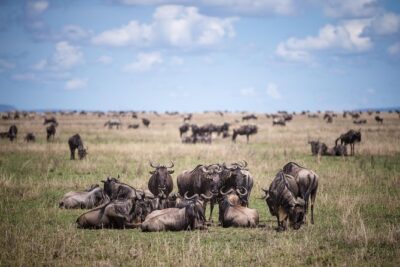
8 Days Great Wildebeest Calving Migration Safari from Arusha
Read our review →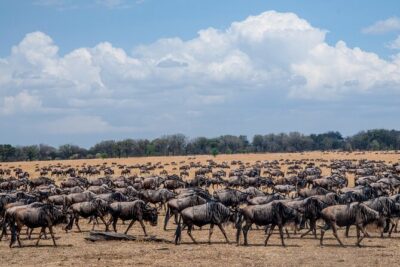
10-Day Serengeti Wildebeest Migration Safari from Arusha
Read our review →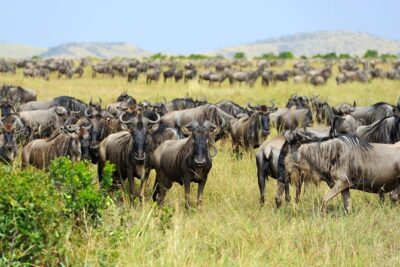
8 Day Spectacular Migration Serengeti mid -Range Tanzania Safari
Read our review →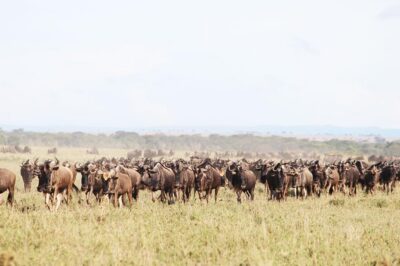
9-Day Serengeti Migration Footsteps Tanzania Safari
Read our review →
Private 6-Day Great Migration Ndutu Serengeti Safari Tour
Read our review →
4 Day Great Migration Safari Serengeti & Ngorongoro Crater
Read our review →Browse the lists this tour appears in