
Reviewed · CAMPING SAFARIS
6 Day Private Camping Safari
Wild Tanzania rewards patience. This six-day private camping safari links Lake Manyara, Serengeti, Ngorongoro, and Tarangire, giving you a broad Northern Circuit experience rather than a quick park sampler. I like the two full Serengeti days, which give you a better chance to find wildlife, and I like the private format, where only your own group takes part. The main point to weigh is the long driving schedule, with several early starts and about five hours listed for each day.
The $2,300 per-person price includes transport, accommodation, park-related fees, meals, and airport transfers. That makes the package easier to budget, but you still need to allow extra money for tips, drinks at camp, visas, insurance, flights, and any night after the safari in Arusha.
In This Review
- Key points to know before booking
- What this six-day safari is really offering
- Day 1: A simple Arusha arrival night
- Day 2: Lake Manyara beneath the Rift Valley escarpment
- Days 3 and 4: Why two Serengeti days matter
- Day 5: Ngorongoro Crater and the search for rhino
- Day 6: Tarangire’s elephants and baobabs
- Camping, meals, and what the price covers
- Who will get the most from this route?
- Booking details worth confirming
- Should you book this safari?
- FAQ
- How long is the safari?
- Where does the safari start?
- What time does the safari start?
- Which parks and conservation areas are included?
- Are airport transfers included?
- Are meals included?
- Are flights and visas included?
- Can I cancel for a full refund?
Key points to know before booking
- Two days in the Serengeti: The schedule gives this famous park more time than a rushed one-night visit.
- Four major Northern Circuit parks: You see Manyara, Serengeti, Ngorongoro, and Tarangire in one trip.
- Private group format: Only your own party participates, with group discounts available.
- Early 6:00 am start: Airport pickup and the safari schedule require careful planning around arrival times.
- Camping is included: Accommodation, five lunches, five dinners, and six breakfasts are covered.
- Strong guide feedback: Cornelius received especially warm praise for his knowledge of national park routes and wildlife areas, while Elias and Laurian were noted for caring well for a multigenerational group.
What this six-day safari is really offering
This is a classic Tanzania Northern Circuit route, shaped around variety. You move from a small lake park to the wide plains of the Serengeti, then into the enclosed world of Ngorongoro Crater before finishing among Tarangire’s elephants and baobabs.
That variety is the best reason to consider it. Each park has a different feel and a different chance of seeing animals. Lake Manyara brings birdlife and a dramatic Rift Valley setting. Serengeti gives you open grasslands and two proper game-drive days. Ngorongoro offers dense animal populations in a compact area. Tarangire adds elephants, baobab trees, and a different style of scenery.
The route is also a practical choice if you have only one safari week. You are not spending the whole trip in one park, so you get less depth in each place. Still, the extra Serengeti day helps prevent the trip from feeling like a string of quick stops.
The schedule describes each activity as about five hours, but the transfer days can feel longer because park roads and interpark drives are part of the experience. You should be comfortable with early breakfasts, bumpy roads, and long periods in a safari vehicle. That is the tradeoff for reaching these four major destinations.
More Camping Safaris in Moshi
- 5 Days Camping Tarangire, Serengeti & Ngorongoro crater & Visiting Maasai
★ 5.0 · 58 reviews - 4 Days Group Joining Camping Safari to Tarangire Serengeti Ngorongoro Crater
★ 5.0 · 50 reviews - 4 days adventure camping safari
★ 5.0 · 44 reviews
Day 1: A simple Arusha arrival night
Your safari begins with pickup at Kilimanjaro International Airport or Arusha Airport. A representative drives you to your accommodation in Arusha, where you spend the night before the main park route begins.
This first night is useful rather than exciting. It gives you a place to sleep before the early departure and separates your international arrival from the safari itself. If your flight arrives late, that buffer matters. You are not expected to arrive at a park and begin wildlife viewing immediately.
The timing deserves attention. The published start time is 6:00 am, so confirm exactly when airport pickup occurs and where the first night is located. The package includes an arrival and departure transfer, but flights are not included. A post-safari night in Arusha is also excluded, so plan that separately if your return flight is the following day.
There is a small naming detail worth checking before you pay. The trip information refers to an African Big Cats Safaris representative for the transfer, while the experience provider is listed as Safaris Africa United. That may simply reflect an operating or sales arrangement, but I would ask for the local contact name and emergency number in writing.
Day 2: Lake Manyara beneath the Rift Valley escarpment
After breakfast, you drive to Lake Manyara National Park. It is smaller than the Serengeti, but the setting gives it plenty of character. The park sits between the Rift Valley escarpment and the shallow, alkaline lake, with scenery that changes from savannah to evergreen forest.
Lake Manyara is best known for birdlife and the possibility of seeing tree-climbing lions. Flamingos may appear in large numbers during the rains, when the lake expands and attracts them. The park also has a strong sense of place because its name comes from the Maasai word emanyara, a plant traditionally used to build a protective homestead enclosure.
This is a good first park because it introduces you to several types of African scenery in a compact area. You might move from open ground into thicker forest, then back toward the lake. That change keeps the game drive interesting even when a major animal sighting is not immediately at hand.
The limitation is time. The schedule allows about five hours, and Lake Manyara is one stop within a packed route. You should see it as a focused introduction, not a full study of every corner of the park. The lake’s condition and birdlife also change with the seasons, so no single visit offers the same view.
Days 3 and 4: Why two Serengeti days matter
The road to Serengeti begins early on Day 3. The park is famous for broad open grasslands, abundant wildlife, and the annual movement of wildebeest, zebra, and antelope in search of fresh grazing.
The migration is not a fixed show on a fixed date. Its timing depends on rainfall patterns each year. That makes the Serengeti rewarding at many times, but it also means you should not book this trip on the assumption that a particular migration event is guaranteed.
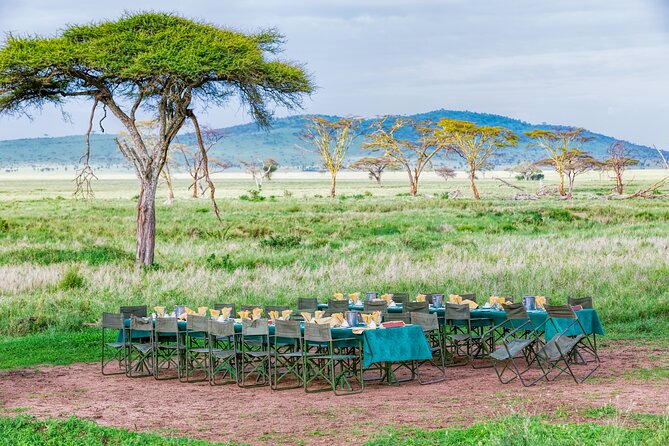
Two days here are one of the strongest features of the itinerary. The Serengeti is enormous, and wildlife sightings are shaped by weather, animal movement, and the area your guide chooses to explore. A second full day gives you another chance to search, and it lets the first day serve as an introduction to the park’s scale.
The open grasslands can make animal viewing easier, especially when wildlife is out in the open. At the same time, the size of the park means you may spend long stretches driving between sightings. That is normal here. The reward is a sense of space that smaller parks cannot offer.
You will also want to discuss the daily plan with your guide. The information promises a full program of game drives, but it does not specify exact camping areas, meal times, or the precise route through the park. Ask how the two Serengeti days will be divided and how much time will be spent driving versus watching wildlife.
The guide can make a large difference. Cornelius was praised for knowing many corners of parks including Arusha, Tarangire, Ngorongoro, Serengeti, and Manyara. Elias and Laurian were also credited with taking good care of a group spanning three generations. Those details suggest an emphasis on both wildlife knowledge and personal care, two things worth valuing on a private safari.
More Private Tours in Moshi
- Private Kilimanjaro Hike 7 Day Lemosho Route
★ 5.0 · 60 reviews - Private Tour to Materuni waterfalls, coffee tour & Kikuletwa hot- springs
★ 5.0 · 49 reviews - 4 Day Private Tour Throughout Tarangire, Serengeti and Ngorongoro
★ 5.0 · 42 reviews - Kilimanjaro 7 Day Private Trekking Experience
★ 5.0 · 40 reviews
Day 5: Ngorongoro Crater and the search for rhino
Day 5 begins with an en-route drive inside Serengeti before the journey to the Ngorongoro Conservation Area. This gives you another chance to see wildlife before leaving the plains.
Ngorongoro Crater feels different from Serengeti because the steep volcanic walls contain a large amount of wildlife in a much smaller area. Inside are open grassland, acacia woodland, lakes, and swamps. The crater formed when a large volcano exploded and collapsed two to three million years ago.
The crater’s geological story is impressive, but its practical value for a safari is just as important. The enclosed setting can make animal searches more concentrated. The trip specifically highlights the hope of seeing a black rhino, though no wildlife sighting can be promised.
The crater visit is also one of the busiest-feeling parts of many Northern Circuit routes, although the supplied information does not give exact visitor numbers or crowd conditions. Your private format means your own group participates together, but it does not mean the park itself is private.
Expect another early start and a demanding transfer. Day 5 combines a Serengeti drive, travel to the conservation area, and a crater visit. If you prefer slow mornings and long stays in one place, this may feel compressed. If you want to see a great deal in six days, it is an efficient use of time.
Day 6: Tarangire’s elephants and baobabs
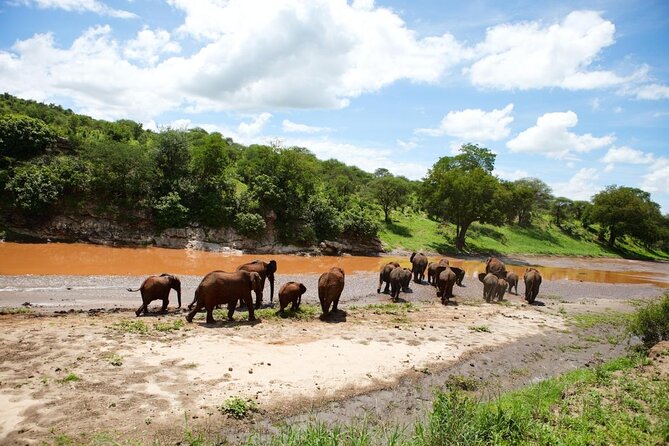
The final park is Tarangire National Park, named for the Tarangire River. During the dry season, the river is the only water source for wildlife in the area, which helps explain why animals gather near it.
Tarangire is especially appealing if elephants are high on your list. Family groups may congregate by the river, and the park is also known for its large baobab trees. Giraffe, bushbuck, hartebeest, lions, and leopards may also be seen.
The park’s vegetation differs from what you have seen earlier. Elephant grass, acacia woodland, and groundwater forest create a mix of open and enclosed areas. That gives the last day its own identity rather than making it feel like an extra Serengeti drive.
Tarangire is a smart final stop because it offers a strong chance of seeing elephants while introducing another setting. The park also has a notable range of breeding bird species, so birdwatchers may find the day especially worthwhile.
The drawback is that the final day still carries the pressure of the route. You begin after breakfast and then return to the meeting point, but the exact ending time is not provided. Do not book a tightly timed onward flight unless the operator confirms the schedule.
Camping, meals, and what the price covers
At $2,300 per person, this is not a low-cost safari, but the price includes several major expenses: transportation, accommodation, arrival and departure transfers, all listed fees and taxes, six breakfasts, five lunches, and five dinners.
That package matters because park fees and transport can add up quickly on a multipark safari. You are also paying for a private arrangement, rather than sharing the entire experience with an unknown group. Group discounts may improve the value for families or friends traveling together.
The included meals cover the main safari nights, but drinks at camp are extra. Tipping is not included, and you should budget for it separately. Flights, visa costs, medical insurance, and travel insurance are also your responsibility.
The wording lists five lunches and five dinners but six breakfasts. That matches a six-day plan beginning with a night in Arusha, though you should confirm which meals are served on transfer days. If you have dietary needs, ask before departure because no special meal information is provided.
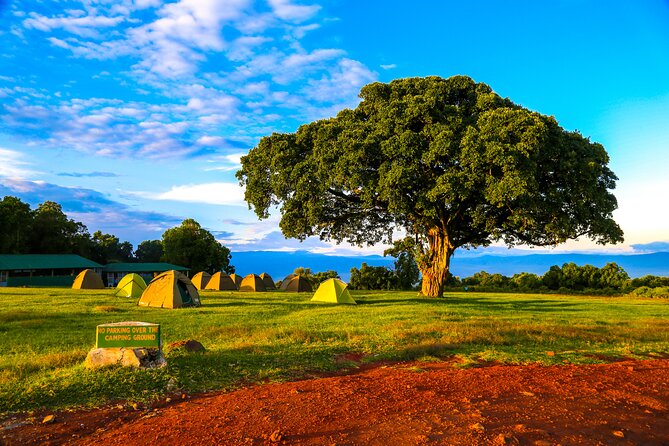
Camping also means you should ask practical questions before booking: what type of camp accommodation is used, where the camps are located, and what facilities are available. The published details confirm accommodation is included, but they do not describe the tent setup or camp services.
Who will get the most from this route?
I would recommend this safari to a first-time Tanzania visitor who wants the main Northern Circuit sights in one organized trip. It suits couples, families, and private groups that value having their own vehicle and guide arrangement.
The route can also work well for a multigenerational group. The strong feedback for Elias and Laurian involved three generations, which makes the personal-care side of the operation worth noting. Still, the early starts and long drives mean every member of your group should be ready for a physically tiring schedule.
This is less suited to someone who wants luxury lodging, a slow pace, or a single-park focus. It is also not the best choice if your sole goal is to see the Great Migration at a precise location. Rainfall controls the movement, and the schedule does not specify a migration season or region.
Most travelers can participate according to the provided information, but that broad statement is not a substitute for discussing mobility needs directly. Park roads can be rough, and the itinerary includes repeated transfers.
Booking details worth confirming
Free cancellation is available if you cancel at least 24 hours before the local start time. Cancellations made later are not refunded, and changes within that 24-hour window are not accepted.
Confirmation is normally provided at booking. If you book within seven days of travel, confirmation may arrive within 48 hours and remains subject to availability.
Before committing, I would confirm the following with Safaris Africa United:
- The exact Arusha accommodation on arrival
- The camp style and facilities
- The airport pickup contact
- The final drop-off time and location
- The guide assigned to your group
- The meal arrangements on each transfer day
- The operator name shown on your booking documents
These questions do not change the route, but they can prevent small surprises from becoming large ones in the bush.
Should you book this safari?
Book it if you want a private, broad introduction to Tanzania with two Serengeti days and four major parks. The strongest value comes from the mix of destinations, included meals and transport, and the chance to work with guides such as Cornelius, Elias, or Laurian, depending on assignment.
Think twice if your ideal safari means fewer driving hours, more rest, or a fixed Great Migration sighting. At $2,300 per person, the trip offers a substantial package, but you still need to add flights, visa, insurance, tips, drinks, and possibly an Arusha night after the route.
For a first safari, I like the balance. You get Manyara’s birds and Rift Valley views, Serengeti’s open plains, Ngorongoro’s crater setting, and Tarangire’s elephants and baobabs. Just go in ready for early mornings, long roads, and a schedule built for seeing a lot of Tanzania in six days.
FAQ
How long is the safari?
The safari lasts approximately six days, including the arrival night in Arusha and visits to four national park areas.
Where does the safari start?
Pickup is offered from Kilimanjaro International Airport or Arusha Airport. The listed meeting point is Kilimanjaro International Airport.
What time does the safari start?
The listed start time is 6:00 am.
Which parks and conservation areas are included?
The route includes Lake Manyara National Park, Serengeti National Park, the Ngorongoro Conservation Area, and Tarangire National Park.
Are airport transfers included?
Yes. Arrival and departure transfers are included in the package.
Are meals included?
Yes. The package includes six breakfasts, five lunches, and five dinners. Drinks at the camps are not included.
Are flights and visas included?
No. Flights and visas are not included. Medical insurance and travel insurance are also excluded.
Can I cancel for a full refund?
Yes, if you cancel at least 24 hours before the experience start time. Cancellations made less than 24 hours in advance are not refunded.
More Camping Safaris
- 6 Days Tanzania Budget Camping Safari with Migration
★ 5.0 · 31 reviews - 5 days Tanzania Camping Safari
★ 5.0 · 29 reviews - 6 Days: Classic Camping( Tarangire, Manyara, Serengeti And Ngorongoro).
★ 5.0 · 26 reviews - Mt Kilimanjaro 360° Trek with Once-in-a-Lifetime Crater Camping
★ 5.0 · 8 reviews
More Safaris in Moshi
- Safari Serengeti And Ngorongoro
★ 5.0 · 288 reviews - Big Five Safari In Tanzania
★ 5.0 · 99 reviews - Unforgettable Tanzania Safari And Zanzibar Beach
★ 5.0 · 97 reviews - 8-Day Essence of Tanzania Safari – Luxury
★ 5.0 · 72 reviews
Just added around Moshi
- Moshi: Lake Chala Tour: Hiking &/or Kayaking★ 4.5 · 3 reviews
- 3 Days Tanga Exclusive Beach Holiday★ 5.0 · 3 reviews
- Serengeti Wildebeest Migration.★ 5.0 · 3 reviews
- Chemka Hotpsrings E-Bike Day Trip★ 5.0 · 3 reviews
- Explore 1 day Ngorongoro Crater Budget Group Safari from Arusha★ 5.0 · 3 reviews
- Explore the 360° of Kilimanjaro★ 5.0 · 3 reviews
- Affordable Short Tanzania Safari (2 Days Camping Safari)★ 5.0 · 3 reviews
- Rongai Route 7 Days★ 5.0 · 3 reviews
Camping Safaris, compared.



3 Days Serengeti & Ngorongoro Group Camping Safari
Read our review →
5 Days Camping Tarangire, Serengeti & Ngorongoro crater & Visiting Maasai
Read our review →
2 Days Tarangire and Ngorongoro Group Camping Safari
Read our review →
3 Day Serengeti National Park & Ngorongoro Crater Camping Safari
Read our review →
3 Days Tarangire, Ngorongoro & Lake Manyara Group Camping Safari
Read our review →Browse the lists this tour appears in