
Reviewed · WILDEBEEST MIGRATION SAFARIS
6 Days Safari Tour to The Great Wildebeest Migration
The river crossing is worth the wait. This six-day safari pairs the Northern Serengeti migration with the Ngorongoro Crater, a Maasai village visit, and nights in a tented camp. I like the private format, since your group can shape parts of the game drives, and I like that park fees, airport transfers, meals, and accommodation are included. The main drawback is timing: wildebeest crossings cannot be predicted, so you may spend long periods waiting without seeing the dramatic river charge you came to find.
You begin with an airport pickup and an easy night in Arusha, then move through the Ngorongoro Conservation Area into the Serengeti. The route covers a lot of ground, but that is the point: you get a taste of the northern migration zone, the central plains, and the crater in one compact trip.
The price is $3,194 per person, which is substantial but reasonable for a private safari covering six days, major park fees, meals, transfers, and lodging. You should still ask for the exact camp names and room setup before booking, since the supplied details only describe the accommodation as specified and mention a tented camp.
In This Review
- Key reasons this safari deserves a close look
- Starting in Arusha after your Kilimanjaro arrival
- Driving from Ngorongoro to the Serengeti
- Waiting beside the Mara River
- Choosing your route between northern and central Serengeti
- The Ngorongoro Crater’s concentrated wildlife
- A tented camp, meals, and what the price covers
- Who will get the most from these six days
- Should you book this migration safari?
- FAQ
- Where does the safari begin?
- Where does the safari end?
- How long is the tour?
- Is this a private tour?
- Is the Maasai village visit included?
- What meals are included?
- Are airport transfers included?
- What is the cancellation policy?
Key reasons this safari deserves a close look
- Mara River focus: The third day is built around the northern river area where wildebeest gather, hesitate, and sometimes turn away at the last moment.
- Private travel: Only your own group participates, giving you more say over the pace and the split between northern and central Serengeti.
- Three major wildlife settings: You see the Serengeti plains, the Mara River region, and Ngorongoro Crater, each with a different feel and wildlife pattern.
- Maasai cultural stop: An optional village visit introduces you to Elders, Warriors, women, and children, with discussion of beliefs and traditions.
- Strong guide reports: Alex is praised for finding good photo positions, while Peter is credited with helping a family with two small children feel safe and comfortable.
- Simple arrival and departure plan: Airport pickup, hotel transfer, and return airport transport are included, which removes much of the first-day guesswork.
Starting in Arusha after your Kilimanjaro arrival
Your safari begins at Kilimanjaro International Airport at about 8:30 a.m., where a Benson Safaris Tanzania driver meets you. You are then driven to your lodge in Arusha, with the rest of the day left open.
That first day is more useful than it may sound. Long-haul flights and airport transfers can leave you tired, so having time to rest, swim, or look around Arusha gives you a gentler start than rushing straight into a game drive. You can also use the day for one of the operator’s optional local tours, although the supplied details do not specify which tours are available or what they cost.
I would treat this as a recovery day rather than a sightseeing day. The program allows up to 12 hours for the stop, but that does not mean you will spend 12 hours in scheduled activities. Your actual time depends on your flight arrival and transfer.
Accommodation is included, but the exact lodge name is not provided. Ask before paying if the lodge location, room type, Wi-Fi, pool access, and meal arrangements matter to you.
More Migration Safaris in Moshi
- Great Migration Safari In Tanzania
★ 5.0 · 71 reviews - 6 Days Tanzania Budget Camping Safari with Migration
★ 5.0 · 31 reviews - 10-Day Wildebeest Migration Calving Safari -All Inclusive
★ 5.0 · 30 reviews
Driving from Ngorongoro to the Serengeti
After breakfast on Day 2, you drive toward Serengeti National Park through the Ngorongoro Conservation Area. This is a long transfer, listed at about 12 hours, but it is also your first real introduction to the scale of northern Tanzania.
The route changes gradually from highland country to open acacia-dotted plains. Even before reaching the main Serengeti viewing areas, you may see birds and animals from the vehicle. The attraction here is not one single stop. It is the gradual shift into a huge, open setting where distance and sky become part of the experience.
The Serengeti is Tanzania’s oldest and most popular national park, and it is also a UNESCO World Heritage site. That status matters less than what you feel on the ground: the park gives you room to watch animal movement without the tight, enclosed feeling of a small reserve.
You may also choose the optional Maasai village visit in the Ngorongoro Highlands. The visit is intended to introduce you to Elders, Warriors, women, and children, with a focus on culture, beliefs, and traditions. I like this addition because it gives the trip a human dimension, but you should confirm the extra cost and length of the visit before agreeing to it. The supplied details identify the stop as optional but do not state its price.
Expect this day to be tiring. You are covering serious distance, and the roads between safari areas can make a full vehicle day feel longer than the clock suggests. The payoff is that you reach the Serengeti without losing one of your six days to a separate internal flight.
Waiting beside the Mara River
Day 3 is the emotional center of the safari. You spend a full day in the Northern Serengeti around the Mara River, looking for the great wildebeest migration.
The basic drama is simple. Huge numbers of wildebeest gather at the river, while crocodiles wait in the water. The animals may build in number for days, moving toward the edge and then wandering away for no clear reason. When a crossing finally begins, it may happen at a place that changes from year to year.
This uncertainty is important. A safari operator cannot order a crossing like a theater show. Even with a full day in the right area, you might see a crossing, a gathering herd, or only the tense waiting that comes before one. Anyone booking this trip should be comfortable with that gamble.
I appreciate that the program does not pretend otherwise. It describes the crossing as unpredictable, which is exactly the honest way to present it. You are paying for access to the right region and the chance to witness an extraordinary natural event, not a guaranteed performance.
This is also where your guide matters most. Alex is specifically praised for putting the group in good positions for photographs. That does not guarantee a crossing, but it suggests useful attention to timing, sightlines, and vehicle placement. Ask in advance how the guide handles long waits and whether the day is likely to be spent mostly stationary or moving between sightings.
The northern Serengeti can feel remote and spacious. Your tented camp places you in the bush rather than returning you to a town each night. That is part of the romance, but it also means you should ask what facilities are provided, since the details do not specify tent size, private bathrooms, electricity, or dining arrangements.
Choosing your route between northern and central Serengeti
Day 4 gives your private group a useful choice. You can spend another full day in the Northern Serengeti before driving to the Central Serengeti, or split the day between a half-day game drive in the north and a half-day drive in the central region.
This flexibility is one of the better features of the trip. If the wildebeest are still gathering near the Mara River, staying north gives you another chance at the main event. If the river is quiet, moving south gives you a change of scenery and a broader search for animals across the central plains.
The Central Serengeti is famous for its wide-open spaces and year-round wildlife viewing. The supplied plan does not promise particular sightings here, so keep your expectations sensible. You are searching for animals in a very large park, not visiting a collection of guaranteed enclosures.
The choice also affects how much time you spend in the vehicle. A full northern day may mean less relocation that day. A split day gives you variety but may feel more rushed, especially if road conditions or animal sightings slow the drive.
I would discuss this decision with your guide over breakfast. The best choice depends on what you have already seen on Day 3 and where the herds are located at that moment. A private group gives you room for that conversation, unlike a fixed coach schedule.
More Safaris in Moshi
- Safari Serengeti And Ngorongoro
★ 5.0 · 288 reviews - Big Five Safari In Tanzania
★ 5.0 · 99 reviews - Unforgettable Tanzania Safari And Zanzibar Beach
★ 5.0 · 97 reviews - 8-Day Essence of Tanzania Safari – Luxury
★ 5.0 · 72 reviews
The Ngorongoro Crater’s concentrated wildlife
On Day 5, you leave the Serengeti for Ngorongoro Crater. At the rim, you descend about 610 meters to the crater floor, where the enclosed setting often makes wildlife easier to find than on the open plains.
The crater has a permanent water supply, so animals remain in the area throughout the year. The species named for the visit include black rhino, wildebeest, buffalo, zebra, eland, Grant’s gazelle, Thomson’s gazelle, and large elephants. The area is also known for excellent game viewing and the unusual fact that people and wild animals live in the same wider conservation area.
This is a different kind of safari from the Serengeti. In the Serengeti, you are following movement across enormous distances. In the crater, the steep walls and compact floor can create a more concentrated day of sightings. You may find it easier to see several species in a shorter stretch of driving, though no wildlife sighting is guaranteed.
Ngorongoro became a UNESCO World Heritage site in 1979. The designation reflects both its natural value and its human connection. This is not simply a wildlife park cut off from local life, which makes the optional Maasai visit and the conservation area context especially relevant.
The supplied schedule gives the crater stop a very short duration in one place, while the overall day is presented as a major safari outing. I would clarify the exact time planned inside the crater. You should also ask how the descent and return transfer fit with your lodging that night.
A tented camp, meals, and what the price covers
At $3,194 per person, this is not a budget safari. Its value comes from the number of major costs bundled together: accommodation, park fees, taxes, airport transfers, pickup and return transport, and listed meals.
The package includes five breakfasts, four lunches, and three dinners. Since the trip lasts six days, that meal count does not cover every meal, so ask which meals are excluded and where you will pay for them. This is a small point that can affect the final cost, especially in remote park areas.
The tented camp is another part of the value. Sleeping in a tented camp in the Tanzanian bush gives the trip a stronger sense of place than a standard town hotel. At the same time, tented accommodation can mean very different things, from a comfortable permanent tent with a private bathroom to a simpler setup. Get the exact camp names and facilities in writing.
The private format helps justify the price. Your group is not mixed with strangers, and the Day 4 route can be adjusted around your interests. If you are a family, a couple, or a small group with a strong interest in photography, that control may matter more than finding the lowest possible fare.
Six reviews give the operator a perfect five-star rating, with especially warm praise for professionalism, communication, punctuality, and safety. Benson himself is praised as both informative and entertaining, while the safari cook receives a direct compliment. A family traveling with two small children felt safe and reported seeing all of the Big Five, though you should remember that individual sightings are never promises.
Who will get the most from these six days
This trip suits you if the Mara River crossing is your main goal but you also want a broader Tanzania safari. The combination of northern and central Serengeti with Ngorongoro gives you more range than a trip focused only on one migration zone.
It is also a good match for families and private groups. Peter is praised for making a family with two young children feel secure, and the private setup lets your group discuss breaks, pacing, and the balance between wildlife viewing and long transfers.
Photographers should pay attention to the guide choice. Alex has been praised for positioning the vehicle for strong photos, which is exactly the sort of practical skill that matters when animals appear suddenly or stay far from the road.
This may be less suitable if you dislike long drives, need a tightly timed schedule, or want a guaranteed river crossing. The six-day plan covers large distances, and migration viewing always involves patience and luck.
Pickup is offered from Kilimanjaro International Airport, and airport transport is included at both ends. The meeting time is 8:30 a.m. at Kilimanjaro Airport, so check that your arrival fits the schedule. Confirmation is provided when you book, and the activity is listed as suitable for most participants, with nearby public transportation noted.
Should you book this migration safari?
I would book this trip if you want a private, migration-focused safari with the Ngorongoro Crater added in. The strongest reasons are the Mara River positioning, the flexible fourth day, included park costs, and the repeated praise for guides and staff.
Before booking, ask four practical questions: Which camps will you use? What is included in the tented camp facilities? Which meals are excluded? How will the guide decide between staying north and moving toward central Serengeti?
You can cancel for a full refund if you do so at least 24 hours before the experience starts. Changes or cancellations made within 24 hours are not accepted for a refund. If you accept the uncertainty of the migration and the long road days, this offers a serious chance at one of Africa’s great wildlife spectacles without turning the rest of your safari into an afterthought.
FAQ
Where does the safari begin?
It begins with pickup at Kilimanjaro International Airport in Tanzania. The listed start time is 8:30 a.m.
Where does the safari end?
The final day includes a transfer to the airport in Arusha for your onward flight.
How long is the tour?
The experience lasts approximately six days.
Is this a private tour?
Yes. Only your group participates in the activity.
Is the Maasai village visit included?
No. The visit to a Maasai village in the Ngorongoro Highlands is listed as optional. The supplied details do not state the additional cost.
What meals are included?
The package lists five breakfasts, four lunches, and three dinners. Ask which meals are not included because the trip lasts six days.
Are airport transfers included?
Yes. Arrival transfer from Kilimanjaro or Arusha Airport, airport pickup, and return airport transfers are included.
What is the cancellation policy?
You can cancel at least 24 hours before the local start time for a full refund. Cancellations or changes made less than 24 hours before the start are not accepted for a refund.
More Safaris
- Serengeti, Ngorongoro and Tarangire 4 Days Safari
★ 5.0 · 59 reviews - 6 Days 5 Night Safari
★ 5.0 · 57 reviews - 7-Day Magical Tanzania Safari -Premium High End Package
★ 5.0 · 53 reviews - 4-day Tanzania Safari
★ 5.0 · 53 reviews
More Migration Safaris
- 8 Days Great Wildebeest Migration – Mara River Crossing
★ 5.0 · 28 reviews - Tanzania Safari – The Great Migration in the North of the Serengeti and Lake Natron
★ 5.0 · 25 reviews - 7 Days Wildebeest Migration – Ndutu Calving Season
★ 5.0 · 18 reviews - 5 Days Tanzania Safari – Migration and Big 5 Safaris
★ 5.0 · 14 reviews
Just added around Moshi
- Moshi: Lake Chala Tour: Hiking &/or Kayaking★ 4.5 · 3 reviews
- 3 Days Tanga Exclusive Beach Holiday★ 5.0 · 3 reviews
- Serengeti Wildebeest Migration.★ 5.0 · 3 reviews
- Chemka Hotpsrings E-Bike Day Trip★ 5.0 · 3 reviews
- Explore 1 day Ngorongoro Crater Budget Group Safari from Arusha★ 5.0 · 3 reviews
- Explore the 360° of Kilimanjaro★ 5.0 · 3 reviews
- Affordable Short Tanzania Safari (2 Days Camping Safari)★ 5.0 · 3 reviews
- Rongai Route 7 Days★ 5.0 · 3 reviews
Wildebeest Migration Safaris, compared.
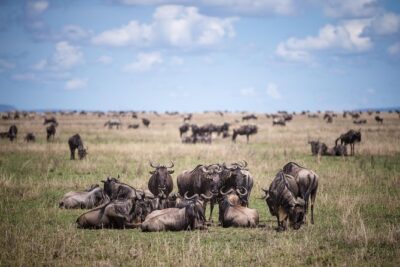
8 Days Great Wildebeest Calving Migration Safari from Arusha
Read our review →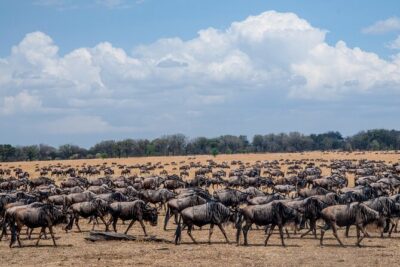
10-Day Serengeti Wildebeest Migration Safari from Arusha
Read our review →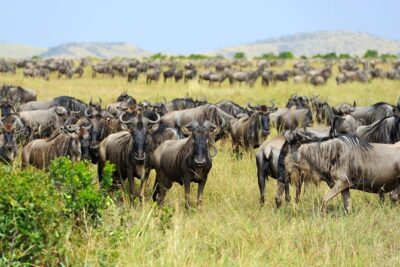
8 Day Spectacular Migration Serengeti mid -Range Tanzania Safari
Read our review →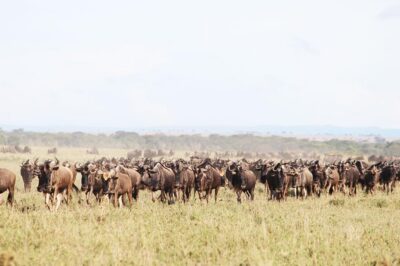
9-Day Serengeti Migration Footsteps Tanzania Safari
Read our review →
Private 6-Day Great Migration Ndutu Serengeti Safari Tour
Read our review →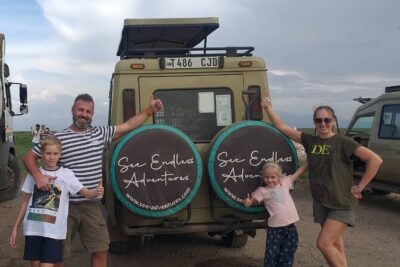
4 Day Great Migration Safari Serengeti & Ngorongoro Crater
Read our review →Browse the lists this tour appears in