
Reviewed · WILDEBEEST MIGRATION SAFARIS
6Days Migration Safari
The animals set the timetable. This six-day safari links the Ngorongoro Crater with several key Serengeti zones, giving you a strong chance to follow the wildebeest migration rather than sit in one camp hoping it passes. I especially like the small group limit of six and the clear focus on northern and western Serengeti, where seasonal movement and resident wildlife both matter. I also like that full-board safari lodging, taxes, and two-way transfers are included.
The main caution is that migration sightings are never guaranteed. The route is built around usual patterns, with Lobo often productive in July, August, October, and November, and Wagakuria most promising from August through October. The midnight start time and the exact arrangements for getting from Kogatende airstrip to Arusha also deserve clarification before you pay.
In This Review
- Key details that shape this safari
- Why this route works for a migration safari
- Day 1: The Ngorongoro Crater from more than 600 meters below the rim
- Day 2: Lobo and the migration calendar
- Day 3: Resident wildlife around Lobo and Grumeti
- Day 4: Northern Serengeti and Wagakuria
- Day 5: Western Serengeti, waterholes, and the Grumeti River
- Day 6: Game viewing on the way to Kogatende airstrip
- What the $3,700 price really covers
- Guides and the human side of the trip
- Who should book this safari?
- Final verdict: a strong route with one important booking check
- FAQ
- Where does the safari start?
- Where does the safari end?
- How long is the safari?
- How many people can join the safari?
- What is included in the price?
- Is the Tanzania visa included?
- When is the migration usually found in the areas visited?
Key details that shape this safari
- Six days across three major wildlife zones: You visit Ngorongoro, Lobo, the Grumeti River area, western Serengeti, and northern Serengeti.
- A maximum of six people: The small vehicle group should make game-drive decisions easier and reduce the crowded feel of a large coach.
- Migration timing matters: Lobo is usually important around July and August, then again in late October and November. Wagakuria is generally strongest from August to October.
- Ngorongoro includes a crater descent: The safari spends an afternoon more than 600 meters below the crater rim in search of wildlife.
- Full board is included: Your safari accommodation includes meals, while all listed fees and taxes are covered.
- Several guides receive strong praise: Faiza handles arrangements, while Laurent and Raymond are praised for care, communication, and their ability to explain what you are seeing.
Why this route works for a migration safari
A migration safari is not simply a matter of driving into the Serengeti and finding one giant herd. The wildebeest move through a wide area, and their position changes with rain, grass, water, and timing. This itinerary responds to that reality by using more than one Serengeti region.
You begin with Ngorongoro, then head toward Lobo in the northern Serengeti before spending time around the Grumeti River and western Serengeti. The route finishes in the Wagakuria and Kogatende area, a sensible choice when the migration is commonly in northern Serengeti from August through October.
I like this structure because it gives you two kinds of wildlife viewing. You have seasonal migration action, but you are not relying on it alone. Lobo and the Grumeti area support resident game throughout the year, so the safari still has purpose if the wildebeest are early, late, or simply grazing somewhere else.
The route is ambitious for six days. That is part of its appeal, but also its cost. You are covering a large portion of northern Tanzania, so some days are likely to feel like long safari days rather than a relaxed stay beside one waterhole.
More Migration Safaris in Moshi
- Great Migration Safari In Tanzania
★ 5.0 · 71 reviews - 6 Days Tanzania Budget Camping Safari with Migration
★ 5.0 · 31 reviews - 10-Day Wildebeest Migration Calving Safari -All Inclusive
★ 5.0 · 30 reviews
Day 1: The Ngorongoro Crater from more than 600 meters below the rim
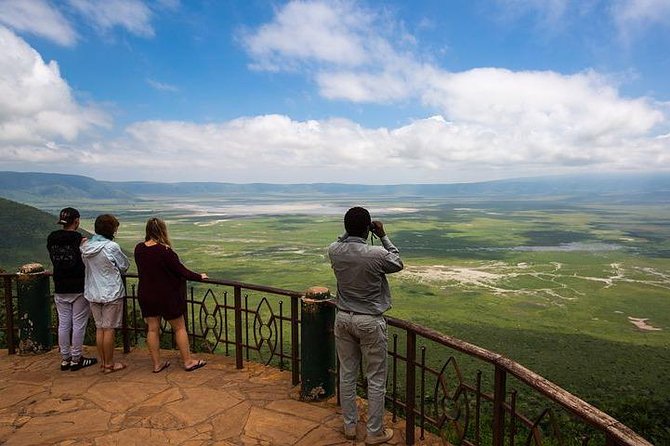
The first major wildlife experience is an afternoon safari in the Ngorongoro Crater. The vehicle descends more than 600 meters into the crater, placing you in a contained natural setting with a high chance of seeing a range of animals in one outing.
The crater is valuable on a short itinerary because it concentrates wildlife. You do not need to spend several days searching a vast open plain before the first good sighting. An afternoon visit also gives the first day a clear focus after the transfer from the Arusha area.
The scheduled stop is listed as about eight hours, though the actual balance between driving, arrival, and game viewing should be confirmed with the operator. The description refers to Arusha and Ngorongoro together, so ask exactly where your first night is located and how long the transfer to the crater will take.
This is also the point where a good guide can make a real difference. Laurent is praised for being caring, friendly, and attentive, while Raymond is praised for answering questions and explaining what you see. Those qualities matter in the crater, where identifying an animal is only the beginning. You want someone who can explain behavior, habitat, and why the sighting matters.
Day 2: Lobo and the migration calendar
The second day moves into the Lobo area of Serengeti National Park. Lobo is especially relevant to the migration because wildebeest commonly pass through in July and August while moving onward, and again in late October and November as they head toward the southern Serengeti.
That timing should guide your booking decision. If your dates line up with one of those periods, Lobo can be an excellent part of the route. If you are traveling outside those windows, you may still see resident animals, but you should not expect the migration to follow the published pattern exactly.
The day is listed at eight hours, which suggests a full safari schedule. That gives your guide room to combine the transfer with wildlife viewing instead of treating the road as dead time. It also means you should be ready for a long day in the vehicle.
The best approach is to judge success by more than a river crossing or a wall of wildebeest. A migration safari can bring scattered herds, dust, calves, predators, or simply a changing rhythm of movement across the plains. The route puts you in the right broad region, but nature decides the final scene.
Day 3: Resident wildlife around Lobo and Grumeti
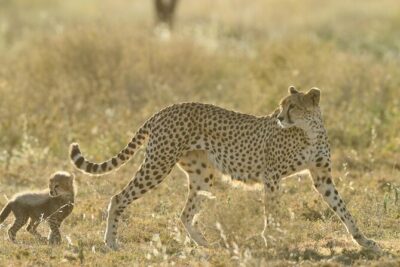
The third day keeps you in the Lobo and Grumeti area. This is a smart addition because it reduces your dependence on migration dates. The area has good resident game throughout the year, so your time can still produce rewarding wildlife viewing even if the herds have moved on.
The Grumeti River adds another type of sighting. Large pods of hippos and very large crocodiles may be found along the river. These animals offer a change from the open-country search for wildebeest and give the day a slower, water-centered focus.
You may also see wildebeest gathering near waterholes in the morning. The description of them appearing like ants around a nest captures the scale of these concentrations. The useful practical point is the timing: the herds commonly gather around waterholes in midmorning, so an early start and patience near water can be worthwhile.
This is one of the itinerary’s strongest days for balance. You have the chance to see migration activity, but you also have river wildlife and year-round game. If you prefer varied viewing over a single dramatic event, this part of the safari makes sense.
More Safaris in Moshi
- Safari Serengeti And Ngorongoro
★ 5.0 · 288 reviews - Big Five Safari In Tanzania
★ 5.0 · 99 reviews - Unforgettable Tanzania Safari And Zanzibar Beach
★ 5.0 · 97 reviews - 8-Day Essence of Tanzania Safari – Luxury
★ 5.0 · 72 reviews
Day 4: Northern Serengeti and Wagakuria
The route then shifts toward the Wagakuria area in northern Serengeti. From August through October, this is normally one of the places where the wildebeest migration can be found.
That seasonal detail is important. A July trip and an October trip are not interchangeable, even though both may be sold as migration safaris. Lobo may be the better target earlier in the season, while Wagakuria becomes more relevant later. Ask the company to explain how it adjusts the route if the herds are ahead of schedule.
The eight-hour day gives you time to search rather than rush in, photograph, and leave. A small group helps here. With no more than six people, the guide has fewer opinions to manage when deciding whether to wait, reposition, or continue looking.
The northern Serengeti section is also useful for people who want a broader sense of the park. You are not simply checking off a famous name. You are moving through several areas with different chances for wildlife, water, and seasonal movement.
Day 5: Western Serengeti, waterholes, and the Grumeti River
Day five returns attention to western Serengeti and the Grumeti River. The river is known on this route for hippos and huge crocodiles, while waterholes can draw dense groups of wildebeest during the morning.
The phrase midmorning concentration is the key practical clue. You may want to discuss the day’s departure time with your guide so you are in a useful position when animals gather at water. The exact schedule can change, but the itinerary clearly treats water access as central to the day.
This can be an especially good day for photographers. Hippos packed into a river, crocodiles near the bank, and herds arriving at water create very different subjects from the usual wide shots of animals on open plains. You should still remember that wildlife does not pose on command. Some drives will be full of movement, while others may involve long periods of scanning.
Spending another day in the Serengeti rather than rushing straight to the airport is a sensible choice. It gives you more time to respond to where the animals actually are. The drawback is that six days leave little spare time if road conditions or wildlife positioning change the plan.
Day 6: Game viewing on the way to Kogatende airstrip
The final morning begins after breakfast at the lodge. You depart for Kogatende airstrip, with a game drive en route before continuing to Arusha.
This is a pleasant way to finish because the transfer itself can still be part of the safari. You are not ending the wildlife portion the night before and then spending the last morning only on transport. The listed duration is about six hours, so plan for a substantial final stretch rather than a quick airport run.
The details here need confirmation. The meeting information gives Kilimanjaro International Airport as the start and end point, while the final day refers to Kogatende airstrip and travel to Arusha. The listing also says that transfers are included in both directions, but it does not clearly spell out whether an air transfer from Kogatende to Arusha is part of the price or arranged separately.
Ask these questions before departure:
- Is the Kogatende to Arusha flight included?
- Does the included transfer continue from Arusha to Kilimanjaro International Airport?
- What time should you expect to reach the airport?
- Is the final game drive dependent on the flight schedule?
Those answers matter if you are connecting to an international flight on the same day.
What the $3,700 price really covers
At $3,700 per person, this is a major purchase. The value depends on how much you use the included service and how well the dates match the migration.
The price includes all fees and taxes, full-board accommodation during the safari, and transfers in both directions. A maximum group size of six is also included in the experience design. That small-group format can be worth real money in northern Tanzania, since it gives you more room and makes it easier to agree on stops and viewing time.
You are paying for a route that covers Ngorongoro and several Serengeti zones in only six days. That means transport, planning, accommodation, meals, and guide service are doing a lot of work. If you tried to arrange every part separately, you would need to coordinate park access, transfers, lodging, game drives, and the final airstrip connection.
Still, do not judge the price only by the chance of seeing a dramatic crossing. No safari operator can control the migration. The better value is the combination of seasonal targets and year-round wildlife around Lobo and Grumeti.
The Tanzania visa is not included. The listed cost is $50 for United States and Canadian passport holders, and $100 for other passport categories as specified by the operator. Confirm your own visa requirement before travel, since the provided price information only identifies those two rates.
Guides and the human side of the trip
The strongest personal praise centers on organization and guiding. Faiza is described as responsive during planning, careful with details, and willing to shape the trip around personal requests. That is useful on a safari, where good communication before arrival can prevent confusion about transfers, lodging, and timing.
Laurent is praised for care, friendliness, and professional conduct. One honeymoon itinerary included an airport pickup and a transfer toward Manyara before the wider safari, showing that the company has handled customized arrangements as well as standard routes. That does not mean this six-day trip includes Manyara, so treat it as evidence of planning flexibility rather than part of this itinerary.
Raymond receives praise for answering questions and giving interesting explanations. This is exactly the kind of guide you want when the vehicle pauses for a distant animal and you need help understanding what you are seeing.
A local contact number is also provided during at least some arrangements. Keep that kind of contact close, especially when your route involves several regions and an airstrip transfer.
Who should book this safari?
I would recommend this trip to you if your priority is the migration and you want more than one chance to find it. It suits people who are happy with long safari days, changing locations, full-board lodging, and a small shared group.
It also suits honeymooners and couples who want a private-feeling itinerary without necessarily booking an entirely private vehicle. The company has experience handling honeymoon arrangements, and the guide praise suggests that personal care is one of its better features.
You may want a different plan if you prefer slow mornings, one lodge for several nights, or a tightly predictable schedule. The route covers a lot of ground. It is designed to improve your odds of finding wildlife, not to give you a quiet resort stay.
Your travel dates are the deciding factor. July and August favor Lobo, while August through October favors Wagakuria. Late October and November can again make Lobo important as herds move toward the southern Serengeti. If your dates fall outside those periods, ask how the company will adapt the route.
The booking terms are friendly if your plans are not fixed: cancellation is free up to 24 hours before the start time for a full refund. Changes or cancellations within 24 hours are not accepted for a refund, based on the local start time.
Final verdict: a strong route with one important booking check
I would book this safari if you want a focused attempt at the northern migration, value a group of no more than six, and appreciate having both seasonal targets and reliable resident game. Ngorongoro, Lobo, Grumeti, western Serengeti, and Wagakuria give the six days a useful range.
Before paying, get written confirmation of the exact first-night location, the midnight meeting time, the Kogatende to Arusha connection, and what happens if the migration is outside its usual area. With those details clear, the $3,700 price can make sense for a well-supported, full-board safari with strong guide attention.
FAQ
Where does the safari start?
The stated start point is Kilimanjaro International Airport near Kilimanjaro National Park in Tanzania.
Where does the safari end?
The stated end point is Kilimanjaro International Airport on Kilimanjaro Airport Road, Tanzania.
How long is the safari?
The experience lasts approximately six days.
How many people can join the safari?
The maximum group size is six people.
What is included in the price?
The price includes all fees and taxes, full-board accommodation during the safari, and transfers in both directions.
Is the Tanzania visa included?
No. The visa is listed separately at $50 for United States and Canadian passport holders and $100 for the passport categories specified by the operator.
When is the migration usually found in the areas visited?
Wildebeest normally pass through Lobo around July and August, then again in late October and November. The Wagakuria area commonly has migration activity from August through October.
More Safaris
- Serengeti, Ngorongoro and Tarangire 4 Days Safari
★ 5.0 · 59 reviews - 6 Days 5 Night Safari
★ 5.0 · 57 reviews - 7-Day Magical Tanzania Safari -Premium High End Package
★ 5.0 · 53 reviews - 4-day Tanzania Safari
★ 5.0 · 53 reviews
More Migration Safaris
- 8 Days Great Wildebeest Migration – Mara River Crossing
★ 5.0 · 28 reviews - Tanzania Safari – The Great Migration in the North of the Serengeti and Lake Natron
★ 5.0 · 25 reviews - 7 Days Wildebeest Migration – Ndutu Calving Season
★ 5.0 · 18 reviews - 5 Days Tanzania Safari – Migration and Big 5 Safaris
★ 5.0 · 14 reviews
Just added around Moshi
- Moshi: Lake Chala Tour: Hiking &/or Kayaking★ 4.5 · 3 reviews
- 3 Days Tanga Exclusive Beach Holiday★ 5.0 · 3 reviews
- Serengeti Wildebeest Migration.★ 5.0 · 3 reviews
- Chemka Hotpsrings E-Bike Day Trip★ 5.0 · 3 reviews
- Explore 1 day Ngorongoro Crater Budget Group Safari from Arusha★ 5.0 · 3 reviews
- Explore the 360° of Kilimanjaro★ 5.0 · 3 reviews
- Affordable Short Tanzania Safari (2 Days Camping Safari)★ 5.0 · 3 reviews
- Rongai Route 7 Days★ 5.0 · 3 reviews
Wildebeest Migration Safaris, compared.
8 Days Great Wildebeest Calving Migration Safari from Arusha
Read our review →
10-Day Serengeti Wildebeest Migration Safari from Arusha
Read our review →
8 Day Spectacular Migration Serengeti mid -Range Tanzania Safari
Read our review →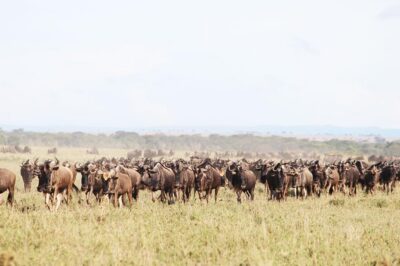
9-Day Serengeti Migration Footsteps Tanzania Safari
Read our review →

Private 6-Day Great Migration Ndutu Serengeti Safari Tour
Read our review →
4 Day Great Migration Safari Serengeti & Ngorongoro Crater
Read our review →Browse the lists this tour appears in