
Reviewed · KILIMANJARO TREKS
7 Day Tour Machame Route
Africa’s highest summit rewards patient walkers. This seven-day climb through Kilimanjaro National Park follows the Machame Route, a well-planned path through rainforest, moorland, high alpine desert, and the summit zone. I like the route’s gradual ascent and the important acclimatization stop at Lava Tower. I also like that meals, water, park fees, lodging, guides, porters, and crew wages are built into the price.
The main drawback is summit day, which is extremely long and demanding. You will start in the early morning, climb to Uhuru Peak, then descend to Mweka Camp in the same day. The price is $2,205 per person, a serious outlay, though the included services make it easier to judge the cost fairly.
In This Review
- Key points before you book
- Why the seven-day Machame Route works
- Day 1: Machame Gate to Machame Camp
- Day 2: Moorland and the open views at Shira Camp
- Day 3: Lava Tower and the Barranco Camp descent
- Day 4: The Barranco Wall to Karanga Camp
- Day 5: Karanga to Barafu Camp
- Day 6: Uhuru Peak and the long descent to Mweka Camp
- Day 7: Rainforest descent to Mweka Gate
- Food, water, lodging, and crew support
- Is $2,205 a fair price?
- Who should choose this climb?
- Should you book the seven-day Machame Route?
- FAQ
- How long is the Machame Route trek?
- What time does the activity start?
- Where does the trek start and end?
- What is included in the price?
- Are meals included every day?
- Are tips and towels included?
- What is the cancellation policy?
Key points before you book
- Lava Tower improves the altitude plan: You climb to about 4,600 meters on day three, then sleep lower at Barranco Camp.
- The Barranco Wall adds a real challenge: It is one of the most memorable parts of the route, but you need steady feet and a good head for steep ground.
- Summit day covers about 18 kilometers: The early ascent to Uhuru Peak is followed by a long descent to Mweka Camp.
- Meals and crew support are included: You receive breakfast, lunch, dinner, drinking water, and assistance from guides, porters, and a cook.
- The route crosses several climate zones: Expect rainforest at the beginning and end, then moorland, alpine desert, and harsh summit terrain.
- The group may reach 30 people: That can bring social energy, but a larger group may feel less personal on the trail.
Why the seven-day Machame Route works
Kilimanjaro is not a technical mountain climb in the usual sense, but altitude makes it serious. The value of seven days is not simply having more time on the calendar. It gives your body a better chance to adjust as you gain height.
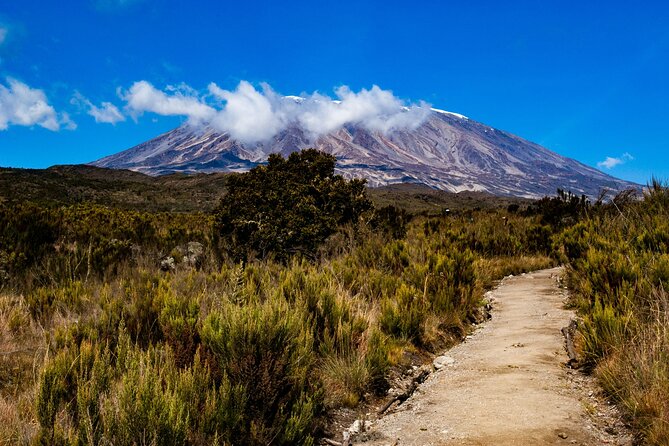
The Machame Route is attractive because the scenery changes often. You begin under tall forest cover, move into open moorland, cross dry high-altitude ground, and finish among rock, ice, and wide views near the summit. The route also uses the climb-high, sleep-lower pattern on day three, with Lava Tower followed by Barranco Camp.
I especially like that the itinerary does not rush directly toward the summit. You spend several nights above 3,000 meters before the final push. That does not remove the risk of altitude sickness, and it does not guarantee that you will reach Uhuru Peak, but it gives the schedule a sensible shape.
The package includes a professional English-speaking guide and a support crew paid through fair and sustainable salary wages. That matters on Kilimanjaro, where porters carry camp equipment and supplies. The food is also a major part of the experience. Meals are included for all seven days, and the cook received particularly warm praise, with one account comparing the food to a five-star hotel standard. That is a strong point when you are spending long days walking at altitude.
More Kilimanjaro routes and climbs:
- 7 Days Kilimanjaro via Machame route affordable price
★ 5.0 · 110 reviews - Kilimanjaro Airport taxi to/from Moshi town/Arusha town
★ 5.0 · 60 reviews - 6 Days Climbing Mount Kilimanjaro Machame Route
★ 5.0 · 40 reviews
Day 1: Machame Gate to Machame Camp
The climb begins at Machame Gate in Kilimanjaro National Park. Registration comes first, followed by an introduction to your guides and porters. The start may feel administrative, but it is an important part of entering the park and organizing the crew.
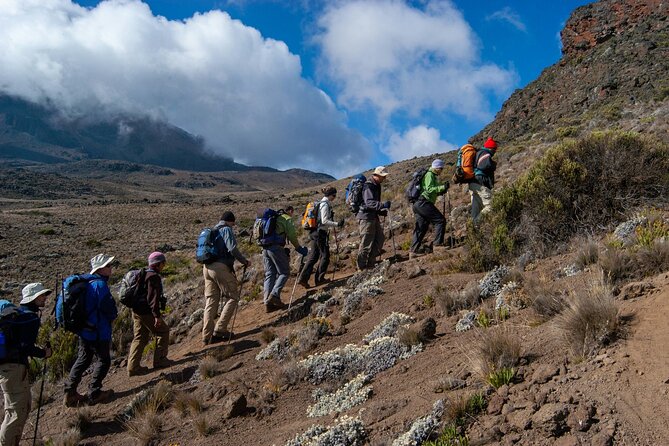
From the gate, you walk roughly 11 kilometers through rainforest to Machame Camp. The stated walking time is about four hours, with camp at approximately 3,000 meters. This is a gradual first day, but do not treat it as a casual stroll. You are already gaining height, and the forest trail can feel tiring when you are carrying a day pack.
The rainforest is the first visual change of the trip. Expect thick greenery and a shaded path rather than open views. It is a good day to settle into a slow pace, drink water regularly, and learn how the group moves.
I would keep your first-day expectations simple. The goal is not speed. It is to reach camp feeling able to eat, sleep, and walk again the next morning. Your included full-board meals make this easier, since you do not need to arrange food along the route.
Day 2: Moorland and the open views at Shira Camp
After breakfast, the trail leaves much of the rainforest behind and enters moorland. The distance is shorter, about five kilometers, and the walking time is listed at roughly three hours. Shira Camp sits at around 3,800 meters.
This is an important change in feel. The forest gives way to open ground, so you can look across broader views rather than walking beneath a dense canopy. Shira Camp also gives you a useful sense of how quickly Kilimanjaro changes with altitude.
The short distance does not mean the day is effortless. You are sleeping higher than the previous night, and altitude can affect people differently. Walk slowly and pay attention to how you feel. Your guide is there to support the group, but you should report discomfort rather than trying to hide it.
For many people, day two is when the mountain begins to feel real. The route no longer resembles a forest hike. It becomes a high-altitude trek with fewer distractions and more attention on breathing, pacing, food, and rest.
Day 3: Lava Tower and the Barranco Camp descent
Day three is one of the most useful days in the schedule. You climb to Lava Tower at about 4,600 meters, then descend to Barranco Camp at roughly 3,960 meters. The total distance is around 10 kilometers, with about four hours of walking listed.
The point of reaching Lava Tower is acclimatization. You spend time at a higher elevation before sleeping lower. That pattern is one of the route’s best features, even though it makes the day feel harder than the distance alone suggests.
The terrain also becomes more exposed and rugged. After the high point at Lava Tower, the trail leads down toward Barranco. This gives you a physical preview of the conditions higher on the mountain without keeping you at 4,600 meters overnight.
Barranco Camp is more than a place to eat and sleep. It positions you for the next day’s Barranco Wall climb, which is the route’s most talked-about physical obstacle. If you are uneasy with steep sections, this is the day to ask your guide what to expect and conserve energy for the morning.
The included oxygen cylinder is a reassuring part of the equipment provision, but you should not see it as a substitute for good pacing or medical judgment. Altitude remains the central challenge of the entire trek.
A few more trips of this kind worth comparing:
- 7-Day Machame Route Kilimajaro
★ 5.0 · 28 reviews - 7 Days Highlight of Tanzania Mid-Range Standard
★ 5.0 · 22 reviews - 7 Days Wildebeest Migration – Ndutu Calving Season
★ 5.0 · 18 reviews - 7 Day Grand Tanzania Safari
★ 5.0 · 13 reviews
Day 4: The Barranco Wall to Karanga Camp
The morning begins with the Barranco Wall. This is a steep and memorable section, and it gives the route more character than a simple uphill walk. You will need to move carefully and follow your guide’s directions.
The itinerary describes the day as roughly six kilometers and about four hours of walking. After the wall, you continue to Karanga Camp, located at approximately 4,035 meters. The route is shorter than day three, but the wall adds effort at the start.
This is a good example of why distance figures do not tell the whole story. Six kilometers may sound modest, but steep ground at high altitude can consume energy quickly. Keep your hands free, maintain a calm pace, and avoid burning yourself out early in the day.
The camp’s height is close to Barranco’s, so the day is not a huge gain in sleeping elevation. That can be helpful before the move to Barafu. It also gives you time to enjoy the route instead of turning every hour into a race toward the next camp.
Day 5: Karanga to Barafu Camp
The trail to Barafu Camp is only about four kilometers, with roughly three hours of walking. Barafu sits at approximately 4,600 meters and serves as the final camp before the summit attempt.
This short day is not a free afternoon. Barafu is high, and the terrain becomes more alpine and rocky. The reduced walking distance gives you time to rest before the hardest part of the trip, but you may still feel the altitude strongly.
Views of the surrounding mountain area add interest, though the main job here is preparation. Eat what you can, drink water, organize your clothing, and follow the instructions from the guide team. Your dinner and breakfast are included, which removes one practical concern during a day when rest matters.
The support structure is particularly valuable at this point. You are not carrying the full camp load yourself, and the guide, porters, and cook help create a workable base for the summit attempt. Still, the mountain makes the final decision. Good service can improve your chances, but it cannot control your response to altitude.
Day 6: Uhuru Peak and the long descent to Mweka Camp
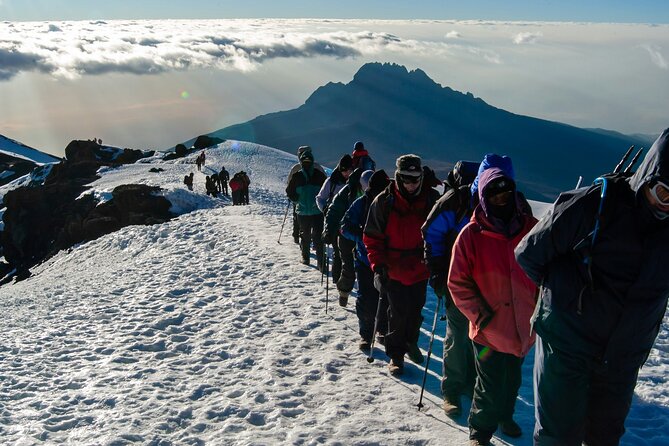
Summit day is the test. The ascent begins in the early hours, before dawn, and the climb to Uhuru Peak is steep and demanding. Reaching Uhuru Peak means standing at the highest point in Africa, which is the clear reward for the previous five days.
The day covers roughly 18 kilometers in total and ends at Mweka Camp at around 3,100 meters. That is a large amount of walking after the summit, so you should not think of reaching the peak as the end of the day.
The pre-dawn start makes sense because it allows the summit attempt to reach its highest point around sunrise. It also means you will be walking when tired, cold, and short on sleep. The climb is not just about fitness. It tests patience, breathing, clothing choices, and mental focus.
After Uhuru Peak, you descend to Mweka Camp. Going down can feel easier on the lungs, but the long descent can be hard on tired legs. Take care on loose ground and save enough energy for the final miles.
This is where a good guide matters most. Emanuele and Joseph are named as guides connected with the experience, and the accounts of the service repeatedly point to a friendly, professional team. The crew also includes porters, a cook, and a waiter, with their help forming a large part of the trip’s appeal.
Day 7: Rainforest descent to Mweka Gate
The final day takes you from Mweka Camp to Mweka Gate, covering about 10 kilometers through rainforest. It offers a different view of the mountain than the opening day because you are now descending with the summit behind you.
The return to forest also marks a clear shift in conditions. After the exposed high-altitude camps, the greenery at lower elevation can feel like a welcome change. The walking remains tiring, especially after summit day, but the route is moving toward a clear finish.
At Mweka Gate, you receive your summit certificates and thank the guide and porter team. That closing moment is part of the experience, not just paperwork. Kilimanjaro is a group effort, and the included crew wages and visible support make it worth recognizing the people who make the climb possible.
The activity ends back at the meeting point. Pickup is offered, the stated start time is 7:30 a.m., and the meeting point information lists Kilimanjaro Airport and Kilimanjaro National Park in Tanzania. Confirm the exact pickup arrangement before setting out, since the information gives both locations.
Food, water, lodging, and crew support
The $2,205 cost includes all fees and taxes, accommodations, drinking water, and full-board meals. Breakfast, lunch, and dinner are listed for all seven days. That is important because food planning becomes difficult once you are on the mountain.
You also receive a professional English-speaking guide and an oxygen cylinder. Towels are not included, so pack your own. Tips are also excluded, and you should plan for them as a separate expense if you want to thank the crew for good service.
The strongest praise centers on the staff and food. The names Emanuele and Joseph come up in the personal accounts, along with positive comments about the porters, cook, waiter, and guides. The crew is described as friendly, funny, and professional, which can make a seven-day climb feel more manageable.
The group limit is 30 people. That is not a small private departure, so ask about your expected group size if personal attention is a top concern. A larger group can provide company and shared encouragement, but it may also mean a less quiet experience at camp and on the trail.
Is $2,205 a fair price?
This is not a cheap mountain holiday, but the inclusions give the price real substance. You are paying for park-related costs, seven days of accommodation, all meals, water, an English-speaking guide, porters, a cook, and crew wages. You are also paying for an organized route with a planned acclimatization schedule.
The best value comes if you want a supported climb rather than trying to arrange each element separately. Food alone is not the only concern. You need a guide team, camp support, permits and fees, water, and a workable plan for seven days at changing elevations.
I would still budget beyond the headline price for tips and personal items. Towels are not supplied, and the package does not say that transport beyond the offered pickup is covered. The free cancellation policy allows a full refund if you cancel at least 24 hours before the local start time. Cancellations within 24 hours are not refunded, and late changes are not accepted.
Who should choose this climb?
This route suits you if you have a moderate level of physical fitness and want a gradual seven-day ascent rather than a shorter, more compressed schedule. It is also a good fit if you value varied scenery, organized meals, and a strong support crew.
You should be ready for long walking days, high altitude, early starts, and basic mountain accommodation. The biggest physical demand comes on summit day, not on the first five days. If you are mainly seeking relaxed sightseeing, this is the wrong trip.
The route may also suit first-time high-altitude trekkers who want professional support, but the word moderate should not be misunderstood. You still need preparation, patience, and a willingness to stop or slow down if your body is struggling.
Should you book the seven-day Machame Route?
I would choose this trek if your priority is a sensible ascent with varied scenery and strong crew support. The Lava Tower acclimatization pattern, Barranco Wall, full-board meals, and seven-day schedule give the route a good balance between challenge and structure.
I would pause before booking if the 18-kilometer summit day sounds beyond your current fitness or if you want a private, quiet trek. The group can reach 30 people, and the final ascent is genuinely demanding.
For the right walker, this is a strong Kilimanjaro option. Book it if you want a supported mountain challenge, understand that Uhuru Peak is never guaranteed, and are prepared to treat pacing and altitude safety as seriously as the summit photograph.
FAQ
How long is the Machame Route trek?
The trek lasts approximately seven days, from the start at Machame Gate to the descent through Mweka Gate.
What time does the activity start?
The stated start time is 7:30 a.m.
Where does the trek start and end?
The meeting information lists Kilimanjaro Airport and Kilimanjaro National Park in Tanzania. The activity ends back at the meeting point.
What is included in the price?
The price includes all fees and taxes, accommodations, crew wages, drinking water, full-board meals, an English-speaking professional guide, and a complimentary oxygen cylinder.
Are meals included every day?
Yes. Breakfast, lunch, and dinner are listed for all seven days.
Are tips and towels included?
No. Tips and towels are not included, so you should bring a towel and budget separately for tips.
What is the cancellation policy?
You can cancel at least 24 hours before the local start time for a full refund. Cancellations or changes made within 24 hours are not accepted, and the amount paid is not refunded.
Just added around Kilimanjaro
- The World’s Best 1 Day Tarangire Budget Group Safari From Arusha★ 5.0 · 3 reviews
- 5 days Serengeti Wildebeest Migration Safari★ 5.0 · 3 reviews
- Tanzania Safari and Kilimanjaro Climb Multi-Day Experience★ 5.0 · 3 reviews
- 9 Days – Best of Tanzania Safari★ 5.0 · 4 reviews
- 7 Days Mountain Kilimanjaro climb Machame Route★ 5.0 · 4 reviews
- 8-Day Tanzania Migration Footsteps – Midrange★ 5.0 · 4 reviews
- 4 Days Lake Manyara National Park, Ngorongoro Crater , Serengeti National Park.★ 4.0 · 4 reviews
- 6 Days Mara River Crossing – The Great Migration★ 5.0 · 5 reviews
Kilimanjaro Treks, compared.



8-Day Small-group Lemosho Kilimanjaro Summit Trekking
Read our review →


Climbing Kilimanjaro through 7 days Machame Route
Read our review →

Browse the lists this tour appears in