
Reviewed · WILDEBEEST MIGRATION SAFARIS
8-Day Grumeti Migration Safari-Luxury Tour May-July
The Grumeti River is where safari drama gets real. This eight-day private safari is built around the western Serengeti migration from May through July, while also adding Tarangire, Lake Manyara, central Serengeti, and Ngorongoro Crater. I like the focus on the Grumeti crossing and the way the route includes both the western corridor and Seronera, two useful areas for seeing the moving herds. I also like the private format, hot picnic lunches, airport transfers, and the chance to travel with guides such as Calvin Kileo, Bariki, William, or Ombeni. The main drawback is that migration timing cannot be guaranteed, and the route description has a few confusing transitions between Serengeti and Ngorongoro that you should clarify before paying.
This is priced at $6,276 per person, so it is a serious investment. The cost includes park fees, a professional guide, transport, seven lunches, seven dinners, and eight breakfasts, but not international flights, visas, insurance, tips, or extra nights. For someone who wants a private safari with higher-end camps and a strong chance of reaching the western Serengeti, the price may be fair, but you should ask for the exact lodge names and room standards before booking.
In This Review
- Key details to know before you book
- Why the western Serengeti matters from May to July
- Day 1: A simple start in Arusha
- Day 2: Tarangire and its elephant country
- Day 3: Lake Manyara for birds and tree-climbing lions
- Day 4: Entering the Serengeti
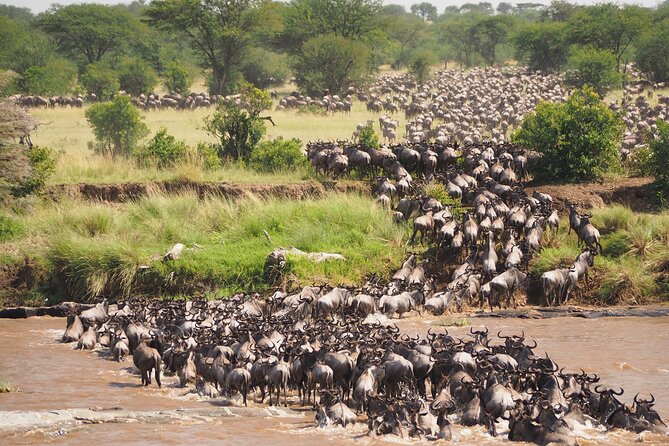
- Day 5: The western corridor and the Grumeti River
- Day 6: Seronera and the central Serengeti
- Day 7: Another Serengeti day before Ngorongoro
- Day 8: Ngorongoro Crater and the return to Arusha
- What the luxury price really includes
- The guide is a major part of the value
- Who should book this safari?
- Final verdict: a strong migration plan with details to confirm
- FAQ
- Where does this safari begin?
- How long is the safari?
- What months is the safari designed for?
- Is the Grumeti River crossing guaranteed?
- Is this a private tour?
- Which parks and areas are included?
- Are meals included?
- Are park fees included?
- Are international flights included?
- What is the tipping guideline?
- Can I cancel for a full refund?
- What happens if bad weather cancels the safari?
Key details to know before you book
- The Grumeti River is the main prize: May through July is chosen to improve your chance of seeing wildebeest in the western corridor, including possible river activity.
- You see several different safari areas: Tarangire, Lake Manyara, central Serengeti, western Serengeti, and Ngorongoro Crater each bring a different setting and wildlife focus.
- It is a private safari: Only your own group participates, giving you more control over stops, questions, and the pace of game drives.
- Hot meals are prepared in the bush: Lunch may include soup, bread rolls, a main dish, fruit salad, wine, tea, and coffee.
- The guide can make or break the trip: Past praise centers on careful driving, animal spotting, patience, clear explanations, and guides including Calvin Kileo, Bariki, William, Morris, and Ombeni.
- The schedule is active: Most safari days run about eight hours, and several include long drives between parks.
Why the western Serengeti matters from May to July
The Great Migration is not a single event that happens on one exact date. It is a moving cycle shaped by rain, grazing, and the instincts of roughly huge herds of wildebeest, along with zebra and other animals. From May to July, many animals generally move toward the western Serengeti and the Grumeti area.
That makes this safari’s main idea sensible. Instead of spending the full trip in central Serengeti, you reach the western corridor, where the Grumeti River can create one of Africa’s most dramatic wildlife scenes. Wildebeest may gather at the river, hesitate at the bank, then rush through the water while crocodiles wait below.
The important word is may. No honest operator can promise a crossing on a particular day. Herds can move early, late, or along a different section of the river. You might see large groups near the water without witnessing a crossing at all. Still, spending time in the right region during the right months gives you a better chance than a standard northern Serengeti route.
The western Serengeti is also worth visiting without the migration. Big cats, elephants, plains game, and birds live here year-round. That matters because a safari should not feel like a failed trip simply because the wildebeest do not perform on cue.
More Migration Safaris in Moshi
- Great Migration Safari In Tanzania
★ 5.0 · 71 reviews - 6 Days Tanzania Budget Camping Safari with Migration
★ 5.0 · 31 reviews - 10-Day Wildebeest Migration Calving Safari -All Inclusive
★ 5.0 · 30 reviews
Day 1: A simple start in Arusha
You meet your guide and transfer to Arusha for dinner and an overnight stay. The drive is listed at about four hours, and the day functions mainly as a staging point before the park circuit begins.
Arusha sits below Mount Meru and serves as a gateway to northern Tanzania’s safari parks. Kilimanjaro Airport is the stated meeting point, so check carefully how your arrival time fits with the transfer. If you land late, you may need extra accommodation before the safari begins because additional nights are not included.
The first evening is useful for meeting your guide and settling in. Use it to confirm the next morning’s departure time, the expected route, and the names of the camps. Since this is sold as a luxury tour, the exact accommodation matters a great deal.
Day 2: Tarangire and its elephant country
After breakfast and a short safari briefing, you leave for Tarangire National Park. The plan calls for a full-day game drive, a hot lunch in the park, and an evening arrival at your lodge or camp.
Tarangire is known for elephants, birdlife, and a quieter feel than some of Tanzania’s better-known parks. It is also associated with seasonal elephant movement, so the park can offer a different wildlife rhythm from the migration-focused Serengeti.
I like starting here because Tarangire gives you an immediate safari experience without making the entire trip about wildebeest. The park’s large animals and birdlife provide variety, and the quieter atmosphere can feel more personal in a private vehicle.
Lunch is more substantial than the usual packed box. Your guide is expected to set up a table and serve soup, bread rolls, a main dish, fruit salad, wine, tea, and coffee. That sounds pleasant, though you should confirm whether wine is included in the final arrangement and whether dietary needs can be handled.
The drawback is the amount of driving. An eight-hour park day can feel long, especially if you are adjusting to jet lag. You will spend much of the day seated in the safari vehicle, so comfort and driving skill are important.
Day 3: Lake Manyara for birds and tree-climbing lions
Lake Manyara National Park follows breakfast at the lodge. The plan allows another full game drive, a hot lunch, and an evening return to the lodge.
Manyara is a good contrast to Tarangire. Its birdlife is a major attraction, with more than 400 recorded species. Even a first-time safari visitor could reasonably see a large number of them in one day, although sightings always depend on conditions and timing.
The park is also known for elephants and its famous tree-climbing lions. Seeing a lion resting in an acacia tree is never guaranteed, but the possibility gives the day a clear purpose beyond simply searching for the Big Five.
I would treat Manyara as a compact wildlife day rather than expecting the vast open plains of Serengeti. The park can feel busier and more enclosed in parts, and the route leaves little time for a slow, relaxed pace. Still, its birdlife and woodland setting add welcome variety before the long Serengeti section.
More Safaris in Moshi
- Safari Serengeti And Ngorongoro
★ 5.0 · 288 reviews - Big Five Safari In Tanzania
★ 5.0 · 99 reviews - Unforgettable Tanzania Safari And Zanzibar Beach
★ 5.0 · 97 reviews - 8-Day Essence of Tanzania Safari – Luxury
★ 5.0 · 72 reviews
Day 4: Entering the Serengeti
The fourth day moves toward Serengeti National Park, with game viewing focused on big cats and the Big Five. A hot lunch is planned during the drive, followed by an evening transfer to accommodation.
The Serengeti is famous for its open plains, but its appeal is not limited to migration season. Resident lions, leopards, cheetahs, elephants, buffalo, and many other species make this one of the strongest wildlife areas in Tanzania throughout the year.
This is the point where your guide’s ability matters most. Calvin Kileo receives especially strong praise for being careful, thoughtful, and alert to animal sightings. Bariki is praised for patient explanations and for finding animals that are easy to miss. William is noted for his animal knowledge, calm driving, and ability to identify different species. Those qualities are not decoration. A good guide can turn a distant shape into a clear sighting and explain what you are seeing without rushing you.
There is a routing issue to clarify here. The day describes Serengeti game viewing and then a late transfer toward Ngorongoro, while the following days return to western and central Serengeti. That may reflect the operator’s actual camp arrangement, but it is not easy to follow on paper. Ask for a map and the exact overnight location for each night.
Day 5: The western corridor and the Grumeti River
This is the core day of the safari. After breakfast, you head toward the western Serengeti and the Grumeti area for game viewing, possible river activity, and more searches for big cats and the Big Five.
The appeal is clear: you are not simply passing through the Serengeti. You are spending time in the region selected for the migration season. If the herds are near the river, you may see animals gathering at the banks, moving through the water, or spreading across the nearby plains.
Expect patience to be part of the experience. River crossings are not scheduled shows. The animals may pause for a long time, change direction, or cross when your vehicle is elsewhere. A private safari can help because your guide may be able to respond to reports of movement and adjust the day’s search, but you still need luck.
The day is listed at about eight hours. That is enough time for a serious game drive, but not necessarily enough to spend all day waiting beside one crossing point. Your guide will balance river hopes with regular wildlife viewing, which is the sensible approach.
The western Serengeti can also be quieter than the central Seronera area. That may mean fewer vehicles in some places, but it can also mean longer distances between sightings and less predictable access to information about herd movements. The tradeoff is space and atmosphere for convenience.
Day 6: Seronera and the central Serengeti
After breakfast, the route turns to Seronera in central Serengeti for another full game drive. Lunch is prepared during the day, followed by an evening return to camp.
Seronera is one of the most dependable areas for resident wildlife. Its central position and permanent water sources help support animals beyond the migration season. Lions are a major draw, and you may also search for leopards, cheetahs, elephants, buffalo, and other plains species.
This day strengthens the trip. If the wildebeest are not at the Grumeti River, Seronera offers another setting where you can still have excellent wildlife viewing. It also prevents the tour from becoming too narrowly focused on one difficult-to-predict event.
The practical concern is the repeated relocation. Going from western Serengeti to central Serengeti can mean many hours on rough roads. Ask how long the actual transfer takes, not just how long the game drive is described. A private vehicle with air conditioning is a welcome feature, and one guide was specifically praised for checking if passengers were too hot, too cold, or uncomfortable.
Day 7: Another Serengeti day before Ngorongoro
The seventh day continues with Serengeti game viewing, followed by a late drive toward Ngorongoro for dinner and an overnight stay. The stated focus remains big cats and the Big Five.
This is another useful buffer day. Migration conditions may shift, and extra time in the Serengeti improves your chances of seeing the park on its own terms. You might spend the day near a pride of lions, searching for a leopard, or watching ordinary but rewarding scenes involving zebra, wildebeest, and other grazing animals.
Again, confirm the exact overnight location. The wording suggests a late transfer to Ngorongoro, but the overall route is not fully clear about where you sleep on every Serengeti night. That is especially important for a luxury trip, since camp quality, travel time, and the setting around your room all affect the value.
Day 8: Ngorongoro Crater and the return to Arusha
The final day begins with an early breakfast and a drive into Ngorongoro Crater. You have a crater game drive, a hot lunch under the vehicle shade, and a late-afternoon drive back to Arusha before airport drop-off.
Ngorongoro Crater is a natural enclosure with a remarkable concentration of wildlife. The plan includes Lake Magadi, a shallow soda lake within the crater, where you might see animals gathering around the water and possibly flamingos, though specific sightings are not promised.
An early start is the right choice. The crater is one of Tanzania’s most popular wildlife destinations, and beginning early gives you more time in the crater and a better chance to see animals while the day is fresh.
The final drive is listed as only four minutes in the schedule, which clearly does not describe the full return journey to Arusha. Treat that figure as an error or a placeholder and ask for the expected airport transfer time. Do not book a close international connection without confirming the actual departure schedule.
What the luxury price really includes
At $6,276 per person, this is not a budget safari. The value depends on three things: the quality of the vehicle and guide, the standard of the camps, and how well the route handles the western Serengeti.
Included costs cover non-resident park fees, a professional driver-guide, round-trip airport transfers, breakfast each morning, seven lunches, and seven dinners. That removes several large safari expenses, especially park fees and full-board meals.
The experience is described as using luxury lodges and tented camps close to nature. However, no accommodation names or room details are provided. I would ask for:
- The name and location of every lodge or camp
- Whether each property is classed as luxury, upper-upscale, or standard
- Whether drinks, laundry, and Wi-Fi cost extra
- How many nights are spent in tents compared with permanent lodges
- The distance from each camp to the planned game-viewing areas
Tips are not included, with a guideline of $15 per person per day. International flights, visas, insurance, souvenirs, and extra accommodation are also separate. These costs can affect your final budget more than you might expect.
The guide is a major part of the value
A safari vehicle is only as useful as the person behind the wheel. The strongest praise for this experience centers on guides who drive carefully, spot animals, explain behavior, and pay attention to passenger comfort.
Calvin Kileo is described as especially conscientious and alert, with a strong ability to find wildlife. Bariki is praised for his storytelling and for answering questions in detail. William is noted for patience, excellent driving, and a sharp eye for animals. Ombeni is described as careful and attentive to comfort, including whether people were hot, cold, or sitting awkwardly. Morris is also named alongside William during one safari.
You cannot usually choose a guide with certainty at booking, so ask the operator if a preferred guide can be requested. Also ask whether the same guide remains with you for all eight days. Continuity can make a big difference, especially when the route covers several parks and a migration event that requires patience.
Who should book this safari?
I would recommend this trip to you if the Grumeti River is your main goal but you also want a broad northern Tanzania safari. The combination of Tarangire, Manyara, Serengeti, and Ngorongoro gives you more than one kind of wildlife experience.
It suits couples, honeymooners, families, and private groups that value their own vehicle and a flexible day. The private format is particularly useful when you want to stop for questions, spend longer with an animal, or adjust the day around possible herd movement.
It may not suit you if you dislike long drives, want a slow camp-based holiday, or need a guaranteed river crossing. The schedule is ambitious, and several days are built around roughly eight hours of driving and game viewing.
The luxury label also needs checking. Since the accommodation names are not supplied, do not assume five-star service from the price alone. Get the camp list in writing before you compare this safari with other operators.
Final verdict: a strong migration plan with details to confirm
I like the logic of this safari. It gives you time in the western Serengeti during the months when the Grumeti migration may be active, then adds Seronera for reliable resident wildlife and Ngorongoro for a powerful finale. The private vehicle, hot bush lunches, airport transfers, and repeated praise for careful guides add real value.
I would book it if the operator confirms high-quality accommodation, a clear day-by-day map, and realistic transfer times. I would also accept that the Grumeti crossing is a chance, not a promise.
If you want the best possible odds of seeing the migration while still enjoying Tanzania’s classic parks, this is a sensible choice. Just make the camp locations and routing clear before committing more than six thousand dollars per person.
FAQ
Where does this safari begin?
The stated meeting point is Kilimanjaro Airport in Tanzania. The first overnight stay is in Arusha.
How long is the safari?
The experience lasts approximately eight days.
What months is the safari designed for?
The safari is designed for May through July, when wildebeest may be found in the western Serengeti and near the Grumeti River.
Is the Grumeti River crossing guaranteed?
No. The safari is designed to improve your chance of seeing migration activity and a crossing, but wildlife movement and river crossings cannot be guaranteed.
Is this a private tour?
Yes. Only your own group participates in the activity.
Which parks and areas are included?
The route includes Tarangire National Park, Lake Manyara National Park, Serengeti National Park, the western Serengeti and Grumeti area, central Serengeti around Seronera, Ngorongoro Conservation Area, and Ngorongoro Crater.
Are meals included?
Breakfast is included for eight mornings, along with seven lunches and seven dinners.
Are park fees included?
Yes. Non-resident park fees are included.
Are international flights included?
No. International flights from and to your home country are not included.
What is the tipping guideline?
The stated tipping guideline is $15 per person per day. Tips are not included in the tour price.
Can I cancel for a full refund?
You can cancel at least 24 hours before the experience start time for a full refund. Cancellations made less than 24 hours before the start time are not refundable.
What happens if bad weather cancels the safari?
If poor weather causes cancellation, you will be offered a different date or a full refund.
More Safaris
- Serengeti, Ngorongoro and Tarangire 4 Days Safari
★ 5.0 · 59 reviews - 6 Days 5 Night Safari
★ 5.0 · 57 reviews - 7-Day Magical Tanzania Safari -Premium High End Package
★ 5.0 · 53 reviews - 4-day Tanzania Safari
★ 5.0 · 53 reviews
More Migration Safaris
- 8 Days Great Wildebeest Migration – Mara River Crossing
★ 5.0 · 28 reviews - Tanzania Safari – The Great Migration in the North of the Serengeti and Lake Natron
★ 5.0 · 25 reviews - 7 Days Wildebeest Migration – Ndutu Calving Season
★ 5.0 · 18 reviews - 5 Days Tanzania Safari – Migration and Big 5 Safaris
★ 5.0 · 14 reviews
Just added around Moshi
- Moshi: Lake Chala Tour: Hiking &/or Kayaking★ 4.5 · 3 reviews
- 3 Days Tanga Exclusive Beach Holiday★ 5.0 · 3 reviews
- Serengeti Wildebeest Migration.★ 5.0 · 3 reviews
- Chemka Hotpsrings E-Bike Day Trip★ 5.0 · 3 reviews
- Explore 1 day Ngorongoro Crater Budget Group Safari from Arusha★ 5.0 · 3 reviews
- Explore the 360° of Kilimanjaro★ 5.0 · 3 reviews
- Affordable Short Tanzania Safari (2 Days Camping Safari)★ 5.0 · 3 reviews
- Rongai Route 7 Days★ 5.0 · 3 reviews
Wildebeest Migration Safaris, compared.
8 Days Great Wildebeest Calving Migration Safari from Arusha
Read our review →
10-Day Serengeti Wildebeest Migration Safari from Arusha
Read our review →
8 Day Spectacular Migration Serengeti mid -Range Tanzania Safari
Read our review →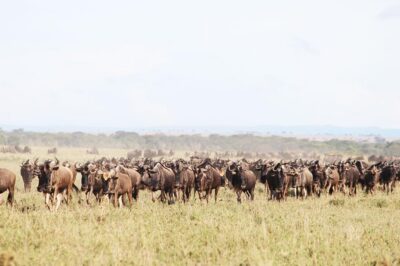
9-Day Serengeti Migration Footsteps Tanzania Safari
Read our review →
Private 6-Day Great Migration Ndutu Serengeti Safari Tour
Read our review →
4 Day Great Migration Safari Serengeti & Ngorongoro Crater
Read our review →Browse the lists this tour appears in