
Reviewed · WILDEBEEST MIGRATION SAFARIS
9 Days Great Migration Safaris with Kojuu Safaris Africa-Luxury.
The wildebeest set the schedule. Kojuu Safaris’ 9-day private journey gives you a strong chance to see the Great Migration in northern Tanzania, while also adding Tarangire National Park, a Maasai village visit, and Ngorongoro Crater. I especially like the local guiding team and the custom 4WD Land Cruiser, which includes a fridge, inverter, drinks, snacks, and unlimited mileage.
I also like the careful attention to airport transfers and arrival support. Judith and guide Harun receive especially warm praise for organization, kindness, safety, animal knowledge, and cultural insight. The main consideration is the amount of driving: reaching northern Serengeti and then returning south makes this a busy safari, not a slow lodge holiday.
In This Review
- Key details that shape the safari
- Why this 9-day route works for migration season
- Day 1: A supported arrival from Kilimanjaro Airport
- Day 2: Tarangire’s elephants and baobabs
- Day 3: The long road into the Serengeti
- Days 4 and 5: Waiting at the Mara River
- Day 6: Sunrise, one last northern look, and central Serengeti
- Day 7: Final Serengeti wildlife, then Karatu
- Day 8: Ngorongoro Crater, a wildlife bowl
- Day 9: A gentle finish in the Arusha area
- What the private vehicle and inclusions mean
- Is $4,110.96 a fair price?
- Who should book this safari?
- Should you book Kojuu Safaris?
- FAQ
- Where does the safari start?
- How long is the experience?
- Is this a private tour?
- Are park and conservancy fees included?
- Are meals included?
- Is a Maasai village visit included?
- What is the cancellation policy?
Key details that shape the safari
- River-crossing focus: Days 4 and 5 are set aside for the Mara River, giving you more than one opportunity to wait for a crossing.
- Private touring: Only your group takes part, so the pace and vehicle are not shared with strangers.
- Strong northern-circuit mix: Tarangire, Serengeti, and Ngorongoro each offer a different type of wildlife viewing.
- Practical vehicle comforts: The open-roof Land Cruiser carries bottled water, soft drinks, regional wine, fruit, snacks, a fridge, and an inverter.
- Cultural contact included: A Maasai village visit adds a human side to a trip otherwise centered on wildlife.
- Good cancellation terms: Cancellation at least 24 hours before the start time qualifies for a full refund, subject to the weather conditions stated for the tour.
Why this 9-day route works for migration season
The Great Migration is not a single event that happens at one fixed spot. Wildebeest, zebra, gazelle, and other animals move through the Serengeti and Kenya’s Masai Mara in a yearly search for food and water. The route changes with rain and grazing conditions, so no safari company can promise a river crossing on a specific afternoon.
This trip handles that uncertainty in a sensible way. It places two full days in northern Serengeti, with the Mara River as the main target, then adds a morning there before you travel back toward central Serengeti. That extra time matters. You are not relying on one hurried stop and one lucky hour.
The tradeoff is distance. Tanzania’s northern parks are vast, and the drive from Arusha through the Ngorongoro area to Serengeti takes time. You will spend long hours on safari roads, especially on the way north and during the return to Karatu. For many people, that is part of the adventure. If you prefer short transfers and long afternoons beside a swimming pool, this route may feel demanding.
More Migration Safaris in Moshi
- Great Migration Safari In Tanzania
★ 5.0 · 71 reviews - 6 Days Tanzania Budget Camping Safari with Migration
★ 5.0 · 31 reviews - 10-Day Wildebeest Migration Calving Safari -All Inclusive
★ 5.0 · 30 reviews
Day 1: A supported arrival from Kilimanjaro Airport
Your trip begins at Kilimanjaro International Airport. After passport and security procedures, a Kojuu Safaris driver-guide meets you at the exit with a sign showing your name. The guide helps with your luggage and drives you to Arusha.
That small arrival detail has real value. International flights can leave you tired and unsure of your surroundings. Having a named driver waiting removes the usual airport guesswork, and assistance with hotel check-in keeps the first evening simple.
You have time to freshen up, eat dinner, take photos, and use the hotel facilities. The first night is not packed with sightseeing, which is sensible after a long flight. The exact accommodation is listed as specified by the operator, but the supplied information does not name the hotel, so you should confirm its location and standard before booking.
Day 2: Tarangire’s elephants and baobabs
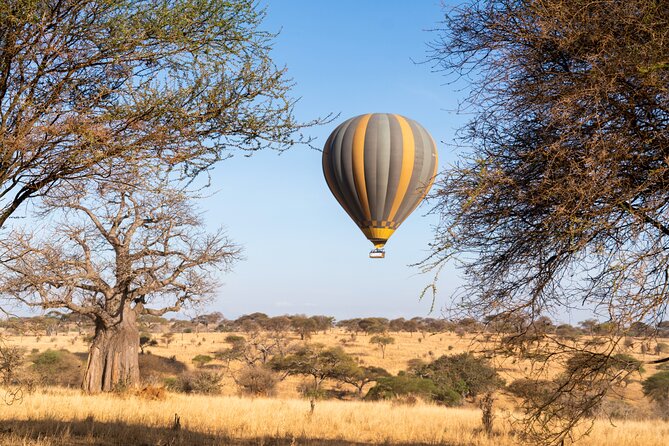
After breakfast, you drive about two hours from Arusha to Tarangire National Park, roughly 120 kilometers away. The plan allows about seven hours for a full game drive.
Tarangire has a different feel from the Serengeti. Its most famous sights are large elephant herds and giant baobab trees. The park also has a permanent water source, which draws animals during the dry season. You might see buffalo, lion, giraffe, leopard, and many smaller species as well.
I like this opening safari day because it gives you variety before the long Serengeti run. Tarangire is also a good reminder that Tanzania’s wildlife is not limited to one famous park. The scenery changes, the trees have a strong character, and the elephants are a major reason to include it.
The phrase full day should be understood in safari terms, not as seven nonstop hours without breaks. You will be out on game-drive roads for much of the day, then return to your accommodation after the park visit. Ask for the exact overnight location, since that affects how early the next morning feels.
Day 3: The long road into the Serengeti
Day 3 starts early. You travel with your driver-guide and safari chef through the Ngorongoro Conservation Area toward Serengeti National Park. The day is planned for about seven hours, though road conditions, wildlife sightings, and stops can affect the actual timing.
Serengeti means endless plains in the language associated with the Maasai, and the name fits the scale. The park covers roughly 15,000 square kilometers and supports the Big Five: lion, leopard, elephant, buffalo, and black rhino. It is also the main stage for the migration.
This is one of the days when the private format helps. Your guide can pause for animals along the route instead of following a fixed coach schedule. The open-roof vehicle also gives you a better view upward and outward when conditions allow, while the fridge and drinks make a long day easier.
Still, this is a transfer and safari day combined. You should expect road time rather than a short, direct journey. Pack a day bag with anything you need in the vehicle, since your main luggage may be stored away during the drive.
More migration safaris:
- 8 Days Great Wildebeest Migration – Mara River Crossing
★ 5.0 · 28 reviews - Tanzania Safari – The Great Migration in the North of the Serengeti and Lake Natron
★ 5.0 · 25 reviews - 7 Days Wildebeest Migration – Ndutu Calving Season
★ 5.0 · 18 reviews - 5 Days Tanzania Safari – Migration and Big 5 Safaris
★ 5.0 · 14 reviews
Days 4 and 5: Waiting at the Mara River
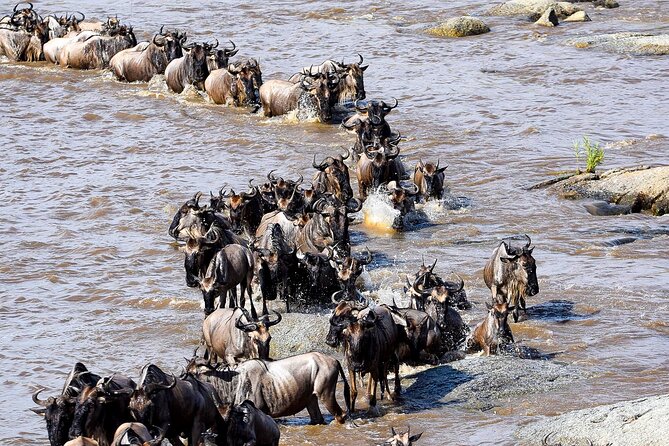
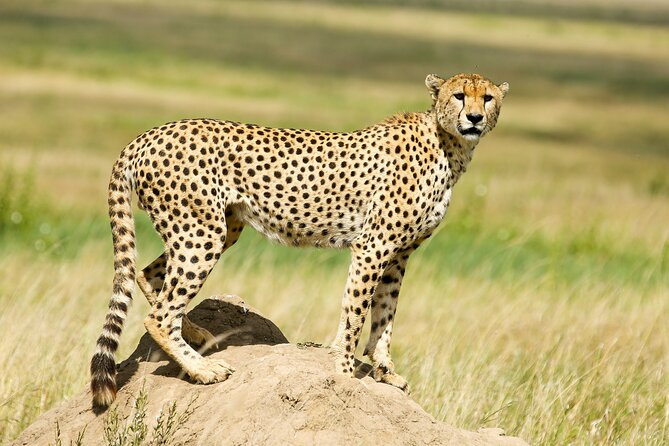
The heart of the trip comes in northern Serengeti. On Day 4, you drive north while watching for giraffe, zebra, lion, cheetah, and other wildlife. After lunch, the focus turns to the Mara River and a possible crossing.
A river crossing is dramatic, but it is also unpredictable. Wildebeest may gather for hours, move away, or cross in a sudden rush. Animals face steep banks, strong currents, crocodiles, and the confusion of a huge herd. The sight can be powerful, but you need patience and realistic expectations.
Day 5 gives you another full day in the northern area, with the river still the main goal. This is one of the strongest parts of the schedule. Two dedicated days reduce the chance that a delayed crossing, changing herd position, or quiet afternoon ruins the entire migration plan.
The northern Serengeti also offers more than wildebeest. You might see zebra, gazelle, topi, giraffe, lion, cheetah, and other plains animals. The supplied plan describes more than 1.2 million wildebeest and zebra moving through the wider Mara ecosystem, along with gazelle and topi. That figure describes the wider annual movement, not a guarantee that every animal will be gathered at your viewing point.
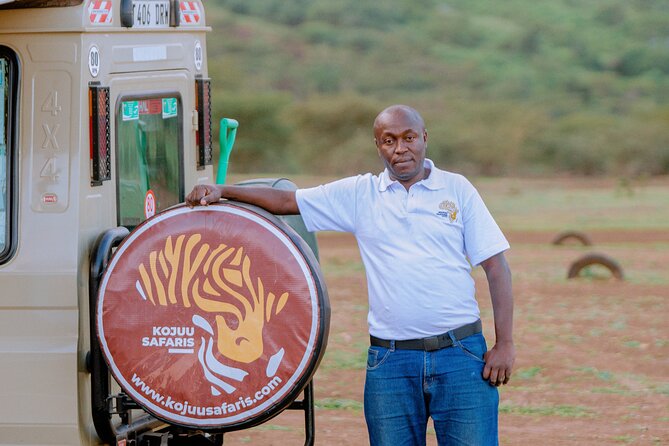
Your guide’s judgment matters here. Harun is specifically praised for safety, animal behavior, Tanzanian culture, and friendly service. Those qualities are useful at a river crossing, where a good guide needs to balance excitement with distance and sensible positioning.
Day 6: Sunrise, one last northern look, and central Serengeti
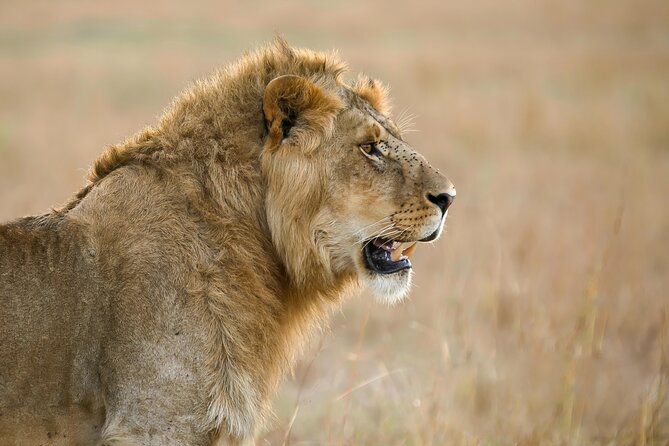
Day 6 begins with an early drive for sunrise. You return to the lodge for breakfast, then spend more time around the Mara River before heading south toward central Serengeti. The planned day lasts about seven hours.
The early start is worth noting. Sunrise game drives can offer a quieter, cooler period for viewing, but they are not for people who want a late breakfast every morning. The schedule then gives you one final opportunity to see the northern region before the long return.
Your guide watches for giraffe, impala, hartebeest, waterbuck, and birdlife along the route. This makes the day more than a simple relocation. Even so, the late arrival in central Serengeti can leave you ready for dinner and an early night.
Day 7: Final Serengeti wildlife, then Karatu
After breakfast, you take a final game drive in Serengeti before driving to Karatu. The safari portion is planned for about seven hours, and the overnight stop prepares you for the next day at Ngorongoro Crater.
This day provides a useful change of pace after several migration-focused days. You may still see plains animals and predators, but the schedule is now moving you toward the crater rather than keeping you in the north.
Karatu is used as the base before Ngorongoro. You have time to relax, eat dinner, and prepare for the early start. Again, the accommodation name is not supplied, so check what room category and facilities are included if those details matter to you.
Day 8: Ngorongoro Crater, a wildlife bowl
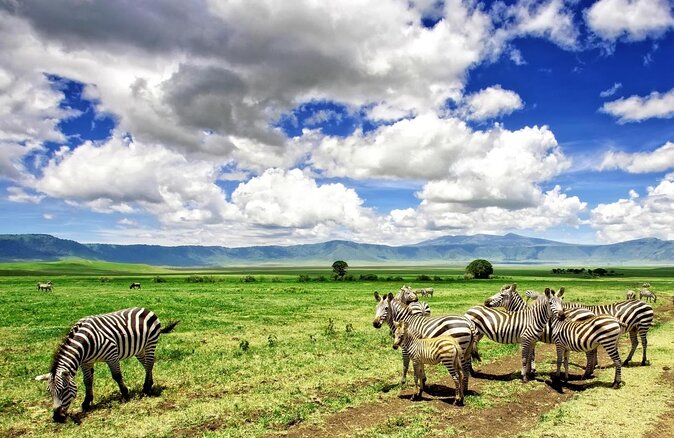
After an early breakfast, you drive to Ngorongoro Crater for a full-day game drive, planned at about six hours. The crater is a volcanic caldera with grassland, forest, swamp, and permanent water. That combination supports a resident population of more than 25,000 large mammals.
You might see lion, leopard, black rhino, hyena, zebra, waterbuck, baboon, and other wildlife. The crater is especially appealing after the open plains of Serengeti because its enclosed setting concentrates animals in a smaller area. The views from the crater rim and the scale of the floor are memorable even before you spot anything.
The crater can be a strong final wildlife day because it offers a different setting and a good chance of seeing several species in one outing. The drawback is that the visit is busy and tightly scheduled compared with the wide-open Serengeti. Six hours inside the crater is substantial, but it is not an unlimited day.
The conservation fee for Ngorongoro is included. Park, national park, and conservancy fees are also included across the trip, which helps protect you from a large collection of extra charges at the end.
Day 9: A gentle finish in the Arusha area
The final morning is deliberately easy. After breakfast, you can relax by the pool, have lunch in the afternoon, and transfer to Kilimanjaro International Airport for your onward flight.
This works best if your departure is later in the day. The information supplied does not give a fixed transfer time, so you should confirm the airport schedule with Kojuu Safaris. The airport transfer is included, as are the arrival and departure arrangements described for the trip.
What the private vehicle and inclusions mean
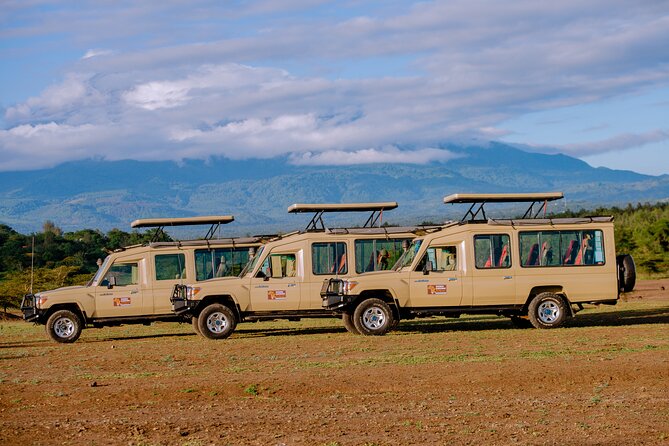
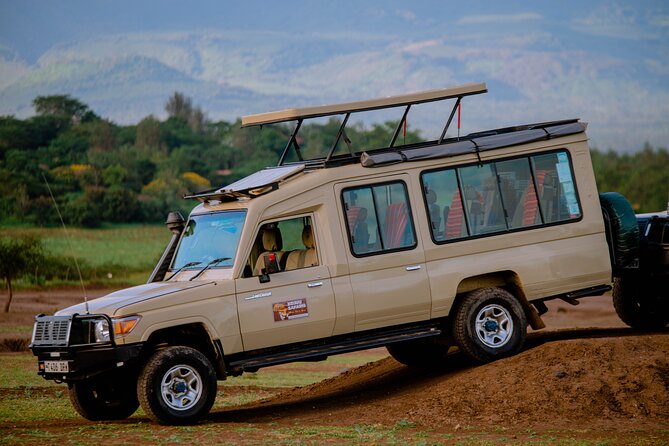
The custom-built, extended, open-roof 4WD Land Cruiser is central to the experience. The vehicle includes a fridge, inverter, bottled water, soft drinks, fruit, snacks, regional wine, and unlimited mileage. Those details matter during long park days and remote-road transfers.
A safari chef is included on the Serengeti route, and the package covers nine breakfasts, eight lunches, and eight dinners. It also includes accommodation as specified, airport transfers, safari fees, a briefing with a travel specialist, a Maasai village visit, and Flying Doctor Insurance cover.
You receive safari swag in the form of bush hats and specially designed Kojuu Safaris duffel bags. These are pleasant extras, though they should not determine your choice of operator.
International flights, visas, departure taxes, and meals or excursions not described are not included. Travel and health insurance are also listed separately, so Flying Doctor Insurance cover should not be treated as a replacement for a full travel policy.
Is $4,110.96 a fair price?
At $4,110.96 per person, this is a serious purchase, but the price covers nine days of private guiding, a custom 4WD, accommodation, meals, park and conservancy fees, airport transfers, vehicle supplies, and the difficult logistics of reaching northern Serengeti.
The value is strongest for two people or a small private group that wants a migration-centered route without sharing the vehicle. The two northern Serengeti days are important because river crossings cannot be ordered like a restaurant meal. You are paying partly for time and flexibility.
The price is less attractive if your main goal is simply to visit Serengeti once. The route includes long drives, several park fees, and repeated movement between northern, central, and southern areas. Before paying, ask for the named accommodations, room details, group capacity, and the exact seasonal dates available for the Mara River portion.
Who should book this safari?
I would point this trip toward couples, families, and small private groups who want a major wildlife journey with personal guiding. It also suits first-time safari visitors who appreciate airport help, organized meals, and a vehicle stocked for long days.
The plan is a good fit if the Great Migration is your priority and you accept that nature sets the timetable. It is less suited to anyone with limited mobility, since the itinerary includes long road days and repeated early starts, although the supplied information says most people can participate.
The strongest praise attached to Kojuu centers on organization, personal care, safety, and guiding. Judith is praised for listening to trip needs and shaping itineraries, while Harun is singled out for his friendly manner and understanding of wildlife and culture. Those human details can make a long safari feel much easier.
Should you book Kojuu Safaris?
Book it if you want a private, migration-first safari with two full chances at the Mara River, a well-equipped vehicle, and a useful mix of Tarangire and Ngorongoro. The five-star rating from four supplied reviews is encouraging, especially because the praise focuses on organization, kindness, safety, and guides rather than only on dramatic animal sightings.
Do not book it expecting a guaranteed river crossing or a relaxed resort schedule. Confirm the season, accommodation names, vehicle capacity, and exact airport timing first. If those details suit you, the combination of local support, long northern Serengeti access, and included safari costs makes this a well-rounded choice for a first or once-in-a-lifetime Tanzania safari.
FAQ
Where does the safari start?
The safari starts with pickup at Kilimanjaro International Airport in Tanzania. A Kojuu Safaris driver-guide meets you at the airport and transfers you to Arusha.
How long is the experience?
The trip lasts approximately nine days, from airport pickup on Day 1 to the airport transfer on Day 9.
Is this a private tour?
Yes. Only your group participates in the private tour or activity.
Are park and conservancy fees included?
Yes. Airport transfers, game park fees, national park fees, and conservancy fees are included. The Ngorongoro Crater admission fee is also included.
Are meals included?
Yes. The package includes nine breakfasts, eight lunches, and eight dinners. Meals and excursions not described in the tour plan are not included.
Is a Maasai village visit included?
Yes. A Maasai village visit is included in the safari package.
What is the cancellation policy?
You can cancel at least 24 hours before the local start time for a full refund. Cancellations or changes made less than 24 hours before the start time are not accepted for a refund. If poor weather causes cancellation, you are offered another date or a full refund.
Just added around Moshi
- Moshi: Lake Chala Tour: Hiking &/or Kayaking★ 4.5 · 3 reviews
- 3 Days Tanga Exclusive Beach Holiday★ 5.0 · 3 reviews
- Serengeti Wildebeest Migration.★ 5.0 · 3 reviews
- Chemka Hotpsrings E-Bike Day Trip★ 5.0 · 3 reviews
- Explore 1 day Ngorongoro Crater Budget Group Safari from Arusha★ 5.0 · 3 reviews
- Explore the 360° of Kilimanjaro★ 5.0 · 3 reviews
- Affordable Short Tanzania Safari (2 Days Camping Safari)★ 5.0 · 3 reviews
- Rongai Route 7 Days★ 5.0 · 3 reviews
Wildebeest Migration Safaris, compared.
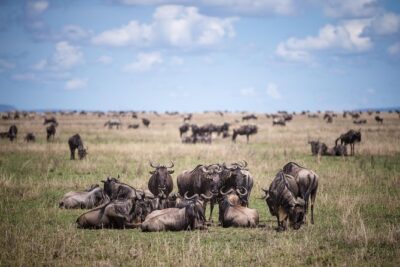
8 Days Great Wildebeest Calving Migration Safari from Arusha
Read our review →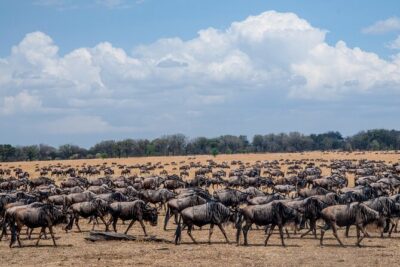
10-Day Serengeti Wildebeest Migration Safari from Arusha
Read our review →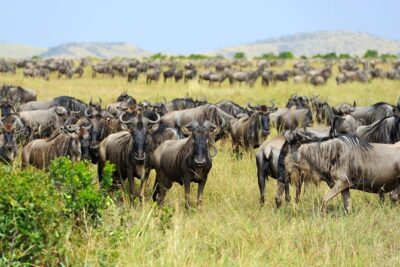
8 Day Spectacular Migration Serengeti mid -Range Tanzania Safari
Read our review →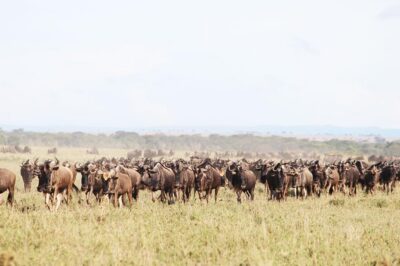
9-Day Serengeti Migration Footsteps Tanzania Safari
Read our review →
Private 6-Day Great Migration Ndutu Serengeti Safari Tour
Read our review →
4 Day Great Migration Safari Serengeti & Ngorongoro Crater
Read our review →Browse the lists this tour appears in