
Reviewed · KILIMANJARO TREKS
Machame Route 7-Day Private Kilimanjaro Trek
Africa’s highest summit demands patience.
This 7-day Machame Route trek gives you a strong balance of scenery, altitude adjustment, and summit support. I like the steady change from rainforest to moorland, alpine desert, and ice near Uhuru Peak. I also like that the price includes park fees, meals, camping gear, airport transfers, guides, porters, and two hotel nights. The main drawback is the summit day: 12 to 15 hours of walking after a midnight start is a serious physical test, not a casual holiday hike.
You pay $2,209 per person for a private experience operated by Bush Lion Trekking and Tours. The plan suits people who want a guided climb with a clear schedule and plenty of support, but you still need good fitness, proper personal gear, travel insurance, and a willingness to sleep in tents for most of the week.
In This Review
- Key points at a glance
- Why the Machame Route is a good seven-day choice
- Day one: rainforest from Machame Gate to Machame Camp
- Day two: open moorland and the Shira Plateau
- Day three: Lava Tower and the important descent to Barranco
- Day four: the Barranco Wall and Karanga Camp
- Day five: the rocky climb to Barafu Camp
- Day six: Uhuru Peak, Barafu, and Mweka in one day
- Day seven: rainforest descent to Mweka Gate
- What the $2,209 price really covers
- Guide support and the human side of the climb
- Who should book this Kilimanjaro trek?
- Should you book it?
- FAQ
- How long is the Machame Route trek?
- How much does the trek cost?
- Is this a private tour?
- What level of fitness do I need?
- Are meals included?
- Is camping equipment provided?
- What happens if bad weather cancels the trek?
Key points at a glance
- A gradual route to altitude: You climb high to Lava Tower, then sleep lower at Barranco Camp, which helps your body adjust.
- Five distinct mountain zones: The route moves from thick rainforest to open moorland, rocky alpine desert, and the icy upper slopes.
- The toughest day is very long: Summit morning begins around midnight, followed by Uhuru Peak, Barafu Camp, and Mweka Camp in one demanding push.
- Private group format: Only your party participates, giving you more control over pace and support than a large scheduled group.
- A well-covered price: Park permits, tents, meals, water, porters, safety equipment, transfers, and hotel nights are included.
- Strong guide support: Guides named in customer feedback include Jackson, Innocent, Kenny, Shafii, Emmanuel, William, Issa, and Martin.
Why the Machame Route is a good seven-day choice
Machame is often called the Whiskey Route, a nickname that hints at its tougher walking compared with easier access routes. You do not need technical climbing skills, but you do need to walk uphill for several days while sleeping at altitude.
The seven-day schedule is useful because it gives your body time to respond to the height. Day three is especially important. You climb to 4,630 meters at Lava Tower, eat lunch there, then descend to Barranco Camp at 3,960 meters. That high point followed by a lower sleeping altitude is a sensible way to prepare for the summit.
I also like the variety packed into a relatively short route. The first day feels enclosed and green. By the second day, trees give way to open moorland and wide views toward Mount Meru and the Shira Plateau. Later, the setting becomes dry, rocky, and severe. You get a real sense of Kilimanjaro changing as you climb.
The seven-day version is not an easy option, though. A longer climb would generally offer more time for adjustment, but this plan has the advantage of being shorter and less expensive than many extended programs. If you already have a solid fitness base and take the altitude rules seriously, the schedule is reasonable. If you are new to high-altitude hiking, you should prepare carefully and discuss insurance and medical evacuation coverage before booking.
More Private Tours in Moshi
- Private Kilimanjaro Hike 7 Day Lemosho Route
★ 5.0 · 60 reviews - Private Tour to Materuni waterfalls, coffee tour & Kikuletwa hot- springs
★ 5.0 · 49 reviews - 4 Day Private Tour Throughout Tarangire, Serengeti and Ngorongoro
★ 5.0 · 42 reviews
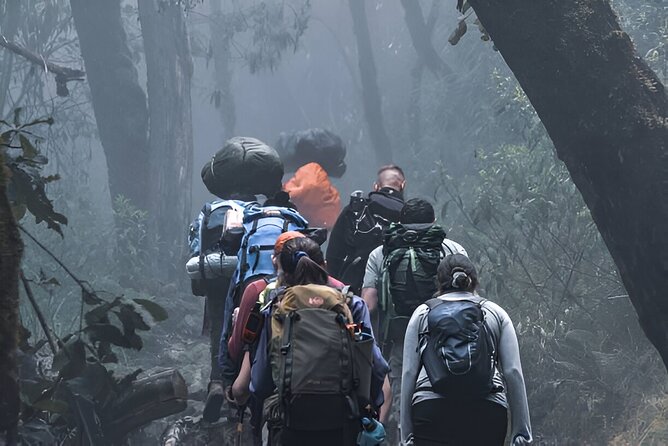
Day one: rainforest from Machame Gate to Machame Camp
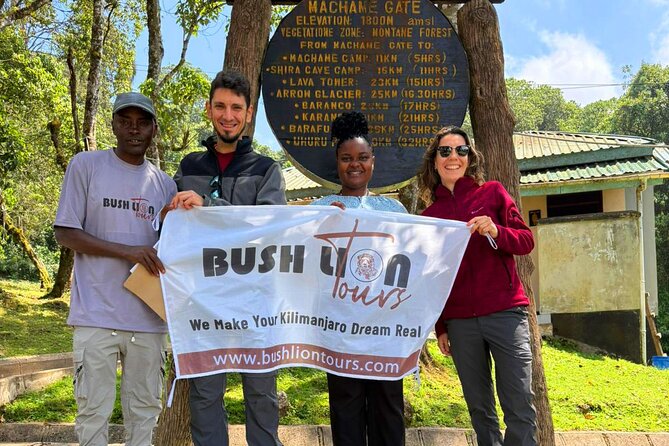
Your first morning begins with transport from Moshi to Machame Gate. After registration and a short briefing, you start walking through Kilimanjaro National Park.
The trail covers about 11 kilometers and takes roughly five to seven hours. Machame Camp sits at 3,010 meters, so you gain a noticeable amount of height on the first day.
This is a beautiful opening. The forest is thick, green, and cool compared with Moshi. You may see wildlife along the route, although animal sightings are not guaranteed. The best approach is to enjoy the forest itself rather than treat this day as a search for animals.
The first day is also where your boots, socks, backpack, and walking pace begin to show their value. Keep your daypack light, drink the provided water regularly, and avoid racing ahead. Your goal is not to prove anything on day one. Your goal is to arrive at camp with energy left.
You sleep in a tent at Machame Camp. Camping equipment, sleeping bags, mats, and a portable toilet are included, which reduces the amount of specialist gear you need to arrange yourself. You should still bring personal clothing, hiking boots, and any comfort items you rely on at night.
Day two: open moorland and the Shira Plateau
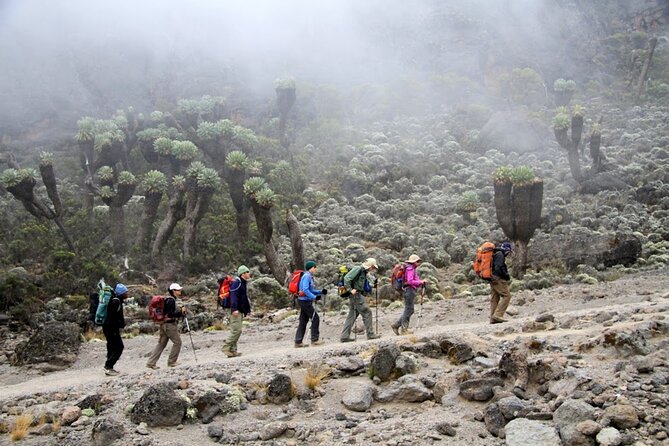
Day two is shorter by distance, but the trail becomes steeper. You walk about 5 kilometers over four to six hours, leaving the rainforest behind and entering the moorland zone.
The destination is Shira Camp at 3,840 meters. The change in scenery is the main reward. Instead of dense trees, you see open ground and long views toward Mount Meru and the Shira Plateau.
This is a good day to settle into the slow rhythm needed for Kilimanjaro. The guide team can help you keep a measured pace, and you should pay attention to how your body responds to the altitude. Headache, unusual tiredness, nausea, or dizziness should not be brushed aside.
The short distance can be misleading. You are walking higher, and the thinner air may make ordinary uphill steps feel surprisingly hard. I would treat this as a calm day, not a chance to make up time.
Day three: Lava Tower and the important descent to Barranco
Day three is one of the most useful parts of the plan. You climb to Lava Tower at 4,630 meters, stopping there for lunch and rest before descending to Barranco Camp at 3,960 meters.
The day covers about 10 kilometers and takes six to eight hours. You gain height, spend time at a higher point, and then sleep lower. That pattern gives your body a chance to begin adjusting while you continue moving toward the summit.
The terrain becomes rougher and more exposed. You are now far from the sheltered forest, and weather can feel more serious. The reward is a stronger sense of being on a high mountain, with broad views and a stark change in color and plant life.
Barranco Camp is a memorable place because the Barranco Wall rises nearby. You can look at the next morning’s challenge before dinner, which is either encouraging or mildly alarming, depending on your mood.
Take this day seriously. It is longer than day two, and the altitude can affect your appetite and sleep. Eat what you can, drink steadily, and tell your guide if you feel unwell. The included meals are an important part of the value here, since you do not need to organize food while coping with the climb.
More Kilimanjaro routes and climbs:
- Kilimanjaro climb by Lemosho Route (7-day)
★ 5.0 · 651 reviews - Kilimanjaro climb, Machame Route (7-day)
★ 5.0 · 262 reviews - Kilimanjaro Climbing Lemosho Route 8 Days.
★ 5.0 · 186 reviews - Climbing Kilimanjaro – Machame Route
★ 5.0 · 170 reviews
Day four: the Barranco Wall and Karanga Camp
The Barranco Wall is steep, but the description of this section is reassuring: no special climbing skills are needed. You walk and scramble upward with the support of the guide team, then continue through a dry, open area to Karanga Camp.
The day covers about 5 kilometers and takes four to five hours. Karanga Camp sits at 4,035 meters.
This is a shorter stage, which gives you some recovery time after the previous day. Still, the wall can feel demanding if you dislike steep ground or have a fear of heights. It is worth asking your guide for help with foot placement and taking the section slowly.
At the top, the views are one of the day’s highlights. The route feels more exposed and more alpine, with fewer signs of the lower mountain. Karanga is not a place to waste energy. Rest, eat, organize your summit clothing, and make sure your daypack is ready for the next stage.
Day five: the rocky climb to Barafu Camp
The route to Barafu Camp is only about 4 kilometers, but it is steep and takes four to five hours. You walk through alpine desert, with rocky ground and little shelter.
Barafu Camp stands at 4,640 meters. It is the launch point for your summit attempt, so the mood changes here. After an early dinner, you rest and prepare for a midnight start.
This is a short walking day but not necessarily an easy one. At this height, even a modest climb can drain you. You should have warm layers, gloves, a hat, a headlamp, and water ready before you lie down. The product includes camping equipment and safety supplies, but personal summit clothing remains your responsibility.
Sleep may be broken or brief. That is normal for a midnight departure, but it makes the previous days of pacing even more important. You want to reach Barafu with enough strength to eat and rest rather than arriving completely spent.
Day six: Uhuru Peak, Barafu, and Mweka in one day
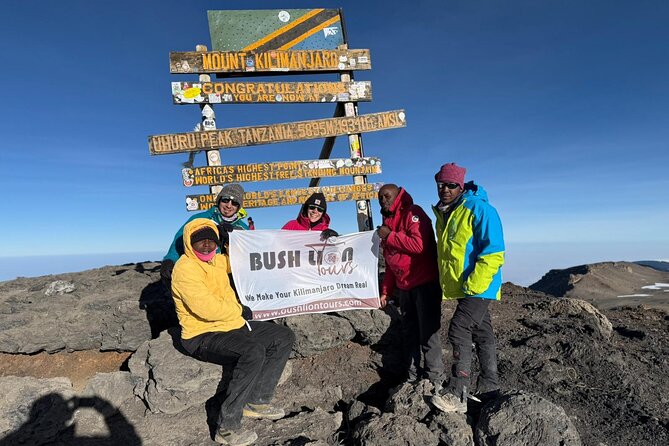
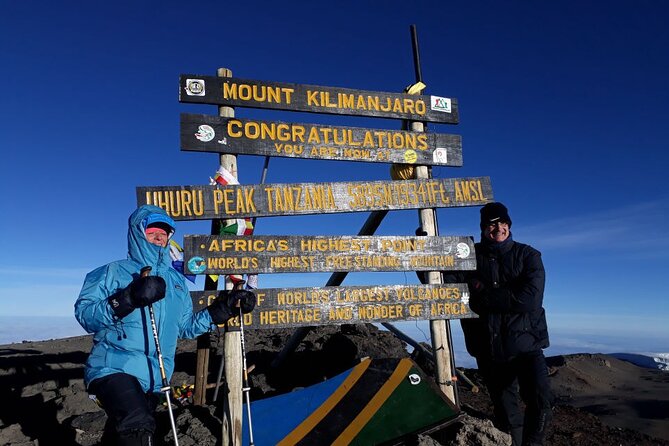
Summit day begins around midnight. You climb through darkness for roughly seven to eight hours before reaching Uhuru Peak at 5,895 meters, the highest point in Africa.
This is the hardest section of the trek. The slope is steep, and the ground is loose. Progress can be slow, especially as the altitude increases. The best tactic is to follow your guide’s pace and concentrate on one step at a time.
At the summit, you have time to celebrate and take in the achievement. Conditions can change quickly at this height, so your stay at Uhuru Peak should be guided by your physical condition and the instructions of the team.
The work is not finished after the summit. You descend to Barafu Camp for a short rest, then continue to Mweka Camp at 3,110 meters. The full day covers about 17 kilometers and takes 12 to 15 hours.
This schedule is the biggest consideration when deciding if the tour suits you. You need good physical fitness and strong mental patience. It is a very long day with little room for a slow recovery between the summit and Mweka.
The included oxygen tanks, first aid kits, and experienced guides provide useful safety support, but they do not remove the risks of altitude or exhaustion. Travel insurance with medical evacuation and trip cancellation cover is not included, so arrange it yourself before departure.
Day seven: rainforest descent to Mweka Gate
The final walk leads through rainforest to Mweka Gate. You cover about 10 kilometers in three to four hours.
After the harsh upper slopes, the return to green forest feels like a reset. The air is warmer, the trail is enclosed again, and you may see wildlife along the way. At Mweka Gate, you receive your Kilimanjaro summit certificate before transport returns you to Moshi.
The final hotel night is included, giving you a proper place to rest after the descent. That matters. Your legs may be tired, and the chance to shower, sleep in a bed, and celebrate without packing a tent is a welcome finish.
What the $2,209 price really covers
At $2,209 per person, this is not a budget walk in the park, but the price includes many costly parts of a Kilimanjaro climb.
You receive airport transfers to and from Kilimanjaro International Airport, a pre-climb briefing, transport to and from the trailhead, national park fees, permits, guides, porters, meals, drinking water, tents, sleeping bags, mats, a portable toilet, safety equipment, and a summit certificate. Two hotel nights are also included, one before and one after the trek.
That package makes the price easier to understand. Park access and permits alone are a major part of a Kilimanjaro budget, while food, staff, equipment, transport, and hotel rooms add up quickly.
The weak point is the list of extra costs. Airfare, personal gear, travel insurance, staff tips, and extra hotel meals are not included. The information also excludes lunch and dinner at the hotel, so you should budget for those meals separately.
The private format may add value if you want your own group rather than a standard large departure. It can allow more direct communication with your guides and make the experience feel more personal. At the same time, the exact staff-to-climber ratio is not stated, so ask for that detail before you pay.
Guide support and the human side of the climb
The strongest praise connected with this trek centers on organization, communication, food, and care from the crew. Jackson is repeatedly associated with clear planning, quick replies, route explanations, and straightforward pricing.
Guide names connected with successful climbs include Innocent, Kenny, Shafii, Emmanuel, William, Issa, and Martin. That gives you a useful list of names to ask about when confirming your team, though the exact guides for your departure are not guaranteed.
The food also receives specific praise. Since breakfast, lunch, and dinner are included throughout the climb, this is more than a minor convenience. You need regular meals when walking for several hours at altitude, and not having to carry a full food supply keeps your pack lighter.
The support appears to work for different types of groups. It has served solo climbers, couples, families, and a 13-year-old accompanied by a parent. That does not mean the climb is easy for children or suitable for everyone under 18. It does show that the operation has experience with different group needs.
One important practical point is tipping. Tips for guides, porters, and other staff are not included. Ask for the company’s current tipping guidance before you arrive, and include it in your total budget.
Who should book this Kilimanjaro trek?
I would consider this trip if you want:
- A private seven-day climb with airport and hotel transfers included
- A route with varied scenery and a recognized altitude-adjustment day
- A guided experience rather than an independent mountain plan
- Camping equipment supplied as part of the package
- A clear price that includes permits, meals, staff, and park access
- A challenging physical goal with a strong sense of achievement
I would hesitate if you dislike long walking days, steep ground, cold conditions, or basic tent accommodation. The summit day is especially demanding, and seven days leaves less spare time than a longer program.
You should also confirm the exact departure date, meeting arrangements, guide team, group size, staff ratio, and equipment list before booking. Confirmation is provided at booking, and the experience requires moderate physical fitness. Poor weather can lead to a different date or a full refund, while standard cancellation allows a full refund if you cancel at least 24 hours before the start time.
Should you book it?
Book this trek if you want a well-supported route with excellent scenery and a price that covers the expensive essentials. The best reasons to choose it are the private format, the Lava Tower and Barranco altitude pattern, and the strong emphasis on helpful guides and careful planning.
Do not book it simply because the summit sounds exciting. Prepare for a 12 to 15-hour summit day, buy suitable insurance, bring proper personal gear, and reserve time for rest before and after the climb.
For a fit and well-prepared hiker, this seven-day Machame plan offers a serious but well-structured attempt at Uhuru Peak. It is demanding, but the route gives you changing scenery, practical support, and a clear path to the roof of Africa.
FAQ
How long is the Machame Route trek?
The experience lasts approximately seven days, including the approach to the mountain, summit attempt, descent, and return to Moshi.
How much does the trek cost?
The listed price is $2,209 per person.
Is this a private tour?
Yes. Only your group participates in the private tour or activity.
What level of fitness do I need?
You should have a moderate level of physical fitness. The summit day involves 12 to 15 hours of walking and is the most demanding part of the trek.
Are meals included?
Yes. Breakfast, lunch, and dinner are included during the climb. Lunch and dinner at the hotel are not included.
Is camping equipment provided?
Yes. Tents, sleeping bags, sleeping mats, a portable toilet, and other camping equipment are included.
What happens if bad weather cancels the trek?
If poor weather causes cancellation, you will be offered a different date or a full refund. Free cancellation is also available when you cancel at least 24 hours before the experience starts.
More 7-Day Experiences
- Climbing Kilimanjaro through 7 days Machame Route
★ 5.0 · 151 reviews - 7 Days Kilimanjaro via Machame route affordable price
★ 5.0 · 110 reviews - 7-Day Magical Tanzania Safari -Premium High End Package
★ 5.0 · 53 reviews - 7 Days Machame route – Kilimanjaro
★ 5.0 · 45 reviews
More Hiking & Trekking
- Best Kilimanjaro hiking day trip tour with Kilinge Adventures
★ 4.5 · 54 reviews - #1. Best Kilimanjaro Day hike Tour-Machame Route-ISMANI
★ 4.2 · 47 reviews - Best Kilimanjaro Adventure 7 days Machame route Trekking
★ 5.0 · 42 reviews - Kilimanjaro 7 Day Private Trekking Experience
★ 5.0 · 40 reviews
Just added around Moshi
- Moshi: Lake Chala Tour: Hiking &/or Kayaking★ 4.5 · 3 reviews
- 3 Days Tanga Exclusive Beach Holiday★ 5.0 · 3 reviews
- Serengeti Wildebeest Migration.★ 5.0 · 3 reviews
- Chemka Hotpsrings E-Bike Day Trip★ 5.0 · 3 reviews
- Explore 1 day Ngorongoro Crater Budget Group Safari from Arusha★ 5.0 · 3 reviews
- Explore the 360° of Kilimanjaro★ 5.0 · 3 reviews
- Affordable Short Tanzania Safari (2 Days Camping Safari)★ 5.0 · 3 reviews
- Rongai Route 7 Days★ 5.0 · 3 reviews
Kilimanjaro Treks, compared.



8-Day Small-group Lemosho Kilimanjaro Summit Trekking
Read our review →


Climbing Kilimanjaro through 7 days Machame Route
Read our review →

Browse the lists this tour appears in