
Reviewed · KILIMANJARO TREKS
Mount Kilimanjaro 7 Days – Machame Route
Kilimanjaro saves its hardest test for sunrise. This seven-day Machame Route climb gives you varied scenery, strong acclimatization, and a real mountain challenge rather than a gentle walk to the summit. I like the South Circuit approach, which lets you see the summit from several angles, and I like that the price includes guides, porters, meals, camping equipment, airport transfers, and hotel nights in Moshi. The drawback is clear: this is a difficult route with long, steep days and heavy crowds on parts of the trail.
You should also know that summit day is a serious physical and mental test. The climb from Barafu Camp begins around midnight and can last about 13 hours, including the long descent. Still, the experienced crew, emergency oxygen, hot washing water, and six nights of prepared meals add useful support. Past climbs have praised guides Alan and Shefii, chef J4, and owner Wenceslaus Tarimo for careful service and steady communication.
In This Review
- Key points before you book
- Why the seven-day Machame Route earns its reputation
- Day one: Machame Gate to the rain forest
- Day two: Leaving the forest for Shira Camp
- Day three: Lava Tower and the important descent to Barranco
- Day four: Climbing the Barranco Wall
- Day five: Barafu Camp and the final preparation
- Day six: A midnight start to Uhuru Peak
- Day seven: Mweka descent and the return to Moshi
- What the $2,530 price includes
- Food, crew support, and the human side of the climb
- Who should choose Machame?
- Practical details to settle before departure
- Should you book this Kilimanjaro climb?
- FAQ
- How long is the Machame Route climb?
- What is the highest point reached?
- How difficult is the Machame Route?
- What time does the summit climb begin?
- How long is summit day?
- Are meals included?
- Is camping equipment provided?
- Are airport transfers and hotels included?
- Is a portable toilet included?
Key points before you book
- Seven days is the sensible choice: The route can be completed in six days, but the extra day gives your body more time to adjust to altitude.
- The route reaches 5,895 meters: Uhuru Peak is the highest point on Kilimanjaro, and the final ascent is the hardest part of the trip.
- Machame is scenic but demanding: Rain forest, the Shira Plateau, Lava Tower, Barranco Wall, glaciers, and high alpine camps provide constant change.
- The price covers the working crew: Guides, assistant guides, porters, a cook, camping gear, meals, transfers, and two hotel nights are included.
- Pack for mud and cold: Gaiters and trekking poles are useful in the rain forest and on the descent, while warm clothing is essential near the summit.
- This is a private climb: Only your own group participates, which can make pacing and communication easier.
Why the seven-day Machame Route earns its reputation
Machame is often called the Whiskey Route, a nickname that hints at its harder character compared with the Marangu Route. You sleep in tents rather than mountain huts, walk longer days, and deal with steeper paths. That makes it a better match for you if you already hike, backpack, or enjoy a physical challenge.
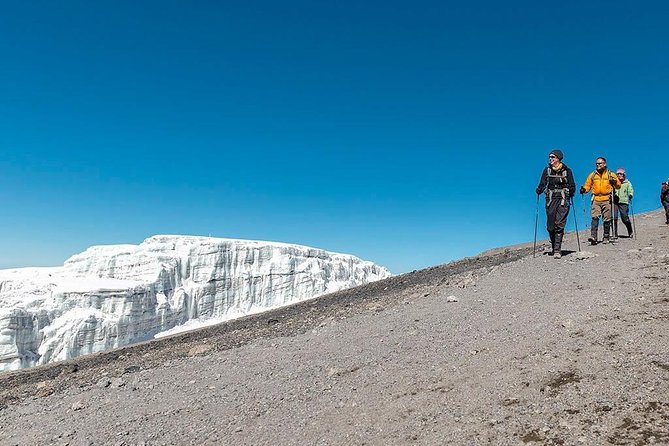
The route begins on Kilimanjaro’s southern side, then curves east beneath the southern ice fields before reaching the summit. The changing scenery is one of its best features. You start among wet forest, cross high open country, pass volcanic rock and dramatic ridges, and finish among snow, scree, and glaciers.
I like the seven-day format because it gives the route a more useful rhythm. Day three takes you high to Lava Tower before bringing you down to Barranco Camp. That gain and loss of altitude is tiring, but it helps your body prepare for the summit. The shorter stages on days four and five also allow you to conserve energy before the midnight start.
The tradeoff is popularity. Machame is now the busiest route on the mountain, so the trail and camps can feel crowded. Its scenery remains excellent, but solitude is not the main reason to choose this climb.
More Kilimanjaro routes and climbs:
- 7 Days Kilimanjaro via Machame route affordable price
★ 5.0 · 110 reviews - Kilimanjaro Airport taxi to/from Moshi town/Arusha town
★ 5.0 · 60 reviews - 6 Days Climbing Mount Kilimanjaro Machame Route
★ 5.0 · 40 reviews
Day one: Machame Gate to the rain forest
Your drive from Moshi to the Mount Kilimanjaro National Park Gate takes about 45 minutes. The road passes through Machame village on the mountain’s lower slopes before you begin the trek at roughly 1,830 meters.
The first day covers 11 kilometers and takes about five to six hours. The path winds upward through rain forest, following a ridge toward Machame Camp at about 3,050 meters. This is a gradual introduction in terms of altitude, but the ground can be muddy and slippery at lower elevations.
Bring gaiters and trekking poles from the start. They are not glamorous pieces of kit, but they can keep wet dirt out of your boots and give you better balance. You will also want rain gear close at hand.
This forest section feels like a proper beginning. You leave roads and vehicles behind, and the steady climb begins under thick vegetation. The main challenge is not distance alone. It is keeping an even pace while the trail rises continuously.
Day two: Leaving the forest for Shira Camp
After breakfast, the route leaves the forest glades and enters more open terrain. You climb from 3,050 to about 3,850 meters, covering only 5 kilometers in four to five hours.
The trail crosses a valley along a steep, rocky ridge, then turns west toward a river gorge. The short distance does not mean an easy day. The rocky surface and steady ascent require careful footwork, and altitude begins to affect how quickly you move.
Shira Camp offers a major change from the first night. You are no longer surrounded by forest. The higher setting feels more exposed, and the views begin to open. You should resist the temptation to hurry simply because the walking time is shorter. A slow, steady pace is more useful than proving how fast you can climb.
The climb includes fresh drinking water and hot water for washing each day. That will not replace a shower, but it is a welcome comfort after several hours on the trail.
Day three: Lava Tower and the important descent to Barranco
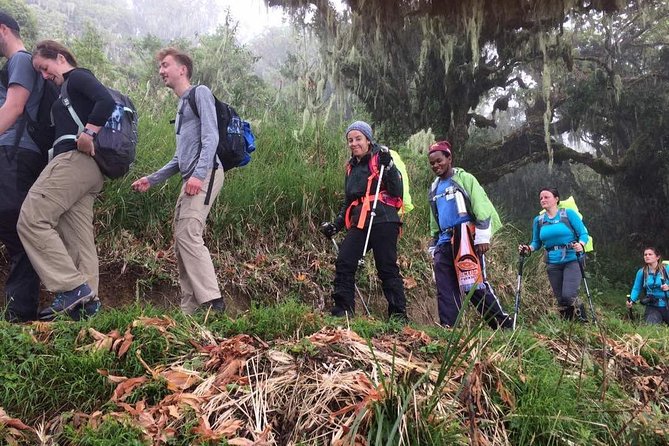
Day three is one of the most useful stages on the route. From Shira Camp at about 3,850 meters, you walk east for 10 kilometers, usually taking five to six hours. The path climbs toward Lava Tower, also called Shark’s Tooth, at approximately 4,650 meters.
You then descend to Barranco Camp, finishing the day around 4,000 meters. On paper, you gain only a little net elevation. In practice, your body has spent time at a much higher point before sleeping lower. That pattern helps with acclimatization and is one reason the seven-day version is preferable.
The route passes a junction toward Kibo and another toward the Arrow Glacier. You do not need to take those routes to appreciate the area. Lava Tower gives this day a stark volcanic character, with rocky ground and a stronger sense that the summit is still a serious distance away.
The descent to Barranco can feel like a reward, but do not treat it as a rest day. You have already climbed high, and the next morning brings the Barranco Wall. Eat well, drink regularly, and use the evening to prepare your clothing and daypack.
A few more trips of this kind worth comparing:
- 7-Day Machame Route Kilimajaro
★ 5.0 · 28 reviews - 7 Days Highlight of Tanzania Mid-Range Standard
★ 5.0 · 22 reviews - 7 Days Wildebeest Migration – Ndutu Calving Season
★ 5.0 · 18 reviews - 7 Day Grand Tanzania Safari
★ 5.0 · 13 reviews
Day four: Climbing the Barranco Wall
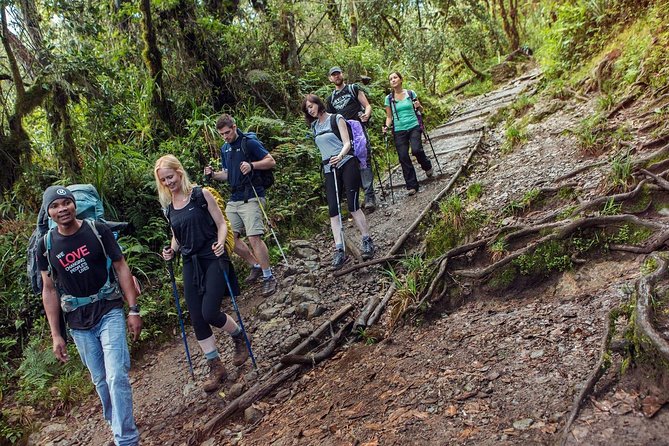
The fourth day is shorter, covering about 5 kilometers in three to four hours. You leave Barranco Camp at roughly 4,000 meters and climb to the Karanga Valley at about 4,050 meters.
The main feature is the Barranco Wall, a steep rocky ridge. It is not a long day by distance, but the terrain demands attention. You may need to use your hands at times, and your guide will help you choose a practical line through the rock.
This is where a calm pace matters. The wall can look intimidating from camp, yet the route is part of the normal Machame itinerary. You should not expect a flat hiking path. If steep rock and exposed-feeling sections make you nervous, tell the guide early so you can move at a comfortable pace.
The trail then reaches the junction connecting with the Mweka Trail. The relatively short day is valuable because it gives you time to rest before the next climb. The camp at Karanga is high and basic, but the point is to position you well for Barafu.
Day five: Barafu Camp and the final preparation
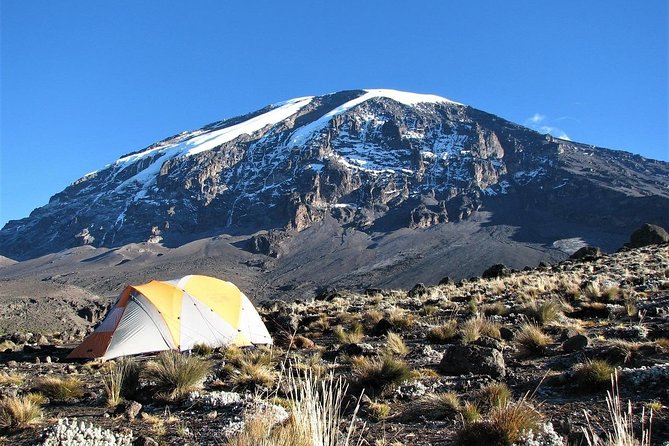
Day five covers just 4 kilometers and takes about three to four hours. You climb from around 4,050 meters to Barafu Camp at 4,700 meters.
The route completes the South Circuit, which gives you views of the summit from several directions. This is an important psychological moment. The peak feels closer, but you are also entering the cold, thin-air zone where small tasks require more effort.
At Barafu, you eat dinner, rest, and prepare for the summit attempt. Your walking time is short, but this is not a day to spend wandering around camp. Keep your gear organized, check your warm layers, and follow the guide’s instructions about the night start.
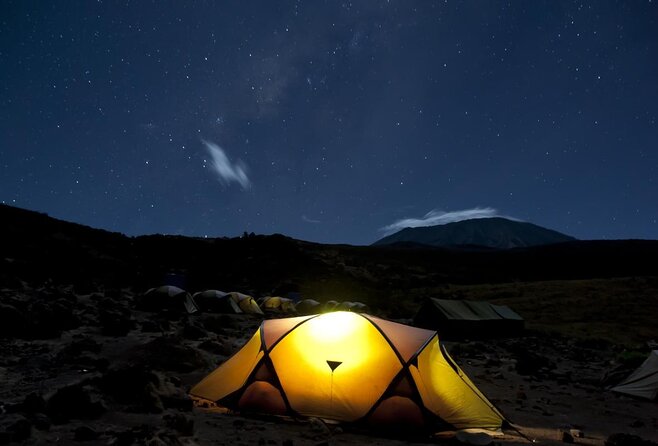
You will likely have a tent, sleeping mattress, camp chair, and table as part of the camping setup. Those items add comfort, though you should still expect simple mountain conditions rather than hotel standards.
Day six: A midnight start to Uhuru Peak
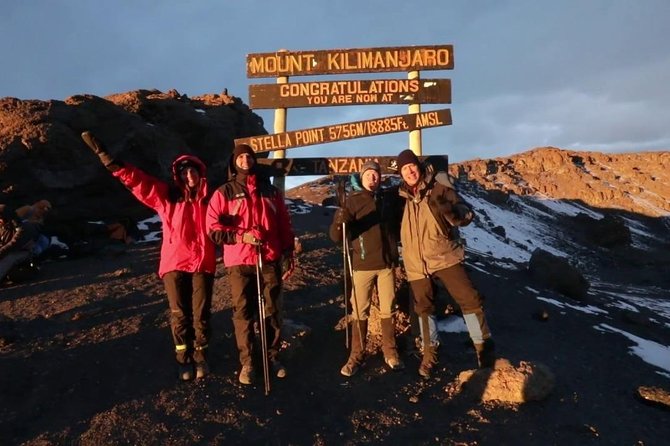
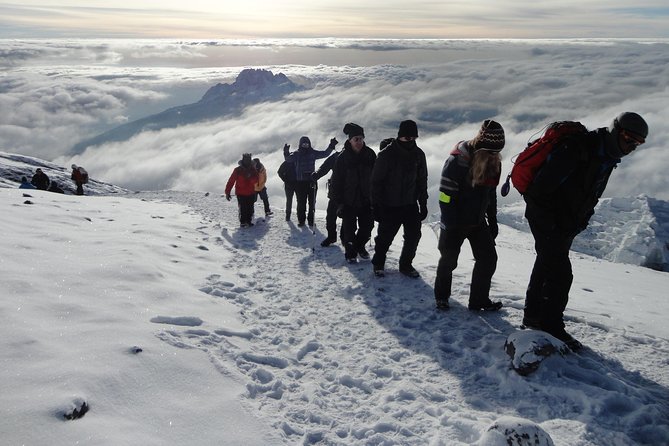
Summit day begins between midnight and 2 a.m. You climb from Barafu at 4,700 meters toward the crater rim, passing between the Rebmann and Ratzel glaciers. The route heads northwest through heavy scree toward Stella Point.
This is the hardest section of the entire climb. The distance to the summit is listed as 5 kilometers up, but the effort is much greater than that number suggests. Darkness, cold, steep ground, and altitude make the pace slow. You need patience more than speed.
At Stella Point, around the crater rim, you can rest briefly and watch sunrise. Faster climbers may see the sunrise from Uhuru Peak, but Stella Point still provides a powerful reward after the night’s work.
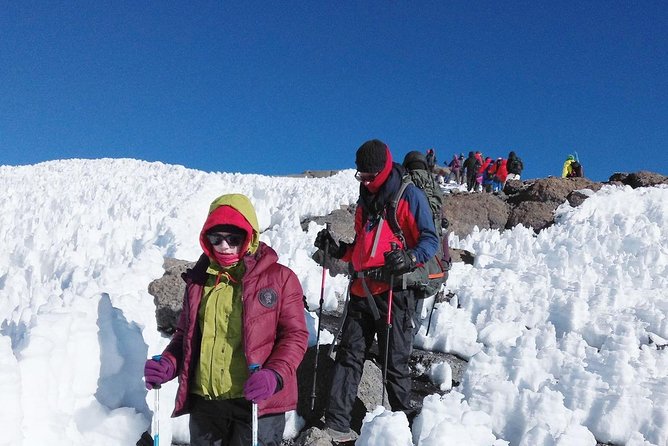
From Stella Point, you may encounter snow during the final hour to Uhuru Peak at 5,895 meters. The summit ticket redemption point is Gilman’s Point, while the highest goal is Uhuru Peak. The route description places both within the summit stage, but the exact outcome depends on your condition, weather, and the guide’s judgment.
After reaching the highest point, you descend to Barafu and continue toward Mweka Camp at about 3,090 meters. The total day takes about 13 hours, with roughly 13 kilometers of descent after the summit section. This long downhill stretch is easy to underestimate. Your knees and feet may be tired, so trekking poles become especially useful.
Emergency oxygen and a basic first aid kit are included, but oxygen is for emergencies only, not as a way to assist a normal summit attempt. That distinction matters. You still need suitable fitness, proper pacing, and a willingness to stop if your condition becomes unsafe.
Day seven: Mweka descent and the return to Moshi
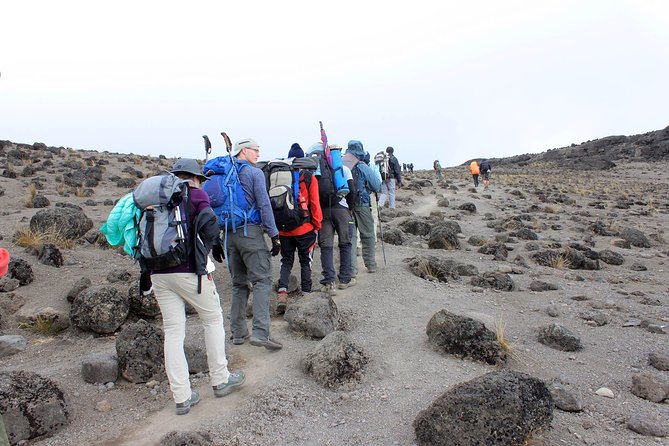
The final day takes you from Mweka Camp at roughly 3,090 meters down to the Mweka Park Gate at about 1,680 meters. The walking distance is around 10 kilometers, usually taking three to four hours.
The lower trail can again become wet and muddy. Gaiters and trekking poles are helpful, while shorts and a T-shirt may be comfortable once you reach warmer elevations. Keep rain gear and a warmer layer accessible because mountain weather can change before you reach the gate.
At the gate, you receive your summit certificate. From there, you continue for about an hour to Mweka Village, where a vehicle takes you back to your Moshi hotel in roughly 30 minutes.
This final transfer is included in the overall arrangement, as are the hotel night before and the hotel night after the climb. Having a bed, dinner, and breakfast on either side of the trek makes the schedule easier to manage, particularly if you arrive tired or need time to organize your onward travel.
What the $2,530 price includes
At $2,530 per person, this climb is not a cheap mountain walk. It is also not simply a fee for a guide. The price includes park-related fees and taxes, airport transfers to and from Moshi, two hotel nights with dinner and breakfast, six breakfasts, six dinners, and seven lunches.
It also covers the mountain crew: a qualified guide, assistant guides, porters, and a cook. Crew salaries are paid according to Kilimanjaro National Park guidelines. That matters because the people carrying equipment, preparing food, and guiding you are central to both safety and comfort.
Camping equipment includes tents, chairs, tables, and sleeping mattresses. You also receive fresh drinking water and hot water for washing each day. Emergency oxygen and a basic first aid kit are included for urgent situations.
For me, the value comes from having the main logistics handled in one private trip. You are paying for a supported seven-day expedition, not only for trail access. The price still does not include flights, visas, medical or travel insurance, personal gear, snacks, personal medicine, or water purification tablets.
A portable toilet is optional but strongly recommended. It costs extra, yet it may be worth considering because camp facilities can be basic. You can also rent some personal hiking equipment from the operator’s equipment store in Tanzania.
Food, crew support, and the human side of the climb
Food can make a major difference during a long mountain trip. Meals are prepared by the camp cook, and past climbs gave especially strong praise to chef J4 for producing good food in difficult weather.
The guide team has also received warm comments for its care and practical support. Alan and Shefii are names associated with particularly well-regarded climbs. Wenceslaus Tarimo, the company owner, has been praised for being available by phone and message while plans were being arranged.
You should confirm the current crew before departure, since mountain staff can change. Still, the operator’s local connection is a positive feature. Booking with a local Tanzanian company can put more of your payment into the people who run the climb on the ground.
The private format means only your group participates. That gives you a better chance to discuss pace, rest stops, and concerns directly with the guide. It does not remove the physical demands, but it can make the daily routine feel more personal.
Who should choose Machame?
I would recommend this route to you if you have moderate physical fitness and some hiking or backpacking experience. You do not need to be an elite athlete, but you should be prepared for several hours of uphill walking, steep rocky sections, cold conditions, and an exceptionally long summit day.
This is a good choice if scenery matters to you. Machame provides more visual variety than a simple up-and-down route, and the South Circuit gives you changing views of Kibo.
You may prefer a different route if you want shorter walking days, indoor sleeping, or a less crowded trail. Machame is popular, and the route’s beauty can be reduced by the number of people using it.
The six-day option is technically possible, but I would choose seven days unless your schedule makes that impossible. The extra time supports acclimatization and gives you a more sensible margin before the summit attempt.
Practical details to settle before departure
Pickup is offered, and the package includes return transfers between Kilimanjaro Airport and Moshi. The climb begins at Machame Gate in Mount Kilimanjaro National Park and ends back at the meeting point after the descent and transfer.
Confirmation is provided at booking. You should arrange your own flight, visa, medical insurance, travel insurance, personal medication, snacks, and personal hiking clothing.
Free cancellation is available if you cancel at least 24 hours before the experience begins. Changes or cancellations made within 24 hours are not accepted for a refund, and the cut-off follows local Tanzanian time.
Should you book this Kilimanjaro climb?
Book it if you want a demanding, scenic Kilimanjaro route with a local crew and most major costs bundled into one price. The strong points are the seven-day acclimatization plan, the variety of the Machame route, included camping support, and the care associated with the guide and kitchen teams.
Think twice if you dislike steep trails, crowded camps, or a midnight start followed by a 13-hour summit day. Machame rewards preparation, patience, and realistic expectations. Pack properly, choose the seven-day schedule, and treat the mountain as a serious expedition rather than a sightseeing outing.
FAQ
How long is the Machame Route climb?
The climb lasts approximately seven days. The route can be completed in six days, but seven days is recommended for a better acclimatization schedule.
What is the highest point reached?
The summit stage reaches Uhuru Peak at 5,895 meters. The route also passes Stella Point on the crater rim.
How difficult is the Machame Route?
The route is considered difficult. It includes longer and steeper walking days than the Marangu Route and is better suited to people with moderate fitness and some hiking or backpacking experience.
What time does the summit climb begin?
The summit attempt begins very early, usually between midnight and 2 a.m. on day six.
How long is summit day?
Summit day takes about 13 hours in total. It includes the ascent from Barafu Camp, the summit section, and the long descent toward Mweka Camp.
Are meals included?
Yes. The package includes six breakfasts, six dinners, and seven lunches.
Is camping equipment provided?
Yes. Tents, camp chairs, tables, and sleeping mattresses are included. Personal hiking and trekking gear is not included, though some items can be rented in Tanzania.
Are airport transfers and hotels included?
Yes. Return transfers between Kilimanjaro Airport and Moshi are included. The package also includes the hotel night before and the hotel night after the climb, with dinner and breakfast.
Is a portable toilet included?
No. A portable toilet is optional, but it is highly recommended.
Just added around Kilimanjaro
- 5 days Serengeti Wildebeest Migration Safari★ 5.0 · 3 reviews
- Tanzania Safari and Kilimanjaro Climb Multi-Day Experience★ 5.0 · 3 reviews
- 9 Days – Best of Tanzania Safari★ 5.0 · 4 reviews
- 7 Days Mountain Kilimanjaro climb Machame Route★ 5.0 · 4 reviews
- 8-Day Tanzania Migration Footsteps – Midrange★ 5.0 · 4 reviews
- 4 Days Lake Manyara National Park, Ngorongoro Crater , Serengeti National Park.★ 4.0 · 4 reviews
- 6 Days Mara River Crossing – The Great Migration★ 5.0 · 5 reviews
- 6- Day Adventure Lodge safari to see Migration★ 4.5 · 5 reviews
Kilimanjaro Treks, compared.



8-Day Small-group Lemosho Kilimanjaro Summit Trekking
Read our review →


Climbing Kilimanjaro through 7 days Machame Route
Read our review →

Browse the lists this tour appears in