
Reviewed · KILIMANJARO TREKS
Mountain Kilimanjaro Climbing 8 Days Lemosho Route
Kilimanjaro begins with a long walk. This 8-day Lemosho climb earns its appeal through a gradual route, striking Shira Plateau views, and a summit plan that gives you time to adjust to altitude. I like the included sleeping gear and meals tailored to dietary needs, two details that make a demanding trip easier to manage. The main drawback is the physical strain: you need moderate fitness, and the summit schedule includes a difficult night and early-morning push.
The route is limited to 15 people, which should help keep the group manageable on narrow mountain paths. Past climbers have praised Exceed Expectations Tours for calm organization, strong staff support, and guides such as Timothy, who served as a main guide for one group. Still, mountain weather can cancel the trip, and the crater overnight adds a serious extra challenge rather than a simple sightseeing stop.
In This Review
- Five things to know before choosing Lemosho
- Why the 8-day Lemosho Route works well
- Day 1: Forest from 2,100 meters to Mti Mkubwa
- Day 2: Grassy moorland and Shira 1 Camp
- Day 3: A slower crossing of Shira Plateau
- Day 4: Lava Tower at 4,640 meters, then Barranco
- Day 5: Barranco Wall and Karanga Camp
- Day 6: Barafu Camp and the long summit night
- Day 7: Uhuru Peak and a night in the crater
- Day 8: Forest descent and a return to Moshi
- Guides, food, equipment, and group size
- Who should book this climb
- Booking, weather, and cancellation details
- Should you book the 8-day Lemosho climb?
- FAQ
- Where does the climb take place?
- How long is the experience?
- How much does it cost?
- Where is the meeting point?
- What time does the experience start?
- Is airport pickup available?
- How large can the group be?
- What fitness level do I need?
- What happens if the trip is canceled?
Five things to know before choosing Lemosho
- Lemosho uses eight days for altitude adjustment: The route takes you through forest, moorland, upland desert, and high volcanic slopes instead of rushing straight upward.
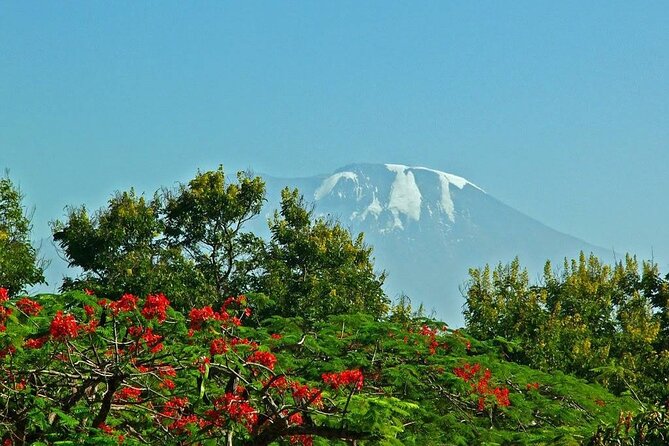
- Shira Plateau is a major scenic reward: You cross open grassy ground scattered with volcanic rock and may see Kibo Peak above the clouds.
- Lava Tower reaches 4,640 meters: You climb high for acclimatization, then descend to Barranco Camp, an important part of the altitude strategy.
- Crater Camp follows the summit: After reaching Uhuru Peak, you descend into the crater for a night near Furtwangler Glacier.
- Much of the practical burden is covered: Guides, cooks, porters, meals, sleeping gear, and transport back to Moshi are built into the experience, according to the supplied details.
Why the 8-day Lemosho Route works well
I like Lemosho because it does not treat Kilimanjaro as a quick up-and-down challenge. The route gives you several days to gain height at a measured pace, with an acclimatization walk on Day 3 and another possible climb near Karanga Camp on Day 5.
The scenery changes often. You begin in thick forest, cross heather and grassy moorland, walk across the broad Shira Plateau, and then enter the stark upper zones below Kibo’s glaciers. That variety matters. Long mountain trips can become a blur of boots and dust, but here each section has its own character.
The advertised trek covers about 40 kilometers to the summit, though the full eight-day mountain journey includes the approach, summit work, and descent. You should think of it as a sustained high-altitude expedition, not an ordinary hiking holiday.
The price is $2,756.93 per person. That is a substantial fee, but the value depends on what you would otherwise need to arrange yourself. The package includes pickup, meals, sleeping gear, expert guides, and support from cooks and porters. It also includes the mountain admission shown in the schedule and transport to your Moshi hotel at the end.
I would still check the final booking terms carefully to confirm exactly what is covered beyond those stated inclusions. The information provided does not specify flights, personal clothing, tips, or every hotel arrangement. Tips for guides, cooks, and porters are specifically expected at the end, so include that extra cost in your planning.
More Kilimanjaro routes and climbs:
- 7 Days Kilimanjaro via Machame route affordable price
★ 5.0 · 110 reviews - Kilimanjaro Airport taxi to/from Moshi town/Arusha town
★ 5.0 · 60 reviews - 6 Days Climbing Mount Kilimanjaro Machame Route
★ 5.0 · 40 reviews
Day 1: Forest from 2,100 meters to Mti Mkubwa
The first walking day begins at about 2,100 meters. The trail winds through Kilimanjaro’s lush forest zone and climbs toward the lower slopes on the northern side of the mountain.
After roughly three hours, you reach Mti Mkubwa Camp at 2,650 meters. This is a fairly gentle opening compared with what comes later, but it still gives you an early lesson in the rhythm of the trip: walk steadily, listen to your guide, and do not waste energy trying to race ahead.
The forest is an important part of the Lemosho experience because it makes the mountain feel gradual. You do not begin on bare rock. Instead, the route builds from low vegetation into higher and more open ground.
Your first camp is also a useful test of your equipment and sleeping routine. Since sleeping gear is provided, you can focus on staying warm, organized, and hydrated rather than carrying every piece of camp equipment yourself.
Day 2: Grassy moorland and Shira 1 Camp
Day 2 takes about seven hours and brings a noticeable increase in effort. The forest gives way to grassy moorland and heather, with volcanic rock formations scattered across the plateau.
Some sections are fairly steep. You gain a reasonable amount of altitude, so this is the day to settle into a slow pace. Your guide’s role becomes especially useful here. The goal is not to prove how fast you can climb, but to reach camp with enough energy for the days ahead.
Shira 1 Camp offers one of the route’s memorable visual moments. Kibo Peak may appear to float above the clouds, an effect that makes the mountain seem both close and distant at the same time. Weather controls what you see, so treat the view as a bonus rather than a promise.
The seven-hour duration also tells you something practical. You should expect full days on your feet even before the summit attempt. Moderate fitness is the stated requirement, but you will need patience as much as strength.
Day 3: A slower crossing of Shira Plateau
The third day remains on the Shira Plateau and takes around seven hours. You cross open moorland with broad views of Kibo and the northern ice fields from the western side of the mountain.
This is an important acclimatization day. You continue to gain altitude, but the steady route gives your body more time to respond. In the afternoon, you take an acclimatization walk and then return to Shira 2 Camp for dinner and sleep.
I like the design of this day because it mixes scenery with a clear physical purpose. You are not simply covering ground. You are spending time at height, then making a controlled return to camp.
The open plateau can also feel exposed and repetitive compared with the forest. That is part of the appeal for some climbers and a possible drawback for others. You have fewer trees and more sky, rock, and distant mountain views.
A few more trips of this kind worth comparing:
- Great Migration Safari In Tanzania
★ 5.0 · 71 reviews - 6 Days Tanzania Classic Safari
★ 5.0 · 52 reviews - 8 Days Kilimanjaro Hike via Lemosho Route
★ 5.0 · 39 reviews - 8 Days Great Wildebeest Migration – Mara River Crossing
★ 5.0 · 28 reviews
Day 4: Lava Tower at 4,640 meters, then Barranco
Day 4 is one of the smartest parts of the route. You climb to Lava Tower at 4,640 meters, your highest point for the day, and then descend to Barranco Camp at 3,960 meters.
The walk takes about four hours, but the altitude makes that number less important than it sounds. You move through upland desert and along lava ridges beneath the glaciers of the Western Breach. Lunch at Lava Tower gives you time to pause at serious elevation before the descent.
This climb-high, sleep-lower pattern helps with acclimatization. It can also feel demanding because you reach a high point without staying there overnight. You may feel tired or headachy at Lava Tower, so tell your guide how you are doing rather than treating discomfort as something to hide.
The descent ends at the base of the Great Barranco Valley. Towering cliffs shelter the camp, while the views open toward the plains below. This is a dramatic campsite, but the combination of steep ground and altitude means you should save energy for the next morning.
Day 5: Barranco Wall and Karanga Camp
Day 5 starts with a descent into the Great Barranco, followed by the climb up Barranco Wall. The route is not technical climbing, but it involves rock and can be long and tiring.
You pass beneath the Heim and Kersten Glaciers before continuing toward Karanga Valley. From the valley, you make a steep climb to Karanga Camp at 3,963 meters.
This is the day when the route feels more like a mountain expedition than a scenic trek. The Barranco Wall requires careful footwork and steady movement. You do not need technical climbing skills based on the supplied description, but you should be comfortable with a strenuous rocky ascent.
A mid-afternoon acclimatization walk may take you to around 4,200 meters before you descend back to camp. That walk is intended for those feeling strong, not as a requirement to force yourself onward. I would treat it as optional in spirit even if your guide encourages it for altitude preparation.
Day 6: Barafu Camp and the long summit night
After breakfast, you walk to Barafu Camp at 4,640 meters. The route crosses barren scree slopes with no vegetation, and the steep climb becomes harder because of the altitude.
The schedule lists about 12 hours for this stage, reflecting the demanding summit preparation and the long night ahead. Once at Barafu, you eat, hydrate, stay warm, and rest. Dinner comes early, followed by an attempt at sleep before waking between 11 p.m. and midnight.
This is where good organization matters most. Your gear should be ready before you lie down. Keep warm layers, water, and essential items close at hand. The provided sleeping equipment reduces the amount you need to arrange, but you still need to manage your personal clothing and summit kit carefully.
Barafu is not a place for a relaxed afternoon. It is a high, exposed camp and a staging point for the hardest part of the trip. You should expect the combination of cold, thin air, limited rest, and a steep climb to test you.
Day 7: Uhuru Peak and a night in the crater
The summit approach begins before dawn. You aim to reach Uhuru Peak in the early afternoon, when the route may be quieter than at busier times.
Reaching the summit is the central goal, but this itinerary adds another demanding feature. After a short descent, you spend the night at Crater Camp, located in the bowl of Kilimanjaro’s crater near Furtwangler Glacier.
Crater Camp is not a separate route. It is an added extension that can be attached to different routes, and it is intended for especially adventurous climbers. Sleeping inside the crater gives you a rare mountain experience, but it also adds work after the summit. You should not view it as an easy reward at the end of the climb.
The day is listed at about seven hours, though the early start, summit effort, descent, and crater stay make it one of the most demanding parts of the program. Your guide will be central here. The strongest praise for this operator centers on guide support and staff service, and one group specifically climbed with Timothy as its main guide.
Day 8: Forest descent and a return to Moshi
The final day takes about five hours. You leave the high mountain, descend through the forest, and continue to the gate where your vehicle waits.
The vehicle returns you to your hotel in Moshi, giving you a clear endpoint after the mountain work. The finish is practical rather than drawn out. You have time to celebrate, recover, and recognize the guides, cooks, and porters who supported the climb.
Tipping is specifically requested. Bring a plan for this before the trip, since you will be leaving the mountain team at the gate. Airport pickup is offered at the start, with a stated meeting point at Kilimanjaro International Airport at 7:00 a.m. One past party also described an airport arrival after midnight where Oscar and a driver were waiting, but you should confirm your own pickup details directly.
Guides, food, equipment, and group size
The strongest praise attached to this trip concerns the people running it. Accounts describe expert guides, polite staff, helpful service, and good organization. Timothy is named as a main guide in one account, while Oscar is associated with airport support and company communication.
That does not guarantee the same guide for every departure, so ask who will lead your group. It is also sensible to ask how the maximum group size of 15 will be handled, including the number of guides, cooks, and porters assigned to the group.
Meals are included across all eight days, and the company says it can accommodate dietary requirements. Tell them your needs before departure and confirm how those meals will be handled at altitude.
Sleeping gear is included, which is a meaningful benefit. High-mountain equipment can be expensive and awkward to transport, so this inclusion can make the $2,756.93 price more reasonable. The information does not say that every item of personal clothing or footwear is supplied, so do not assume you can arrive without your own suitable hiking clothes.
Who should book this climb
I would recommend this trip to you if you want a measured route with several acclimatization opportunities, broad scenery, and a serious summit goal. It suits someone who accepts early starts, cold camps, long walking days, and a basic mountain routine.
The Lemosho route is also a strong fit if you value support. Meals, sleeping gear, airport pickup, guides, porters, cooks, and a return vehicle remove many practical tasks from your shoulders.
I would hesitate if you want a soft adventure or a flexible sightseeing schedule. The route contains steep sections, the Barranco Wall, high camps, a midnight wake-up, and a crater overnight after the summit. Moderate fitness is required, but the altitude can challenge even fit people.
The crater extension deserves special attention. If you mainly want to reach Uhuru Peak, ask if the crater night is essential to your booking. If you want an unusual and demanding high-altitude experience, it may be the feature that makes this route memorable.
Booking, weather, and cancellation details
Confirmation is received at booking. The experience depends on suitable weather, and poor conditions can lead to a new date or a full refund. It also requires a minimum number of climbers, so a departure can be changed or refunded if that minimum is not reached.
You can cancel for a full refund up to 24 hours before the local start time. Changes or cancellations made inside that 24-hour period are not accepted for a refund.
Should you book the 8-day Lemosho climb?
You should book it if you want Kilimanjaro with time for acclimatization, strong logistical support, and the option to sleep in the crater after reaching the summit. The Shira Plateau, Lava Tower, Barranco Wall, and crater camp give the route real variety.
Before paying, confirm the exact pickup time, personal gear requirements, guide assignment, group arrangements, dietary plan, and tipping expectations. If you are ready for a hard climb rather than a comfortable holiday, the eight-day schedule offers a thoughtful route and solid practical value.
FAQ
Where does the climb take place?
The climb takes place on Mount Kilimanjaro in Tanzania, within the Kilimanjaro National Park area.
How long is the experience?
The experience lasts approximately eight days.
How much does it cost?
The listed price is $2,756.93 per person.
Where is the meeting point?
The stated starting point is Kilimanjaro International Airport on Kilimanjaro Airport Road, Tanzania.
What time does the experience start?
The stated start time is 7:00 a.m.
Is airport pickup available?
Yes. Pickup is offered, and the experience includes a mobile ticket.
How large can the group be?
The maximum group size is 15 people.
What fitness level do I need?
You should have a moderate level of physical fitness. The route includes steep climbs, long walking days, high camps, and a demanding summit approach.
What happens if the trip is canceled?
If poor weather causes cancellation, you will be offered another date or a full refund. If the minimum number of climbers is not reached, you will be offered another date or experience, or a full refund.
Just added around Kilimanjaro
- 5 days Serengeti Wildebeest Migration Safari★ 5.0 · 3 reviews
- Tanzania Safari and Kilimanjaro Climb Multi-Day Experience★ 5.0 · 3 reviews
- 9 Days – Best of Tanzania Safari★ 5.0 · 4 reviews
- 7 Days Mountain Kilimanjaro climb Machame Route★ 5.0 · 4 reviews
- 8-Day Tanzania Migration Footsteps – Midrange★ 5.0 · 4 reviews
- 4 Days Lake Manyara National Park, Ngorongoro Crater , Serengeti National Park.★ 4.0 · 4 reviews
- 6 Days Mara River Crossing – The Great Migration★ 5.0 · 5 reviews
- 6- Day Adventure Lodge safari to see Migration★ 4.5 · 5 reviews
Kilimanjaro Treks, compared.



8-Day Small-group Lemosho Kilimanjaro Summit Trekking
Read our review →


Climbing Kilimanjaro through 7 days Machame Route
Read our review →

Browse the lists this tour appears in