
Reviewed · CITY TOURS
Guided City tour of Moshi
Start with Moshi’s everyday life. I like this tour because it takes you beyond the usual safari and trekking routes, with stops at the German-built railway station and the town’s food market. I also like the local coffee stop and rooftop view, where you may see Mount Kilimanjaro on a clear day.
The main consideration is that this is a walking tour, not a sightseeing trip by vehicle. You will need comfortable shoes, and the $20 price does not cover transport, hotel meals, drinks at larger restaurants, souvenirs, or tips. Still, the included local lunch and coffee make it a strong-value introduction to Moshi.
In This Review
- Five details that make this Moshi walk worthwhile
- Why a Moshi city walk belongs before your safari
- Meeting at Mama Africa or your hotel
- The old railway station and Moshi’s German-era past
- The food market, spices, and ordinary Moshi
- Craft stalls and the Mama Africa Giftshop
- Tanzanian coffee with a local pause
- Rooftop views toward Mount Kilimanjaro
- What the $20 price really gives you
- Who will enjoy this tour most
- How to get more from the walk
- Should you book the Moshi city tour?
- FAQ
- Where does the Moshi city tour begin?
- How much does the tour cost?
- What language is the tour offered in?
- Is lunch included?
- Is coffee included?
- Is transportation included?
- Are drinks from hotels or large restaurants included?
- Can I buy souvenirs during the tour?
- Will I definitely see Mount Kilimanjaro?
- What should I bring?
- Can I cancel the booking?
- Do I have to pay when I reserve?
Five details that make this Moshi walk worthwhile
- German-era railway station: See one of Moshi’s notable old buildings and hear how rail travel shaped the town.
- Local food market: Look at produce, spices, and daily shopping in a place used by local residents.
- Craft and souvenir market: Find handmade gifts, including inexpensive souvenirs at the Mama Africa shop.
- Tanzanian coffee stop: Taste local coffee and learn more about one of the country’s best-known products.
- Rooftop Kilimanjaro view: On a clear day, the rooftop stop gives you a fine look toward Africa’s highest mountain.
- Guide-led orientation: A guide such as Ziggy can help you find ATMs, local food, and useful places around town.
Why a Moshi city walk belongs before your safari
Moshi is often treated as a launch point for Kilimanjaro climbs and northern Tanzania safaris. That is a shame. The town has its own rhythm, and a short guided walk helps you see more than the hotel, safari vehicle, and airport transfer.
I like this tour as a first-day activity because it gives you practical bearings. You can learn where to withdraw cash, see where people shop for food, and get suggestions for local meals. Those details can make the rest of your stay easier.
The tour also gives you a better sense of who benefits from tourism. Safari operators and mountain companies receive much of the visitor spending in the region. A local city walk directs some of that money toward guides, markets, coffee sellers, and small craft businesses in Moshi itself.
At $20 per person, the tour is priced below many longer sightseeing activities. The value comes from the combination of a guide, a local lunch, a coffee experience, and several stops that would be harder to connect on your own.
A few more trips of this kind worth comparing:
- Kilimanjaro climb by Lemosho Route (7-day)
★ 5.0 · 651 reviews - Safari Serengeti And Ngorongoro
★ 5.0 · 288 reviews - Kilimanjaro climb, Machame Route (7-day)
★ 5.0 · 262 reviews
Meeting at Mama Africa or your hotel
The tour begins with pickup from your hotel or at the Mama Africa Giftshop. This gives you two useful options. If you are already staying in Moshi, hotel pickup keeps the start simple. If you are coming from another part of town, Mama Africa is a clear meeting point and also a useful place to browse souvenirs.
The walk is designed as an intimate look at town rather than a large coach excursion. That matters here. Markets are easier to enter on foot, and a guide can explain small details as you go instead of giving one long speech from a vehicle.
English and Swahili are offered. If you want more from the experience, ask questions as you walk. The guide can help explain the spices, food, buildings, and customs you see, rather than leaving you to guess at their meaning.
One guide praised for this route is Ziggy, who is described as friendly and informative. The best way to use a guide like this is to speak up. Ask about the food in the market, the town’s railway past, and where locals eat. The tour becomes much more useful when it is a conversation.
The old railway station and Moshi’s German-era past
The first main stop is Moshi’s old railway station, a structure built by the Germans. It offers a physical reminder that Moshi was shaped by outside powers, trade, transport, and colonial-era construction.
You do not need to be an architecture specialist to enjoy this stop. Look at the building’s older design and consider its original purpose as part of a railway network. The station gives the walking tour a useful historical starting point before you move into the active commercial center.
This is also a good stop for photographs, although the appeal is more about atmosphere and context than a formal museum visit. The available details do not indicate that the station includes exhibits, guided interior access, or a long historical presentation.
That is worth keeping in mind. If you want a full study of Tanzania’s railway history, this tour will not replace a museum visit. If you want one memorable building that helps explain Moshi’s past, it fits well.
The food market, spices, and ordinary Moshi
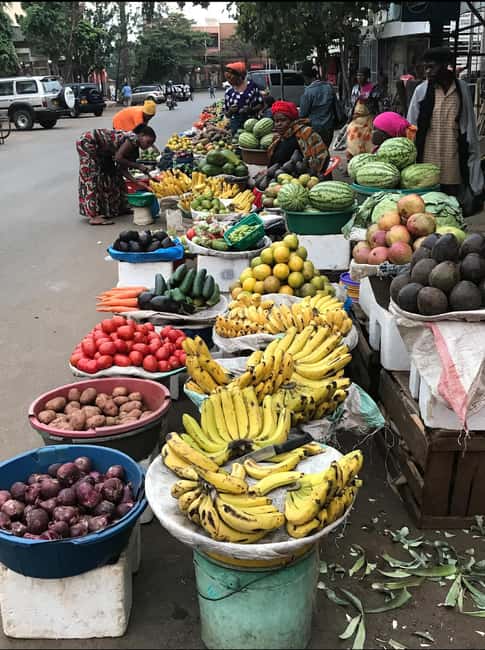
From the station, you walk to a local food market. This is one of the strongest parts of the route because it shows how food reaches the table, not just how it appears on a restaurant menu.
You can expect stalls with fresh produce and local food items. The market also offers a close look at the spices used in cooking. Take your time here, but be polite about photographs and follow your guide’s lead when moving through the market.
I especially like the chance to ask questions at this stop. What looks like an unfamiliar spice or ingredient may be common in local cooking, and a guide can give you context that a quick solo visit would miss.
The market can also be a sensory stop. Expect movement, conversation, produce, and the normal activity of a place where people shop. It is not arranged for sightseeing, which is exactly why it feels useful. You are seeing a working part of town rather than a display made for visitors.
For some people, this will be the least polished section of the tour. That is not a flaw, but you should know what you are choosing. The market is about daily life, not comfort or a carefully staged presentation.
A completely different kind of day out from Moshi:
- Kilimanjaro Climbing Lemosho Route 8 Days.
★ 5.0 · 186 reviews - Climbing Kilimanjaro – Machame Route
★ 5.0 · 170 reviews - Climbing Kilimanjaro through 7 days Machame Route
★ 5.0 · 151 reviews - Kilimanjaro climb, Lemosho Route (8-day)
★ 5.0 · 148 reviews
Craft stalls and the Mama Africa Giftshop
The route continues to a local craft and souvenir market. This is your chance to look at handmade goods and choose gifts connected to Tanzania.
Mama Africa Giftshop is also mentioned as a place to find nice, inexpensive souvenirs. If you want a small present without committing to a large purchase, this may be a practical stop.
A guided visit helps because shopping in a market can feel awkward when you do not know the usual prices or customs. Your guide may help you understand what is available and how to approach a purchase. The tour cost does not include souvenirs, so bring extra money only if you plan to shop.
Do not feel pressured to buy. A city tour should let you look, ask questions, and decide. The craft stop is most valuable when you treat it as a chance to learn about local artistic work, with shopping as an optional extra.
Tanzanian coffee with a local pause
The coffee experience adds a welcome change of pace after the markets. You get to enjoy the aromas and flavors of Tanzanian coffee, making this more than a quick pass by a café.
Coffee is an important part of Tanzania’s agricultural identity, especially around the Kilimanjaro region. This stop gives you a simple way to connect the drink in your cup with the country you are visiting.
The information provided does not specify the exact coffee venue, tasting format, or number of drinks. You should therefore think of it as a local coffee experience, not a formal coffee course.
You may also want to try a local ginger shot if it is offered during the walk. One useful tip is that it has a strong kick. If you prefer mild flavors, start carefully. If you enjoy sharp, spicy drinks, it can be a memorable little moment.
The coffee stop is included, along with a local lunch. Food and drinks from hotels or larger restaurants are not included, so the experience is focused on local options rather than an international dining setting.
Rooftop views toward Mount Kilimanjaro
The final relaxing stop is a rooftop bar in the center of town. From here, you get a higher view over Moshi, and on clear days you may see Mount Kilimanjaro.
The mountain view is weather dependent. Kilimanjaro can disappear behind cloud, so do not book this tour only for a guaranteed photograph. The rooftop is still useful as a place to pause and look back over the streets you have walked.
For many people, this will be the most scenic stop. The setting connects Moshi to the mountain that draws so many people to the region, but it also keeps the focus on the town itself.
Drinks at the rooftop bar are not included if they fall outside the local lunch and coffee arrangements. Check with the guide before ordering so you know what is covered.
What the $20 price really gives you
At $20 per person, this is a good-value orientation tour if you want several local experiences in one outing. You receive a guided city walk, a local lunch, a coffee experience, and help understanding where to find food and ATMs.
The price is especially reasonable for people arriving before a safari or climb. You get useful local information without paying for a separate meal, coffee tasting, and private orientation.
The value is less clear if you only want major monuments or a fast overview from a vehicle. This route is built around walking, markets, conversation, and small discoveries. You are paying for access and explanation as much as for sightseeing.
Budget for extras. Transport is not included, and neither are tips, souvenirs, or food and drinks from hotels and larger restaurants. The tour description does not give a duration, so confirm the expected length when booking if your schedule is tight.
The reserve-now, pay-later option can help if your plans may change. You can also cancel up to 24 hours in advance for a full refund.
Who will enjoy this tour most
I would recommend this experience to first-time visitors who want to understand Moshi before heading into the countryside. It is also a good fit if you are coming for a safari or Kilimanjaro trek and want to support businesses outside the main adventure-tourism chain.
Food lovers should enjoy the market and coffee stops. Shoppers may appreciate the craft stalls and Mama Africa Giftshop. Anyone interested in local life will get more from the route by asking questions instead of simply following the guide.
It may be less suitable if you have difficulty with walking, want a private vehicle tour, or prefer formal museums and major historic sites. The available information does not specify accessibility arrangements, so ask the provider before booking if that is important to you.
Bring comfortable shoes. You may also want sun protection and water, although only comfortable footwear is specifically listed as required.
How to get more from the walk
Start with questions. Ask about the railway station, the spices in the market, the best places for local food, and the daily life you see around you.
Keep some flexibility in your expectations. The rooftop view depends on clear weather, and markets are working places rather than fixed attractions. Their activity can change from one day to another.
If you plan to shop, set a small budget before you go. The craft market and Mama Africa Giftshop can offer inexpensive souvenirs, but you do not need to buy anything for the visit to be worthwhile.
Use the ATM advice as part of the tour’s practical value. Knowing where to get cash can save you time later, especially when smaller businesses do not accept cards.
Most of all, treat the tour as an introduction rather than a complete portrait of Moshi. A few hours cannot explain every part of the town, but it can give you enough context to move around with more confidence.
Should you book the Moshi city tour?
Book it if you want a friendly, affordable introduction to Moshi with local food, markets, coffee, shopping, and a possible Kilimanjaro view. The strongest points are the personal guide service, the everyday market stops, and the practical help with ATMs and local places to eat.
I would be especially happy to choose it before a safari or trek. It adds a human scale to a trip that might otherwise focus only on wildlife, mountain routes, and hotel compounds.
Skip it if you want a vehicle-based tour, a detailed museum program, or a guaranteed mountain view. Otherwise, $20 buys a useful first look at Moshi and a chance to support local businesses along the way.
FAQ
Where does the Moshi city tour begin?
You can be picked up from your hotel or meet at the Mama Africa Giftshop.
How much does the tour cost?
The price is $20 per person.
What language is the tour offered in?
The tour is offered in English and Swahili.
Is lunch included?
Yes. A local lunch is included in the tour.
Is coffee included?
Yes. An authentic local coffee experience is included.
Is transportation included?
No. Transport is not included. The experience is described as a walking city tour.
Are drinks from hotels or large restaurants included?
No. Food or drinks from hotels and larger restaurants are not included.
Can I buy souvenirs during the tour?
Yes. The route includes a local craft and souvenir market, and Mama Africa Giftshop is also mentioned as a place to find souvenirs. Any purchases are paid for separately.
Will I definitely see Mount Kilimanjaro?
No. The rooftop offers the best view of Mount Kilimanjaro on clear days, so visibility depends on the weather.
What should I bring?
Bring comfortable shoes for the walking tour.
Can I cancel the booking?
Yes. You can cancel up to 24 hours in advance for a full refund.
Do I have to pay when I reserve?
No. The reserve-now, pay-later option lets you book without paying anything immediately.
Just added around Moshi
- Moshi: Lake Chala Tour: Hiking &/or Kayaking★ 4.5 · 3 reviews
- 3 Days Tanga Exclusive Beach Holiday★ 5.0 · 3 reviews
- Serengeti Wildebeest Migration.★ 5.0 · 3 reviews
- Chemka Hotpsrings E-Bike Day Trip★ 5.0 · 3 reviews
- Explore 1 day Ngorongoro Crater Budget Group Safari from Arusha★ 5.0 · 3 reviews
- Explore the 360° of Kilimanjaro★ 5.0 · 3 reviews
- Affordable Short Tanzania Safari (2 Days Camping Safari)★ 5.0 · 3 reviews
- Rongai Route 7 Days★ 5.0 · 3 reviews
City Tours, compared.

Arusha Guided Walking City Tour, Culture, Lifestyle & History
Read our review →

The Best/Top Rated Cultural City Tour in Dar es Salaam
Read our review →
Browse the lists this tour appears in